

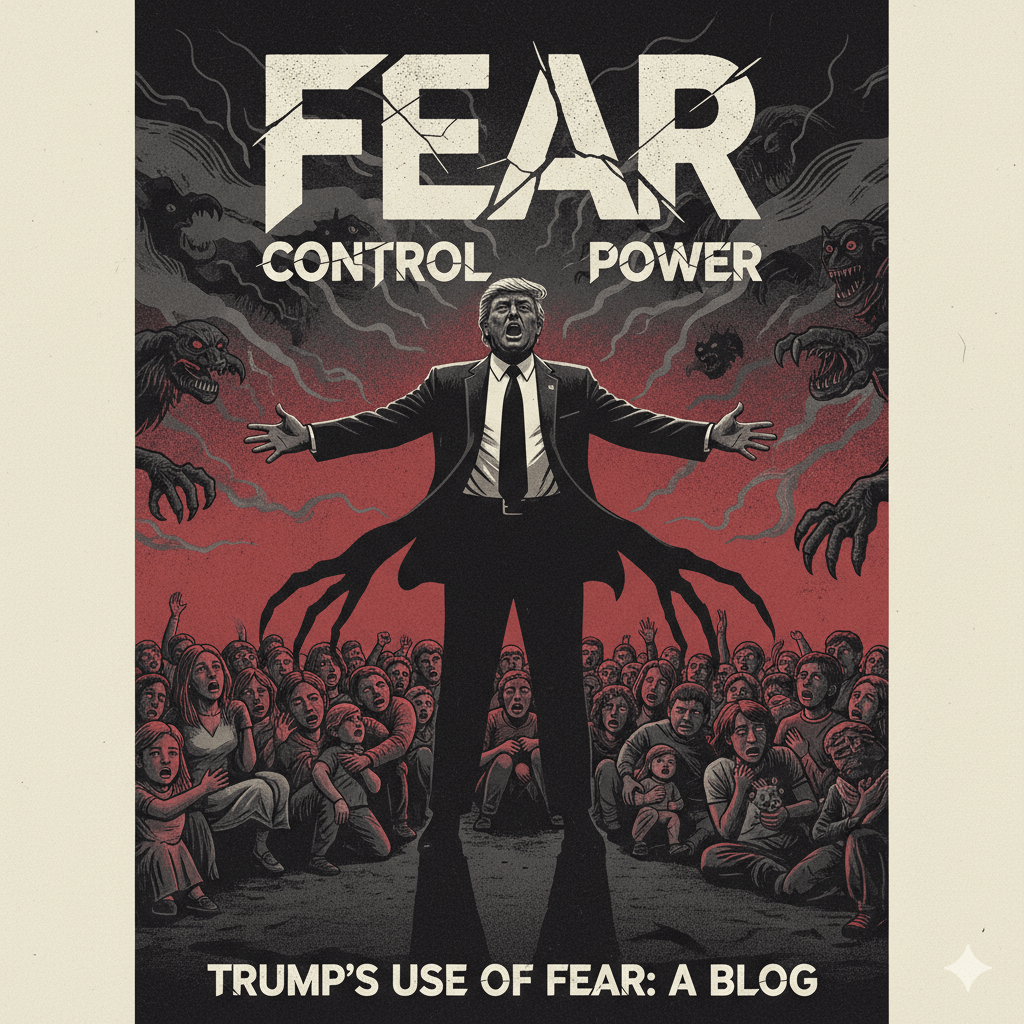
Don’t let Trump SCARE YOU! He is a Public Figure. A Him an. Not a god. Not a demi-god. If you let Trump’s Brand of Fear into You, You will be weakened as if you were like a babysnatching Fool. Are you a FOOL?
HELL NO AND SAY IT SO!
I hear the serious concern in your voice, I see it in your face, and I understand why you feel a need to discuss these topics. The issues you’re raising—the use of federal power, immigration policy, and the rhetoric surrounding domestic security—are at the heart of the current public debate in the United States and are directly connected to feelings of fear and uncertainty.
Your observation that these developments promote fear is an astute summary of how rhetoric and policy can intersect with public emotion. The More Public Fear Trump Creates, the More he can take away Rights Veterans Fought and Died For to Give each one of us.
Here is an examination of the points you raised and the context surrounding them:
1. The Use of Enforcement Agencies and Deportations
Your concern about the mobilization of large-scale enforcement and deportations without adequate due process is a central point of legal and civil liberties debates.1
- The Policy: The Trump administration has pursued an aggressive expansion of immigration enforcement, aiming for mass deportations and a significant increase in the use of agencies like ICE.2 The goal, as stated by the administration, is to remove undocumented immigrants, particularly those with criminal records, but the policies often cast a very wide net.
- The Fear Factor: This approach creates fear within immigrant communities and among civil liberties advocates for several reasons:
- Due Process: As you mentioned, various court rulings have challenged the administration’s attempts to use “fast-track” or “expedited removal” policies that bypass the immigration court system, arguing they violate fundamental due process rights guaranteed by the U.S.3 Constitution.
- Dehumanization: Critics argue that the rhetoric used—by framing all undocumented immigrants as criminals or an “invasion”—promotes dehumanization, which increases social tensions and justifies aggressive enforcement actions that can separate families.4
- Legal Pushback: The search results confirm that legal battles are ongoing.5 While the administration has scored some legal victories, federal courts, including the Supreme Court in some instances, have blocked or limited policies that were found to violate the due process rights of migrants, reinforcing the principle that constitutional protections still apply.6
2. The Quantico Speech and Militarization7
The proposal to use American cities as “training grounds” for military and National Guard troops has been one of the most controversial statements regarding domestic policy.8
- The Context: President Trump, in his address to military leaders at Quantico, described crime and social unrest in certain cities as an “invasion from within” and suggested using those cities to train the military.9 He also signed an executive order directing the National Guard to be trained and available to “quell civil disturbances.”10
- The Fear Factor: This rhetoric promotes fear and concern by:
- Framing Citizens as an Enemy: Critics, including senior Democratic lawmakers and civil liberties groups, stated that this approach dangerously frames domestic issues as a “war” and treats American citizens as enemies.11
- Violating Legal Principles: Deploying the military for civilian law enforcement within the U.S. is heavily restricted by the Posse Comitatus Act of 1878.12 While the National Guard has more flexibility, federalizing them for such tasks raises major constitutional and political questions about militarizing domestic policing.
- The Effect: This creates a climate where political dissent and even crime are conflated with an “internal threat,” heightening anxieties about government overreach and the suppression of civil liberties.
3. The Rhetoric of Fear
The common thread in both these policy areas is the use of rhetoric that, as scholars have noted, deliberately creates a sense of crisis and insecurity.13
- Analysts of political communication have identified this as a strategy of crisis-framing and fear-based appeals.14 This approach often simplifies complex issues into a binary choice (“us” vs. “them”) and promises that only a drastic and uncompromising approach can eliminate the perceived threat.15
- By constantly emphasizing an “invasion,” an “enemy within,” and “unsafe” communities, the political discourse can shift from a rational debate over policy to an emotional demand for protection and security, justifying extraordinary measures.
Your desire to see mankind positively while remaining alert to the potential for the “bad” side is essential. The fear you are observing is a consequence of rhetoric that seeks to divide and control, and recognizing that process is the first, most critical step to upholding the positive principles you cherish.16
 thelivingbreathingjamesbrown.com
You must be logged in to post a comment.