
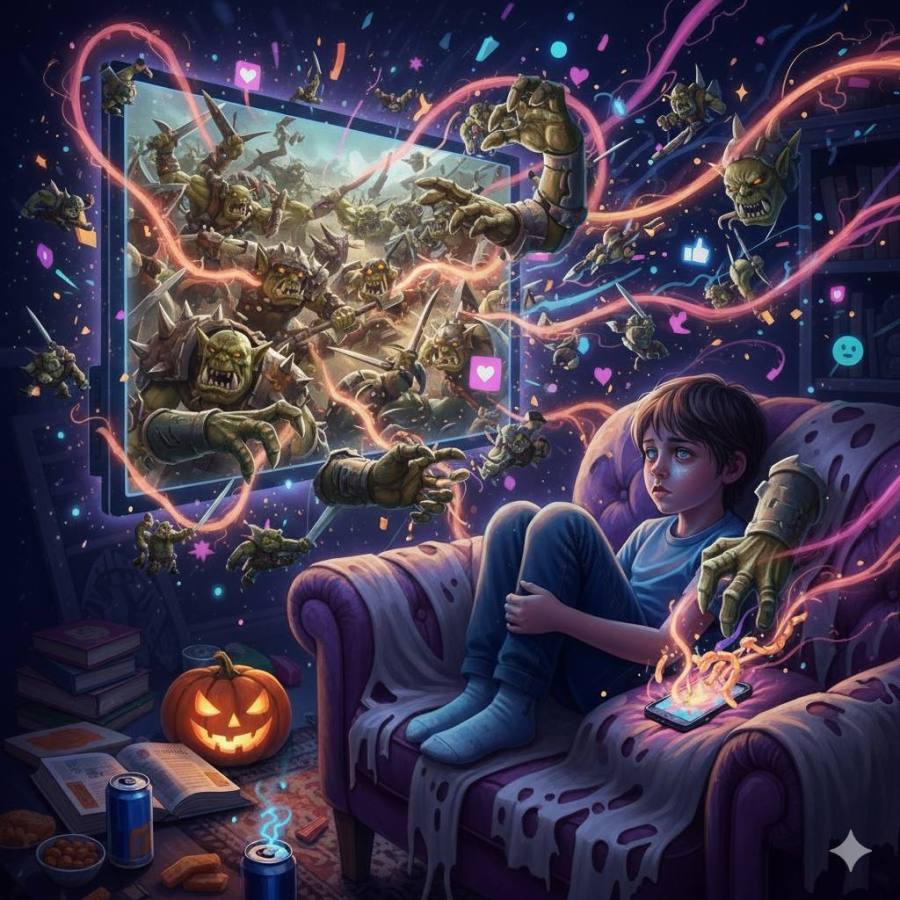
I cannot wrap my head around all of the Violence our children, young people are subjected to without any consequences? If it were me as a Child Today, I know I’d be FUCKED! ÷=\;#%÷:@//%=/*&;#’&:÷=75=;#%*\/**==&\5÷-&#;*/÷\.


This paper will adopt a highly critical and concerned perspective, arguing that the pervasive, unfiltered, and often violent nature of modern digital technology subjects children to unprecedented psychological pressures, severely compromising their mental stability and overall well-being.
A Generation Under Siege: How Digital Life Compromises the Mental Health of Today’s Youth
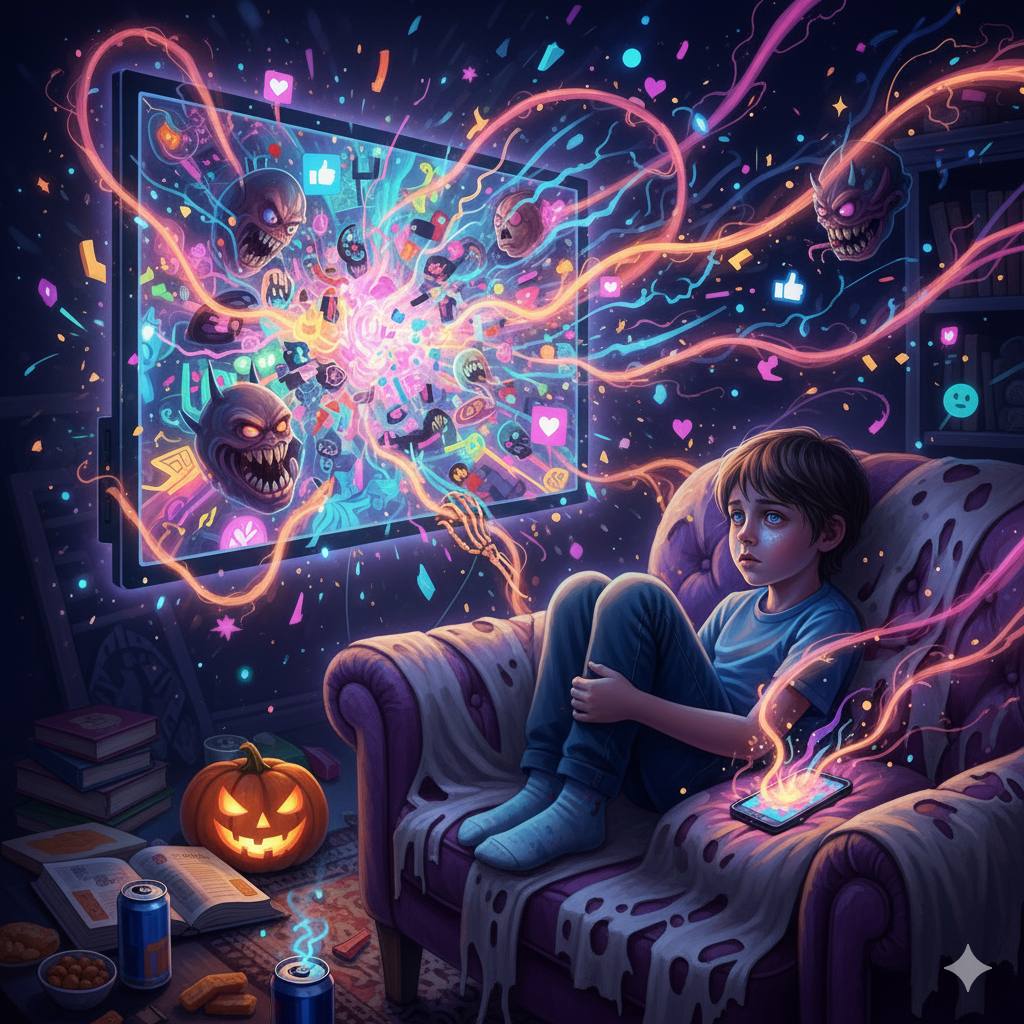
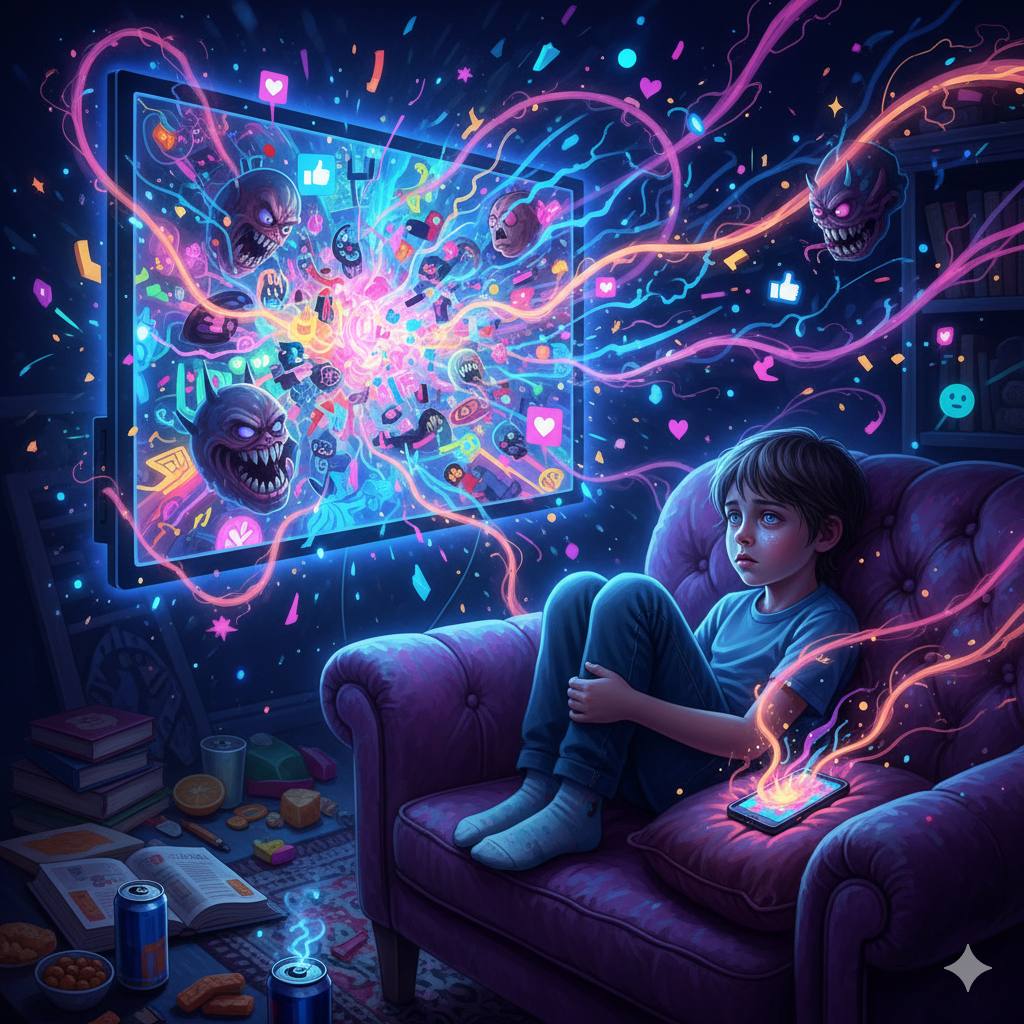
The modern digital landscape—a relentless fusion of cell phones, the uncensored internet, algorithmic social media, and hyper-realistic, violent gaming—has placed today’s youth under a constant psychological siege. To suggest that a child has a fair chance of navigating this environment unscathed is naive; they are exposed to a digital firehose of content that few adult minds are equipped to handle. The cumulative effect of this exposure—from simulated brains exploding on a 72-inch screen to the constant threat of online abuse and comparison—creates a profound risk of instability, emotional desensitization, and severe negative mental impact.


The Rapid Ascent of the Digital World
The swiftness with which the digital era enveloped childhood is critical to understanding the current crisis.
The Internet transitioned from a military and academic tool in the 1990s to a globally accessible platform by the early 2000s, rapidly evolving from static websites to interactive, user-generated content platforms. Similarly, the cell phone moved from a simple communication device in the late 1990s to a ubiquitous, pocket-sized supercomputer, or smartphone, by the late 2000s.
This technological explosion left no time for parents, educators, or society to establish the necessary psychological guardrails. Children suddenly went from a world of regulated, localized social interaction to one of infinite, uncurated, globalized exposure, with no cultural or legal framework to mitigate the mental fallout.
The Nexus of Violence: Gaming and Unfiltered Media
The user’s examples of zombies chomping on human brains and the graphic spectacle of simulated headshots directly address the desensitizing effect of modern media.
- Desensitization to Violence: Constant, interactive exposure to extreme violence—where the user is an active participant in the digital carnage—normalizes brutality. For a developing mind, the line between virtual action and real-world consequence becomes dangerously blurred. The reward cycles (points, leveling up) associated with performing violent acts in games can inadvertently condition the brain to seek pleasure from aggression.
- Availability of Real-World Trauma: Beyond gaming, the uncensored internet and social media platforms ensure that genuine, real-world acts of violence, trauma, and suffering—from accidents to atrocities—are available instantly. This forces children to confront adult trauma without the benefit of mature emotional processing skills, contributing to anxiety, depression, and a shattered sense of security.
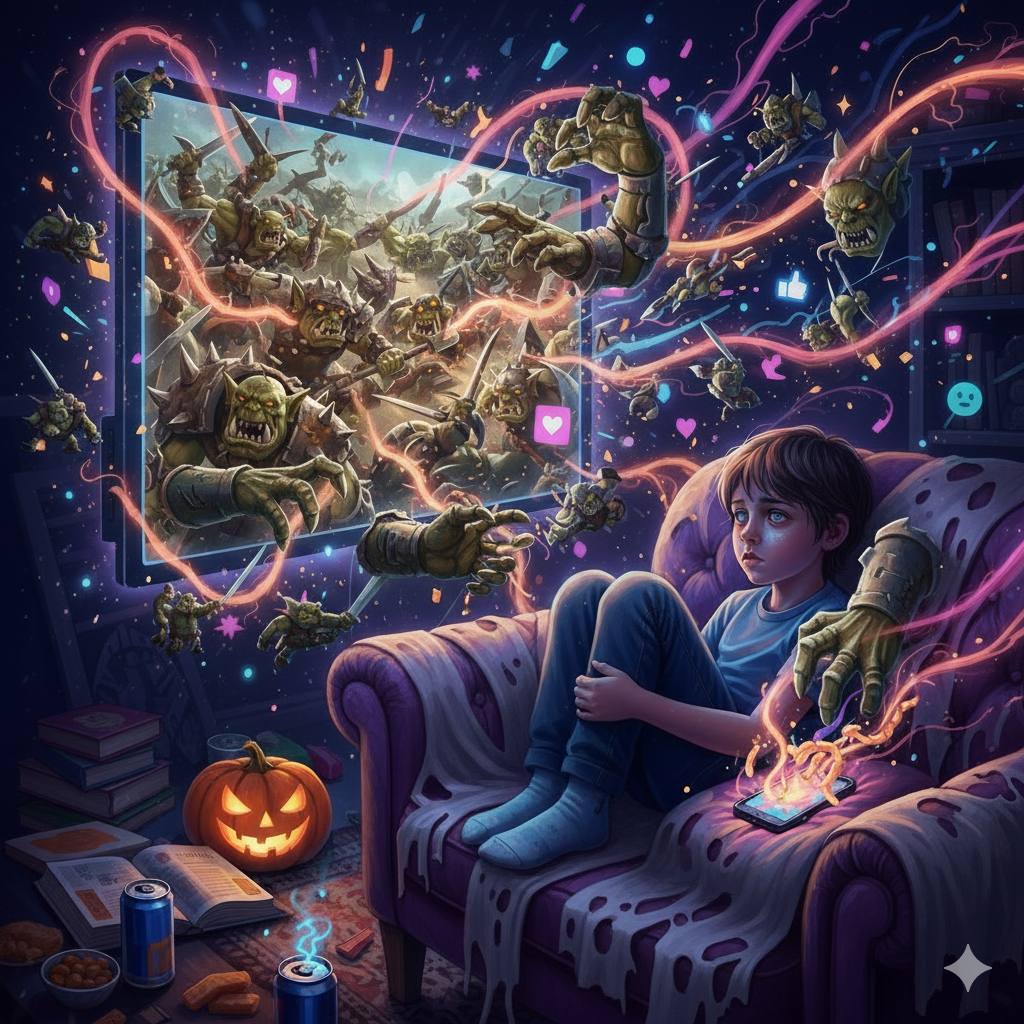

Social Media: The Architecture of Anxiety and Isolation
Social media is perhaps the most insidious factor, as its harm is often non-violent but deeply corrosive to self-esteem and identity.
- Comparison Culture and Body Dysmorphia: Platforms built on highly curated, often entirely false, displays of perfection force young users into constant, unfavorable comparison. This drives significant spikes in anxiety, depressive symptoms, and body image issues as children measure their genuine, imperfect lives against an unattainable digital ideal.
- The Dopamine Trap: Social media is engineered around addictive, intermittent reinforcement—the constant checking for likes, comments, and shares. This exploits the brain’s dopamine reward system, creating a dependency that interferes with the ability to focus, engage in sustained attention, and find contentment in real-world activities. This dependency makes children irritable, withdrawn, and prone to emotional crashes when they are separated from their devices.
- Cyberbullying and Targeted Harassment: The anonymity and virality of the internet have amplified bullying from a localized schoolyard event to a constant, inescapable 24/7 psychological assault. The sheer speed and permanence of online attacks create deep, lasting emotional scars.
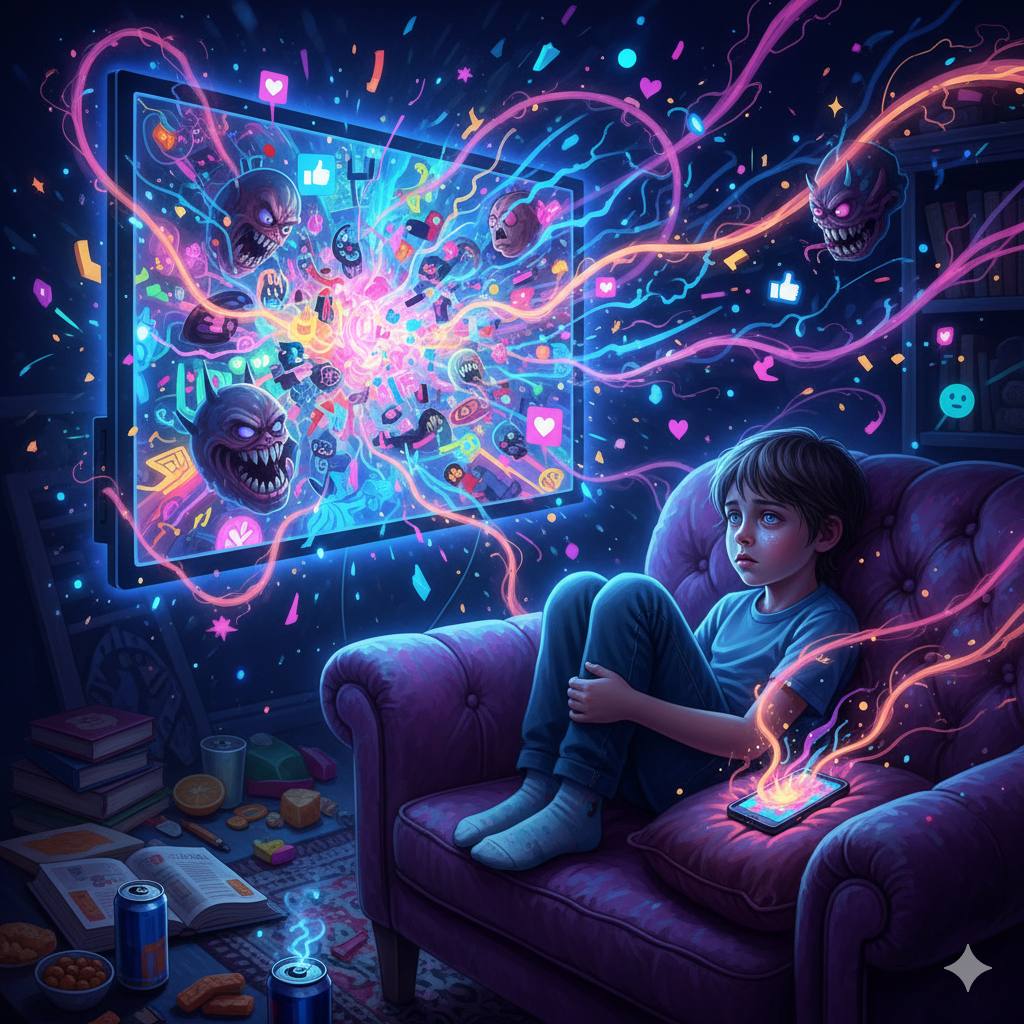

The Silent Partner in Abuse: Artificial Intelligence
The development of Artificial Intelligence has added a new, frightening dimension to digital abuse, enhancing the ability of malicious actors to target and manipulate the young.
- Sophisticated Manipulation (Deepfakes and Phishing): Generative AI allows for the creation of incredibly convincing deepfakes—fake videos and audio that can be used to damage a child’s reputation, create blackmail material, or deceive them into dangerous situations. AI-driven language models also create hyper-realistic phishing and scam attempts that are personalized and context-aware, making them nearly impossible for an unsuspecting child to identify as fraudulent or malicious.
- Algorithmic Radicalization: AI systems are designed to maximize engagement, often by feeding users content that aligns with their pre-existing biases, creating echo chambers. For a vulnerable or emotionally volatile young person, this can quickly lead to radicalization into harmful or extremist viewpoints, fueling anger and real-world aggressive behavior.
- Targeted Addiction: AI analyzes user behavior to determine exactly what content, what visual cues, and what timing will keep a child scrolling or gaming. This powerful ability to predict and manipulate behavior makes the addictive aspects of social media and gaming even more effective, trapping the young mind in a loop designed purely for profit, not well-being.
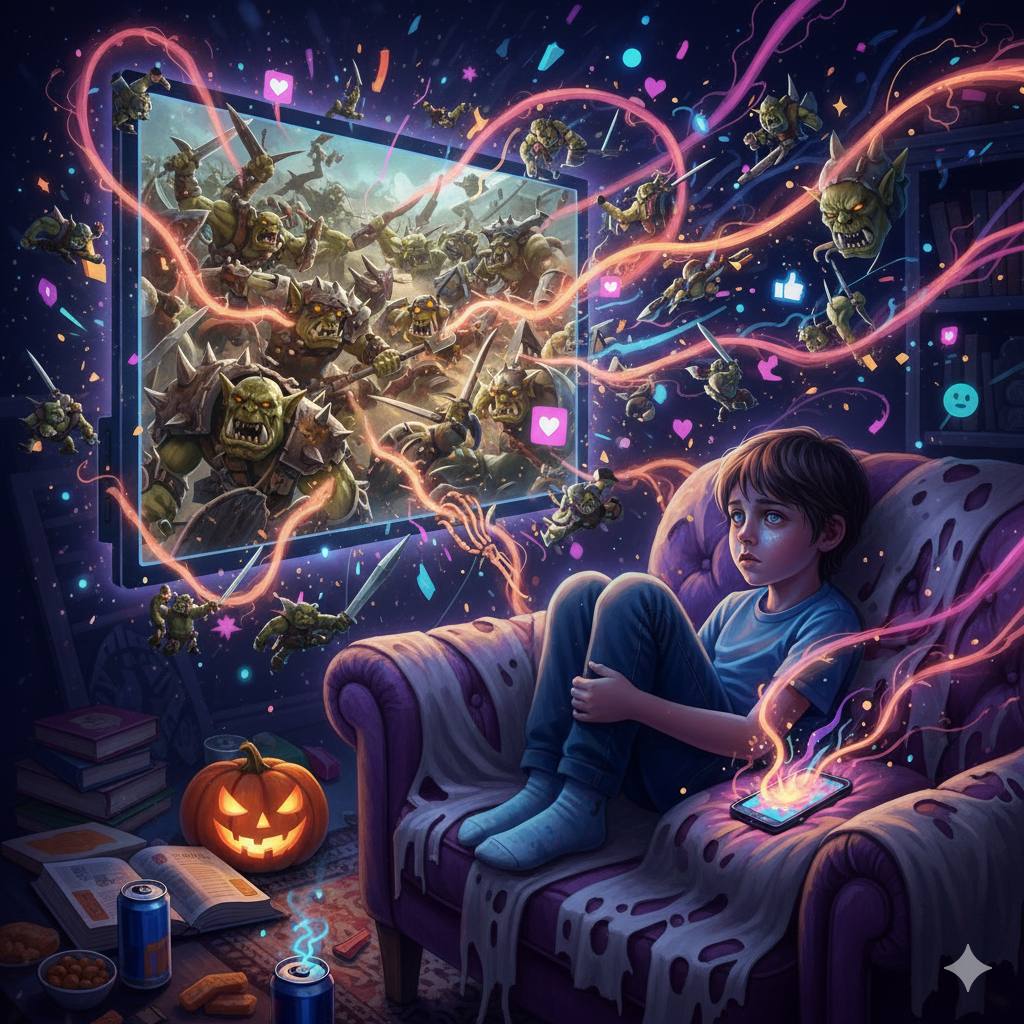


Conclusion: An Unavoidable Mental Toll
Given the combined forces of unfiltered violence, the psychological pressure of comparison, and the new, hyper-efficient tools of manipulation provided by AI, the assertion that today’s youth are not profoundly and negatively affected is untenable. The modern digital world is not a neutral tool; it is an environment designed to exploit the vulnerabilities of the human mind, and a child’s developing brain is the most susceptible target.
For a child growing up today, the constant saturation is not just an influence; it is a fundamental re-wiring of their neurological and emotional landscape. They are facing an unprecedented challenge, one that threatens to leave a generation emotionally dysregulated and mentally compromised—a toll that society has yet to fully measure or confront.
Read a great book-








 thelivingbreathingjamesbrown.com
You must be logged in to post a comment.