
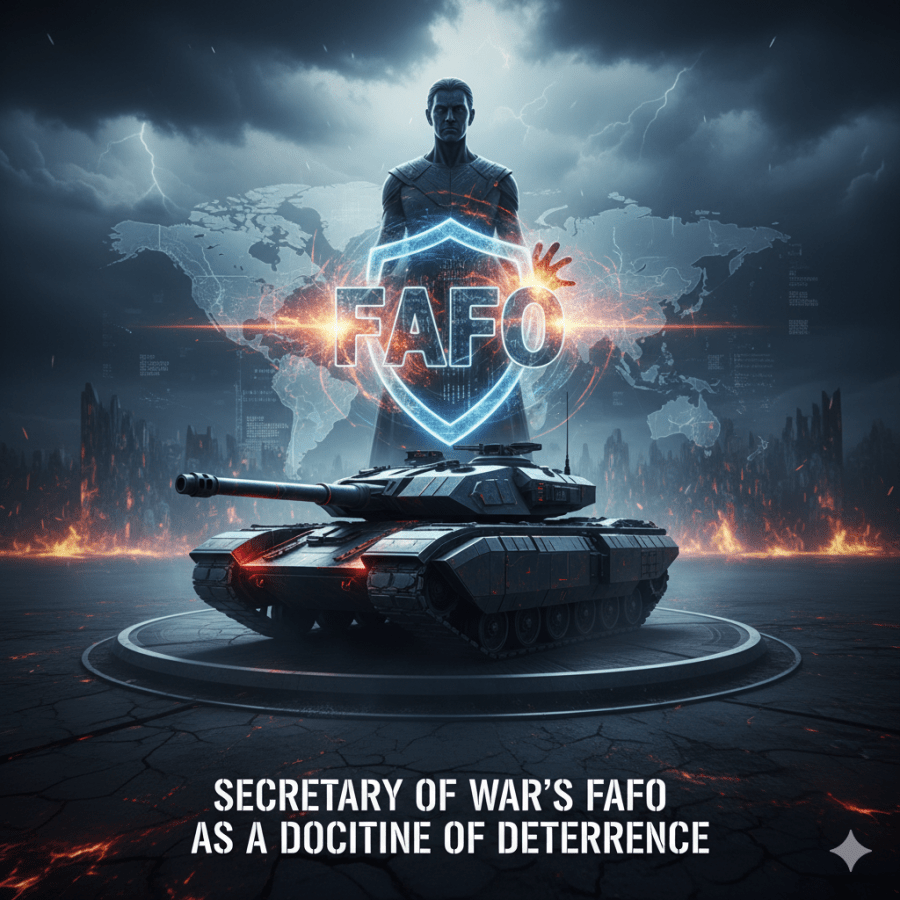
OMG! FAFO as a Doctrine of Deterrence sure scares the poop out of Ground Hog Day. Unbelievable! What Beer Tube Chugging Anteater dreamed that up? OMG! It’s Not Fake! It’s for Real!
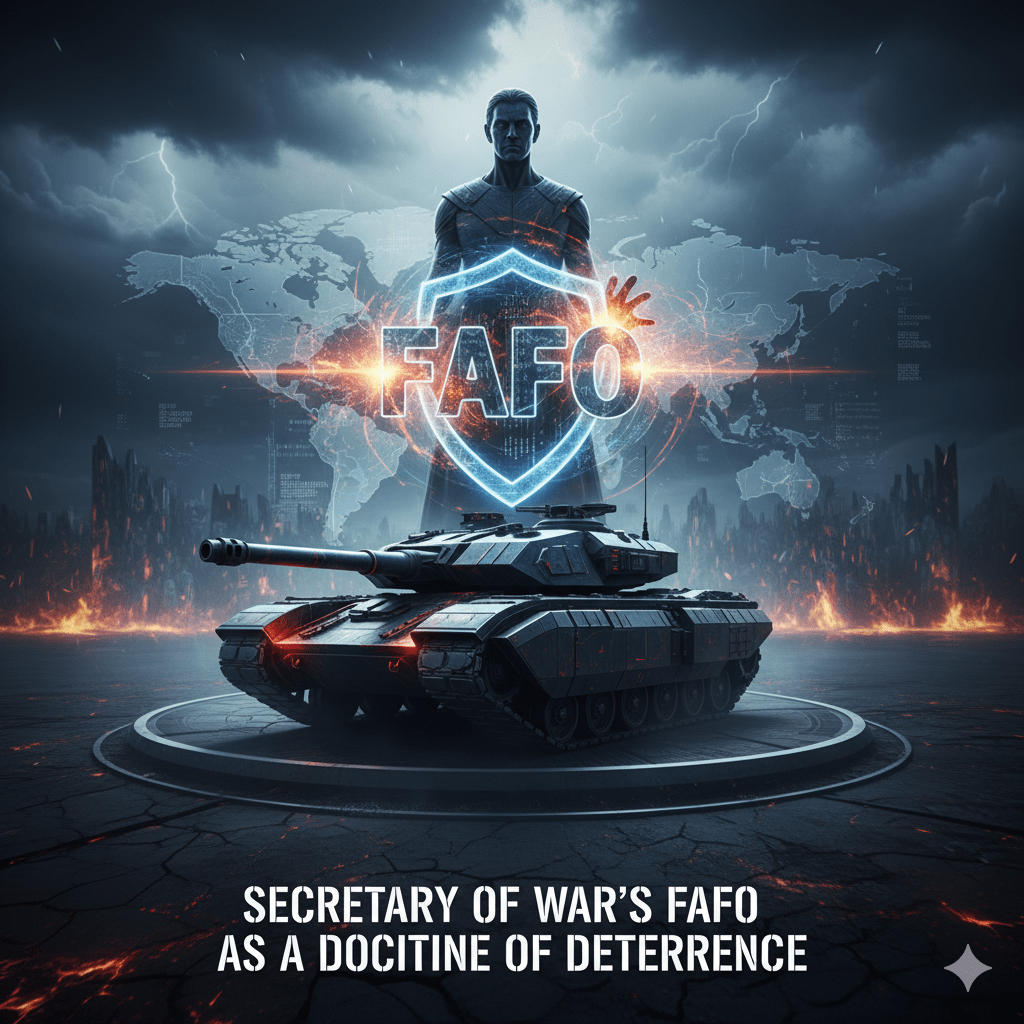
The Doctrine of “FAFO” and the Restoration of the War Department: A Cultural and Strategic Shift
The provided text, encompassing both the definition of the aggressive acronym FAFO (“F— around and find out”) and the full transcript of Secretary of War Pete Hegseth’s address at Quantico, Virginia on September 30, 2025, reveals a dramatic and self-described “uncompromising” shift in U.S. defense policy. This paper will analyze the core tenets of the newly established Department of War, interpret the significance of its adoption of “FAFO” as a doctrine of deterrence, and explore the cultural and personnel reforms being mandated by the Secretary.
FAFO as a Doctrine of Deterrence
The acronym FAFO is a crucial ideological anchor in Secretary Hegseth’s address. While its origins are rooted in vulgar, aggressive, and internet-centric slang, its elevation to a military doctrine is a symbolic move to signal a return to “peace through strength.”
The Strategic Application of Slang
In its civilian context, FAFO conveys personal accountability and the certainty of severe, natural consequences for reckless behavior. Secretary Hegseth directly translates this concept into foreign policy:
“Should our enemies choose foolishly to challenge us, they will be crushed by the violence, precision and ferocity of the War Department. In other words, to our enemies, FAFO.“
This usage serves multiple strategic purposes:
- Clarity of Consequence: It strips away diplomatic nuance, delivering a direct and easily understood warning that any aggressive action against the U.S. will be met with overwhelming, decisive force.
- Projection of Aggression: It embodies the “warfighting, preparing for war and preparing to win, unrelenting and uncompromising” mission. The word choice is intended to intimidate, moving the military’s posture from purely “defense” to proactive, uncompromising “war.”
- Cultural Slogan: Like the phrase “peace through strength,” FAFO is positioned as an easily digestible motto intended to permeate both the international sphere and the domestic military culture, emphasizing a change in mindset.
The Era of the “War Department”: Mission and Mandate
Secretary Hegseth explicitly declares the “era of the Department of Defense is over,” restoring the Department of War with a single mission: warfighting. This shift is not merely semantic; it represents a fundamental change in philosophy regarding the use of military power and the perception of the military’s role in government.
The Litmus Test of Warfighting
The speech focuses on removing everything perceived as a “distraction” from this core mission. This is framed as “clearing out the debris” and “ending the war on warriors.” The declared non-mission focus areas include:
- Social and Political Issues: Identity politics, “woke garbage,” identity months, DEI (Diversity, Equity, and Inclusion) offices, and gender-based promotions.
- Environmentalism: “Climate change worship” and the pursuit of a “green fleet.”
- Risk Aversion: The “zero defect command culture” that incentivizes risk-averse behavior.
The core message is that anything that does not directly contribute to winning a war is a liability. The ultimate simplifying test for reform is the “Golden Rule Test”: Would I want my own son or daughter serving in this specific unit? This rule dictates the need for high, uniform, and uncompromising standards.
Personnel and Cultural Reforms: The War on “Woke Garbage”
The Secretary’s central tenet is “Personnel is policy.” The bulk of the address details a series of reforms designed to purge the previous culture and restore a “warrior ethos.” These reforms are grouped into ten directives, summarized by the speaker’s concepts of the 1990 Test and the E-6 Test.
Restoring Ruthless Standards (Directives 1-3)
The most aggressive reforms target physical fitness, appearance, and the evaluation of leadership:
- Gender-Neutral Standards (Male Standard Only): The directive mandates that all requirements for combat military occupational specialties (MOS) must return to the highest male standard only, including the introduction of a combat field test. The rationale is that war is dispassionate, and standards cannot be lowered for any group.
- Mandatory PT and Appearance: Every member of the joint force, regardless of rank or job, is required to take a Physical Training (PT) test twice a year and adhere to strict, “professional” grooming standards (no beards outside of Special Forces). This is framed as an enforcement of “common sense” and the “broken windows theory” of leadership.
- The End of “Walking on Eggshells”: The speech announces an overhaul of the Inspector General (IG), Equal Opportunity (EO), and Military Equal Opportunity (MEO) processes. This is explicitly aimed at “liberating commanders and NCOs” from fear of retribution from “frivolous” or “anonymous complaints,” which are deemed to have been “weaponized.”
Meritocracy and Leadership Purge (Directives 4-5)
The Secretary mandates a complete overhaul of the promotion system, stating that promotions will be based on only one thing: merit—colorblind and gender-neutral.
Furthermore, the address justifies the firing of senior officers, including the previous Chairman and combatant commanders, based on the need to replace those who “benefited from” or were “truly invested in the woke department.” The new compass is pointed toward leaders who embody the ethos of figures like Stockdale, Schwarzkopf, and Patton.
Focus on Training and Lethality (Directives 6-10, Summarized)
The final set of directives prioritizes mission-essential tasks:
- Drastically Reducing Mandatory Training: To give time back to units, “ridiculous” mandatory training (PowerPoint briefings, online courses) will be slashed in favor of time for training on mission and maintenance of equipment.
- Restoring Basic Training: Basic training will be made “scary, tough and disciplined,” empowering drill sergeants to use traditional methods to “forge” new recruits.
- “No More Stupid Rules of Engagement”: Warfighters’ hands will be “untied” to allow for “common sense, maximum lethality and authority.”
In summary, Secretary Hegseth’s address is a declaration of war against what he perceives as a decaying, politically correct, and risk-averse military culture. By restoring the name “Department of War” and adopting the uncompromising doctrine of FAFO, the administration is signaling a return to a singular focus on unrelenting warfighting capability as the ultimate guarantor of peace.
The “1990 test” is a military policy framework recently introduced by Secretary of War Pete Hegseth, calling for a review of current military standards by comparing them to those that were in place in 1990. The directive aims to eliminate changes seen as weakening military readiness, particularly in physical and training standards.
The 1990 test framework
The 1990 test is one of two new assessment frameworks introduced by Hegseth on September 30, 2025.
- The justification: When justifying changes from 1990 standards, military leaders must answer the question, “Was it a necessary change based on the evolving landscape of combat? Or was the change due to a softening, weakening, or gender-based pursuit of other priorities?”.
- Targeted standards: The review is aimed at standards related to military education, training, physical fitness, grooming, and promotions.
- Gender-specific standards: Some new policies specifically restore previous gender-based distinctions. For example, some combat roles will now have a “highest male standards” requirement for all personnel.
Context of 1990 and recent updates
The choice of 1990 is significant for several reasons:
- Post-Cold War period: 1990 was immediately before the Gulf War, a major military victory for the U.S. Some supporters see the 1990 standards as having produced a superior fighting force.
- Pre-gender integration: In 1990, women were barred from direct combat roles. The introduction of women into combat positions began in 2015, and the new directive suggests a partial rollback of these policies by applying different physical fitness and performance metrics.
- Historical controversy: Critics of the 1990 test argue that the 1990s were a “dark time” for military culture, citing the Tailhook scandal of 1991, which exposed widespread sexual assault in the U.S. Navy.
E-6 TEST
https://acrobat.adobe.com/id/urn:aaid:sc:VA6C2:f4787d6d-67e1-4597-ba0d-2da961b24f17
 thelivingbreathingjamesbrown.com
You must be logged in to post a comment.