
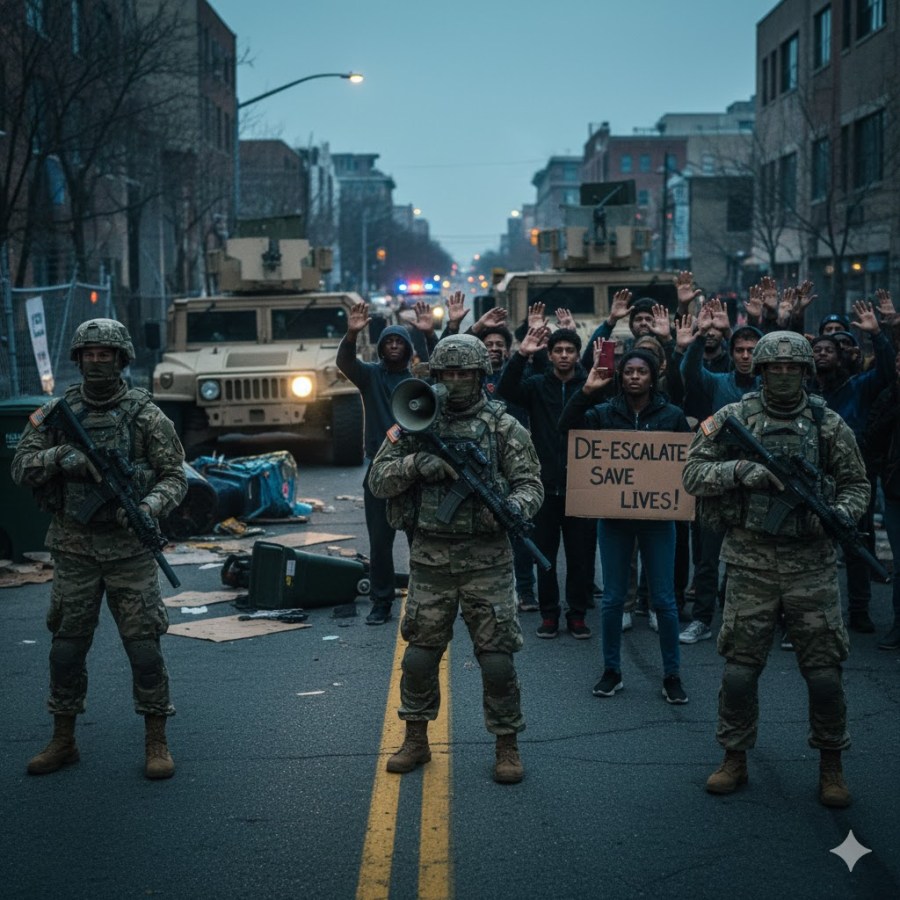
Safety Protocol for Civilian-Military Interactions Under the Insurrection Act
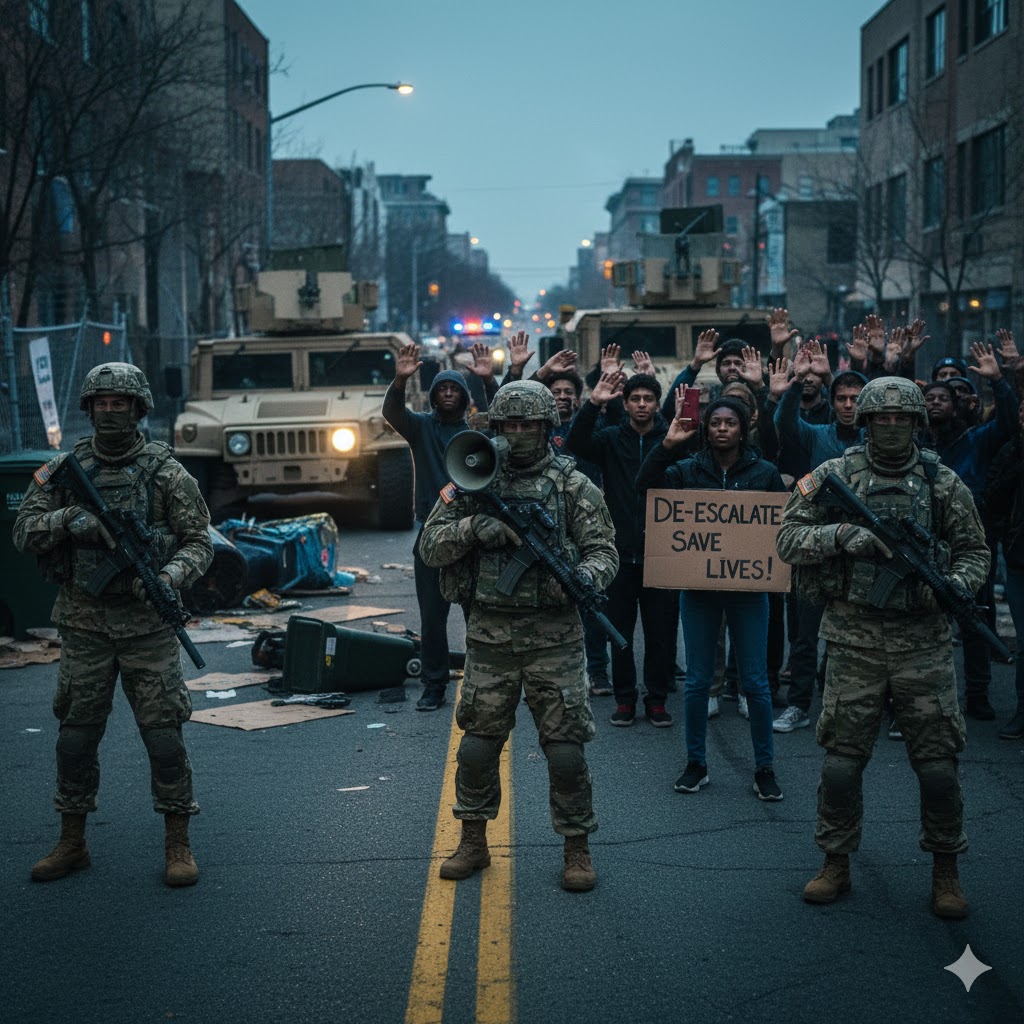
The following information outlines best practices for civilians and the legal mandates for deployed military personnel, predicated on the potential invocation of the Insurrection Act, a federal law that supersedes the Posse Comitatus Act and authorizes the military to perform law enforcement functions within the United States.1
Part I: Guidance for Civilians to De-Escalate and Ensure Safety
The primary goal for all civilians in an area of military deployment is to avoid becoming a target, being injured, or being detained. Non-compliance, even when perceived as justified, exponentially increases the risk of the military employing force.
A. Physical Interaction and Movement
- Maintain Distance: Avoid areas where troops are concentrated, actively moving, or securing a perimeter. Do not approach checkpoints or fixed positions unless absolutely necessary, and then only with hands clearly visible.
- Comply Immediately and Fully: If confronted or given an order by military personnel:
- Stop Moving: Freeze your hands and movements.
- Keep Hands Visible: Immediately raise your hands slightly, palms open, to show you are unarmed. Do not reach into pockets, bags, or behind your back.
- Follow All Instructions: Comply immediately with verbal orders, even if they seem confusing or arbitrary. Avoid arguing, debating, or questioning the legality of the order on the spot.
- De-escalate Communication:
- Speak Calmly: Use a calm, measured voice. Do not yell, curse, or use aggressive language.
- Identify Yourself: If asked, state your name and date of birth clearly. If detained, calmly state, “I am exercising my right to remain silent, and I would like to speak to an attorney.”
- Avoid Misinterpretations:
- Do Not Impede Movement: Do not block military vehicles or attempt to swarm or surround troops. This will be interpreted as a direct hostile act or threat of force.
- Never Threaten Force: Do not point objects, brandish weapons, or make quick movements toward personnel. Under their Rules for the Use of Force (SRUF), the perception of an imminent threat of death or serious bodily harm is the sole justification for the use of lethal force.
B. Constitutional Rights and Documentation
- Right to Record: Civilians generally maintain the right to film or photograph military activity in public spaces, provided they do not interfere with the mission or violate new security perimeters/laws that may be in place. However, be aware that asserting this right in a tense situation may lead to detention or temporary confiscation of equipment.
- Right to Counsel (Detention): If detained or arrested, you have the right to remain silent and the right to an attorney. Do not answer questions beyond identifying yourself. Military forces performing law enforcement functions under the Insurrection Act are required to turn detainees over to civilian authorities for prosecution.
- Presidential Proclamation: Note that before deploying forces under this Act, the President is generally required to issue a formal proclamation ordering those committing civil unrest to disperse.2 Compliance with this proclamation is the best method to avoid military action.
Part II: Mandates for Military Personnel (Rules of Engagement)
Military forces deployed under the Insurrection Act have their core mission drastically changed to domestic law enforcement, but they are not absolved of their constitutional duties.
A. Lethal Force Restrictions
- Last Resort Only: All military personnel, even when armed with live ammunition, are bound by the Standing Rules for the Use of Force (SRUF). Lethal force is restricted to situations where there is an imminent threat of death or serious bodily harm to the service member or another person.
- No Punitive Action: The military is deployed to restore order and enforce the law, not to punish individuals. The use of force must be proportional to the threat. Excessive or punitive force is a violation of the Uniform Code of Military Justice (UCMJ) and civilian law.
- Warning Requirements: Where time and circumstances permit, a verbal warning, command to cease the activity, and a warning shot (if permitted by specific mission orders) should precede the use of lethal force.
B. Civil Liberties and Duties
- Constitutional Compliance: Military personnel are legally required to abide by the U.S. Constitution, including the 4th Amendment (searches and seizures), 5th Amendment (due process/self-incrimination), and 1st Amendment (speech/assembly), even when acting as law enforcement. They do not have the authority to suspend these rights.
- Legal Limits on Actions: While the Insurrection Act allows troops to perform core law enforcement duties like arrests and searches, these actions must be done within the bounds of existing federal and state law (e.g., they must have probable cause for an arrest).
- Proclamation Requirement: The deployment should be preceded by a presidential proclamation formally ordering those involved in the unrest to disperse.3 This serves as a clear warning to civilians.
- Accountability:
- Judicial Review: While courts historically show deference to the President’s decision to invoke the Act, the lawfulness of the military’s actions once deployed can still be reviewed by the courts.4
- UCMJ and Civilian Law: Military personnel who commit unlawful acts, such as the excessive use of force or violating the civil rights of detainees, are subject to prosecution under both the Uniform Code of Military Justice (UCMJ) and applicable civilian federal or state law.
 thelivingbreathingjamesbrown.com
You must be logged in to post a comment.