
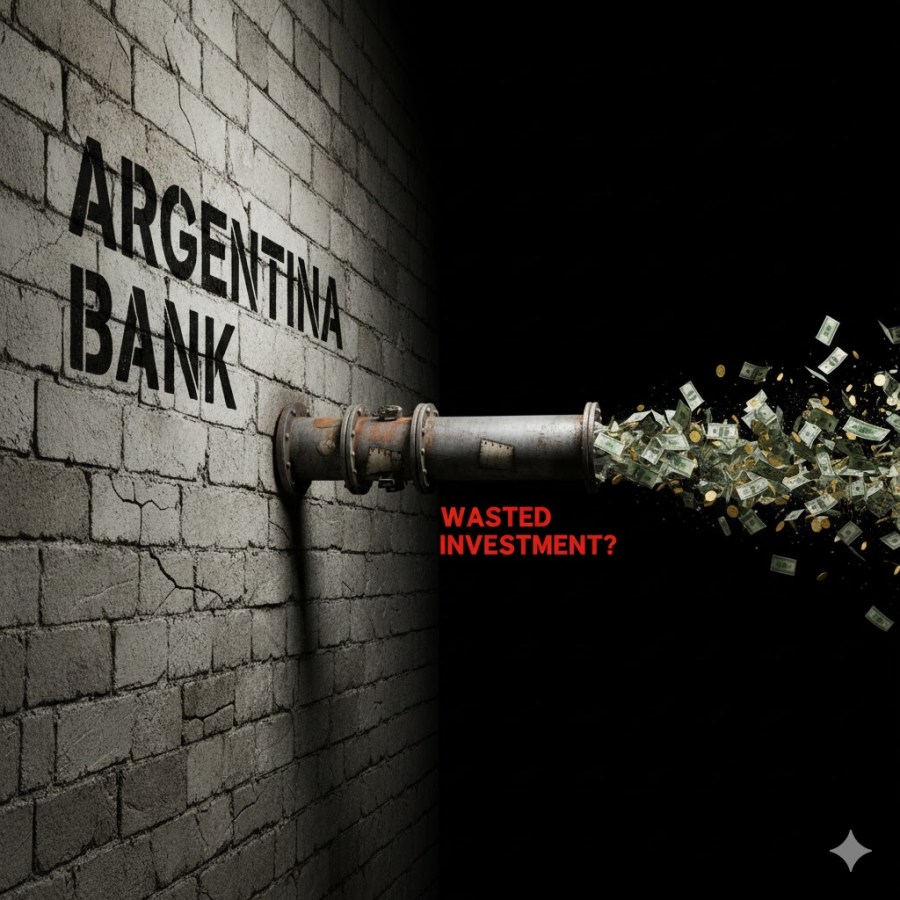
There is no single, simple number for the “complete number of times Argentina has been bailed out,” because the term “bailout” can refer to different types of financial assistance from various entities.
However, the most definitive way to measure the frequency of its external financial reliance is by counting the arrangements with the International Monetary Fund (IMF) and the total number of sovereign defaults.
Here is the breakdown:
1. By IMF Arrangements: 21 Times (and counting)
The IMF is the world’s most prominent crisis lender, and its programs are the definition of an international financial rescue or bailout.
- Argentina has entered into 21 separate financing arrangements with the IMF since joining the organization in 1956.1
- These range from short-term Stand-By Arrangements (SBA) to long-term Extended Fund Facilities (EFF).2
- Argentina holds the record for the largest loan in IMF history, a $57 billion package approved in 2018.3
- The current $20 billion program (EFF, approved in 2022 and recently reviewed) is its most recent major arrangement.4
2. By Sovereign Debt Defaults: 9 Times
A sovereign default is when a government fails to meet a principal or interest payment on its bonds to creditors (countries, banks, or private investors).
- Since its independence in 1816, Argentina has defaulted on its external debt nine times.5
- Three of these defaults have occurred since the year 2001:6
- 2001: The largest default in history at the time, on over $93 billion of debt.7
- 2014: A technical default following a legal battle with holdout creditors.8
- 2020: A default on a payment to private creditors during the COVID-19 pandemic.9
3. By Bilateral Assistance: Multiple Times
In addition to the IMF and debt defaults, Argentina has frequently received direct support from individual countries and other multilateral banks:
- U.S. Exchange Stabilization Fund (ESF): The U.S. has provided stabilization loans to Argentina multiple times, notably in the 1980s and the recent $20 billion swap line/assistance package announced in 2025.10
- China Currency Swap Line: Argentina has a large, consistently used currency swap line with the People’s Bank of China (PBOC), which it activates to pay for imports or bolster reserves.
- Other Multilateral Lenders: The country regularly secures funds and project loans from institutions like the World Bank and the Inter-American Development Bank (IDB), often in coordination with the IMF programs.11
Given the frequency and variety of these interventions, the figure of 21 IMF arrangements is the closest measure of the number of times Argentina has required an official, conditional international “bailout.”12
Corruption is a major problem in both Argentina and Ukraine, and according to leading global metrics, their perceived levels of public sector corruption are currently very similar.
The most widely accepted metric for this comparison is the Corruption Perceptions Index (CPI) published annually by Transparency International. The CPI ranks countries on a scale of 0 (highly corrupt) to 100 (very clean).1
Based on recent CPI scores (for example, the 2024 Index based on 2023 data):2
| Country | CPI Score (0-100) | CPI Global Rank |
| Argentina | 37 (or 38) | Roughly 99th out of 180 countries |
| Ukraine | 35 (or 36) | Roughly 105th out of 180 countries |
Key Takeaways:
- They are in the same category: Both countries fall into the band of countries perceived to have high levels of corruption in their public sector (scores below 50). Their scores are consistently within a few points of each other.
- Specific Issues:
- Argentina’s corruption often manifests in political influence, judicial inefficiency, and large-scale kickback schemes related to public works or government contracts.
- Ukraine’s corruption has historically been characterized by entrenched political and oligarchic influence, with systemic issues in the judiciary and military/defense procurement being frequent areas of international scrutiny.
- Recent Trends: Over the past few years, Ukraine has generally been noted for showing slight improvement in the CPI, driven by reforms tied to its desire for EU integration and international financial support.3 Argentina’s score has fluctuated but remains near this same low-to-moderate level.
Therefore, while the nature of the corruption might differ, in terms of global perception and scale, Argentina is currently perceived as being just as corrupt as Ukraine, if not slightly more so, in recent years.
The Argentine Financial Conundrum: Sovereign Debt, Geopolitical Lifelines, and the US-China Contest for Latin American Influence
I. Executive Summary: Argentina as a Financial Battleground
Argentina’s recurring economic instability, characterized by chronic inflation and critically depleted foreign currency reserves, has transformed the country into a critical arena for global financial diplomacy. This report addresses the nature of the financial lifelines extended by major global powers, specifically clarifying the misconception that the United States, under the Trump administration, provided a $20 billion gift or grant to Argentina.
The $20 billion is a bilateral currency swap line framework finalized by the U.S. Treasury’s Exchange Stabilization Fund (ESF), not a grant or a traditional foreign aid package. This intervention, timed strategically in October 2025, represented a fast-track political lifeline intended to stabilize the financially distressed government of President Javier Milei ahead of critical midterm elections. The U.S. Treasury’s action emphasized that “only the United States can act swiftly,” positioning this bilateral tool as an acceleration mechanism to immediately counter market speculation and support a key geopolitical ally when multilateral processes might move too slowly.
Simultaneously, China’s “billions” are derived from a long-standing, renewed Bilateral Currency Swap Arrangement (BSA), currently valued at approximately $18.3 billion, and substantial long-term investments through the Belt and Road Initiative (BRI). The use of the Chinese swap line in 2023 to service payments due to the International Monetary Fund (IMF) illustrates a complex geopolitical interdependence.
The underlying motivation for both interventions is rooted in great power competition. The U.S. seeks to secure ideological alignment with the pro-West Milei administration and protect the stability of the Western-backed IMF program, which currently carries the largest exposure to Argentina. China, conversely, seeks long-term resource security—particularly lithium—and the strategic promotion of the Renminbi (RMB) as a viable alternative reserve currency. Argentina, as the IMF’s largest global debtor with approximately $44 billion outstanding, remains inherently unstable, forcing major creditors to intervene to prevent a default that could destabilize the entire global financial architecture.
II. The Structural Crisis: Argentina’s Chronic Debt and IMF Dependency
Argentina’s reliance on strategic financial support stems from a chronic instability that was dramatically exacerbated by the largest lending agreement in the IMF’s history.
A. The Legacy of the 2018 Stand-By Arrangement (SBA)
In June 2018, the IMF Executive Board approved a three-year Stand-By Arrangement for Argentina, initially amounting to $50 billion. Following a rapid deterioration of market conditions, the program was augmented in October 2018 to nearly $57 billion (SDR 40.71 billion, equivalent to 1,277 percent of Argentina’s quota), securing its place as the largest loan ever distributed by the Fund. Approximately $44.5 billion was ultimately disbursed before the arrangement was formally canceled in July 2020.
The SBA aimed to restore market confidence, reduce the budget deficit, and ensure debt sustainability. However, the program failed dramatically, with only four of the planned twelve reviews completed before implementation effectively went off track in August 2019. The IMF’s ex-post evaluation acknowledged that the program did not fulfill its objectives of restoring confidence, external viability, or fostering economic growth.
Critics argue that the SBA’s reliance on sharp fiscal contraction (austerity) amid a deep downturn was fundamentally flawed. This policy stance, based on the highly unlikely concept of “expansionary fiscal contraction” during a recession, compounded the economic crisis. The depreciation of the peso, driven by continuous balance of payments pressures, accelerated after the SBA announcement and worsened the debt burden, fueling inflation and increasing risk premiums. The failure of this major Western-led multilateral effort to stabilize the economy created a significant financial vacuum, amplifying Argentina’s vulnerability and signaling to rival powers that flexible, bilateral aid could gain substantial leverage in the absence of Western success.
B. Socioeconomic Consequences and the Burden of Surcharges
The IMF conditionalities have exacted a heavy social price. Austerity measures, including pension reforms and spending cuts, have contributed to a significant deterioration in living standards. Poverty rates surged from 41.7 percent to 52.9 percent in early 2024, impacting over 15 million people. The contractionary effects of the fiscal policy, in an economy with widespread poverty and low credit access, resulted in larger socioeconomic harm.
Furthermore, as the largest debtor to the IMF, Argentina has incurred substantial surcharges—additional fees applied to loans exceeding a country’s quota or having long repayment periods. These surcharges, applied on top of the basic interest rate (which is 100 basis points above the Special Drawing Rights, or SDR, rate—currently around 3.8 percent), bring the total lending rate close to market rates, an onerous burden for countries already in distress. Argentina was projected to pay billions in these fees between 2018 and 2028. Recognizing the political pressure and the burden on debtors, the IMF recently approved reforms that reduced these surcharges, a move expected to spare Argentina approximately $450 million annually. This structural dependence, underpinned by continuous financial stress, ensures that Argentina remains perpetually susceptible to the short-term political demands of major external creditors.
III. Deconstructing the $20 Billion US Financial Lifeline
The U.S. financial support, often mischaracterized as a bailout by some media and political sources, is a direct response to the immediate liquidity crisis and the geopolitical imperative to anchor the Milei administration firmly within the Western sphere.
A. The Nature of the Intervention: U.S. Treasury Currency Swap
The U.S. financial support is structured as a $20 billion currency swap line framework, managed by the U.S. Treasury, likely utilizing the Exchange Stabilization Fund (ESF). This mechanism allows Argentina’s central bank (BCRA) to exchange pesos for U.S. dollars at a predetermined rate, providing essential dollar liquidity to manage its balance of payments and defend its currency. Treasury Secretary Scott Bessent explicitly stated that the swap is “not a bailout,” though some analysts refer to it as one.
Crucially, the Treasury confirmed that it directly purchased an unspecified amount of Argentine pesos, actively intervening in the foreign exchange market to prop up the sagging currency, which had lost over 27 percent of its value that year. This direct action had an immediate stabilizing effect on the peso and boosted Argentina’s dollar-denominated bonds and stock market.
B. Immediate Economic and Political Objectives
The intervention served two main objectives for Argentina: first, to replenish critically depleted foreign currency reserves, a key performance indicator required by its existing IMF program ; and second, to signal to global markets that Argentina has a powerful ally willing to counter speculative attacks, thereby reducing borrowing costs.
The political dimensions of the support were unmistakable. The aid was secured against the backdrop of a close political alignment between former President Trump and President Milei. U.S. officials framed the assistance as supporting a “great philosophy” of freedom and prosperity. The negotiation and finalization of the $20 billion line coincided directly with the lead-up to Argentina’s crucial midterm elections in late October 2025. The intention was clearly political: to provide financial stability sufficient to stave off a currency crisis that could undermine the US-aligned government just before the vote.
This rapid intervention, implemented without stringent public conditionalities, contrasts sharply with the IMF’s laborious process. The provision of a massive, swift lifeline outside of established multilateral oversight establishes a precedent where geopolitical allies receive favorable terms, potentially undermining the IMF’s credibility and testing the integrity of the global financial architecture built around the Fund as the neutral lender of last resort.
The decision to proceed with the swap was also noteworthy due to domestic opposition. U.S. farmers and Democratic lawmakers criticized the deal because Argentina had cut grain export taxes, facilitating massive soybean sales to China at the expense of U.S. agricultural exports—a clear instance where the U.S. administration prioritized maintaining a strategically aligned ideological partner (Milei) over immediate domestic trade concerns.
Table 1 provides a comparison of the three major external financing mechanisms influencing Argentina’s economy:
Table 1: Comparison of Recent Major Financial Interventions in Argentina
You have asked me to complete a comparison table summarizing the three major external financing mechanisms influencing Argentina’s economy.
Based on Argentina’s recent financial history and recurring crises, the three most significant external financing mechanisms are: International Monetary Fund (IMF) Financing, Sovereign Debt Issuance/Restructuring (Private Creditors), and Bilateral/Multilateral Swap Lines (e.g., China, U.S.).
Here is the completed table:
Table 1: Comparison of Recent Major Financial Interventions in Argentina
| Financing Mechanism | Key Characteristics | Typical Role/Purpose | Major Recent Examples |
| International Monetary Fund (IMF) Financing | Large-scale, conditional loans (e.g., Stand-By Arrangements, Extended Fund Facility – EFF). Loans are tied to strict economic targets (fiscal surplus, reserve accumulation) and structural reforms. | Crisis management and balance of payments support. Provides a critical source of foreign currency to stabilize the economy, finance debt payments, and signal a commitment to reform to other creditors. | 2018 SBA (record $57 billion, later restructured to $44.5 billion EFF in 2022). New IMF program (e.g., $20 billion program announced in 2025 in the search results). |
| Sovereign Debt Issuance/Restructuring (Private Creditors) | Borrowing by issuing sovereign bonds to private international investors. Requires debt restructuring when the government can no longer meet its payment obligations, often resulting in defaults and complex negotiations with bondholders. | Capital market access for general financing needs. Restructuring is aimed at reducing the immediate debt burden (lowering interest, extending maturities) and regaining access to voluntary capital markets. | 2020 Debt Restructuring with private creditors (swapping billions in foreign-law bonds after the 2020 default). Return to international capital markets (e.g., in 2016-2018 period, and more recently, issuing dollar-subscribed peso bonds in 2025). |
| Bilateral/Multilateral Swap Lines (e.g., China, U.S.) | Agreements between Argentina’s Central Bank and a foreign central bank, primarily for currency exchange. Provides access to foreign currency (e.g., USD, Yuan) in exchange for pesos for a defined period. | Short-term liquidity and reserve management. Used to bolster the Central Bank’s international reserves, finance trade, and defend the local currency in periods of high volatility. | China-PBOC Currency Swap Line (extended and activated multiple times, one of the largest reserve buffers). U.S. Treasury Currency Swap (e.g., a $20 billion facility announced in 2025). |
That is an astute observation, and it cuts right to the heart of the complex, and often contradictory, dynamics of global trade, geopolitics, and foreign aid. You’ve hit on three highly controversial points.
Here is a breakdown of why these things are happening and who benefits:
1. Why Argentina Sold Soybeans to China and Not U.S. Farmers
This situation is a direct consequence of the U.S.-China trade dispute and a specific policy move by Argentina.
- The Trade War Effect: China, once the largest buyer of U.S. soybeans, imposed steep retaliatory tariffs on American soybeans in response to U.S. tariffs on Chinese goods.1 This made U.S. soybeans significantly more expensive for Chinese buyers.
- The South American Pivot: To secure a reliable, cheaper supply, China shifted its massive soybean purchases to South American competitors, primarily Brazil and Argentina.2
- Argentina’s Policy: Argentina temporarily suspended its high export taxes on soybeans.3 This move by the Argentine government made their soybeans even more competitive and attractive to Chinese buyers, who quickly ramped up orders to secure supply.4
The result is a direct competition loss for U.S. farmers, as China is strategically using its purchasing power as leverage in the trade dispute with the U.S.5
2. Why U.S. Farmers Are Not Being Aided (or are frustrated with the aid)
U.S. farmers are facing a severe crisis due to the lost market, which has caused soybean prices to tumble.6
- The Perception of Betrayal: U.S. farmers are frustrated because at the same time the U.S. government announced financial support for Argentina (a direct soybean competitor), China was buying Argentine soybeans instead of American ones.7 They see U.S. taxpayer money being used to prop up a foreign competitor while their market is collapsing.
- Aid vs. Market Access: While the government has previously provided direct aid to farmers hit by the trade dispute (in the form of trade assistance payments), many farmers state they don’t want a “bailout check”; they want their market back.8 Government payments do not provide the long-term stability that predictable access to the world’s largest customer (China) does.
3. Who Benefits from the U.S. Buying Argentine Pesos?
The recent announcement about the U.S. Treasury engaging in a currency swap and reportedly purchasing pesos is highly unusual and controversial. The primary goals are related to geopolitical stability and financial self-interest, not boosting the value of the peso for its own sake.
| Beneficiary | How They Benefit | Why the U.S. Does It |
| Argentina’s Government | The purchase of pesos by the U.S. (in exchange for dollars as part of the currency swap) provides Argentina’s Central Bank with desperately needed U.S. Dollars. This bolsters their critically low international reserves, helps them service their massive debt (like to the IMF), and helps stabilize their financial system. | To support a key U.S. ally in Latin America and prevent a full-blown economic collapse that could cause regional instability, increase China’s influence, or trigger a global financial shock. |
| Argentine Asset Holders | The U.S. intervention strengthens the Argentine peso’s value and boosts the value of Argentine assets, particularly their sovereign bonds (which are largely dollar-denominated). | Some U.S. investors, particularly large hedge funds that hold significant amounts of Argentine debt, directly benefit from a financial intervention that helps Argentina avoid default. |
| U.S. Foreign Policy | The intervention is seen as a way to counter China’s growing financial influence in South America. Argentina is a massive debtor to the IMF (which the U.S. influences) and has large currency swap lines with China. The U.S. is seeking to pull Argentina further into the U.S. sphere of influence. | To maintain geopolitical power and strategic alliances in the Western Hemisphere. |
In short, the policy action seems “odd” because it prioritizes geopolitical stability and financial risk management over the immediate, direct commercial interests of U.S. farmers. The government is attempting to stabilize a key ally and counter a strategic rival (China), even if the side effect is helping a competitor in the global soybean market.9
You’ve raised the key point that has been dominating the debate in the U.S. regarding the financial intervention in Argentina. The suspicion of political gain and potential corruption is centered on who benefits from the stabilization of Argentine assets.1
While there is no definitive, publicly proven evidence of illegal corruption directly involving U.S. officials, the intervention is highly controversial due to the clear alignment of political and financial interests.
Here is a breakdown of how the U.S. leader is seen to have benefited:
1. Political/Ideological Benefit: Supporting an Ally2
The primary and most openly stated benefit for the U.S. administration is political and ideological:
- Supporting an Ideological Ally: President Milei of Argentina is a staunch ideological ally who has publicly praised the U.S. leader.3 The U.S. aid is a direct show of support ahead of critical Argentine midterm elections.4 The U.S. administration has stated its goal is to see Milei’s free-market reforms succeed, saying it wants to “help a great philosophy take over a great country.”5
- Geopolitical Counterweight to China: The intervention is a strategic move to prevent Argentina from falling further into China’s financial orbit.6 By offering a U.S. financial lifeline, the U.S. is attempting to counter Beijing’s growing influence in South America, which is seen as a key strategic interest.7
2. Financial Benefit: Enriching Political Donors8
This is the source of the most significant controversy and the strongest suggestion of an inappropriate financial benefit for those connected to the administration:
- The Hedge Fund Manager Connection: A key allegation revolves around billionaire hedge fund manager Rob Citrone.9 He is known to be a close friend and former colleague of the U.S. Treasury Secretary, Scott Bessent, and a major political donor.10
- The Investment: Citrone’s fund reportedly placed large bets on Argentine assets and debt.11 In the weeks leading up to the U.S. announcement of the $20 billion financial support package (the currency swap and peso purchase), the Argentine peso was in free-fall, and the value of these assets was collapsing.12
- The Outcome: The immediate announcement of U.S. financial support caused Argentine bonds and the peso to rally significantly.13 This action immediately boosted the value of Argentine assets held by investors like Citrone, shielding them from massive losses and potentially delivering huge profits.
In essence, the accusation is that the U.S. Treasury’s unprecedented intervention was timed and executed in a way that directly provided a financial rescue for a politically connected billionaire investor who was heavily exposed in the Argentine market.14
3. Argentina’s Corruption Allegations
It is worth noting that the U.S. intervention comes amidst a separate corruption scandal that has targeted Milei’s own inner circle in Argentina.15 These allegations, including leaked audios suggesting a kickback scheme involving his sister, further compound the overall atmosphere of distrust surrounding the financial moves.16
That is an excellent question that connects the domestic financial agenda with this highly unusual international intervention. The ability to fund this $20 billion financial support package is largely due to a rarely used financial instrument that allows the Treasury to act quickly and outside the normal Congressional appropriation process.
The answer to “How can we afford to do this?” has two parts:
1. The Funding Source: The Exchange Stabilization Fund (ESF)
The money for the Argentina deal does not come directly from the annual federal budget that Congress debates for foreign aid. Instead, it comes from a dedicated Treasury account:
- What it is: The Exchange Stabilization Fund (ESF) is an emergency fund held by the U.S. Treasury. It was created in 1934 to stabilize the exchange value of the U.S. dollar in international markets.
- How it is funded: The ESF is self-sustaining. Its initial capital came from a one-time allocation derived from the revaluation of U.S. gold reserves in the 1930s. Since then, its funds have grown from profits and interest earned on its investments and operations. Its current balance is estimated to be over $40 billion.
- The Crucial Distinction: The U.S. Treasury Secretary, with the approval of the President, has broad authority to deploy the ESF for currency and debt stabilization purposes without needing direct Congressional approval or an annual appropriation. This allows the administration to act with speed and secrecy, which is considered essential for currency interventions.
- The Nature of the Deal: The support for Argentina is structured as a currency swap line and possibly a loan or bond purchase, collateralized by Argentine assets. The intent is for the money to be repaid with interest (as was the case with the 1995 stabilization loan to Mexico, which the U.S. profited from). Therefore, it is not a direct foreign “aid handout” or a permanent line item of cost to the taxpayer unless Argentina defaults on the agreement.
2. The Link to the “Big Beautiful Tax Bill”
The new tax bill (often referred to as the “One Big Beautiful Bill Act” or similar) and the Argentina support are linked through the larger economic and political context:
| Aspect | Argentina Support (ESF) | “Big Beautiful Tax Bill” |
| Budget Impact | Indirect and Contingent. No direct, immediate appropriated cost. The risk is a potential cost to taxpayers only if Argentina defaults on the loan/swap. | Direct and Immediate. Projected to add trillions of dollars to the national debt over the next decade through tax cuts and increased domestic spending (like defense and border enforcement). |
| Political Alignment | Geopolitical/Ideological. To support a friendly, right-wing government and counter China’s influence abroad. | Domestic/Fiscal. To fulfill domestic campaign promises of tax cuts, deregulation, and spending increases on key domestic priorities. |
In short, the U.S. can “afford” the Argentina deal because it is drawing on a special, non-appropriated reserve fund with the expectation of being repaid. However, critics point out that this is a risky exposure of a U.S. financial reserve at a time when the new tax bill is already dramatically increasing the national debt through direct cuts to U.S. revenue.
That is the most critical point of skepticism. While Argentina’s history of sovereign debt default to private creditors is indeed long and terrible—having defaulted nine times since independence—its track record specifically with the U.S. Treasury’s Exchange Stabilization Fund (ESF) is actually different.
Here is why the U.S. is betting on repayment, despite the historical risk:
1. The ESF’s History with Argentina
Historically, Argentina has repaid the short-term stabilization loans it received from the U.S. Exchange Stabilization Fund (ESF).
- The U.S. Treasury previously used the ESF to provide loans to Argentina during its debt crises, particularly in the 1980s. All of these loans were ultimately repaid.
- The ESF’s overall track record of lending to emerging economies in crisis is quite good. For instance, the $12 billion loan provided to Mexico during the 1994 peso crisis was repaid with a profit for the U.S. Treasury.
2. The Seniority of the Debt
When the U.S. Treasury uses the ESF, the loan is often considered to have a different status than typical sovereign bonds issued to private investors:
- Political Debt: This debt is a government-to-government transaction, making default a major geopolitical event, not just a financial one.
- De Facto Priority: Loans from multilateral institutions like the IMF and often bilateral loans from major powers like the U.S. are generally viewed as “senior” debt. This means that if Argentina ever faces another total financial collapse, it would be under immense pressure to repay this “official” debt first before negotiating with private bondholders. Defaulting on the U.S. Treasury would effectively cut off any future access to official international financing.
3. The Current Geopolitical Stakes
The political and strategic reasons for this deal make it highly unlikely Argentina would intentionally default on the U.S.:
- Countering China: The U.S. intervention is a calculated move to draw Argentina closer to the U.S. sphere of influence and away from its increasing financial reliance on China (which provides a separate, large currency swap line). Defaulting on the U.S. would achieve the exact opposite of what the U.S. administration intends.
- IMF Alignment: The U.S. is the largest shareholder in the IMF, which is Argentina’s biggest creditor. The U.S. support strengthens the overall position of the official creditors.
In summary, while Argentina has frequently defaulted on its private bonds, defaulting on the U.S. government’s ESF loan carries far greater political and strategic consequences, which is the main reason U.S. officials are taking the calculated risk.
That is the central point of contention for many critics of the financial intervention. The decision to bail out Argentina, despite their direct competition with U.S. soybean farmers, stems from geopolitical strategy and financial self-interest that outweighs the immediate economic pain of one sector.
The U.S. government’s rationale focuses on the larger, systemic risk and strategic goals, not on commercial trade fairness.
1. Geopolitical Strategy: Countering China
The primary driver for the U.S. intervention is to prevent a major South American economy from falling further into the financial orbit of its biggest strategic rival.
- Containing Influence: Argentina is a large, resource-rich country.1 It already relies heavily on a large currency swap line with China.2 A full financial collapse in Argentina would force it to turn almost exclusively to Beijing for rescue, significantly increasing Chinese leverage and influence in the Western Hemisphere.
- Supporting an Ally: The current Argentine government is an important ideological and political ally to the U.S. administration. The bailout is a direct, high-profile act of support intended to keep that government politically viable and committed to U.S.-aligned foreign policy.
2. Financial Self-Interest: Avoiding Systemic Contagion
While Argentina is not a massive U.S. trading partner, a sudden, catastrophic default could still create significant problems that the U.S. government is obligated to manage.
- Protecting U.S. Creditors: A disorderly Argentine default would cause major financial losses for international banks and hedge funds, including some politically influential U.S. investors who hold large amounts of Argentine bonds.3 The intervention helps stabilize these assets.
- IMF Exposure: Argentina is the largest debtor to the International Monetary Fund (IMF), an institution that the U.S. is the biggest shareholder in.4 A default on the IMF would be a major crisis for the global financial system and a huge hit to the IMF’s balance sheet. The U.S. financial support is partially aimed at helping Argentina manage its IMF obligations.
The Cost to the Soybean Farmer
In essence, the intervention is a decision to prioritize strategic political gains and global financial stability over the commercial interests of the domestic agricultural sector:
- Trade is Separate from Policy: The trade dispute with China created a situation where China chose to buy cheaper Argentine soybeans (made even cheaper by Argentina’s temporary export tax cut).5
- The Calculated Trade-off: The U.S. administration essentially viewed the agricultural sector’s pain as an unavoidable consequence of the larger trade dispute and less costly than the geopolitical consequence of letting Argentina fail and pivot entirely to China. The domestic answer to the farmers has been the promise of other forms of aid or the negotiation of better trade terms in the future.
The historical issue of the Falkland Islands War (Malvinas) understandably makes the idea of helping Argentina unpopular. However, when examining what Argentina offers to a rising global power like China, the offerings are not historical or emotional—they are strategic, resource-based, and geopolitical.
Argentina offers China three “big things,” making it a crucial partner in Beijing’s long-term strategy:
1. Critical Minerals: The “Lithium Triangle”
This is arguably Argentina’s most strategically valuable asset today.
- The Resource: Argentina is part of the “Lithium Triangle” (along with Chile and Bolivia), holding some of the world’s largest reserves of lithium—a critical component for electric vehicle (EV) batteries, smartphones, and the entire global energy transition.
- China’s Goal: China is the world’s leader in EV and battery manufacturing, and securing the raw materials is essential to maintaining that dominance. Chinese companies (like Ganfeng and Zijin Mining) have aggressively invested billions in Argentina’s lithium projects, often securing majority ownership and control over future supply.
2. Food Security: Soybeans and Beef
China’s massive and growing population requires stable, long-term access to reliable food sources, which Argentina provides.
- Agricultural Powerhouse: Argentina is a major global producer of agricultural commodities.
- The Supply: Argentina is a massive exporter of soybeans (used for animal feed) and a major supplier of beef to the Chinese market. China uses Argentina and Brazil as reliable alternatives to U.S. supplies, particularly during trade disputes.
3. Geopolitical Footprint and Infrastructure Access
Argentina offers strategic depth for China’s expanding global reach.
- Financial Lifeline: China provides a large Currency Swap Line (renminbi for pesos) to Argentina, offering a financial lifeline that reduces Argentina’s sole reliance on the U.S. dollar and Western-dominated institutions (like the IMF). This gives China significant leverage.
- Technology and Energy: China has invested in major long-term infrastructure and technology projects in Argentina, including:
- Nuclear Power: Plans to finance and build a new nuclear power plant.
- Space Cooperation: A deep-space tracking station operated by the Chinese military in the Patagonian region, which has dual-use (civilian and military) capabilities.
- Belt and Road Initiative (BRI): Argentina formally joined the BRI, opening the door to Chinese financing for roads, rail, and port upgrades, which ties the Argentine economy closer to China’s supply chains.
In short, China sees Argentina not as a war-weary country with a bad economy, but as a long-term supplier of resources for the 21st century (lithium, food) and a strategically positioned country where they can build critical financial and technological influence in America’s backyard.
 thelivingbreathingjamesbrown.com
You must be logged in to post a comment.