
🪐 Report on Venus: Earth’s Scorching “Sister Planet”
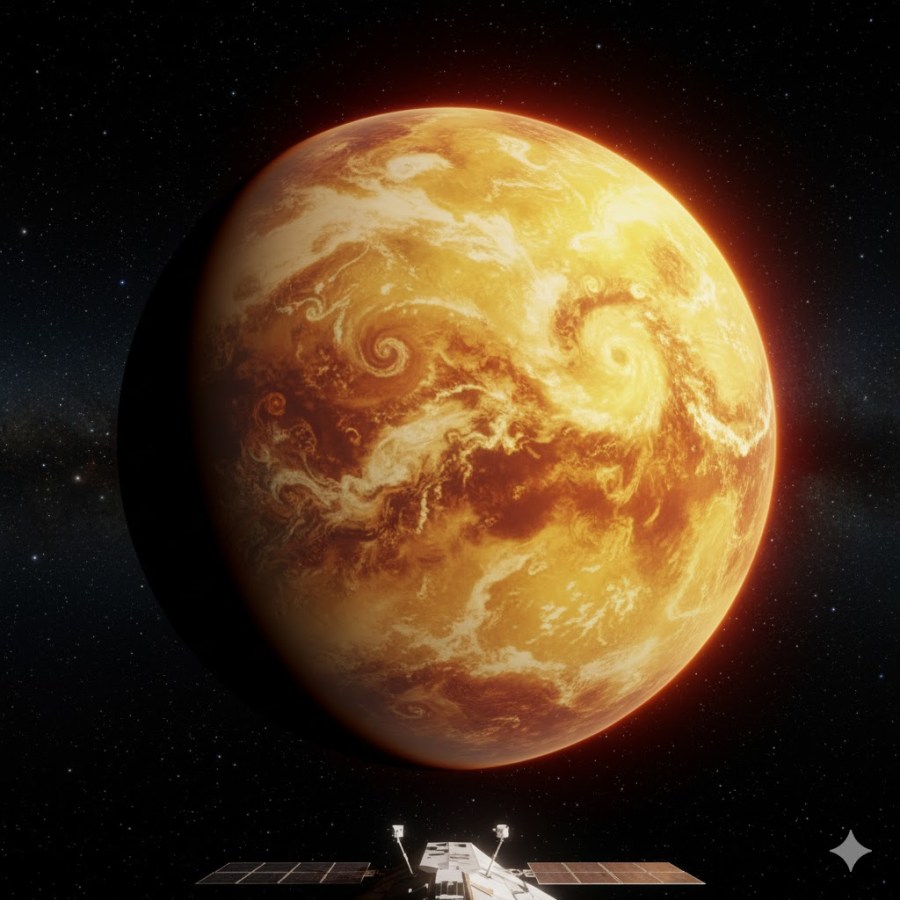
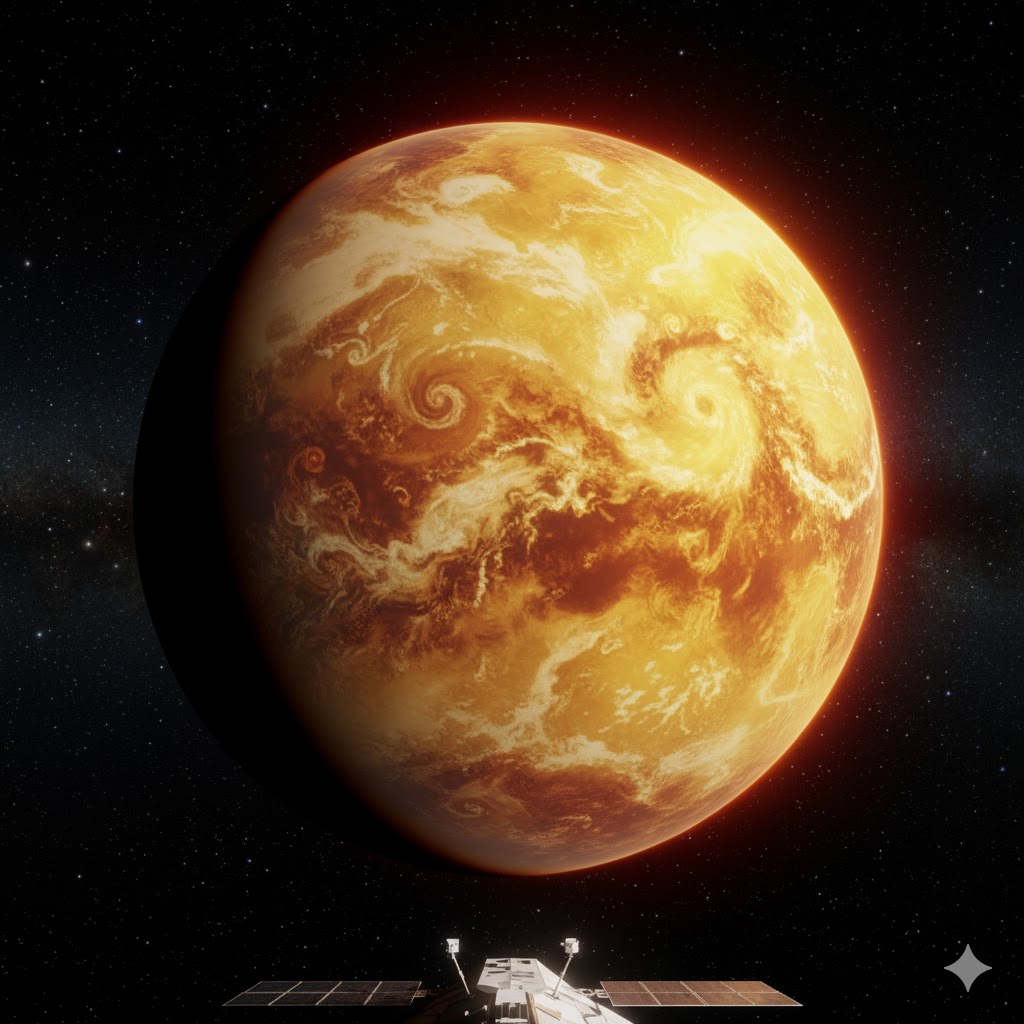
Venus is the second planet from the Sun, often referred to as Earth’s “sister planet” or “twin planet” due to their similar size, mass, density, and composition. However, despite these similarities, Venus is a hellish world with extreme surface conditions, starkly different from our own. It is named after the Roman goddess of love and beauty.
Key Planetary Statistics
| Feature | Value |
| Type | Terrestrial (Rocky) Planet |
| Diameter | 12,104 km (approx. 95% of Earth’s) |
| Mass | 82% of Earth’s mass |
| Average Distance from Sun | 108 million km (0.72 AU) |
| Length of a Year (Orbit) | 224.7 Earth days |
| Length of a Day (Rotation) | 243 Earth days (Slowest of any planet) |
| Rotation Direction | Retrograde (Clockwise) |
| Moons | 0 |
🌋 Atmosphere and Surface Conditions
The most defining characteristic of Venus is its incredibly dense and hot atmosphere, which makes its surface one of the most deadly environments in the Solar System.
- Atmospheric Composition: The atmosphere is overwhelmingly composed of 96.5% carbon dioxide ($\text{CO}_2$), with 3.5% nitrogen and traces of other gases, including sulfur dioxide.
- Runaway Greenhouse Effect: The high concentration of $\text{CO}_2$, a potent greenhouse gas, traps heat efficiently, creating an intense runaway greenhouse effect. This makes Venus the hottest planet in the Solar System, hotter than Mercury, despite being farther from the Sun.
- Temperature: The average surface temperature is approximately $460\text{°C}$ ($860\text{°F}$), which is hot enough to melt lead.
- Pressure: The atmospheric pressure at the surface is crushing, more than 90 times the pressure on Earth’s surface. This is equivalent to the pressure found nearly one kilometer deep in Earth’s oceans.
- Clouds: Venus is permanently shrouded by thick, reflective clouds made of sulfuric acid ($\text{H}_2\text{SO}_4$) droplets, which obscure the surface from visible light observation.
The Venusian surface consists largely of flat, volcanic plains (about 80% of the surface). It is covered in thousands of volcanoes, some of which may still be active today. Unique surface features include “farra” (flat-topped volcanic domes resembling pancakes) and large, ring-like structures called “coronae” formed by upwelling material beneath the crust. The surface also has very few impact craters, suggesting it underwent a global volcanic resurfacing event relatively recently (300–600 million years ago).
🕰️ Unique Rotation and Orbit
Venus has several curious orbital properties:
- Slow, Retrograde Rotation: Venus spins extremely slowly and in the opposite direction (clockwise) to most other planets, a rotation known as retrograde rotation. This results in a solar day (sunrise to sunrise) of about 117 Earth days.
- Day Longer Than a Year: Its rotation period (243 Earth days) is longer than its orbital period (224.7 Earth days), meaning a “day” on Venus is longer than its “year.”
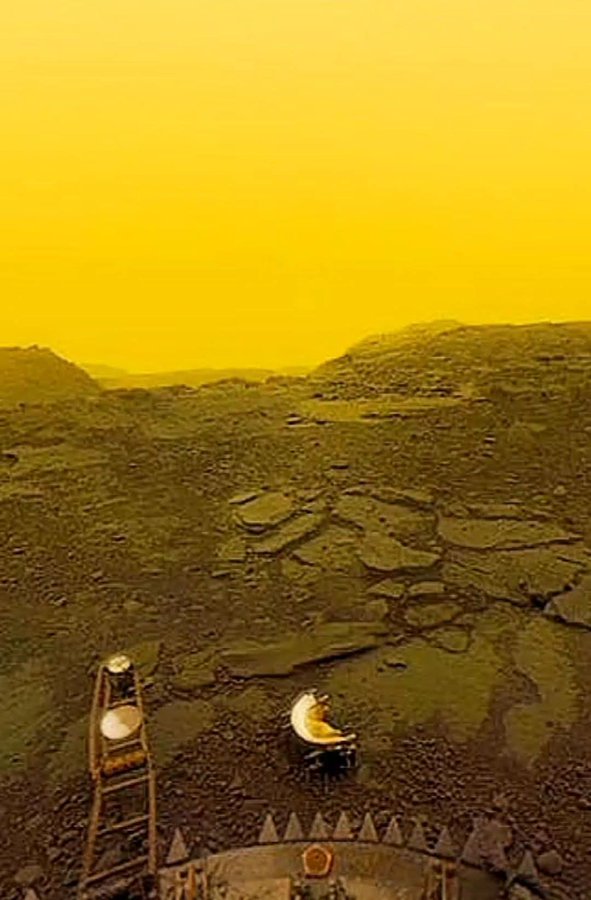
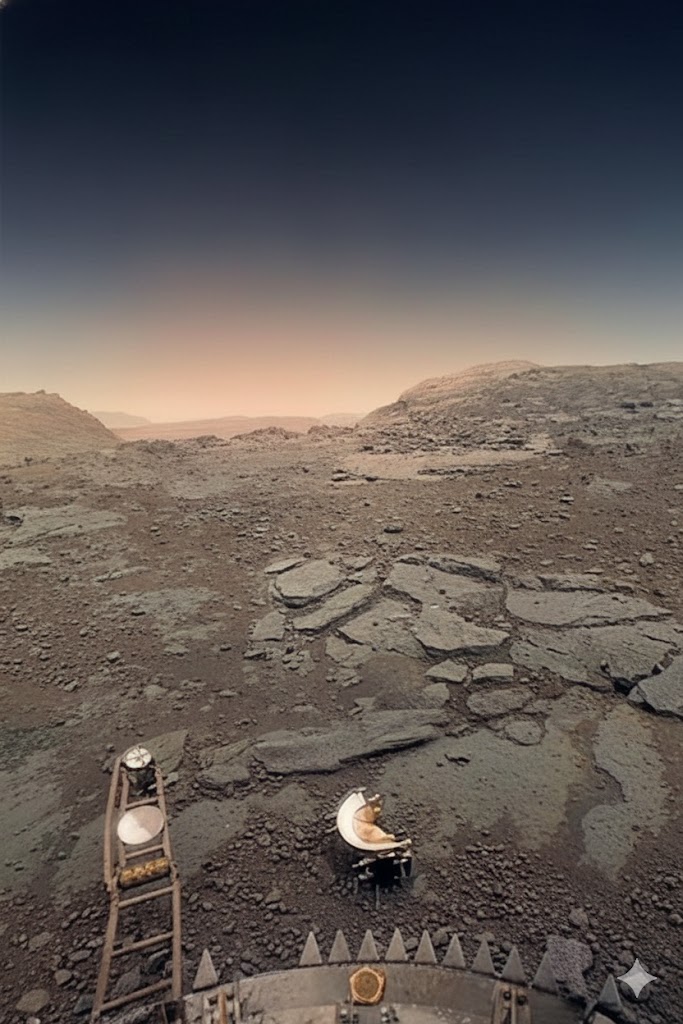
The intense heat and pressure make the surface of Venus a hostile environment for spacecraft, which is explored further in this video. We Finally Know What the Surface of Venus Looks Like
 thelivingbreathingjamesbrown.com
You must be logged in to post a comment.