
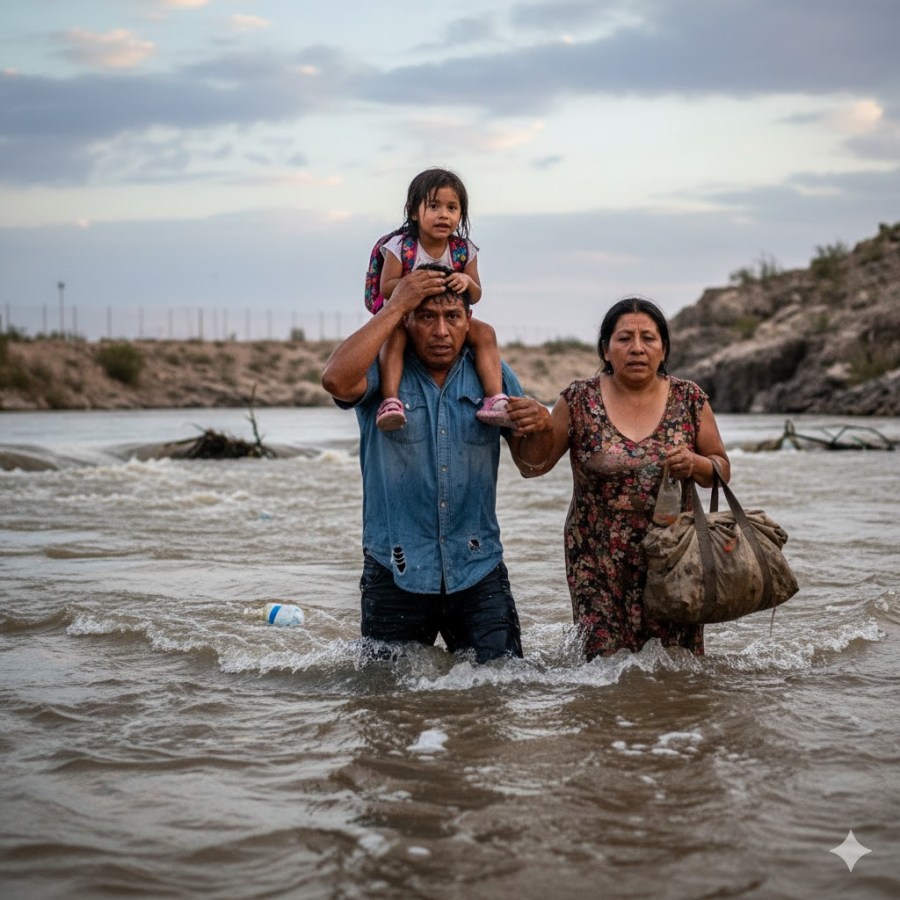

The dream was America. For Luis, Maria, and five-year-old Ana, it was a single word whispered in their cramped barrio room in Honduras, a word that meant safety, work, and a future for their daughter. The decision to leave was born of desperation, a choice made when the shadows of the gangs grew longer than the evening sun.
The journey began in 2022, during what many called the “Biden Days.” They paid a coyote with money they didn’t have, joining a river of tired, hopeful people flowing north.
The first darkness was the Darién Gap. It was not a jungle; it was a living, breathing monster. The air, thick as wet wool, choked them. Insects raised welts on Ana’s skin, and the mud tried to steal their shoes with every step. They saw things they tried to shield Ana from—the vacant stares of people who had given up, the crude graves marked by broken branches. At night, Maria and Luis would hold each other, Ana bundled between them, listening to the screams of monkeys and the much quieter, more terrifying sounds of unseen men moving through the trees. Fear was a metallic taste in their mouths, constant and sharp. But Luis would tap Maria’s hand and point at Ana’s sleeping face. Por ella. For her.
They crossed borders, rode on the roofs of rattling trains, and walked until their feet were cracked and bleeding. They were hungry, they were hunted, and they were exhausted, but they were together.
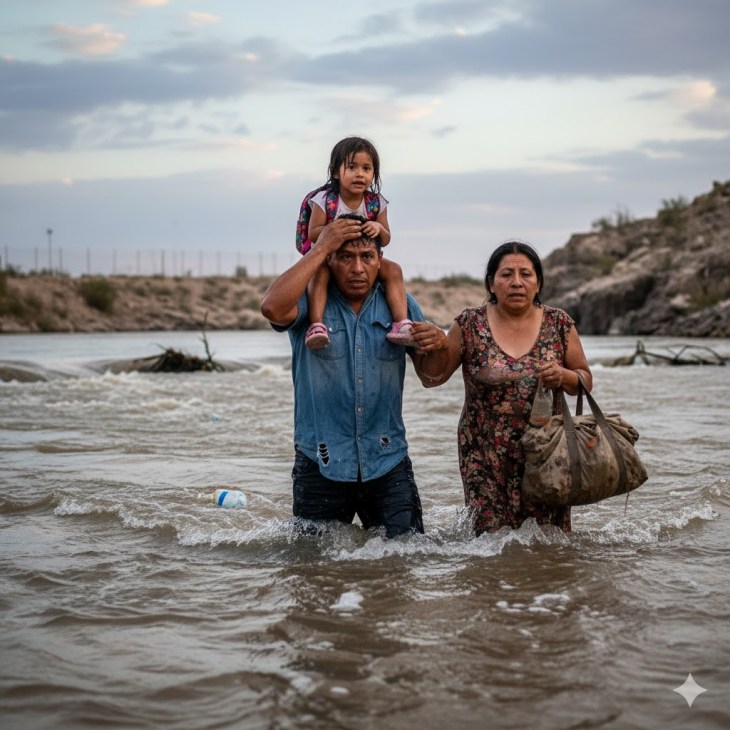
Then came the river. The Rio Grande.
It did not look like the end. It was wide and muddy, but it was the last step. Others were crossing. “Hold Ana tight,” Luis told Maria. “I will go first, just a little, to find the footing.”
He hoisted Ana onto his shoulders. Maria clutched the small backpack with their only papers and a change of clothes for Ana. They stepped in. The water was deceptively cold, the current a living thing pulling at their legs. They were halfway across when the riverbed simply vanished. Luis stumbled, a hole appearing where solid ground had been.
“Luis!” Maria screamed as he went under.
He surfaced, sputtering, shoving Ana towards her. “Take her! ¡Tómala!“
Maria lunged, grabbing Ana’s thin arm as Luis’s head dipped below the brown, swirling water.
“Papa!” Ana shrieked.
Maria saw his hand, just once, fingers grasping at the air. And then he was gone. The river that was supposed to deliver them to a new life had swallowed her husband whole. Maria, howling a sound she didn’s recognize, used her last ounce of strength to drag herself and her daughter to the American shore. She collapsed on the muddy bank, soaked and broken, clutching a child who was staring, silent and wide-eyed, at the water that had taken her father.
They kept walking. Numb. Ana didn’t speak for a week. They followed the road, ghosts in a new land, until they reached San Antonio.
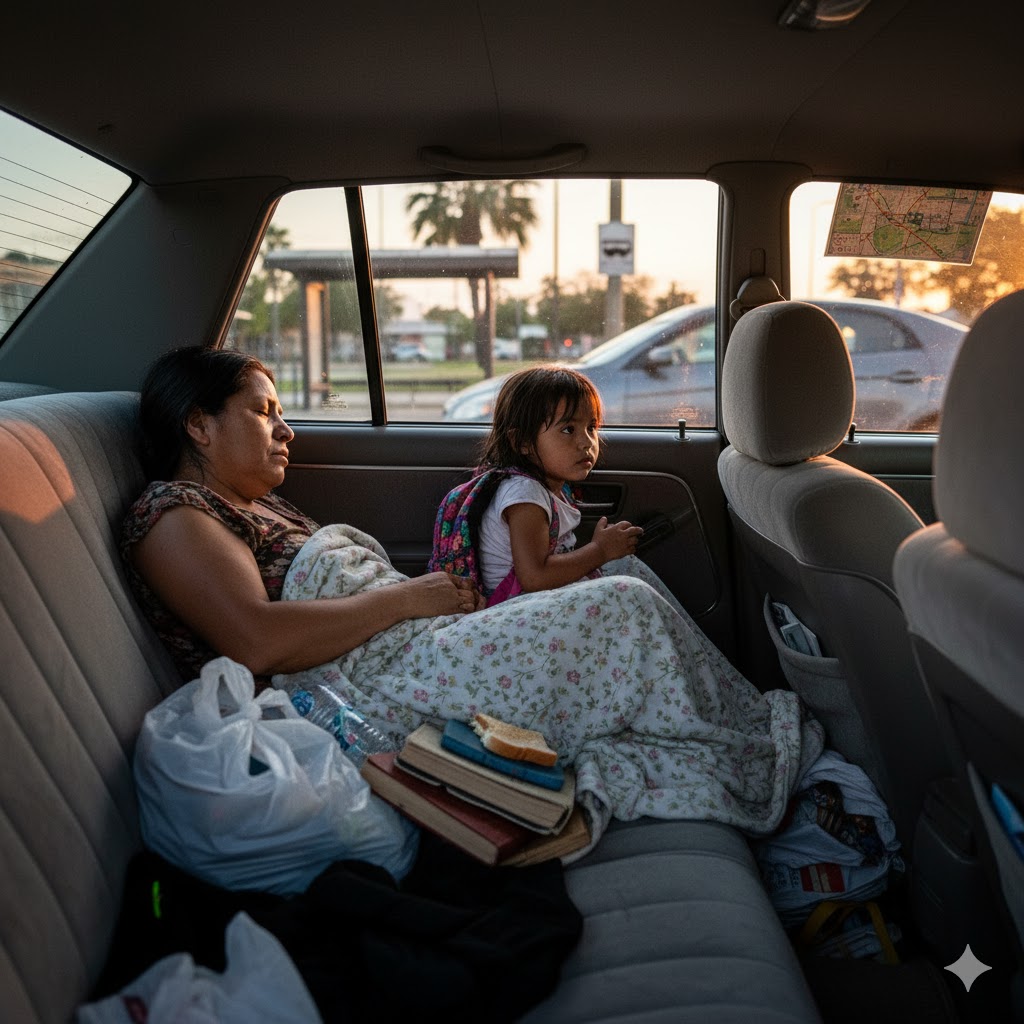
Maria found work washing dishes at a small diner. The pay was under the table, barely enough. But after three months of saving every penny, she bought a 1998 Toyota sedan for $400. It was their home. She parked it at the dead end of an old street, under a flickering orange streetlight. The car smelled of old upholstery and, faintly, of the bleach from her work clothes.
She was friendly to everyone—the baker who sometimes slipped Ana a pan dulce, the other women at the bus stop. But underneath, she was terrified. She was illegal. She was a ghost. She looked for help, for a way to become a “real American Citizen,” but the doors were all closed to her. There was no path. She was trapped in the shadows, praying no one ever noticed her.
Winter 2025. The cold was bitter. Maria and Ana, now eight, were huddled under a mound of blankets in the backseat when the flashing lights—blue and red—tore through the frosted windows. Banging on the glass. ¡Policía! ¡Salga!
ICE.
Maria’s heart stopped. She didn’t think. She grabbed Ana’s hand, shoved the car door open, and ran. “Run, Ana! ¡Corre!“
Ana was small, but Maria was faster. She pulled her daughter down the dark street. Footsteps pounded behind them. A large agent, over 350 pounds and breathing hard, closed the gap. He didn’t tell her to stop; he lunged. His full weight crashed onto Maria’s back, driving her face into the frozen pavement.
She heard the snap before she felt it. A blinding, sickening pain exploded in her arms as he pinned her. Ana was screaming, trying to pull the massive man off her mother.
They were sent to a detention center in Florida. It was cold, bright, and full of a quiet despair. A week later, a guard handed Maria papers. She was being deported.
“But… Honduras…” she tried to explain, her arms in cheap plaster casts.
They didn’t listen. The flight manifest said Venezuela.
When they landed in Caracas, they knew no one. They were aliens all over again. They hadn’t been at the airport for an hour before a man with a kind face offered them a ride and a place to stay. The kindness was a lie. He took their papers and drove them to a compound.
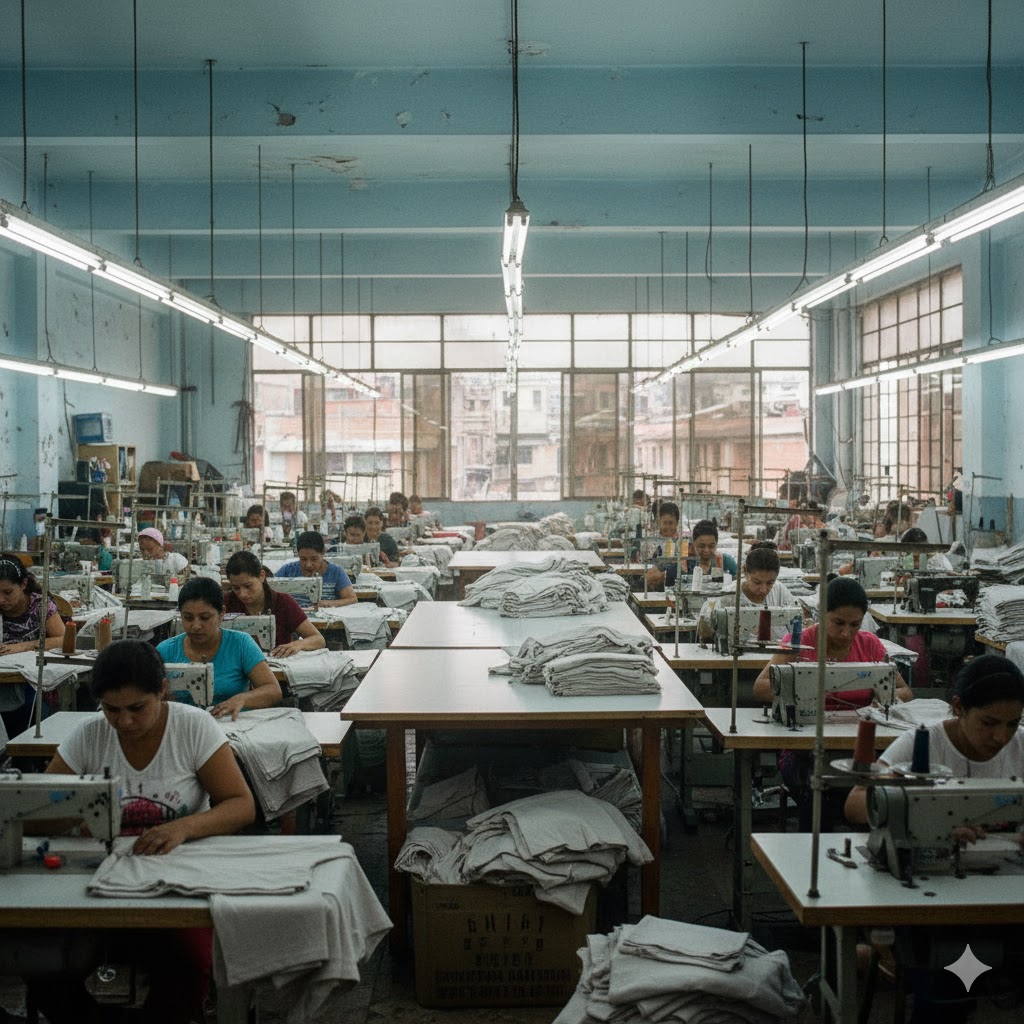
It was a sweatshop, loud with the clatter of a hundred sewing machines. The air was thick with lint and hopelessness. The cartel ran it.
Maria and Ana were put to work. Sixteen hours a day. Their fingers, one pair broken and healing, the other small and nimble, pushed fabric under the needles. Their world shrank to the needle, the thread, and the quota.
The arms in Maria’s casts healed, but the bones had set wrong. A constant, dull ache became her new companion, a permanent reminder of the pavement in San Antonio. Ana, now nine, barely spoke. She had the eyes of a hollowed-out woman, but her small hands were quick, prized by the armed guards who stalked the aisles.
One evening, Maria was sorting a pile of finished children’s t-shirts. She saw the tag. It was a bright, smiling cartoon character, a brand she recognized from the televisions at the diner in Texas. A hot, bitter laugh threatened to climb her throat. She swallowed it down. It tasted like river water and bleach.
She looked across the room at Ana, her head bent, her small back rigid with concentration. Ana was sewing a bright red pocket onto a pair of blue jeans. The tag on that pair was red, white, and blue. It read “American Dream Apparel.”
Maria caught her daughter’s eye. Ana didn’t smile. She just nodded, once, a small, jerky acknowledgment. I am still here.

The dream of America was gone. The dream of safety was a cruel joke. All that was left was the clatter of the machines and the ache in her bones. Maria bent her head, ignoring the pain, and pulled the next shirt toward her. Her only prayer, whispered so low the machines swallowed it whole, was the same it had always been.
Por ella.
 thelivingbreathingjamesbrown.com
You must be logged in to post a comment.