
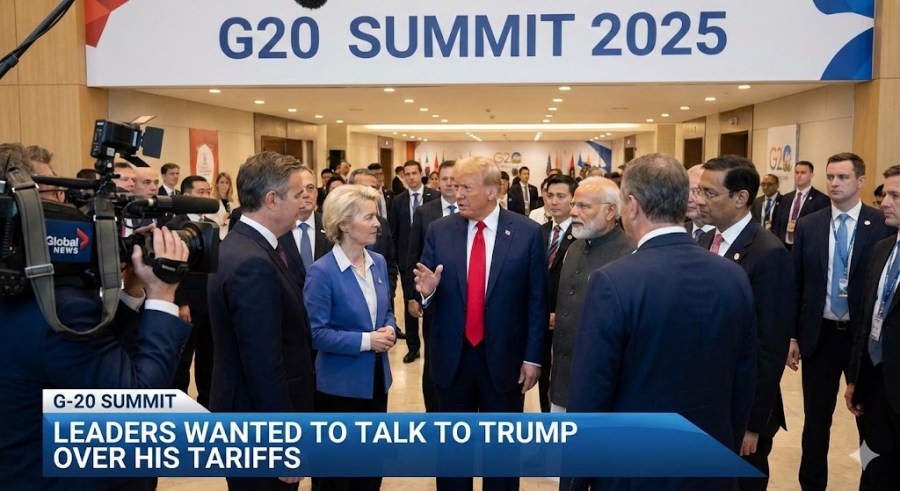
Oh my. Did Trump skip G-20 Summit because of all of the Rumbling, bubbling words of oozing Anger from the G-20 Nations? They sure planned to give him a mouthful. Or was he in solidarity with Putin because Putin did not go?
President Trump did not attend the G20 Summit in South Africa (held November 22–23, 2025).1 He ordered a U.S. boycott of the event, citing political disputes with the host nation, South Africa.2 As a result, there was no U.S. delegation at the summit to discuss tariffs directly.3
However, the Trump administration has active tariff rates in place for the G20 members who did attend. Below is the breakdown of the specific tariff amounts currently imposed on each individual G20 member as of late November 2025.
North American Neighbors (USMCA Partners)
- Canada:
- General Rate: 35% (Increased from 25% on Aug 1, 2025).
- Exemption: Goods that are USMCA-compliant (meet origin rules) are exempt (0%).
- Energy & Potash: 10%.4
- Mexico:
- General Rate: 25%.
- Exemption: Goods that are USMCA-compliant are exempt (0%).
- Energy: 25% (Unlike Canada, Mexican energy does not have the lower 10% rate).
Asian Nations
- China:
- Reciprocal Tariff: 10% (Extended through Nov 2026).
- Fentanyl Penalty: 10% (Reduced from 20% on Nov 10, 2025).5
- Total Baseline: 20% (Plus existing Section 301 tariffs, which can range from 25% to 100% on specific goods like EVs and semiconductors).
- India:
- General Rate: 50% (Originally 25%, doubled in August 2025 due to India’s continued purchase of Russian oil).6
- Indonesia:
- General Rate: 19%.
- Japan:
- General Rate: 15% (Baseline reciprocal rate agreed to in July 2025).
- South Korea:
- General Rate: 15% (Or the KORUS FTA rate, whichever is higher; typically capped at 15%).
European Union & UK
- European Union (France, Germany, Italy):
- General Ceiling: 15% (Per the July 2025 framework agreement).
- Note: Specific sectors like steel/aluminum may face quotas or different legacy duties, but the general reciprocal ceiling is 15%.
- United Kingdom:
- General Rate: 10%.
- Note: The UK was notably exempted from the global increase on steel tariffs (remaining at 25% while others went to 50%).
South America
- Argentina:
- General Rate: 10% (Under new trade framework).
- Brazil:
- Agriculture: 0% / Standard Rate (The 40% punitive tariff on beef, coffee, and cocoa was removed on Nov 21, 2025).
- Industrial/Other Goods: 40% (Items remaining on the punitive list) or 10% (Items not on the list).
- Note: The removal of the ag tariff was a major concession just days before the summit.
Russia & Turkey
- Russia:
- Aluminum: 200%.
- General Rate: 25% – 41% (Variable rates for “major trade partners” on the non-favored list; energy is largely sanctioned).
- Turkey:
- General Rate: 15% (Increased from 10% earlier in 2025).
Middle East & Africa
- Saudi Arabia:
- General Rate: 10%.
- South Africa (Host):
- General Rate: 30% (Unilateral tariff imposed Aug 2025).
- Note: South Africa’s hosting of the summit was the specific reason cited for the U.S. boycott.
- African Union (New G20 Member):
- Rates Vary: There is no single “AU” rate.
- South Africa: 30%.7
- Others (e.g., Lesotho, Madagascar): Up to 50%.
- Most Others: 10% baseline.
- Note: The AGOA trade pact expired on Sept 30, 2025, removing duty-free access for many African nations.8
Summary Table
| Country | Tariff Rate | Key Notes |
| India | 50% | Penalized for Russian oil imports. |
| Brazil | 10% / 40% | 40% Ag tariff removed Nov 21. Industrial goods vary. |
| Canada | 35% | 0% if USMCA compliant. Energy is 10%. |
| South Africa | 30% | Unilateral rate; Summit host. |
| Mexico | 25% | 0% if USMCA compliant. Energy is 25%. |
| China | 20% | 10% Reciprocal + 10% Fentanyl (+ Section 301). |
| Indonesia | 19% | |
| EU (France, Germany, Italy) | 15% | Capped ceiling. |
| Japan | 15% | |
| South Korea | 15% | |
| Turkey | 15% | |
| Argentina | 10% | |
| Australia | 10% | Steel/Alum higher (50%). |
| Saudi Arabia | 10% | |
| United Kingdom | 10% |
+3
In 2024, the United States imported approximately
$72.7 million worth of cocoa derivatives from Brazil, which represented a volume of 8.1 thousand tons. This figure primarily includes products like cocoa butter, chocolate, and cocoa powder, not raw cocoa beans. Brazil is a major exporter of cocoa products, but the U.S. receives only a small portion of its raw cocoa beans from Brazil, which are mainly sourced from West Africa.
- Value: The total value of cocoa derivatives imported from Brazil was about $72.7 million in 2024.
- Volume: The weight of these imported cocoa derivatives was 8.1 thousand tons in 2024.
- Breakdown: The imports include various cocoa preparations, such as cocoa butter, cocoa powder, and chocolate products.
- Raw beans: In 2024, the value of raw cocoa beans exported from Brazil to the U.S. was significantly smaller, at around $31.7k.
- Primary source: The majority of raw cocoa beans for U.S. consumption come from West African countries like Côte d’Ivoire and Ghana.
Add 40% Tariff on the Cacoa from Brazil.
The claim is a misrepresentation of the facts; while President Trump did lower tariffs on Switzerland from


Trade deal details
- Tariff reduction: The U.S. reduced tariffs on Swiss goods from
39%39 %39% to
15%15 %15%. This is not a
24%24 %24% reduction, but a reduction from
39%39 %39% to
15%15 %15%.
- Swiss investment: As part of the deal, Switzerland committed to investing $200 billion in the U.S. over Trump’s second term.
Gifts from CEOs
- Rolex CEO: Gifted a gold-plated desk clock to President Trump.
- MKS CEO: Gave President Trump an engraved 1-kilogram gold bar.
- Official representatives: The individuals who gifted the items were not the official Swiss government representatives negotiating the trade deal.
Ethical concerns
- Timing: The gifts were given just days before the tariff reduction was announced, leading to questions about influence.
- White House response: A White House spokesperson stated the gifts were separate from the decision-making process.
- Presidential gifts: It is standard procedure for presidents to receive gifts that are typically turned over to the National Archives. Presidents can choose to buy and keep some gifts after paying taxes on them.
 thelivingbreathingjamesbrown.com
You must be logged in to post a comment.