


The year is 2035. The dream of interplanetary travel, once a distant fantasy, is now within our grasp, thanks to a revolution in AI-powered manufacturing and resource utilization. We’re not just building rockets; we’re building ecosystems, first on the Moon, then on Mars. Mankind is quickly reaching the true Dawn of Interplanetary Explorations.
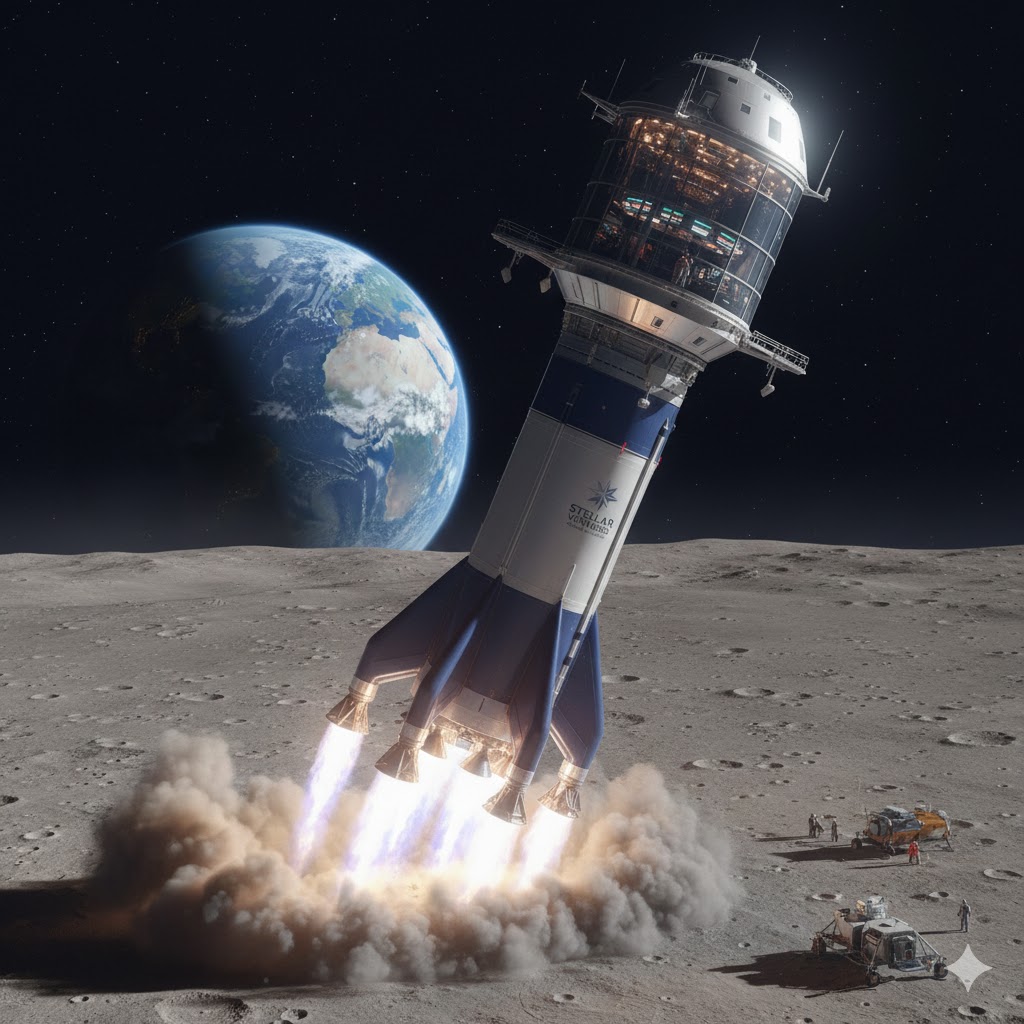
Phase 1: Lunar Gateway – The Stepping Stone to Mars (2035-2040)
Our journey begins not with a direct flight to Mars, but with a strategic return to the Moon. This isn’t just about planting flags; it’s about establishing a sustainable lunar presence and a crucial staging point for Mars.
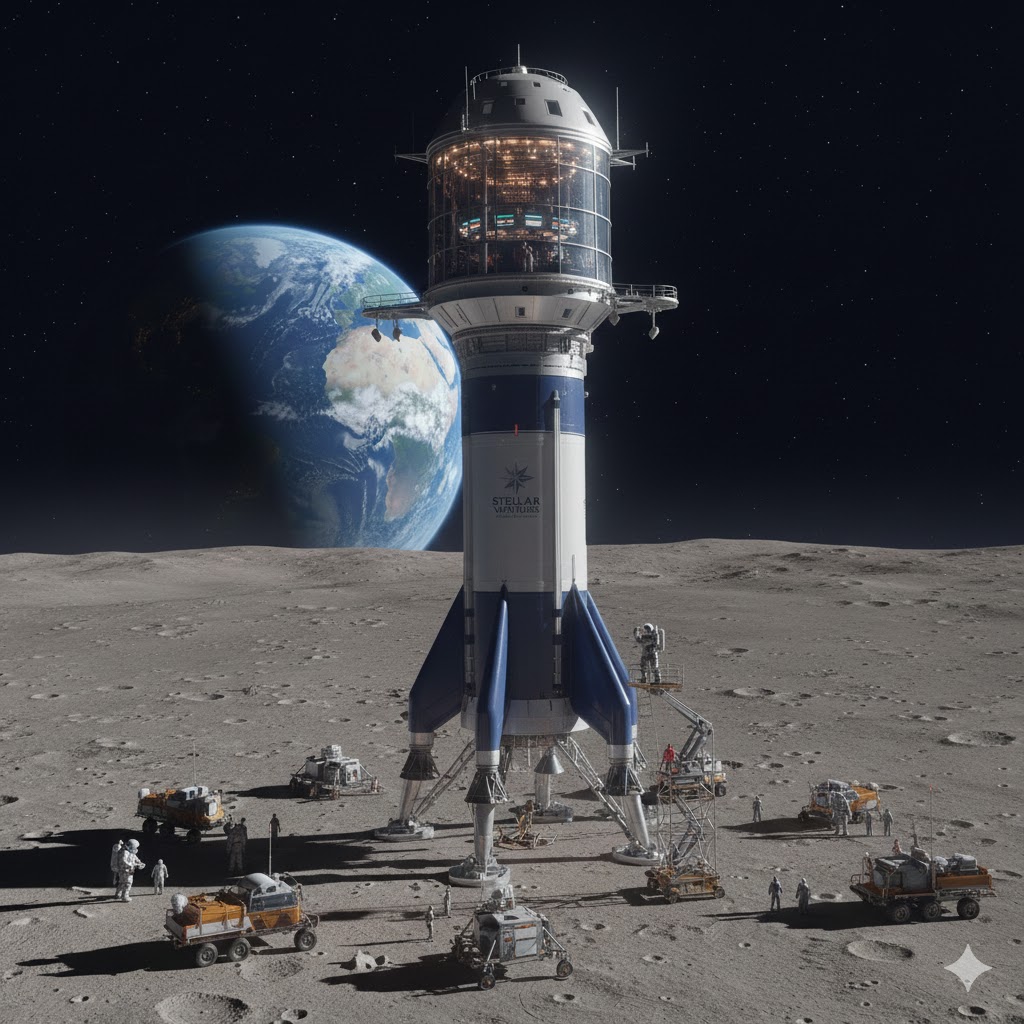
The Lunar Habitat: “Artemis Base”
Our first mission is to establish Artemis Base near the Moon’s South Pole, chosen for its potential water ice deposits in permanently shadowed craters. The habitat itself is a marvel of AI-driven construction.
- Autonomous Rover Swarms: Before humans even set foot, AI-controlled rover swarms will have mapped the terrain with unprecedented precision, identified prime locations for solar arrays, and begun excavating regolith. These aren’t your grandfather’s Mars rovers; they’re equipped with advanced machine learning algorithms, capable of making on-the-fly decisions, identifying hazards, and optimizing excavation paths.
- 3D-Printed Structures: Using lunar regolith as a primary material, AI-powered 3D printers will construct radiation-shielded habitats. These massive printers, guided by sophisticated architectural AI, can adapt designs based on real-time data about regolith composition and structural integrity. This drastically reduces the amount of material we need to launch from Earth, cutting costs by an order of magnitude.
- In-Situ Resource Utilization (ISRU): This is where AI truly shines. Smart factories, managed by central AI, will extract water ice, metals, and other valuable resources from lunar regolith. Imagine AI-driven drills targeting specific ice veins, and then AI-controlled furnaces refining metals for structural components or even fuel. This self-sufficiency is what makes the mission “money acceptable.”
- Closed-Loop Life Support Systems: AI monitors and optimizes every aspect of the life support system, from atmospheric recycling to water purification and hydroponic farms. These systems learn and adapt, ensuring maximum efficiency and resource conservation, meaning less reliance on resupply missions from Earth.
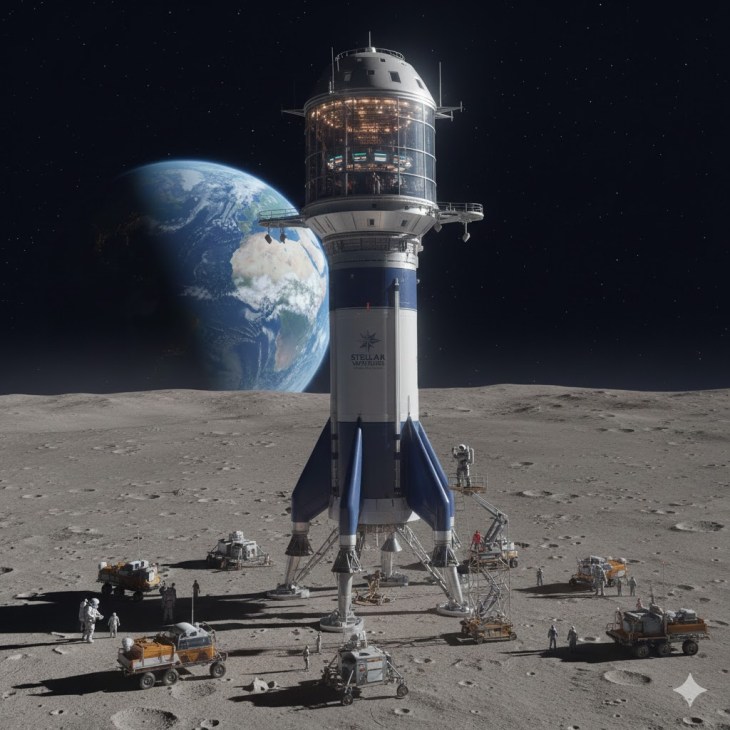
Exciting AI Innovations for Artemis Base:
- “Lunar Architect AI”: This AI system designs the optimal layout for habitats, power grids, and transportation routes, taking into account solar illumination, radiation shielding, and potential expansion. It can generate thousands of optimal designs in minutes.
- “Regolith Refinery AI”: This AI manages the entire ISRU process, from identifying suitable regolith deposits to controlling the extraction and refining machinery. It can analyze the elemental composition of regolith and adjust processing parameters in real-time.
- “Autonomous Maintenance Bots”: Swarms of small, agile robots, guided by AI, constantly monitor the habitat for micro-meteoroid impacts, structural fatigue, or system malfunctions. They perform proactive repairs, minimizing downtime and human risk.
The Rocket: “Stellar Voyager I”
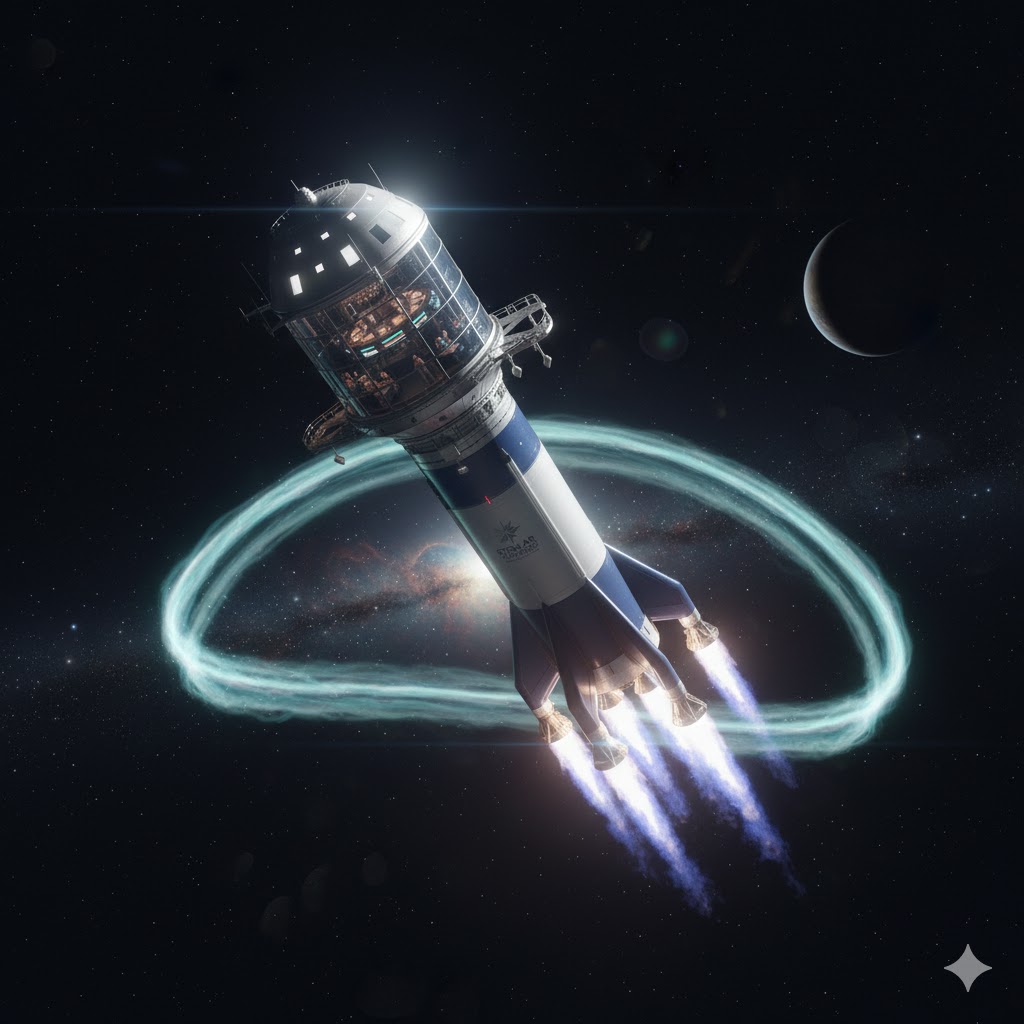
The journey to Artemis Base is made possible by the “Stellar Voyager I” – a marvel of modular design and AI-optimized propulsion. This rocket incorporates lightweight, AI-designed alloys and smart propulsion systems that monitor engine performance and adjust thrust vectors with unprecedented precision. The huge capsule on top, nicknamed “The Oasis,” is designed for extended stays, offering panoramic views and advanced life support for its crew of six.
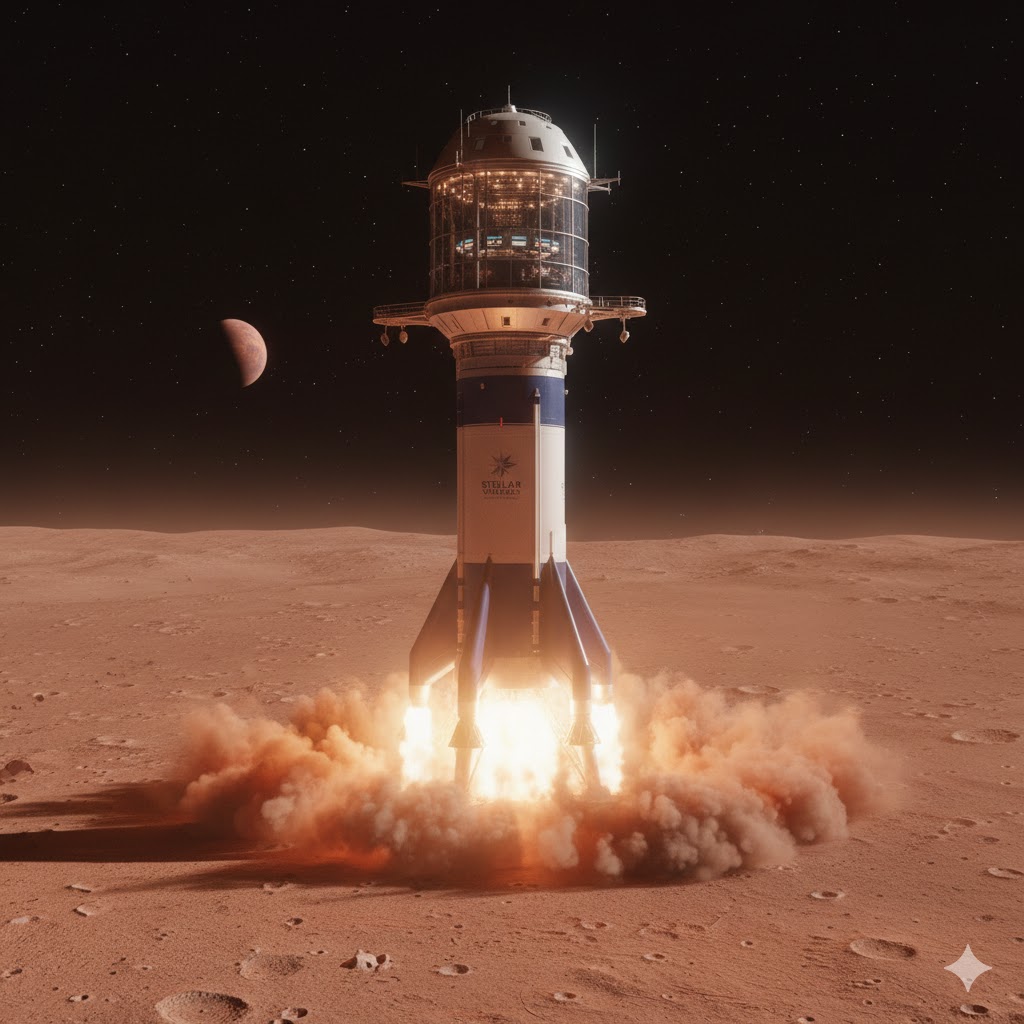
Phase 2: Martian Frontier – Establishing Olympus Colony (2040-2050)
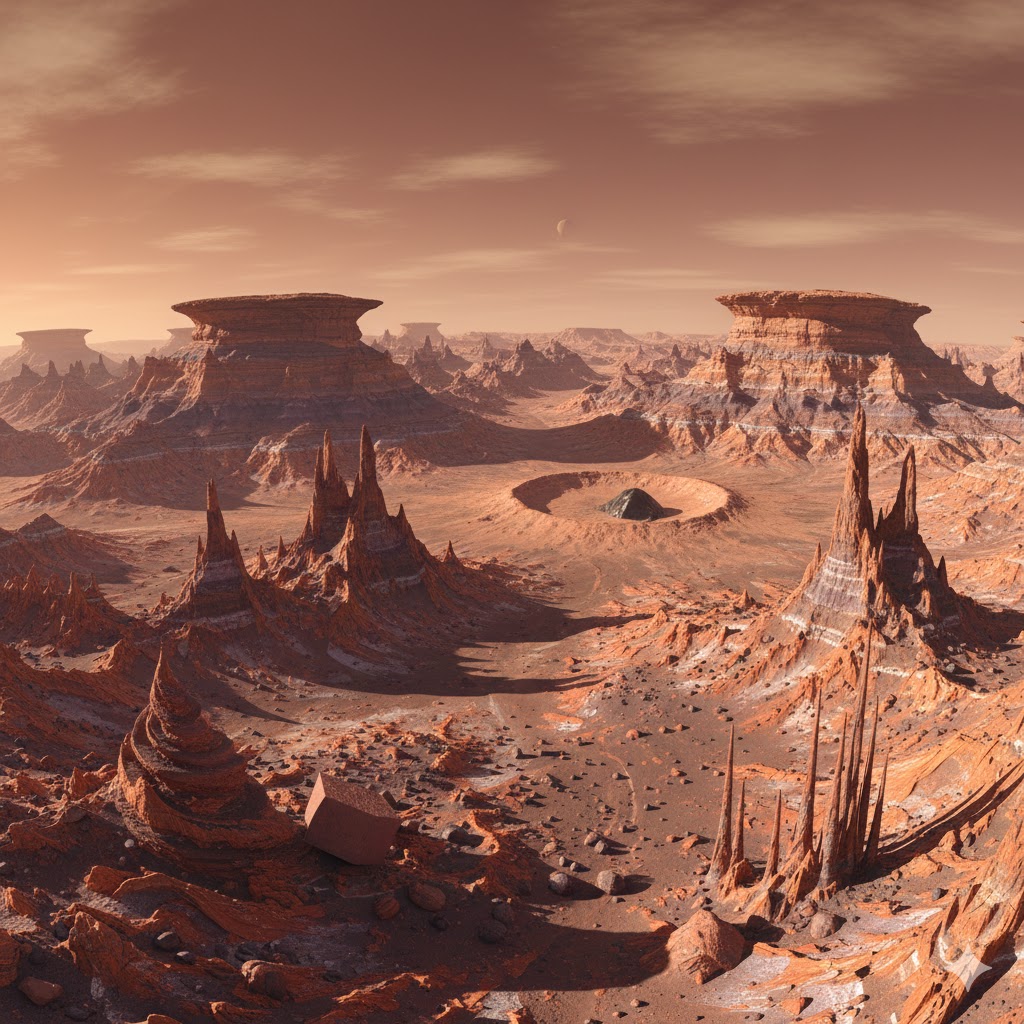
With Artemis Base operational and providing a steady supply of lunar-derived fuel and resources, the leap to Mars becomes economically viable. Our destination: a site near the ancient Valles Marineris, offering diverse geological features and potential subsurface water ice.

The Martian Outpost: “Olympus Colony”
The lessons learned and technologies perfected on the Moon are directly applied, and significantly enhanced, for Mars.
- Advanced AI-Driven Pre-Deployment: Years before humans arrive, a fleet of AI-controlled heavy-lift landers will have delivered and deployed autonomous construction units. These units, much more sophisticated than their lunar predecessors, are designed to withstand Mars’ thinner atmosphere and more aggressive dust storms.
- Subsurface Habitats: Recognizing the harsh Martian surface radiation, “Olympus Colony” will heavily feature subsurface habitats. AI-powered boring machines will excavate vast underground caverns, where 3D printers, again using Martian regolith, will construct shielded living and working spaces.
- Terraforming Starters: While full terraforming is centuries away, AI-managed greenhouses will begin experimenting with hardy Martian-adapted flora, powered by solar and even small-scale nuclear reactors. These greenhouses, entirely managed by AI for optimal growth conditions, represent the first steps towards a breathable Mars.
- Local Resource Exploitation: Martian ISRU will focus on extracting water from ice reserves, processing atmospheric CO2 for oxygen and methane fuel, and mining iron-rich regolith for structural materials. AI-driven robotic miners will target specific geological formations with high resource concentrations.

Exciting AI Innovations for Olympus Colony:
- “Martian Geologist AI”: This AI analyzes satellite imagery and rover data to identify optimal sites for resource extraction, habitat placement, and scientific exploration. It can predict geological hazards and identify potential water ice deposits with remarkable accuracy.
- “Atmospheric Processor AI”: This AI manages the complex process of converting Martian atmospheric CO2 into breathable oxygen and rocket fuel (methane). It optimizes energy consumption and chemical reactions for maximum output.
- “Colony Expansion AI”: As the colony grows, this AI dynamically redesigns and integrates new habitat modules, infrastructure, and resource pipelines. It ensures optimal flow of resources, waste management, and human traffic.
- “Robotic Pioneer Swarms”: These small, agile robots, equipped with advanced AI, explore dangerous terrains, scout for resources, and set up preliminary outposts, reducing the risk to human explorers.
The Rocket: “Stellar Voyager II”
The “Stellar Voyager II,” our interplanetary flagship, is a further evolution of its lunar predecessor. It features advanced AI-driven trajectory optimization, allowing for incredibly precise maneuvers and fuel-efficient transfers. Its “Martian Oasis” capsule is even more spacious and boasts AI-enhanced radiation shielding, capable of adapting its protective layers based on real-time solar flare data. The propulsion system is a hybrid of chemical and advanced ion engines, allowing for faster transit times and greater payload capacity.
The Excitement Factor:
Imagine the first human steps onto the Martian surface, not as a fleeting visit, but as the beginning of a sustained presence. Think of the discoveries that await – signs of past life, new geological wonders, and the sheer exhilaration of building a second home for humanity. The integration of AI doesn’t diminish the human element; it amplifies it, empowering us to achieve what was once unimaginable.

This isn’t a pipe dream; it’s a meticulously planned, AI-accelerated blueprint for humanity’s future in the cosmos. The cost-effectiveness of AI-driven manufacturing and ISRU makes these monumental endeavors not just possible, but the logical next step in our evolution. The Moon and Mars are no longer just destinations; they are future homes, built with intelligence, ingenuity, and the tireless efficiency of our AI partners. The “envy of the sky” is now the future of humanity.

 thelivingbreathingjamesbrown.com
You must be logged in to post a comment.