
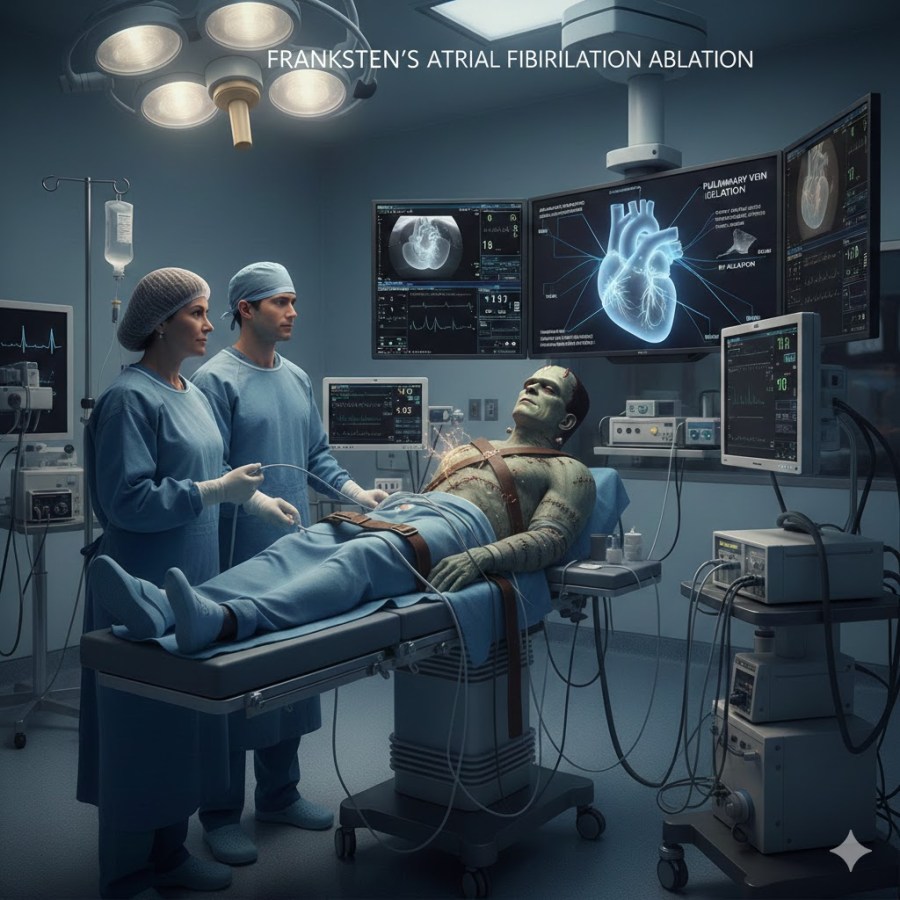
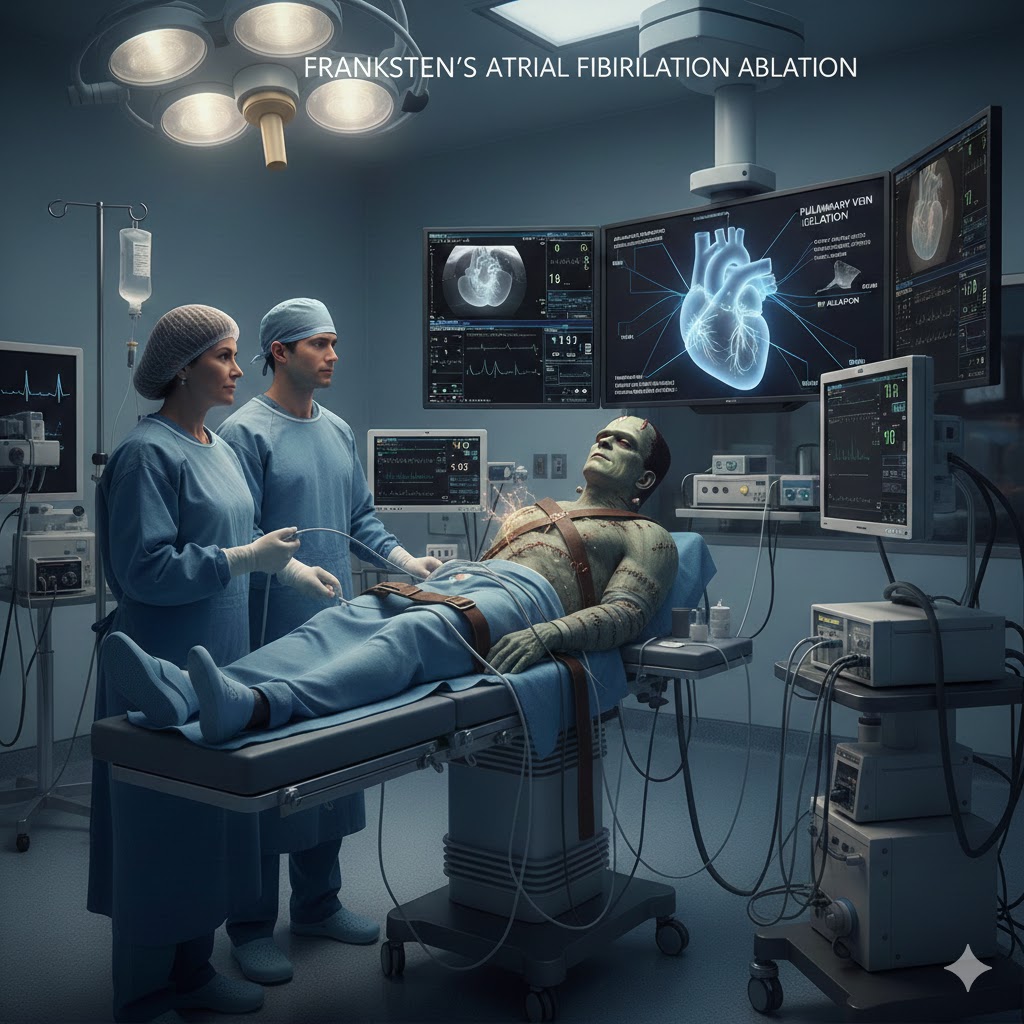
Atrial Fibrillation (AFib) Ablation: A Comprehensive Clinical Overview
Catheter ablation has emerged as a cornerstone in the rhythm management of Atrial Fibrillation (AFib), particularly for patients who are symptomatic or for whom antiarrhythmic drugs have failed.1 This procedure aims to disrupt the electrical triggers or pathways that maintain the irregular heartbeat.2
1. Pre-Procedural Preparation
Before the ablation, a thorough evaluation is conducted to ensure patient safety and procedure efficacy.
- Imaging: A Transesophageal Echocardiogram (TEE) is often performed within 24 hours of the procedure to rule out blood clots in the left atrium. CT or MRI scans may be used to create a 3D map of the patient’s pulmonary vein anatomy.
- Anticoagulation: Patients usually remain on blood thinners (like Apixaban or Warfarin) to minimize stroke risk during and after the procedure.
- Physical Exam: Blood work, including kidney function and electrolytes, is standardized.
2. The Procedure: Techniques and Mechanism
The primary goal is Pulmonary Vein Isolation (PVI). Most AFib triggers originate in the pulmonary veins; by creating scar tissue at the junction of these veins and the left atrium, the “bad” electrical signals are blocked.
| Feature | Radiofrequency (RF) Ablation | Cryoablation |
| Energy Source | Heat (High-frequency electrical current) | Extreme Cold (Liquid nitrogen/Nitrous oxide) |
| Method | Point-by-point “burning” to create a line | A balloon is inflated to freeze the entire vein opening |
| Precision | Highly customizable for complex maps | Faster for standard pulmonary vein isolation |
3. Time in Hospital: The Recovery Timeline
The total hospital stay for an AFib ablation is typically brief, ranging from 6 to 23 hours, though some cases require an overnight stay.
- Immediate Post-Op (2–4 hours): Patients must lie completely flat to prevent bleeding at the femoral artery access site (the groin).
- Monitoring (4–12 hours): Continuous ECG monitoring to check for immediate recurrence of arrhythmias or complications like pericardial effusion.
- Discharge: Most patients go home the same day or the following morning once they are ambulatory and their vital signs are stable.
4. Post-Operative Care and The “Blanking Period”
Recovery at home involves specific protocols to ensure the heart heals correctly.3
- Activity Restrictions: No heavy lifting (usually >10 lbs) or strenuous exercise for 7–10 days to allow the groin puncture sites to heal.4
- Medication Management: Anticoagulants are typically continued for at least 2–3 months.
- The Blanking Period: For the first 90 days post-ablation, it is common to experience “rebound” AFib. This is often due to inflammation from the procedure itself and does not necessarily indicate that the ablation failed.
5. Success Rates and Risks
While highly effective, patients should be aware of the statistical landscape of the procedure:
- Success Rate: Paroxysmal (intermittent) AFib has a success rate of 70-80% after one procedure. Persistent AFib may require a second “touch-up” procedure.5
- Potential Risks:
- Common: Groin bruising or hematoma.
- Rare but Serious: Pulmonary vein stenosis, esophageal injury, or cardiac tamponade (fluid buildup around the heart).6
Clinical Summary: AFib ablation is a minimally invasive, highly effective intervention that significantly improves quality of life.7 Advances in mapping technology and energy delivery have reduced hospital stays and increased long-term success.
 thelivingbreathingjamesbrown.com
You must be logged in to post a comment.