
JAPAN was set to run out of Oil and went to War! Will China Follow?
The Five-Year Horizon: Analyzing China’s Energy Fragility and Strategic Response
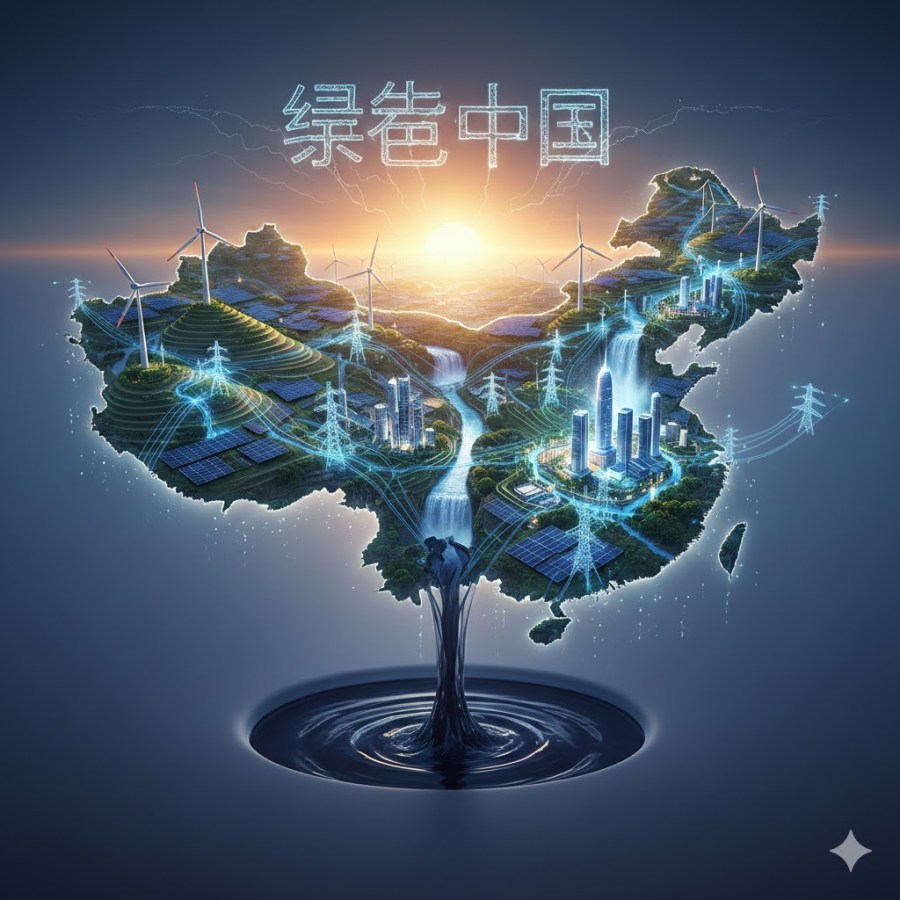
As of 2026, the global energy landscape is defined by a striking paradox in the People’s Republic of China. While China maintains the 13th largest proven oil reserves in the world—totaling 28.182 billion barrels—it simultaneously faces a precarious “energy security” countdown. With reserves representing only 1.60% of the global total, Beijing’s domestic supply is projected to last approximately five years at current 2024 consumption levels if imports were entirely severed. This structural vulnerability has transformed China from a mere consumer into the world’s most aggressive architect of strategic energy reserves.
I. The Arithmetic of Vulnerability
The core of China’s energy dilemma lies in the vast disparity between its industrial thirst and its geological reality.
- Proven Reserves vs. Consumption: China’s 28.18 billion barrels are equivalent to roughly 4.7 times its annual consumption. In an era of heightened geopolitical friction, a 60-month window of self-sufficiency is a narrow strategic margin for the world’s second-largest economy.
- Import Dependency: China currently relies on foreign oil for approximately 70% of its total consumption. In 2025, while domestic production hit record highs of 215 million metric tons, it remained insufficient to bridge the gap.
- Global Standing: Despite its #13 rank, China’s reserves are dwarfed by leaders like Venezuela (303 billion barrels) and Saudi Arabia (267 billion barrels), placing it in a category of nations that must “buy” their security rather than “drill” it.
II. Strategic Stockpiling: The “Energy Rice Bowl”
Guided by President Xi Jinping’s mandate that the “energy rice bowl must be held in our own hands,” Beijing has launched a massive infrastructure campaign to buffer against supply shocks.
- Expansion of Storage: Between 2025 and 2026, state oil companies (Sinopec, CNOOC, PetroChina) are adding at least 169 million barrels of new storage capacity across 11 key sites.
- Unified National Reserve: A 2025 law formally merged “strategic” and “commercial” reserves, giving the central government tighter oversight to manage price volatility and emergency drawdowns.
- Inventory Scale: Estimates for China’s total onshore inventories—including strategic, commercial, and refinery stocks—reached a record-breaking 2.67 billion barrels in early 2026. This makes China the world leader in onshore storage, accounting for 31% of global inventories, far outpacing the United States at 11%.
III. The Substitution Solution: Peak Oil and EVs
To mitigate the “five-year” threat, China is aggressively decoupling its economic growth from oil consumption through technology.
- The EV Revolution: New energy vehicle (NEV) penetration is forecast to reach 56%–60% in 2026, significantly eroding gasoline demand.
- Fuel Substitution: The adoption of LNG-fueled heavy-duty trucks and high-speed rail networks has already begun to displace millions of barrels of diesel and gasoline annually.
- Demand Plateau: Analysts expect China’s total oil demand to reach a terminal peak by 2027, after which consumption is projected to enter a long-term decline.
IV. Geopolitical Implications
China’s stockpiling serves as a critical “shock absorber” for the global market but also acts as a defensive shield.
- Sanction Resilience: By building a reserve that could eventually cover six months of imports (roughly 2 billion barrels), Beijing aims to insulate itself from potential Western sanctions or shipping blockades in the Indo-Pacific.
- Price Support: In 2025 and 2026, China’s opportunistic buying at prices between $60 and $70 per barrel has effectively created a global price floor, absorbing a projected 1.8 million bpd surplus.
Conclusion
The “five-year” reserve figure is less a prediction of collapse and more a driver of total national mobilization. Through record domestic production, a world-leading strategic stockpile, and a rapid transition to electric transport, China is attempting to extend its energy horizon indefinitely. In 2026, control over reserves has become synonymous with control over global stability.
This video discusses the 2026 oil market outlook, including how China’s strategic stockpiling and transition to clean energy are reshaping global supply and demand dynamics.
Is Trump attempting to go to War with China by His shutting down Oil to China?
In 2024 and 2025, China was the primary buyer of Venezuelan oil, though much of this trade was conducted through “back-channel” routes to avoid US sanctions.
However, as of early 2026, the volume of oil being sold to China is in a state of flux due to the recent ousting of Nicolás Maduro and the subsequent US military and diplomatic intervention in Venezuela.
1. Recent Historical Averages (2024–2025)
During the final years of the Maduro administration, China absorbed the vast majority of Venezuela’s total exports, often through ship-to-ship transfers in places like Malaysia to mask the oil’s origin.
- Average Daily Volume: Between 600,000 and 750,000 barrels per day (bpd).
- Percentage of Venezuela’s Exports: China typically took 75% to 80% of all Venezuelan oil exports.
- Total Value: In 2024, bilateral trade was approximately $7 billion, with oil and oil products making up the vast majority of Venezuela’s contribution.
2. The “Hidden” Trade vs. Official Data
There has historically been a massive discrepancy between official customs data and actual tankers tracked by analysts:
- Official Customs: China often reported as little as 30,000 bpd from Venezuela.
- Actual Shipments: Independent trackers (like Kpler and Vortexa) identified that actual shipments were closer to 700,000 bpd, often re-labeled as “Malaysian” or “Other” crude to bypass sanctions.
3. Current Status (Early 2026)
Following the capture of Maduro in January 2026 and the US-led blockade/intervention, the trade relationship has shifted dramatically:
- Sharp Decline: Shipments to China have slumped as the US has asserted control over PDVSA (the state-owned oil company). Daily exports to China are expected to drop significantly from February 2026 onward as the new interim administration pivots toward Western buyers.
- Debt Repayment: Much of the oil previously “sold” to China was actually used to pay down an estimated $10–$15 billion in remaining debt from previous Chinese loans.
- The US Shift: In early 2026, the United States reclaimed its position as a top destination for Venezuelan crude, with exports to the US rising to roughly 150,000–260,000 bpd as Chevron and other Western firms increased their presence under new licenses.
Summary Table: Venezuela Oil to China (Estimates)
| Period | Est. Daily Volume (bpd) | % of Total VEN Exports |
| 2024 Average | ~650,000 | ~75% |
| 2025 Peak | ~746,000 | ~80% |
| Early 2026 | Slumping (Est. <200,000) | Dropping rapidly |
Would you like me to look into the details of the “oil-for-debt” agreements between these two countries?
The “oil-for-debt” relationship between China and Venezuela is one of the most complex financial entanglements in modern history. As of early 2026, this arrangement has hit a massive wall due to the recent political upheaval in Caracas.+1
Here is the breakdown of how these agreements worked and their current status:
1. The Structure: “The Joint Fund”
Starting around 2007, under Hugo Chávez, China and Venezuela established the China-Venezuela Joint Fund. It wasn’t a standard loan; it was a “credit line” collateralized by oil.+1
- How it worked: China (via China Development Bank) provided cash upfront for infrastructure and social projects. Venezuela (via PDVSA) repaid the loans by shipping hundreds of thousands of barrels of oil per day to Chinese state-owned firms.+1
- The Scale: Between 2007 and 2018, China lent Venezuela roughly $60 billion. This made Venezuela the largest recipient of Chinese state-backed lending in Latin America.+1
2. The Current Debt (2026)
While Venezuela has paid back the majority of the original principal, a significant “tail” of debt remains.
- Outstanding Balance: Analysts estimate Venezuela still owes China between $10 billion and $12 billion.
- Default Status: Technically, Venezuela has been in a state of selective default or “repayment stress” since 2017. In 2020 and 2024, China granted “grace periods” where Venezuela only had to pay interest, not principal, to keep the arrangement from collapsing entirely.
3. The “Blockade” & US Intervention (Feb 2026)
Following the capture of Nicolás Maduro in January 2026, the US Treasury (OFAC) has issued a series of General Licenses (GL 46A and GL 48) that effectively dismantle the old China-led oil flow:
- The Debt Swap Ban: New US regulations explicitly prohibit debt swaps for Venezuelan oil. This means the interim administration cannot legally ship oil to China to “pay off” the old Maduro-era debt under current US-authorized channels.
- The Escrow Requirement: Any authorized oil sales must now have proceeds funneled into “Foreign Government Deposit Funds”—escrow accounts controlled or monitored by the US Treasury—rather than going directly to Beijing to settle loans.
- Asset Shifts: Chinese firms like Sinopec have already begun selling their stakes in Venezuelan joint ventures to Western firms (such as Amos Global Energy) to avoid being caught in the crossfire of the new administration’s pivot.
4. Why China is “Stuck”
Beijing is in a difficult spot. Because their loans are collateralized by oil, if the oil stops flowing to them, the loans essentially become “unsecured” and uncollectible.+1
Current Reality: With the US now overseeing PDVSA’s exports, China has lost its primary leverage. They are currently transitioning from a “preferred buyer” to just another creditor waiting in a very long line for debt restructuring.
Summary of Terms
| Feature | Old Maduro Era (Pre-2026) | New Reality (Post-Jan 2026) |
| :— | :— | :— |
| Payment Method | Direct oil shipments | Cash to Escrow / Western buyers |
| Daily Vol. to China | ~650,000+ bpd | Under 200,000 bpd (and falling) |
| US Sanctions | Evaded via “Shadow Fleets” | Enforced via Direct Intervention |
| Debt Repayment | Active through oil swaps | Halted/Pending Restructuring |
Would you like me to look into how the new interim government plans to handle these Chinese debts during the upcoming restructuring talks?
 thelivingbreathingjamesbrown.com
You must be logged in to post a comment.