
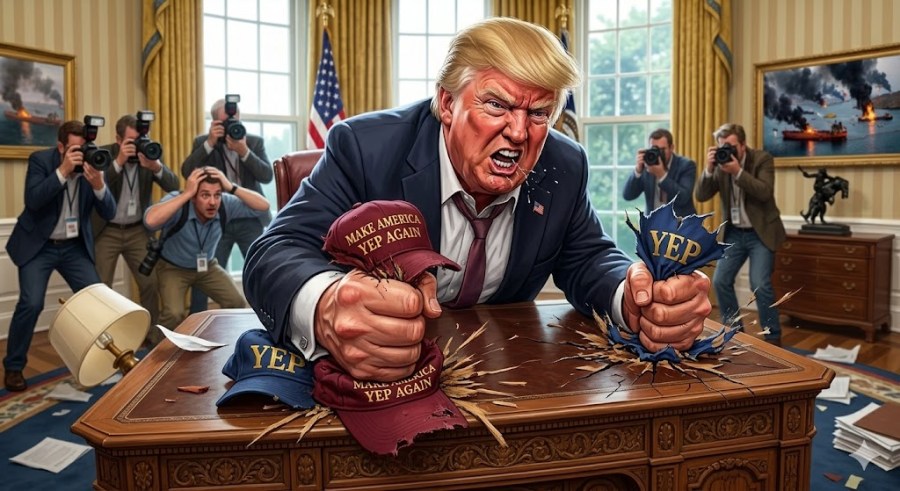
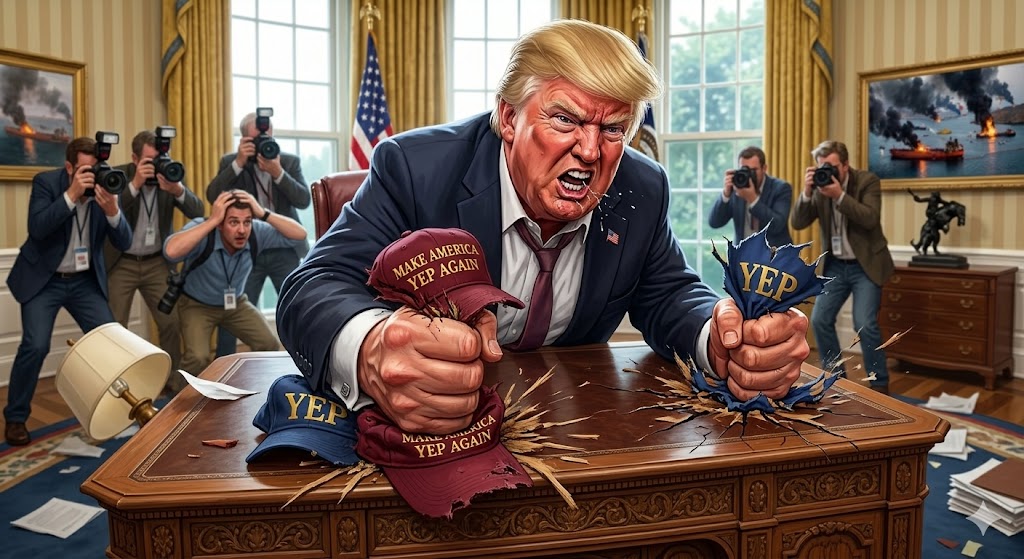
The recent friction over the Strait of Hormuz is more than a simple disagreement; it’s a symptom of a fundamental shift in how the world engages with U.S. leadership. While traditional allies like the UK, Germany, and Japan have historically followed the U.S. lead in Middle Eastern maritime security, their current “rebuff” signals that trust in the Trump administration’s strategic judgment is at a historic low.
The situation reveals three primary layers of fracture:
1. The “Whose War?” Dilemma
The most immediate cause of the fracture is a lack of shared ownership. Unlike past operations (such as Operation Prosperity Guardian), which were framed as collective defense of global trade, many allies view the current crisis as a direct consequence of the unilateral U.S.-Israeli strikes on Iran.
- Germany’s bluntness: Defense Minister Boris Pistorius’s statement—“This is not our war; we did not start it”—highlights a refusal to inherit the consequences of a military campaign they weren’t consulted on.
- The UK’s “Principles”: Prime Minister Keir Starmer has signaled a pivot toward British interests over “special relationship” loyalty, limiting U.S. access to bases like Diego Garcia for offensive strikes.
2. Transactional Diplomacy vs. Collective Security
Trump’s warning that NATO faces a “very bad future” if members don’t comply has further eroded trust. For European and Asian allies, this reinforces the fear that the U.S. now views alliances as protection rackets rather than mutual security pacts.
- Article 5 concerns: By linking the future of NATO to a maritime operation in the Middle East—an area outside NATO’s traditional treaty geography—Trump has raised alarms that the U.S. might walk away from its core defense commitments in Europe or Asia if its specific regional demands aren’t met.
- Economic Leverage: Using a planned summit with Xi Jinping or trade tariffs against Denmark (as seen in the January Greenland dispute) as bargaining chips makes allies feel like they are being coerced rather than consulted.
3. Fear of Escalation Without a “Day After” Plan
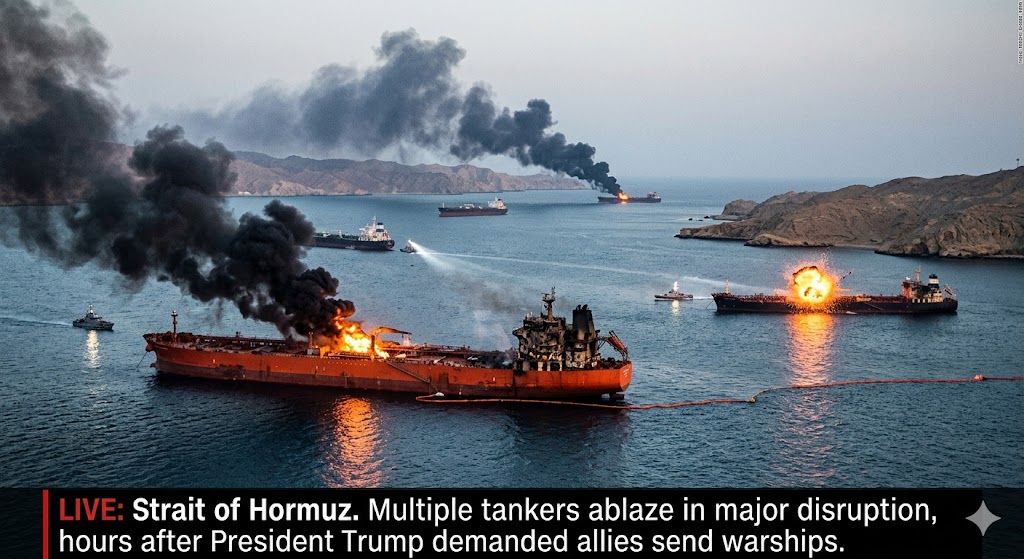
There is a profound skepticism regarding the administration’s endgame. While Trump has claimed a 90% reduction in Iranian missile capabilities, allies are looking at $100+ oil prices and a spiraling regional war involving Lebanon and the Gulf.
- Missing Strategy: EU diplomats, led by Kaja Kallas, have noted a “clear wish” to secure the Strait but a total “lack of appetite” to join the current U.S. military framework. They are essentially waiting for a diplomatic roadmap that the White House has yet to provide.
- Internal Buffers: Countries like Japan are using their own legal frameworks (pacifist constitutions) as a “soft no,” allowing them to avoid direct confrontation with Trump while refusing to deploy.
Do they still trust him?
In short: No, not in the traditional sense.
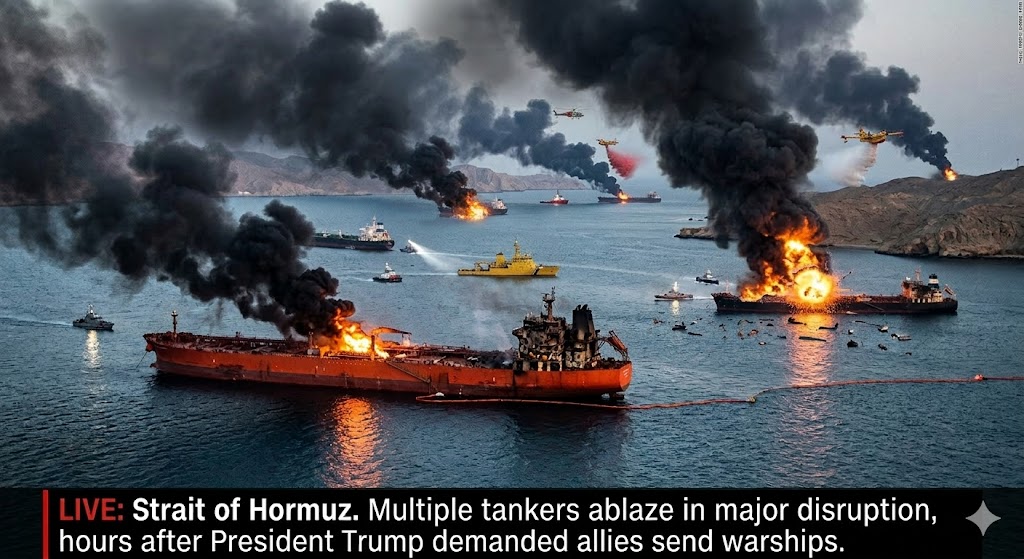
Allies currently view the Trump administration as a unpredictable partner rather than a leader. The trust has been replaced by “Strategic Hedging.” * Europe is increasingly looking toward “European-led deterrence” and independent naval missions (like Operation Aspides) to avoid being “drawn into the wider war.”
- Asian partners are communicating “closely” but making no commitments, effectively trying to outlast the immediate pressure without triggering a trade war.
The “fracture” isn’t a total break—none of these countries want to lose the U.S. security umbrella entirely—but they are no longer willing to pay any price to keep it.
Would you like to look into the specific details of the European Union’s alternative plan for the Strait of Hormuz, or perhaps the current status of the U.S.-China summit?
While the situation in the Strait of Hormuz remains volatile, there is a clear strategic divide between the Trump administration’s “coalition of the willing” approach and the alternatives being pursued by the EU and China.
1. The EU’s Alternative: “Strategic De-linking”
The European Union is actively resisting being pulled into the U.S. military command structure. Instead of joining the U.S. “Operation Epic Fury,” they are proposing a separate, defensive framework.
- Operation Aspides Expansion: EU Foreign Policy Chief Kaja Kallas has proposed changing the mandate of the existing Operation Aspides (originally for the Red Sea) to cover the Strait of Hormuz. The goal is to provide escorts, not strikes.
- The “Black Sea” Model: Kallas is also pushing for a diplomatic arrangement similar to the Black Sea Grain Initiative. This would involve creating limited humanitarian and energy corridors negotiated through the UN, rather than forcing a reopening through naval combat.
- Economic Alarm: The EU is terrified of a “double hit.” Beyond soaring oil prices (now over $105/barrel), Kallas warned that a prolonged closure will cause a global fertilizer shortage, leading to “food deprivation” by 2027.
2. The U.S.-China Summit: Diplomacy Held Hostage
The planned summit between President Trump and Xi Jinping (originally March 31–April 2) is currently on life support.
- The “Delay” Threat: Trump has publicly stated he may delay the trip by “a month or so” as a leverage tactic. He explicitly linked the visit to China’s willingness to send warships, telling the Financial Times, “I’d like to know [their position] before traveling.”
- China’s Response: Beijing has remained non-committal. While state media (Global Times) slammed Trump’s request as a “transfer of risk” for a war he started, official channels are keeping the door open. They are framing the summit as “irreplaceable,” but have refused to confirm the dates, giving themselves an exit if Trump’s demands become too aggressive.
- The Paris Backdoor: Despite the tension, Treasury Secretary Scott Bessent met with Chinese Vice Premier He Lifeng in Paris yesterday. Bessent is trying to decouple the trade talks from the war, calling the discussions “constructive” to prevent a total market collapse.
The Reality on the Water
Despite U.S. claims that 90% of Iran’s missile capacity is destroyed, the Strait is functionally closed. Iran has successfully used:
- GPS Jamming: Scrambling civilian navigation so badly that ships are colliding or getting lost.
- Swarm Tactics: Using small, fast-boats for mine-laying that are difficult for large U.S. destroyers to intercept.
- Selective Passage: Iran has hinted they may allow Chinese ships to pass safely, prompting some vessels to fly Chinese flags or broadcast “Chinese Crew” on their transponders to escape attack.
Would you like to look into the “GPS Jamming” technical details affecting the Gulf, or perhaps the specific impact this is having on Texas oil refineries? No, let’s look at Texas Oil Refineries.
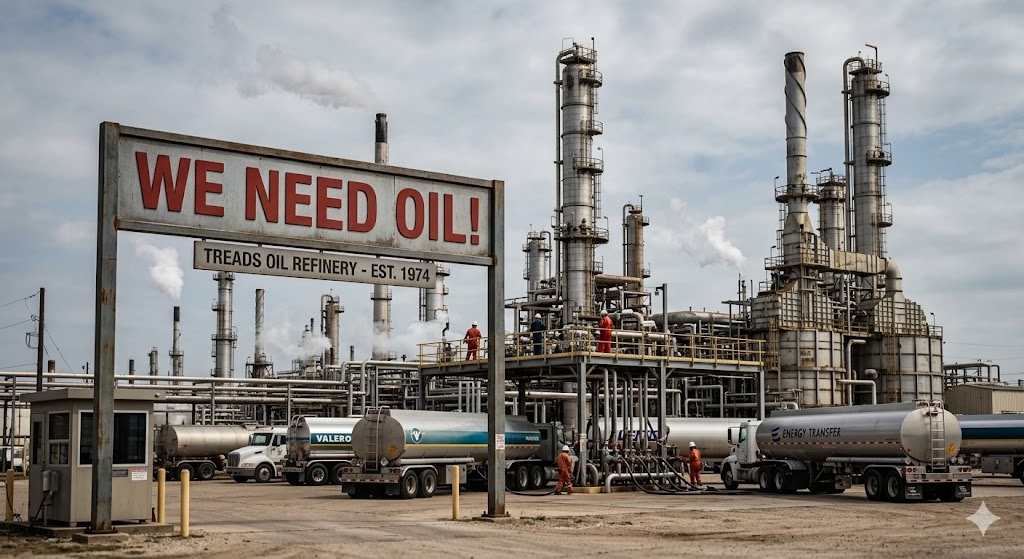
The situation for Texas oil refineries is a paradox: while the state is a massive energy producer, its refining infrastructure is currently caught between a windfall and a “feedstock” crisis.
As of today, March 16, 2026, here is how the conflict is hitting home in Texas:
1. The “Feedstock” Crisis
Most major Texas refineries (like those in Port Arthur and Houston) were built decades ago to process “heavy” crude oil from places like Saudi Arabia, Iraq, and Kuwait.
- The Disruption: With the Strait of Hormuz “effectively closed,” the supply of this specific heavy crude has slowed to a trickle.
- The Scramble: Refiners are desperately bidding up the price of alternative heavy oils from Venezuela and Canada to keep their units running. Valero Energy recently noted that Venezuelan crude will now make up a “large part” of their diet through the spring.
2. The $300 Billion “America First” Pivot
In a direct response to this vulnerability, President Trump recently announced the construction of America First Refining (AFR) at the Port of Brownsville.
- Why it matters: This is the first “greenfield” refinery built in the U.S. since 1976.
- The Strategy: Unlike older plants, it is designed specifically to process Texas Light Shale Oil from the Permian Basin. This is a long-term play to ensure that even if the Middle East remains closed, Texas can refine its own oil into gasoline without needing “heavy” imports.
3. Pain at the Pump vs. Record Profits
Texas is seeing a “split-screen” economy right now:
- The Consumer Hit: Despite being the nation’s largest oil producer, Texans aren’t immune to global prices. The average price for a gallon of gas in Texas hit $3.21 last Tuesday—up from $2.55 just a month ago. Analysts warn that if the Strait remains closed, Texas pump prices could spike to $5.00 or $6.00 by summer.
- The Industry Win: For Texas drillers in the Permian Basin, $100+ oil is a massive profit driver. They are accelerating drilling to fill the global supply gap, making the Texas energy sector the “big winner” of the conflict, even as local drivers feel the pinch.
4. Supply Chain “Just-in-Time” Failures
Refineries along the Gulf Coast operate on a “just-in-time” basis. Because storage tanks are filling up with refined products that can’t be shipped out easily (due to the same maritime risks in the Gulf), some plants are actually having to slow down production despite the high demand.
Summary of Impact
| Sector | Impact | Why? |
| Gas Prices | Up 25%+ | Global benchmarks (WTI/Brent) have surged due to the “Hormuz Premium.” |
| Refining | Scrambling | Heavy crude from the Middle East is missing; switching to Venezuelan oil. |
| Investment | Booming | $300B Brownsville refinery project fast-tracked to end import reliance. |
| Agriculture | Strained | Diesel prices have jumped 23%, hitting Texas farmers during planting season. |
 thelivingbreathingjamesbrown.com
You must be logged in to post a comment.