
Recent reports from March 2026 indicate that Iranian military officials have indeed escalated their rhetoric, threatening that “parks, recreational areas, and tourist destinations” worldwide would no longer be safe for their enemies. This follows several weeks of intense military conflict between Iran, Israel, and the United States.
While the Iranian statement was broad and did not name specific landmarks like the Vatican or the Western Wall (Wailing Wall), security analysts often consider high-profile cultural and religious sites as potential symbolic targets during such global escalations.
Here is the history and significance of the locations you mentioned, along with other major global sites that often see increased security during these periods.
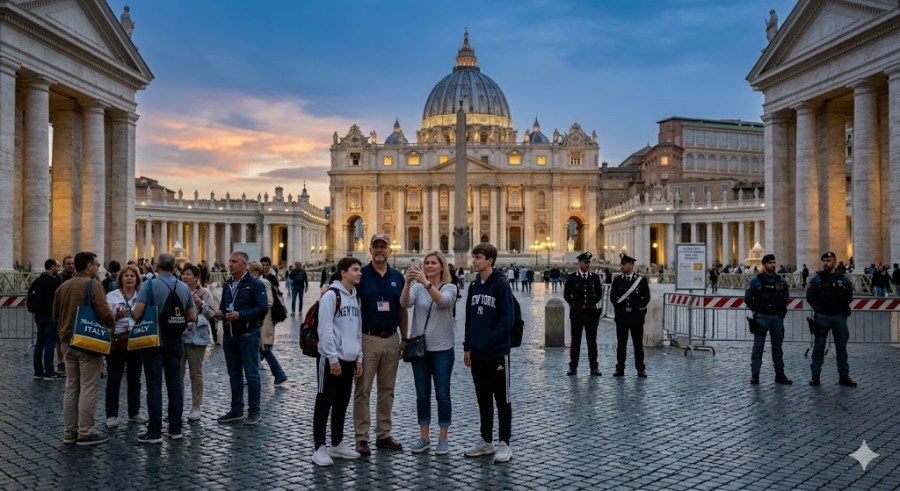
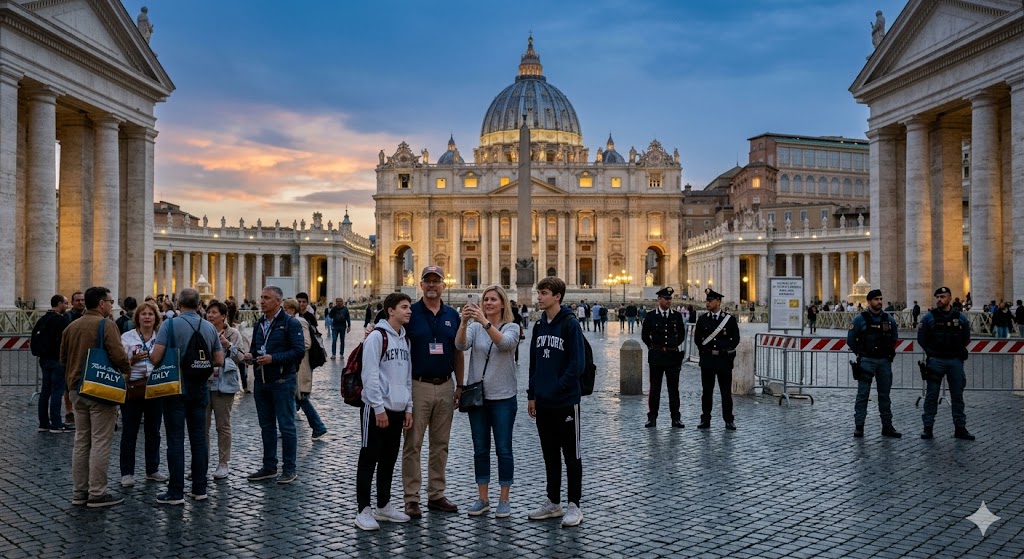
1. Vatican City (Rome, Italy)
The smallest independent state in the world, the Vatican is the spiritual and administrative center of the Roman Catholic Church.
- History: Established as an independent state via the Lateran Treaty in 1929, it sits upon the site where St. Peter was reportedly martyed and buried.
- Significance: It houses St. Peter’s Basilica, the Apostolic Palace, and the Vatican Museums. It is a UNESCO World Heritage site and a primary destination for millions of American and international tourists annually.
2. The Western Wall (Jerusalem)
Known as the “Wailing Wall” (Kotel), this is the holiest site where Jews are permitted to pray.
- History: It is a surviving retaining wall of the Second Temple courtyard, which was expanded by Herod the Great and destroyed by the Romans in 70 CE.
- Significance: For centuries, it has been a site of pilgrimage and lamentation. It is part of the larger Temple Mount complex, which is also home to the Dome of the Rock and Al-Aqsa Mosque, making the entire area a flashpoint of religious and political sensitivity.
3. The Louvre Museum (Paris, France)
As the world’s most-visited museum and a symbol of Western art and culture, the Louvre is frequently under high alert during international threats.
- History: Originally built as a fortress in the late 12th century under Philip II, it was converted into a royal palace and eventually opened as a public museum in 1793 during the French Revolution.
- Significance: It represents the peak of European cultural heritage, housing the Mona Lisa and the Venus de Milo.
4. Times Square & Statue of Liberty (New York City, USA)
Though located within the U.S., these are the most iconic symbols of “American Tourism” globally.
- Statue of Liberty: A gift from France in 1886, it served as a beacon for millions of immigrants.
- Times Square: Often called “The Crossroads of the World,” it is one of the most densely populated pedestrian areas on the planet, making it a “soft target” that requires constant surveillance.
5. The Colosseum (Rome, Italy)
A massive stone amphitheater that stands as a testament to the power of the Roman Empire.
- History: Commissioned around 70–72 CE by Emperor Vespasian, it was used for gladiatorial contests and public spectacles for over four centuries.
- Significance: It is the largest ancient amphitheater ever built and remains the premier symbol of the Roman Empire’s architectural and engineering legacy.
Current Safety Measures
If you are planning to travel or are currently near these locations, it is highly recommended to:
- Monitor State Department Advisories: Check for updated “Level 4: Do Not Travel” or “Level 3: Reconsider Travel” warnings.
- Register with STEP: Use the Smart Traveler Enrollment Program to receive security updates from the nearest U.S. embassy.
- Stay Vigilant: Be aware of your surroundings in crowded “tourist zones” and follow the instructions of local law enforcement.
Would you like to look up the current U.S. State Department travel advisories for a specific country or region?
As of March 21, 2026, the U.S. Department of State has issued an exceptionally rare Worldwide Caution due to the ongoing military conflict involving the United States, Israel, and Iran.
The situation is fluid and very dangerous, but here are the specific advisories for the areas you mentioned and the broader regions impacted by these threats.
1. The Middle East (High Risk)
Following U.S. combat operations in Iran that began in late February 2026, the entire region is under severe alert.
- Israel, the West Bank, and Gaza: Currently at Level 3: Reconsider Travel (Israel and West Bank) and Level 4: Do Not Travel (Gaza). As of March 18, 2026, the U.S. Embassy in Jerusalem has directed all government employees to shelter in place. Routine consular services are suspended, and Ben Gurion Airport has faced periodic closures. DANGEROUS
- Saudi Arabia: Level 3: Reconsider Travel. On March 13, 2026, the State Department ordered non-emergency employees and their families to depart the country due to the risk of Iranian drone and missile attacks targeting American interests. DANGEROUS
- Jordan & Kuwait: Security alerts were issued as recently as yesterday (March 20) due to reports of missiles and drones in Jordanian airspace. Travelers are advised to seek overhead cover immediately if sirens sound. DANGEROUS
2. Vatican City & Rome, Italy-DANGEROUS
- Advisory Level: Level 2: Exercise Increased Caution.
- Current Status: While Italy (including the Vatican) remains at Level 2, the U.S. Embassy in Rome issued a specific security alert on March 18, 2026, reinforcing the “Worldwide Caution.”
- Specific Threats: Authorities have warned of potential “spillover” demonstrations and the risk of terrorist activity targeting “soft targets” like tourist sites and religious landmarks. There have been reports of railway sabotage and bomb threats in Rome throughout February and March.
3. General “Worldwide Caution” Guidance
The State Department advises all U.S. citizens abroad to:
- Register with STEP: The Smart Traveler Enrollment Program is the only way to get direct security alerts from the local embassy.
- Expect Disruptions: Commercial flights in the Middle East and parts of Europe may be rerouted or canceled without notice due to airspace closures.
- Avoid Crowds: Large gatherings, especially near diplomatic facilities or iconic tourist landmarks, are considered higher risk during this period of “reprisal threats.”
Next Steps for Safety
Given the specific nature of the threats you mentioned regarding tourism locations:
- Check Local Media: Sites like the Vatican often have their own security updates separate from the Italian government.
- Have a Departure Plan: The State Department has emphasized that they may not be in a position to provide evacuation flights if major airports close suddenly.
 thelivingbreathingjamesbrown.com
You must be logged in to post a comment.