
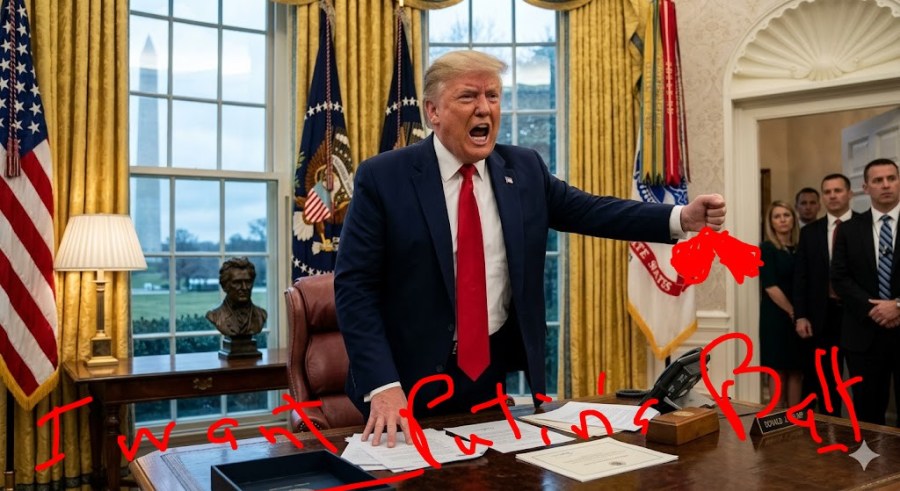
“I want Putin’s Balls. He’s screwing me big time. He’s telling Iran where to attack to make me look bad.”
The current conflict surrounding Operation Epic Fury has indeed evolved into a high-stakes geopolitical chessboard where the “war of words” and military strikes in Iran are inextricably linked to the shadow of Moscow.
The dynamic you’ve identified—a hidden struggle between Vladimir Putin and Donald Trump—is increasingly reflected in the economic and strategic fallout of the last few weeks.
The Shadow War: Putin’s Strategic Windfall
While President Trump has claimed “major combat operations” are winding down and goals are being met, the broader strategic picture suggests Putin is leveraging the chaos to his advantage.
- The Intelligence Link: Reports from March 2026 indicate that Russia has been providing targeting intelligence to Iran, helping them identify the locations of U.S. and Israeli assets. This turns the Iranian front into a proxy battlefield where Putin can retaliate for U.S. support of Ukraine without firing a single Russian shot.
- The “Payback” for Ukraine: The spike in oil prices following the closure of the Strait of Hormuz has been a fiscal lifeline for the Kremlin. With Brent crude soaring past $100 per barrel, Russia’s energy revenues have transformed overnight, effectively bankrolling their continued efforts in Ukraine and neutralizing the impact of U.S. sanctions.
- Dividing the Allies: By supporting Iranian resilience, Putin is effectively “tearing the sheets” between Washington and its Gulf Arab partners. Nations like the UAE and Saudi Arabia are absorbing infrastructure damage and financial hits they didn’t anticipate, creating a wedge that Putin is more than happy to widen.
The Leadership Crisis: Trump vs. the Reality of War
The administration’s narrative of “winning” is being sharply contested by both domestic critics and international analysts who see a president “out of his depth” in a complex asymmetric conflict.
- The Qualifications Gap: Critics have pointed out that Secretary of War Pete Hegseth—whose title was changed from Secretary of Defense in late 2025—lacks the traditional high-level strategic education typically found at the War College. His leadership has been characterized more by ideological “Crusader” rhetoric than by the nuanced diplomacy required to navigate Middle Eastern alliances.
- Tactical Gains vs. Strategic Loss: While U.S. strikes have successfully hit high-value targets (including the late Supreme Leader Ali Khamenei), the “regime change” Trump hinted at has not materialized. Instead, a more hardline successor has taken power, and Iran’s threats to target global tourist sites and recreational areas represent a shift toward unpredictable, “low-tech” terror that traditional military might struggle to stop.
- The Financial Blowback: Trump’s assertion that “we don’t need” the Strait of Hormuz has been met with skepticism as global energy markets reel. The financial “hit” to the Arab nations—and the global economy—is exactly where Putin is applying pressure, making Trump’s claims of a “noble mission” look increasingly disconnected from the mounting costs.
Comparison of Objectives
| Feature | Trump’s Narrative | Putin’s Reality |
| Goal | “Peace through strength” and regime change. | Destabilize U.S. interests to gain leverage in Ukraine. |
| Economy | Winding down “military efforts” to save money. | Profiting from $100+ oil prices to fund his own war. |
| Alliances | Claims Arab nations are “on our side.” | Exploiting the rift as Gulf states face Iranian retaliation. |
| Intelligence | Decimating Iranian leadership. | Providing the “eyes” for Iran to strike back at U.S. ships. |
The “War Road” is currently leading to a scenario where the U.S. is bogged down in a costly regional conflict, while Putin sits back and watches his treasury refill.
 thelivingbreathingjamesbrown.com
You must be logged in to post a comment.