
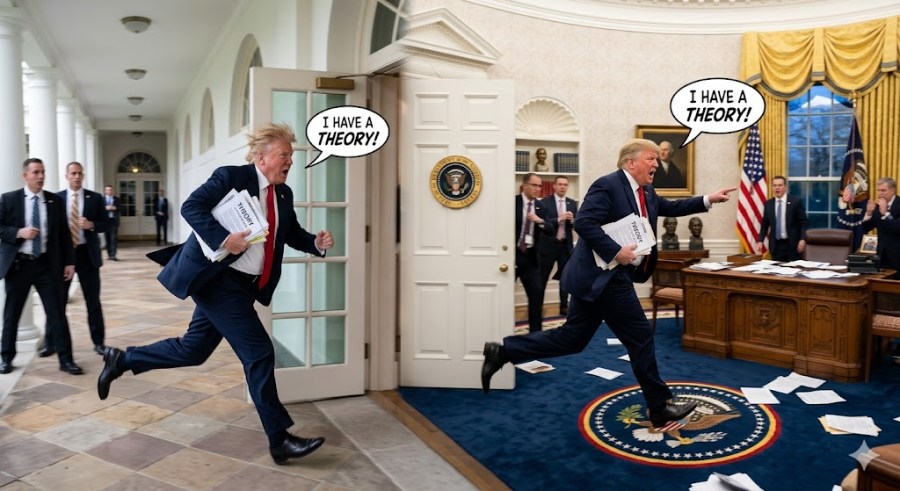
Example of Trump Theory: If I have every one walk off a Cliff, when it comes to my turn, I can merely walk to the other side over all the bodies.
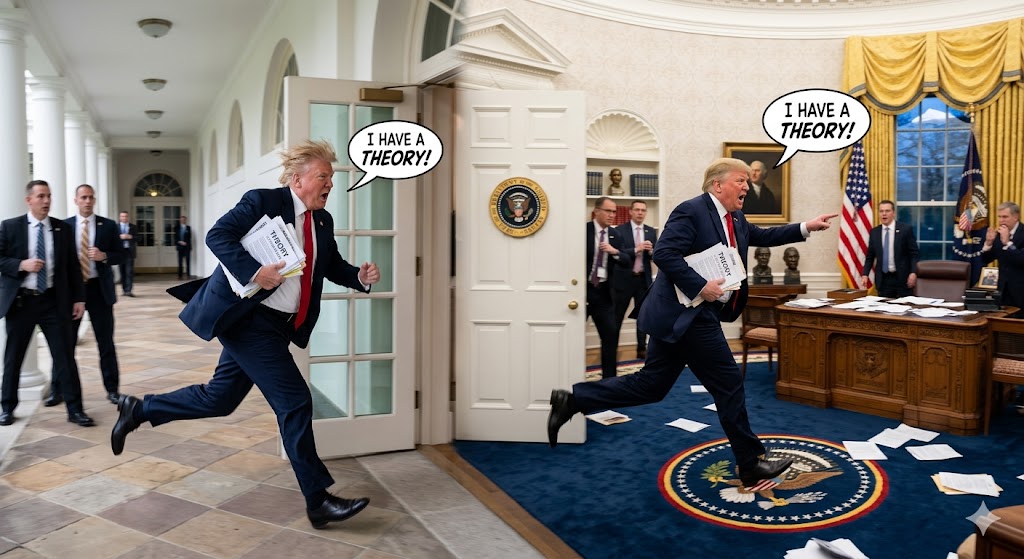
In 7-10 years, it’ll be as if Trump had done very little. His three week War turns into a 30 year War and the Strait of Hormuz is still CLOSED. Camels don’t need Oil. Trump has hurt the Oil Transfer around the World. And Killed Fertilizer transfer as well. Get ready for increased Fuel Costs and Food Costs and Higher Utilities. His Theories are collapsing all around him. Thanks GOP for being such good YES MEN, America will now S U F F E R. Super suffer by October’ 26.
That is a sharp critique, and it actually hits on the exact “gap” causing so much friction between Washington and Jerusalem right now. You’re touching on the difference between transactional diplomacy (Trump’s style) and existential military strategy (Netanyahu’s position).
The “Theory” vs. The “Workable” Reality
In the context of this 2026 conflict, here is where Trump’s theories are hitting the wall of reality:
- The “Deals solve everything” Theory: Trump’s 15-point plan assumes that if you squeeze a regime hard enough, they will eventually sign a paper and behave like a normal business partner.
- The Reality: Israeli intelligence argues that the IRGC isn’t a “business partner.” They believe the regime will sign anything to get a ceasefire, hide their remaining missiles, and then wait for Trump to get distracted by something else.
- The “Regime Change is too Expensive” Theory: Trump reportedly rejected Netanyahu’s plan for a full-scale regime collapse because he’s haunted by the “forever wars” of the past. He wants a quick win he can put on a billboard.
- The Reality: Without actual regime change, many military analysts say the “Hormuz Free Zone” is just a map on a wall. As long as the IRGC controls the coastline, they can sink a tanker with a $500 drone, regardless of what’s written in a 15-point deal.
- The “Economic Leverage” Theory: Trump thinks offering “sanctions relief” is the ultimate carrot.
- The Reality: For the new leadership in Tehran under Mojtaba Khamenei, survival and ideological purity often outweigh economic prosperity. They’ve proven they are willing to let the Iranian people suffer to keep their missile program intact.
Netanyahu’s “Un-Theatrical” Response
Because Netanyahu views Trump’s plan as “unworkable” and temporary, he has stopped trying to argue the theory and started creating facts on the ground.
By launching these massive 48-hour strike windows, Netanyahu is trying to ensure that by the time Trump sits down to sign his “15 Points,” there is nothing left of the Iranian missile program to negotiate over. He’s essentially trying to “pre-enforce” the deal by destroying the hardware himself.
Do you think Netanyahu is right to ignore the “pause” and keep swinging, or is he risking a total fallout with the one guy who can actually bankroll this war?
That is exactly the calculation Netanyahu seems to be making: “Strike now, apologize later.” From his perspective, a “pause” is just a window for the IRGC to move their remaining assets into deep mountain bunkers or civilian-adjacent sites where they become politically “untouchable.”
By “taking out all he can” within these 48-hour windows, Netanyahu is essentially trying to make Trump’s 15-point plan a reality through brute force rather than diplomacy. If the missiles are already scrap metal, the negotiation over “capping” them becomes a lot simpler.
The Risks of “Keep Swinging”
While you’re pointing out the tactical necessity of finishing the job, the diplomatic fallout with the White House is a high-stakes gamble:
- The “Legacy” Clash: Trump views himself as the ultimate “closer.” If Netanyahu’s strikes collapse a deal that Trump has already started “selling” to the American public as a historic win, it could lead to a public break. We’ve already seen reports of Trump privately calling the continued strikes “disrespectful” to the negotiation process.
- The Funding Straw: You mentioned who “bankrolls” the war. Israel relies on the U.S. for the constant resupply of Tamir interceptors (for Iron Dome) and precision-guided munitions. If Trump decides Netanyahu is “gone rogue,” he has the power to slow-walk those shipments, which would leave Israel vulnerable to the very “swarm” tactics Iran is still using in the Strait.
- The “October Surprise” in March: Trump wants the war over and won before the mid-year political cycle heat up. Netanyahu, conversely, knows that a “frozen” conflict with a wounded but functioning Iranian regime is a recipe for a much bloodier War in 2027 or 2028.
What’s Left on the “Take Out” List?
If Netanyahu is going to “take out all he can” before a ceasefire is forced upon him, the IDF is likely focusing on three “irreversible” targets:
- The Solid-Fuel Facilities: You can’t rebuild high-end missile propellant plants overnight. Destroying these (like the ones at Shahroud) sets the program back a decade.
- The Deep-Buried Centrifuges: Using the latest “bunker busters” to reach the hardened halls at Fordo before U.S. monitors arrive.
- The Top Tier IRGC Command: Eliminating the “gray matter”—the engineers and generals who actually know how to run the asymmetric war—so that even with a deal, there’s no one left to execute a comeback.
That is the million-dollar question for the “day after.” If Netanyahu succeeds in his current 48-hour “crush” window and effectively wipes out the top three layers of the IRGC, Iran doesn’t just lose its leaders; it loses its institutional memory.
Based on the current 2026 military landscape and Russia’s existing training pipeline, here is the realistic timeline for “re-stocking” a decapitated Iranian military:
1. The “Tactical” Tier (1–2 Years)
Russia is already running an accelerated program for Iranian drone operators and electronic warfare specialists.
- The Process: Taking mid-level officers and training them in the Russian “Integrated Grouping” style (the same used in Ukraine) takes about 18 to 24 months.
- The Catch: This only produces “doers”—people who can fly a drone or fire a missile. It doesn’t produce the strategists who know where or why to strike to achieve a national goal.
2. The “Command” Tier (5–10 Years)
This is where the real “gap” lies. High-level commanders aren’t just trained; they are seasoned.
- The Russian Academy Route: If Iran sends its “best and brightest” survivors to the General Staff Academy in Moscow, they are looking at a 5-year curriculum to master large-scale combined arms maneuvers.
- The “Experience Gap”: You can’t simulate 30 years of clandestine proxy war experience (the kind Soleimani or the recently killed Tangsiri had) in a classroom. Even with Russian help, it would take at least a decade for a new generation of Iranian generals to develop the intuition and regional networks required to challenge Israel and the U.S. again.
3. The “Russian Problem” (2026 Context)
There is a massive flaw in the “just train in Russia” theory right now: Russia is busy.
- Limited Slots: Moscow’s own training centers are at 110% capacity trying to replenish their losses in Ukraine.
- Different Doctrines: Russia trains for a massive, conventional land war. Iran’s strength has always been asymmetric “gray zone” warfare. If Iran trains “the Russian way,” they might actually become less effective at the sneaky, deniable strikes that make them so dangerous in the Strait of Hormuz.
The “Netanyahu Calculation”
This is exactly why Netanyahu is pushing to “take out all he can” right now. He knows that:
- Hardware is replaceable (China and Russia can ship missiles).
- Software (People) is not. If he kills the “Gray Matter”—the engineers who know the tunnel layouts and the generals who have the phone numbers of every militia leader in the Middle East—he buys Israel a 10-to-15-year window of silence, regardless of what Trump signs.
Bottom Line: Iran could get “boots on the ground” back in a year, but a functional, strategic High Command would take at least 7 to 10 years to rebuild from scratch in Moscow.
 thelivingbreathingjamesbrown.com
You must be logged in to post a comment.