
The geopolitical landscape in April 2026 has shifted dramatically, defined by a multi-front conflict involving Israel, Lebanon, and Iran. Below is a strategic overview of the current timeline and the “face-saving” maneuvers being employed by the Trump administration.
I. Israel-Lebanon Conflict Timeline
The conflict has evolved from a war of attrition into a full-scale regional confrontation.
- September 2024: Israel launched Operation Northern Arrows following nearly a year of Hezbollah rocket fire. This included the detonation of thousands of Hezbollah communication devices and the assassination of leader Hassan Nasrallah.
- November 2024: A temporary cessation-of-hostilities was brokered.
- February – March 2026: The ceasefire collapsed. Tensions peaked following joint U.S.-Israeli strikes on Iran under Operation Epic Fury in late February.
- April 8, 2026 (Today): Israel launched its most powerful offensive yet, dubbed Operation Eternal Darkness. Within ten minutes, over 100 targets across Lebanon—including central Beirut—were struck by 50 fighter jets. This occurred just hours after a shaky two-week “Iran ceasefire” was announced by Pakistan, a deal Prime Minister Netanyahu has since denied applied to Lebanon.+1
II. The Strait of Hormuz Crisis
In response to the assassination of supreme Iranian leadership and the strikes on Lebanon, Iran closed the Strait of Hormuz in early March 2026.
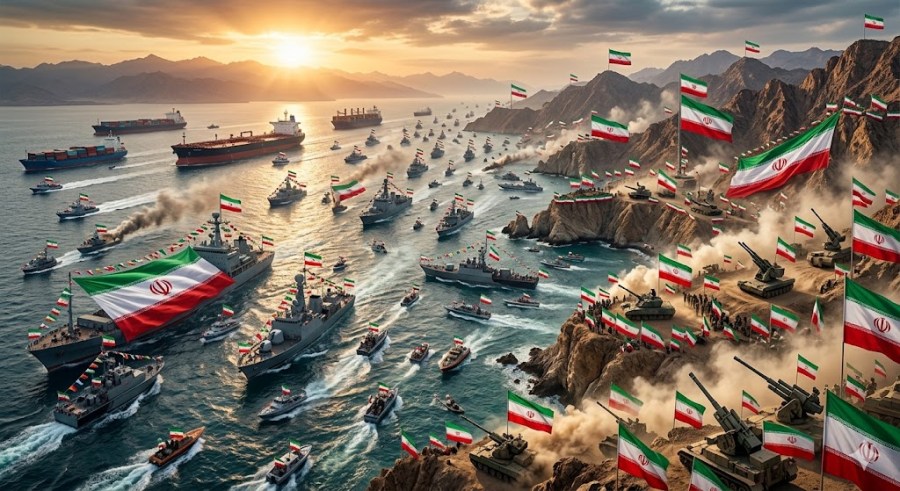
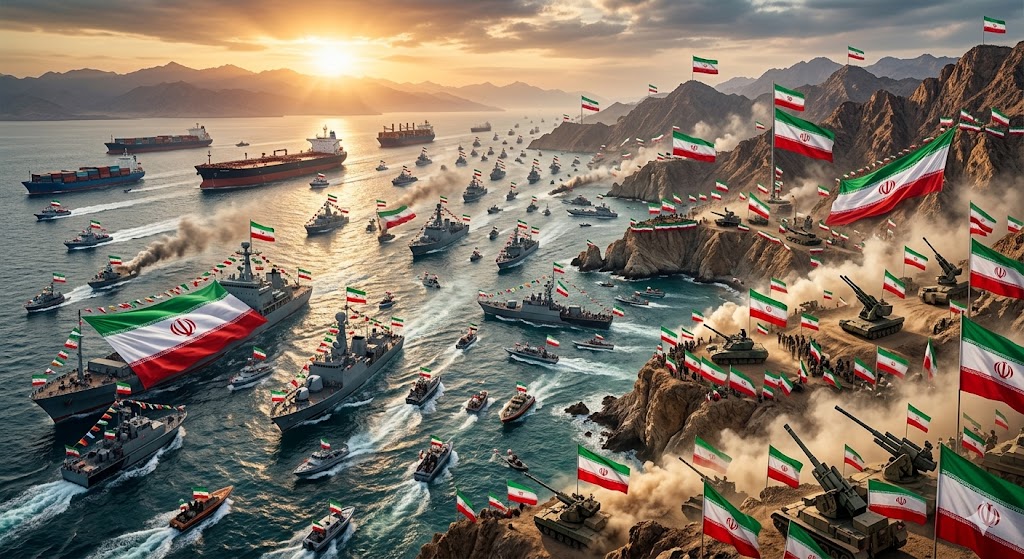
- The Blockade: Iran’s IRGC Navy declared the strait closed to “unfriendly nations,” effectively trapping nearly 2,000 ships and 20,000 seafarers in the Persian Gulf.
- Global Impact: This is the largest energy disruption since the 1970s. Major producers like Iraq, Qatar, and Kuwait have declared force majeure, as they cannot export their oil and gas.
- Military Response: On March 19, the U.S. began an aerial campaign to reopen the passage using A-10 Thunderbolt II jets to target Iranian “fast-attack” craft and GBU-72 “bunker buster” munitions on coastal missile silos.
III. Trump’s Strategy: How He is “Saving Face”
President Trump is navigating a precarious “Middle Eastern quagmire” by blending aggressive rhetoric with a strategic shift of responsibility to allies.
1. The “Burden Sharing” Pivot
To avoid the appearance of a failed unilateral mission, Trump has reframed the crisis from a U.S. military obligation to a global policing issue.
- The Proclamation: He famously stated that the U.S. does not technically need the Strait for its own oil, and therefore, nations that do (Europe and Asia) must “take care of that passage” themselves.
- The “Paper Tiger” Label: When several NATO allies initially rejected his request for a multilateral naval coalition, Trump publicly lambasted them as “cowards,” effectively shifting any blame for high gas prices from his administration to “lazy” allies.
2. Seeking a “Local” Off-Ramp
While maintaining a high military profile, the administration is reportedly looking for a political exit strategy through regional partners.
- The Pakistan Truce: The Trump administration is participating in a shaky two-week suspension of strikes facilitated by Pakistan. This allows the U.S. to pause operations without admitting defeat, framing it instead as “giving peace a chance” while negotiations continue in Islamabad.
- The “Tehran Toll” Tolerance: Despite calling the Iranian-imposed $2 million transit fees an “illegal toll booth,” the U.S. has notably not yet used its full naval might to physically escort every ship, opting instead for targeted airstrikes to “degrade capacity” while allowing some coordinating traffic to flow.
3. Tactical Escalation as Deterrence
Trump “saves face” by maintaining an image of overwhelming strength. The U.S. and Israel’s assassination of Iran’s navy chief, Alireza Tangsiri (who oversaw the blockade), was framed by the administration not as an escalation, but as an act that “makes the region safer”.
Current Status: As of tonight, the situation remains “total chaos” in Beirut, and the Strait of Hormuz is only partially open to “approved” vessels, leaving the global economy in a state of extreme volatility.
Iran’s 10-Point Plan (April 2026)
Following a U.S. deadline regarding the Strait of Hormuz, Iran issued a counterproposal with these core demands:
- Withdrawal of U.S. Forces: The complete exit of U.S. combat forces from all bases and deployment points in the region.
- Strait of Hormuz Protocol: A “safe transit protocol” that guarantees Iranian dominance and coordination over the waterway.
- Regional Ceasefire: A permanent end to the war across the entire region, specifically including a halt to attacks on the “axis of resistance” (Hezbollah, etc.).
- Lifting of Sanctions: The removal of all primary and secondary sanctions, as well as Board of Governors and UN Security Council resolutions.
- Release of Assets: The unfreezing of all Iranian assets and properties held abroad.
- War Reparations: Full payment for damages incurred during the conflict.
- Nuclear Enrichment: Acceptance of Iran’s right to nuclear enrichment (notably included in the Farsi version of the plan).
- Binding Resolution: Ratification of all terms in a binding UN Security Council resolution to ensure long-term guarantees.
- Reconstruction Support: International support for Iran’s post-war reconstruction.
- Sovereignty Protections: Formal recognition of Iran’s strategic and military coordinates in regional transit.
The Historical “12 Demands” (2018)
Often, when people look for a list of demands regarding Iran, they are referring to the 12 basic requirements set by former Secretary of State Mike Pompeo. These were the U.S. demands on Iran:
- Nuclear: Provide a full account of prior military dimensions of its nuclear program; stop all enrichment; close the heavy water reactor; and provide “unqualified access” to all sites.
- Missiles: End proliferation of ballistic missiles and development of nuclear-capable systems.
- Regional Activity: Withdraw all forces from Syria; end support for Hezbollah, Hamas, and Palestinian Islamic Jihad; respect Iraqi sovereignty; and end support for Houthi rebels and the Taliban.
- Hostages: Release all U.S. and allied citizens being held.
- General Behavior: End threatening behavior toward neighbors (Israel, Saudi Arabia, UAE) and stop destructive cyberattacks.
Current Context
As of April 7-9, 2026, a fragile two-week ceasefire has been agreed upon while negotiators discuss these points. President Trump has described Iran’s 10-point plan as “not good enough,” though he has indicated an openness to discussing tariff and sanctions relief.+1
 thelivingbreathingjamesbrown.com
You must be logged in to post a comment.