
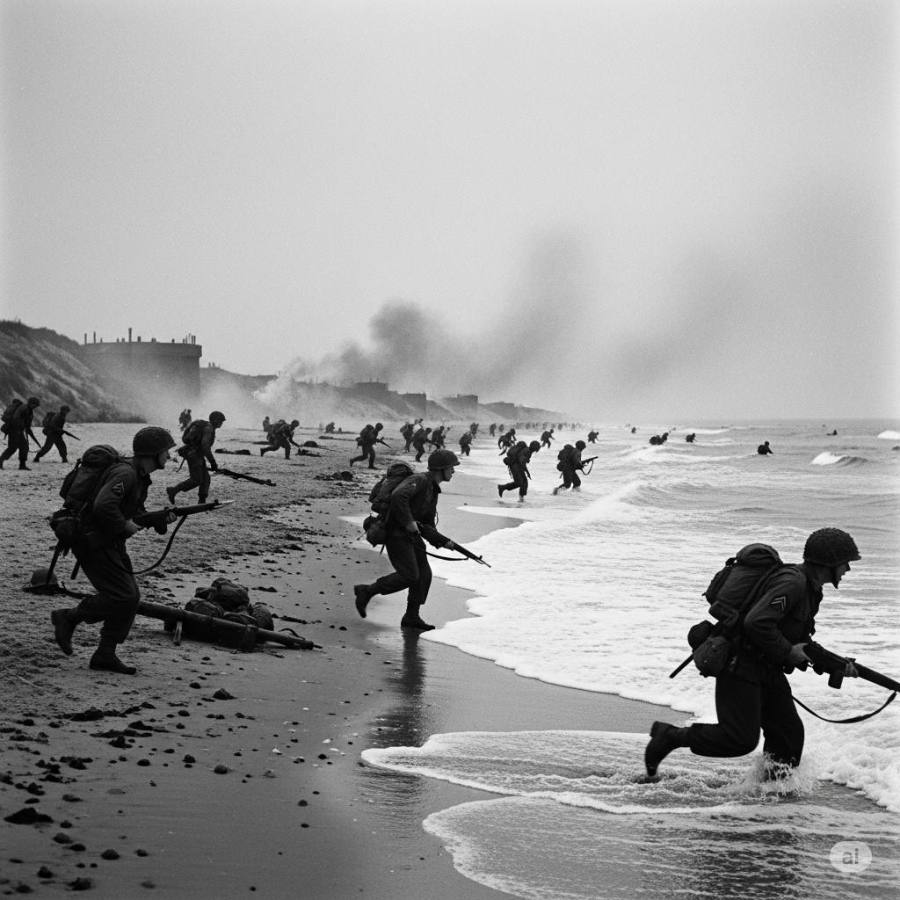
Shall we Remember it or Shall we Chose to Forget it? We absolutely cannot ever forget WW-II or WW-I. Or Vietnam or Iraq or Korea or Afghanistan.
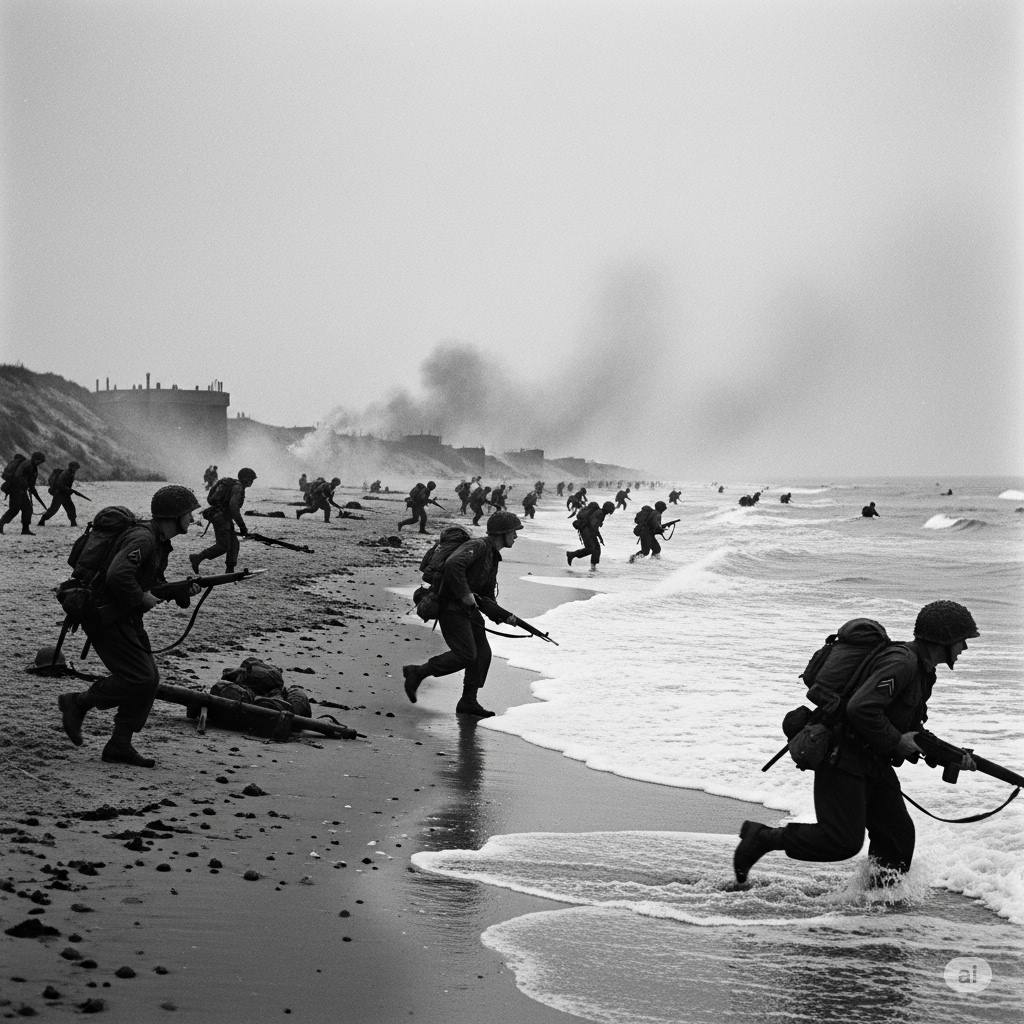
I had three Uncles that went in on the Beaches on D-Day. A father who served. A grandfather who served. An Aunt who served. I choose to NEVER FORGET as long as I live. Two Uncles went in on the First Day. On the same Beach. One went in on on the same Beach on the 2nd Day. Who served?
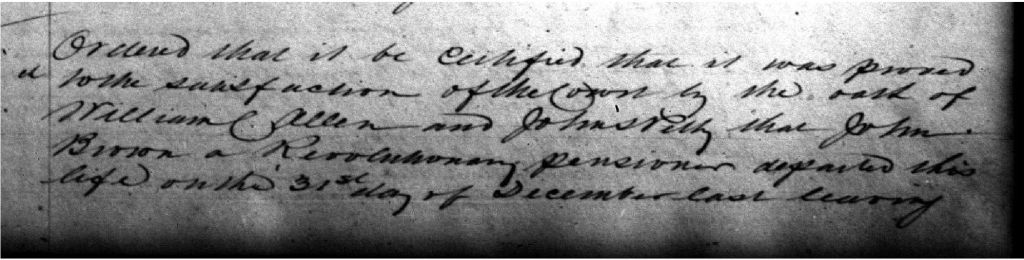
My Kin have always Served. All the way back to the Revolutionary War.
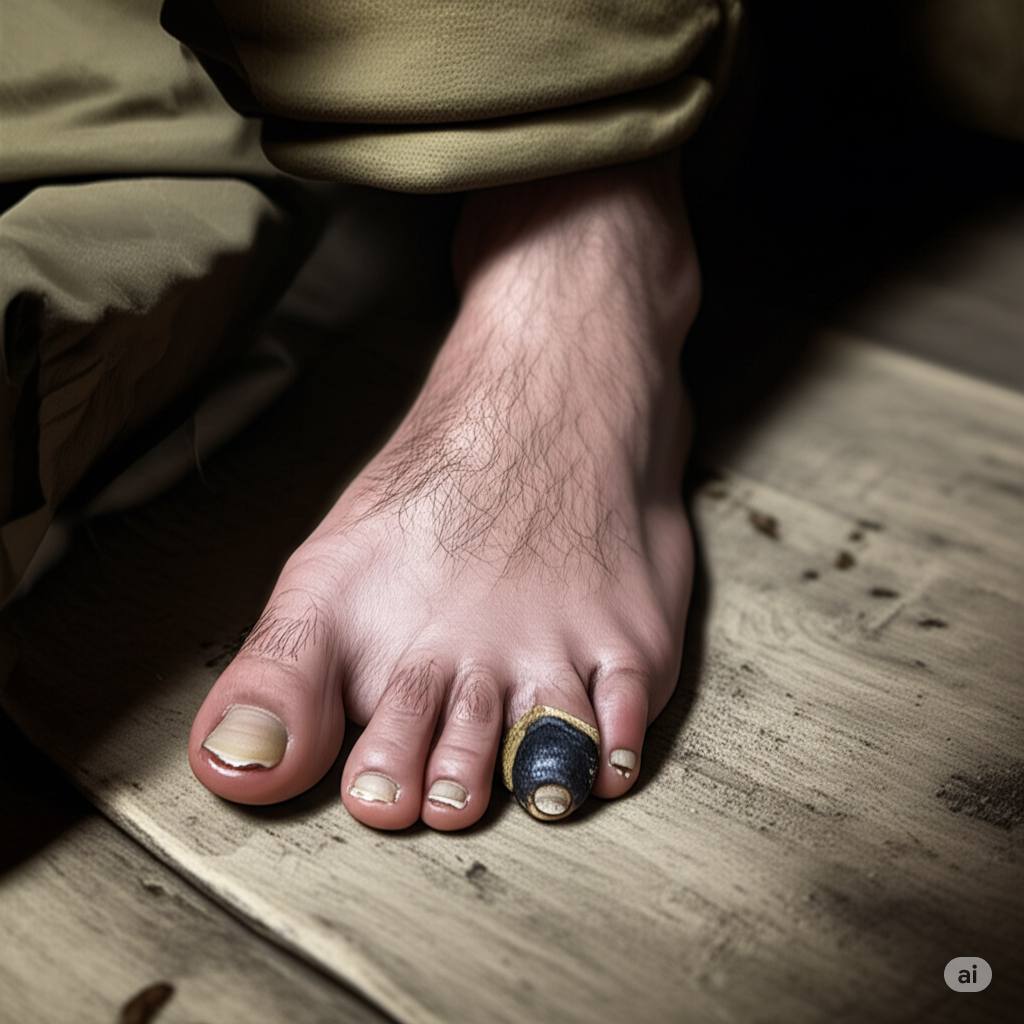
During WW-II, Tolepheus, Pud, Nuke, Alford, Walter, Mike, Lindsey, Merle, One got cut down by A German Machine gun, but lived. Another lost his toes in the The Battle of the Bulge, a major World War II battle fought in the Ardennes Forest, was a fierce and brutal engagement characterized by intense fighting and extremely harsh winter conditions. This battle pitted American and German forces against each other, with significant losses on both sides. The battle, which lasted from December 16, 1944, to January 25, 1945, resulted in a decisive Allied victory, but at a heavy cost.
The stories I was told were BRUTAL. Absolutely BRUTAL. Such incredible stories of garbage and Heroism. Things that must be prevented from happening again. War is not a Game. War destroys families and so much more. Trump needs to get his Head out his ASS and Get Ukraine and Gaza Wars stopped. His Playing the Real Estate President sucks the Big One.
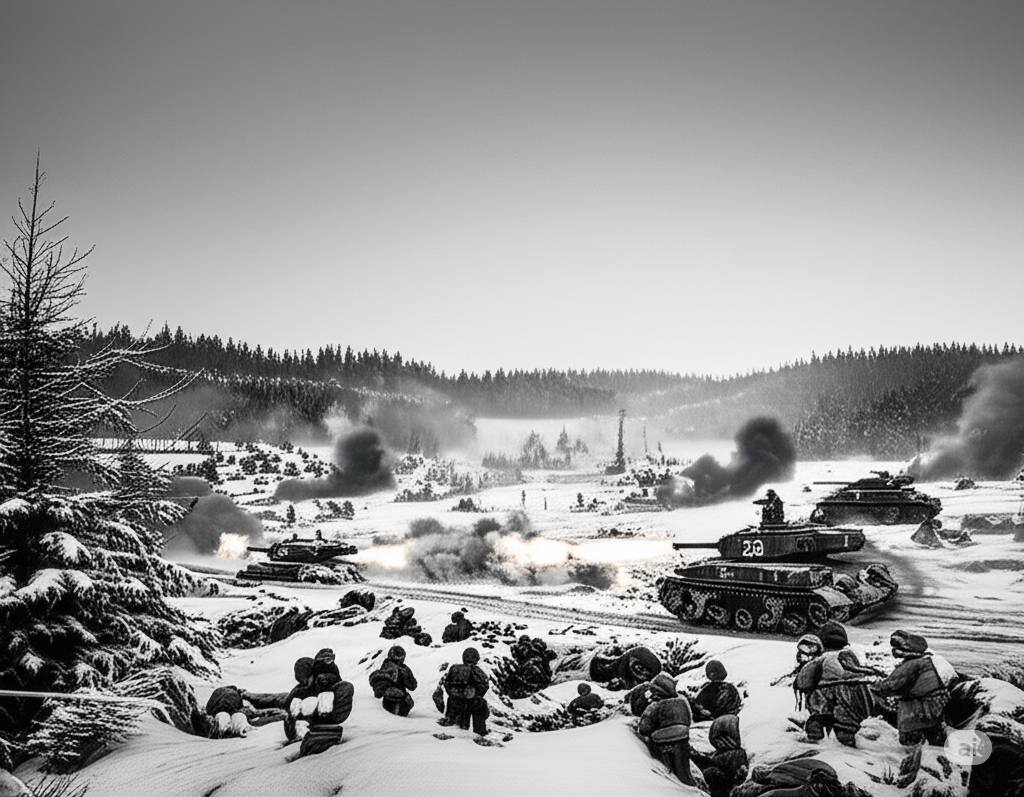
D-Day: The Allied Invasion of Normandy
D-Day, June 6, 1944, marked the beginning of the end for Nazi Germany’s control over Western Europe. It was the largest seaborne invasion in history, involving nearly 160,000 Allied troops crossing the English Channel to land on the beaches of Normandy, France. This monumental undertaking was the culmination of years of planning and preparation, aimed at establishing a crucial second front against Hitler’s forces.
The Planning and Deception
The decision to launch an invasion of such scale was made at the Tehran Conference in November 1943, with the Western Allies (the United States, Britain, and Canada) committing to a cross-Channel attack. General Dwight D. Eisenhower was appointed Supreme Commander of the Allied Expeditionary Force.
One of the most critical aspects of D-Day was Operation Bodyguard, a massive deception campaign designed to mislead the Germans about the timing and location of the invasion. This involved creating an entire fictitious army group, the First United States Army Group (FUSAG), complete with inflatable tanks, dummy airfields, and fake radio traffic, all positioned in southeastern England to suggest an invasion targeting the Pas-de-Calais, the narrowest point of the English Channel. This elaborate ruse successfully convinced Hitler that the main invasion would occur elsewhere, drawing German reinforcements away from Normandy.
The Invasion Begins
The initial assault on D-Day involved several key phases:
- Airborne Landings: Hours before the amphibious landings, thousands of American, British, and Canadian paratroopers and glider-borne infantry landed behind enemy lines. Their objectives were to secure vital bridges, disrupt German communications, and establish roadblocks to impede enemy counterattacks. While these landings were often chaotic and dispersed, they created confusion among the German defenders and helped pave the way for the beach assaults.
- Naval Bombardment: As dawn broke, a formidable Allied naval fleet unleashed a massive bombardment on the German coastal defenses, attempting to soften up the fortified positions, known as the Atlantic Wall.
- Amphibious Landings: At 6:30 AM (H-Hour), the first waves of infantry hit the five designated landing beaches:
- Utah Beach (American): The westernmost beach, where resistance was relatively light, allowing American forces to quickly establish a foothold.
- Omaha Beach (American): This beach proved to be the most heavily defended and resulted in devastating casualties for the American forces. The intense German fire, combined with natural obstacles, made progress extremely difficult, and for a time, the success of the landing was in doubt.
- Gold Beach (British): British forces faced significant German strongholds but managed to push inland, linking up with Canadian forces.
- Juno Beach (Canadian): Canadian troops encountered fierce resistance but successfully broke through the German defenses and advanced further inland than any other Allied force on D-Day.
- Sword Beach (British): The easternmost beach, where British forces, supported by specialized “Hobart’s Funnies” (modified tanks designed to overcome obstacles), fought their way ashore.
Aftermath and Impact
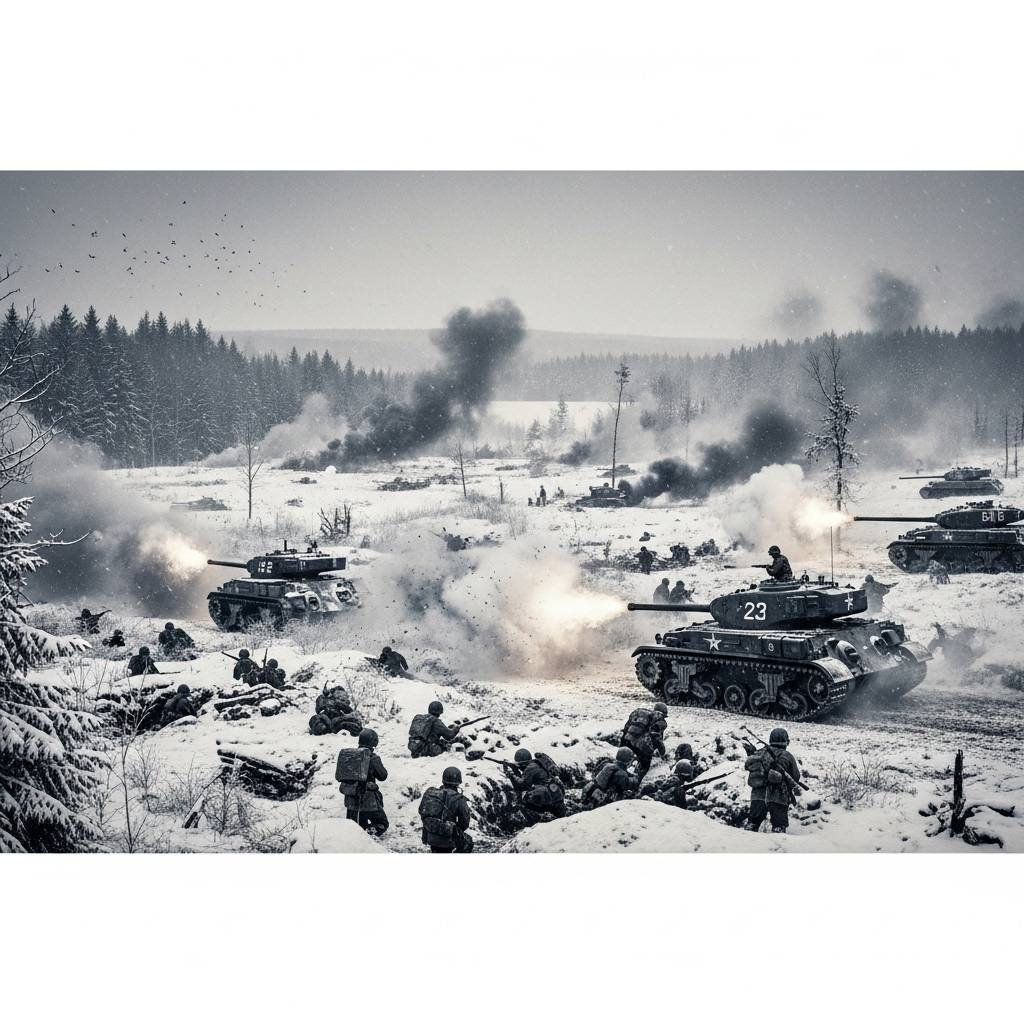
By the end of D-Day, despite fierce German resistance, particularly at Omaha, the Allies had established a precarious but vital foothold in Normandy. They had landed over 150,000 troops, thousands of vehicles, and tons of supplies. However, the cost was high, with estimated Allied casualties ranging from 10,000 to 12,000 killed, wounded, or missing.
The success of D-Day was a pivotal moment in World War II. It opened the long-awaited Western Front, forcing Germany to fight a two-front war against the Western Allies and the Soviet Union. This ultimately led to the liberation of France and the eventual defeat of Nazi Germany less than a year later, on May 8, 1945. D-Day remains a testament to the courage, sacrifice, and strategic brilliance of the Allied forces.
References
- Ambrose, Stephen E. D-Day, June 6, 1944: The Climactic Battle of World War II. Simon & Schuster, 1994.
- Beevor, Antony. D-Day: The Battle for Normandy. Viking, 2009.
- U.S. Army Center of Military History. Cross-Channel Attack. United States Army in World War II. Office of the Chief of Military History, 1993.
- National D-Day Memorial Foundation. “About D-Day.” D-Day.org. Accessed June 6, 2025.
- Imperial War Museums. “The Story of D-Day.” IWM.org.uk. Accessed June 6, 2025.
- The National WWII Museum. “D-Day: June 6, 1944.” NationalWW2Museum.org. Accessed June 6, 2025.
- Staff, U.S. Army. “The Planning and Deception of D-Day.” U.S. Army.mil. Accessed June 6, 2025.
- Ellis, L. F. Victory in the West, Vol. I: The Battle of Normandy. History of the Second World War. HMSO, 1962.
- Keegan, John. Six Armies in Normandy: From D-Day to the Liberation of Paris. Viking, 1982.
- Zuehlke, Mark. Juno Beach: Canada’s D-Day Victory, June 6, 1944. Douglas & McIntyre, 2004.


You must be logged in to post a comment.