


The Hemispheric Tinderbox: A Speculative Analysis of a Venezuelan Oreshnik Strike on the United States
Introduction
The current geopolitical landscape, as detailed in the article “Russia’s Tit-For-Tat Move! How Moscow Is Arming Venezuela…” (Ahlawat, 2025), is characterized by an escalating proxy conflict between Russia and the West. The strategy of “arming the adversary” has moved from a regional chess match to a direct challenge of historical geopolitical doctrines. The article posits a scenario where Russia, in response to potential U.S. arms supplies to Ukraine, provides Venezuela with advanced, long-range hypersonic missiles, including the “nuclear-capable” Oreshnik.
This paper will explore the catastrophic “what if” scenario requested: What if Venezuela, emboldened by this new arsenal, chose to use an Oreshnik missile to strike American cities? This analysis will delve into the immediate, devastating impacts of such an attack and the complex, cascading global repercussions that would inevitably follow, pushing the world to the brink of a new and terrifying conflict.
Part 1: The Unthinkable Act: A Hypersonic Strike on the Homeland
The scenario presupposes that Venezuela has not only received the Oreshnik missile—a weapon with a reported 3,400-mile range capable of reaching much of the continental U.S.—but has made the regime-ending decision to launch it. The nature of this weapon is key. As a hypersonic missile, its speed (far exceeding Mach 5) and maneuverability would render existing U.S. air defenses, according to the article’s claims about Russian technology, “inadequate.”
The immediate impact would be catastrophic on multiple levels:
- Physical Devastation: A conventional Oreshnik warhead striking a major American city—be it Miami, Houston, or even Washington D.C. (all well within range)—would cause massive casualties and infrastructure collapse. If Venezuela were to use the missile’s “nuclear-capable” function, the act would be one of civilizational suicide, resulting in millions of deaths and a response that would erase Venezuela from the map. For this analysis, we will focus on the more plausible (though still extreme) conventional strike, which is horrific enough.
- Psychological Shock: The continental United States, protected by two oceans and technological supremacy, has not experienced a conventional strike from a foreign nation’s advanced missile systems. The psychological impact of an “unstoppable” missile successfully striking a city would be a national trauma dwarfing 9/11. It would shatter the American sense of security and invulnerability, introducing a new era of fear.
- Immediate Chaos: The attack would trigger an immediate nationwide grounding of air traffic, a catastrophic stock market crash far exceeding any historical precedent, and a declaration of martial law in the affected regions. Panic would be widespread.
Part 2: The Unavoidable Retaliation: America’s Overwhelming Response
An attack of this magnitude would not be met with sanctions or diplomacy. It would be an unambiguous casus belli—an act of war that would unite the American populace and political spectrum in a singular demand for overwhelming retribution.
- The End of the Venezuelan Regime: The U.S. military response would be swift and devastating. It would not be a limited operation. The stated goal would be the complete and total neutralization of the regime responsible. This would involve a massive air and missile campaign targeting every known Venezuelan military asset, command-and-control center, air defense system (like the S-300VMs and Pantsirs mentioned in the article), and government headquarters.
- A New Interpretation of the Monroe Doctrine: The 1823 Monroe Doctrine, which the article notes Russia is challenging, would be violently reasserted. The U.S. would not just act to prevent foreign interference; it would act to punish the consequences of that interference. A full-scale invasion and occupation of Venezuela to remove the regime and secure any remaining advanced weaponry would be highly probable. The Venezuelan military, despite its Russian Su-30MK2 fighters and air defenses, would be completely overwhelmed by the full force of the United States.
Part 3: Global Repercussions: A World on the Brink
The most terrifying repercussions would not be in Caracas, but in Moscow. The United States would not view this as an isolated act by a rogue state. It would be seen, unequivocally, as an attack by a Russian proxy using a Russian weapon.
- The U.S.-Russia Confrontation: The immediate U.S. demand would be for Russia to stand down, withdraw all military personnel from the Western Hemisphere, and answer for its role in arming a nation that committed mass murder against the U.S. This would be the 1962 Cuban Missile Crisis in reverse, but after the missiles have already flown.
- The Escalation Ladder:
- Diplomatic: All diplomatic ties between Washington and Moscow would be severed instantly.
- Economic: A complete global embargo on Russia, enforced by the U.S. Navy, would be attempted. All Russian assets, public and private, would be seized.
- Military: U.S. and NATO forces would be placed on their highest-possible alert (DEFCON 1 or 2). A direct military confrontation between U.S. forces (in the process of invading Venezuela) and any Russian troops or “advisors” on the ground would be almost unavoidable. This would be the first direct, hot conflict between U.S. and Russian soldiers since the Russian Civil War. The world would be closer to a full-scale nuclear exchange than at any point in history.
- Global Fracture:
- NATO: Article 5 would be invoked. An attack on the U.S. by a nation armed for that purpose by Russia would be presented as an attack by Russia itself. The alliance would be forced to mobilize, putting all of Europe on a war footing.
- China and the Global South: The world would be forced to choose. China would face the ultimate dilemma: back its Russian partner in a direct conflict with the U.S., or cut Moscow loose to avoid a third world war that would destroy the global economy it relies on.
- Latin America: The region would be instantly destabilized. Nations would be terrified, and any government with ties to Russia or Venezuela would face immense U.S. pressure to break them or be declared hostile.
Conclusion
The hypothetical scenario of Venezuela using a Russian Oreshnik missile on American cities is a study in catastrophic escalation. It would be an act of suicide for the Venezuelan regime, resulting in its swift and violent destruction.
However, the true danger lies in the proxy dynamic. The attack would shatter the unspoken rules of geopolitical conflict. The “tit-for-tat” move described in the article—arming Venezuela to “pressure Washington”—would have spun wildly out of control, transforming a regional proxy war in Ukraine into a direct, global confrontation between the world’s two largest nuclear powers. The repercussions would be a global economic collapse, a new world war, and an existential gamble with the future of humanity, all balanced on the reckless decision of a client state and the arrogant calculations of its superpower patron.
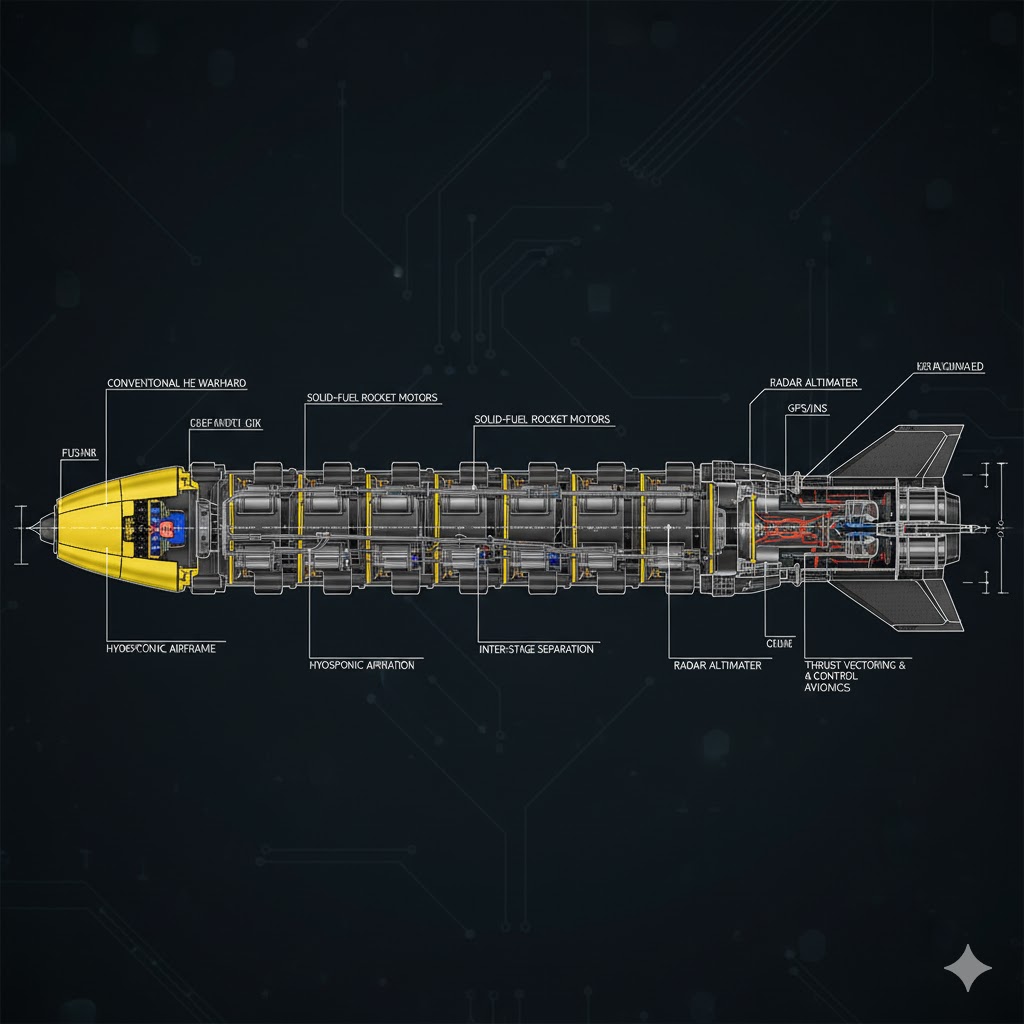
Here are the facts regarding the Oreshnik missile system, based on official statements and public reporting. How many will Russia give to Venezuela? With Nukes? Hitting six cities per Missile?
- Name: Oreshnik (Russian: Орешник, meaning “Hazel shrub”).
- Type: It is an Intermediate-Range Ballistic Missile (IRBM) system.
- Origin: The Russian Federation. The Pentagon has stated the Oreshnik is a variant of the RS-26 Rubezh missile.
- First Combat Use: The missile’s first documented use in combat was on November 21, 2024. Russia used the missile to strike a target in the Ukrainian city of Dnipro.
- Reported Speed: The missile and its warheads are described as hypersonic. Russian President Vladimir Putin stated it reached a speed of Mach 10. Ukrainian officials have cited speeds of Mach 11.
- Payload (Warhead): The Oreshnik is reported to be equipped with a MIRV (Multiple Independently Targetable Reentry Vehicle) payload. This allows the missile to release multiple warheads to strike different targets or the same target area.
- Warhead Count: Video analysis and reports from the November 21 strike indicate the missile carried six separate warheads.
- Capability: The system is described as dual-capable, meaning it is designed with the ability to carry either conventional or nuclear warheads.


You must be logged in to post a comment.