
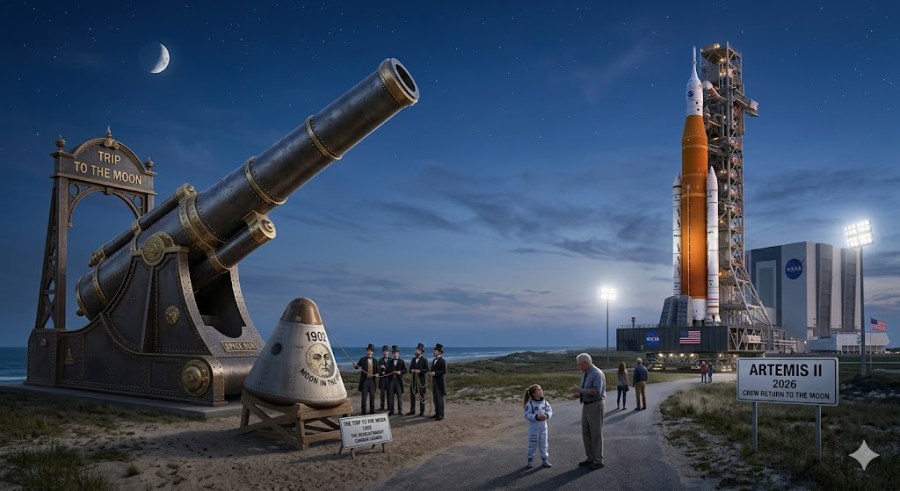
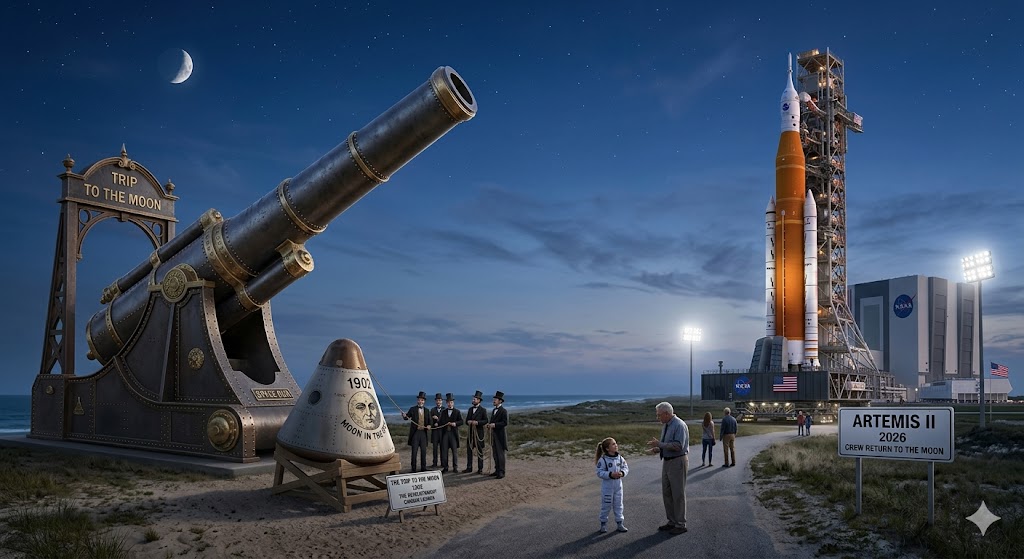
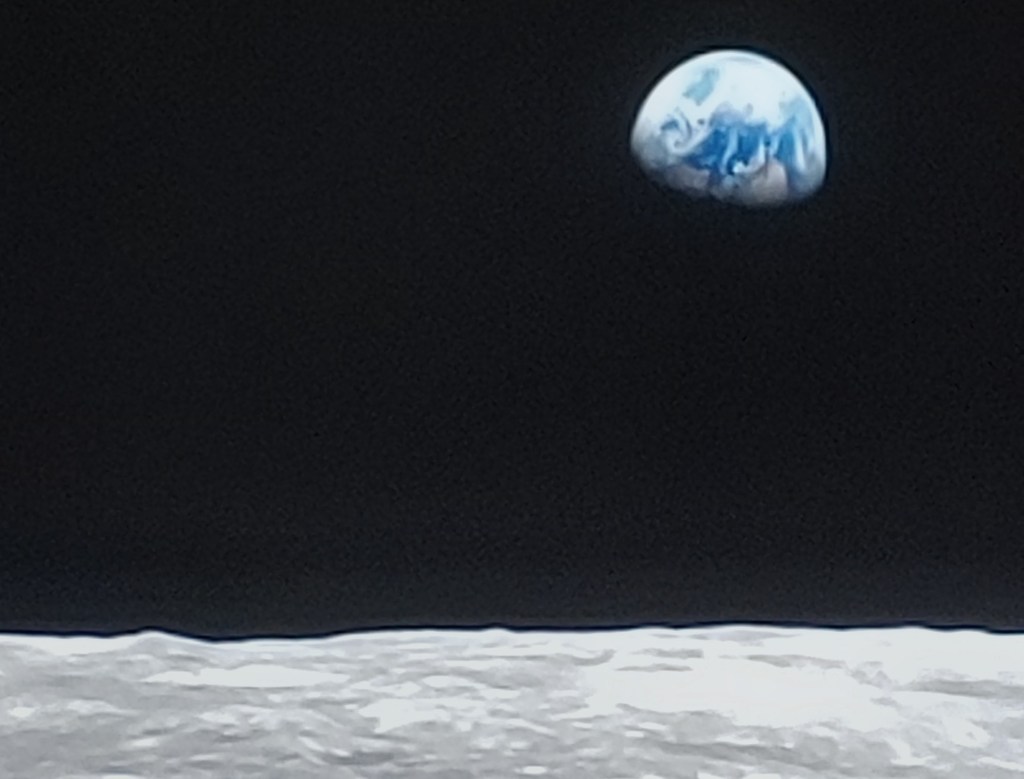
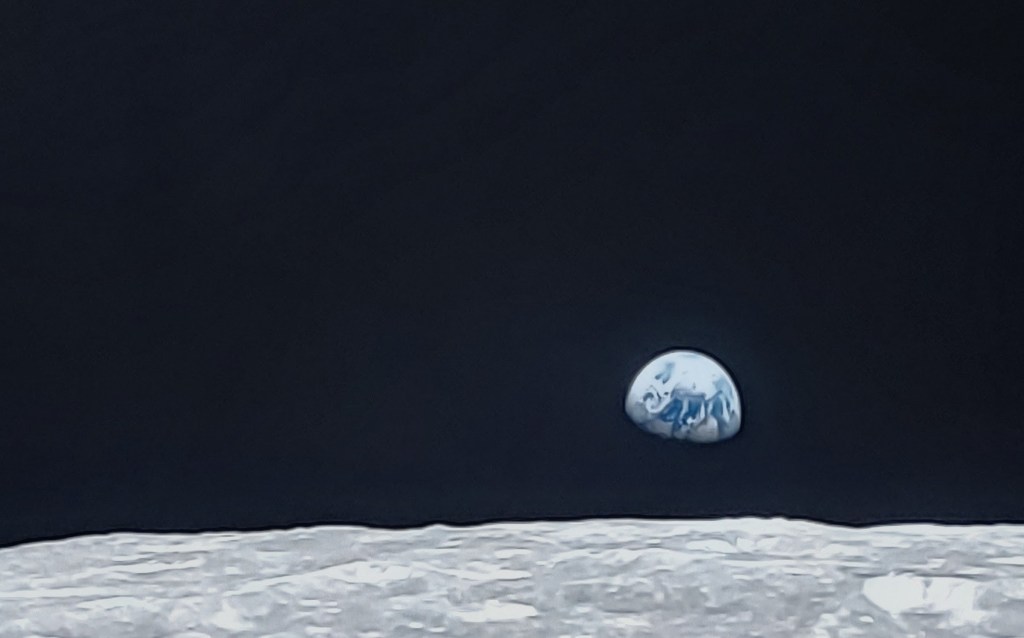
Georges Méliès’ Le Voyage dans la Lune (1902) remains one of the most significant milestones in cinematic history. It wasn’t just a movie; it was the birth of special effects and the first time humanity’s collective imagination truly touched the lunar surface.
Looking back from 2026, the contrast between Méliès’ whimsical dream and our modern scientific reality is both humorous and deeply moving.
The Visionary Comparison: 1902 vs. 2026
| Feature | The 1902 Vision (Méliès) | The 2026 Reality |
|---|---|---|
| The Launch | Fired from a massive “Space Gun” (the Columbiad) by a group of bearded astronomers. | Vertical takeoff via multi-stage rockets (like the SLS or Starship) using liquid oxygen and methane. |
| Lunar Inhabitants | Selenites: Insect-like creatures that explode into dust when hit with an umbrella. | An arid, sterile landscape. We look for microbial life or frozen water, not acrobatic moon-men. |
| Atmosphere | Earth-like; the astronomers step out of the capsule and breathe freely without suits. | A vacuum. Astronauts require pressurized suits, life support, and radiation shielding. |
| Return Trip | The capsule is tipped off a ledge with a rope, letting gravity “fall” it back to Earth. | Precision trans-earth injection burns and heat shields to survive atmospheric re-entry at 25,000 mph. |
The Magic of “The Rope” and Gravity
The most charming moment you mentioned—pulling the capsule off the moon with a rope—highlights a fundamental 1902 misunderstanding of physics that feels like pure poetry today. In Méliès’ world, the Moon was like a high shelf. To get home, you simply needed to fall off the edge.
In 2026, we know the “fall” back to Earth is a violent, high-speed ballet of physics. Yet, there is a shared DNA between that rope and our modern docking latches. Both represent the human need to “tether” ourselves to safety while exploring the unknown.
Selenites vs. Science
The Selenites were a reflection of the era’s fascination with the “exotic” and the unknown. They weren’t meant to be biologically accurate; they were manifestations of our fear and curiosity. Today, our “Moon Creatures” are actually ourselves—the inhabitants of the Artemis Base Camp. We have traded the exploding insect-men for lunar rovers and 3D-printed habitats.
Inspiring the Next Generation
Méliès didn’t have a physics degree; he had a background in stage magic. He proved that creativity often precedes capability. Before the engineers could build the Apollo rockets or the Starships of the 2020s, someone had to imagine what it would look like to hit the “Man in the Moon” in the eye.
Lessons for the Future:
- Fearless Imagination: If the 1902 audience had waited for “realistic” science, they never would have dreamed of space. Don’t let current limitations stifle your ultimate goal.
- Art Drives Innovation: The scientists of the 1960s grew up on the stories inspired by Méliès. Fiction is the blueprint for future facts.
- The Human Element: Whether it’s a 1902 astronomer in a top hat or a 2026 astronaut in a high-tech suit, the spirit is the same: We are a species that cannot help but look up and wonder.
Even in 2026, with all our sensors and satellites, we still owe a debt to that flickering silent film. It taught us that the Moon isn’t just a rock—it’s a stage for the human spirit.
What do you think is the “rope and capsule” idea of our time—something we do now that people in 100 years will find hilariously simple?


You must be logged in to post a comment.