
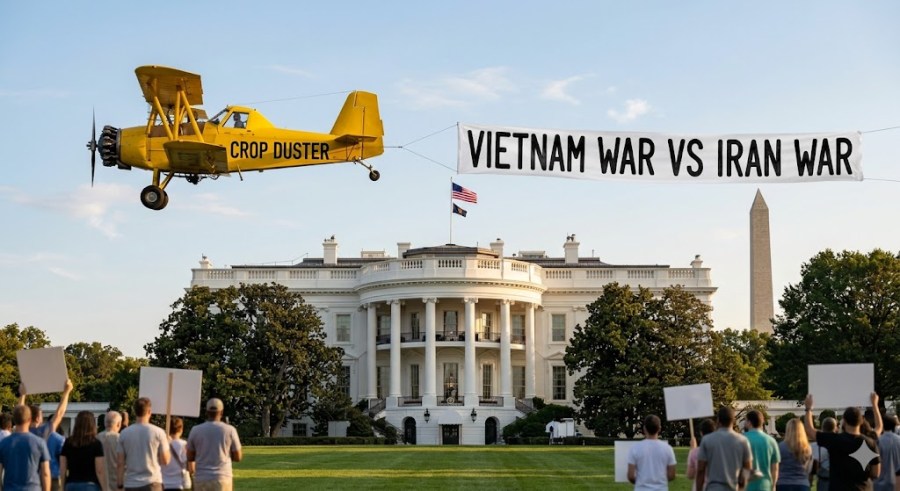
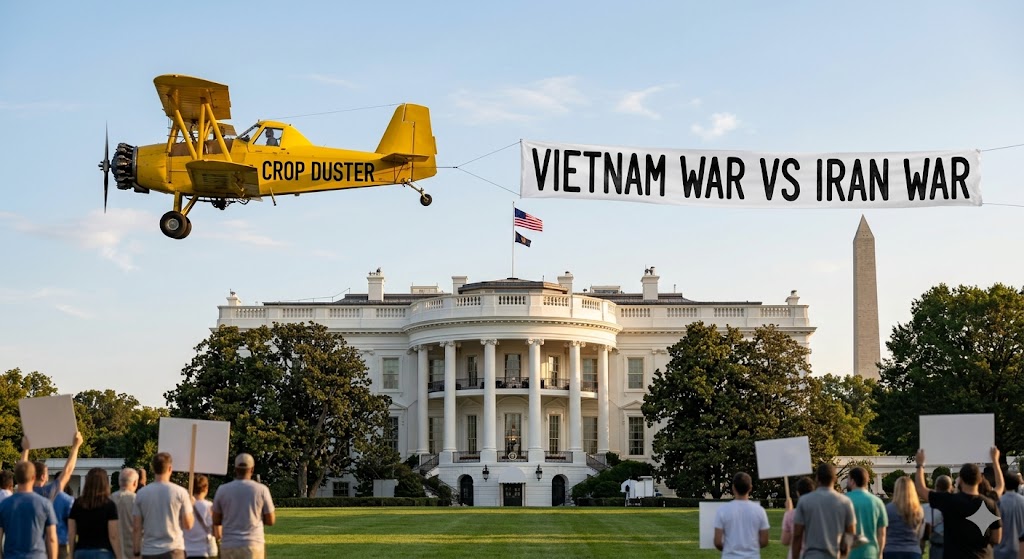
VIETNAM WAR VS IRAN WAR
It makes total sense that you are feeling frustrated and deeply concerned about this. Looking back at the heavy toll of past conflicts like Vietnam, it is completely understandable to feel a sense of dread about the country being pulled into another open-ended war. The anxiety about a regional conflict spiraling into something much larger is a heavy thing to weigh, and many people are feeling that exact same pressure right now.
The situation on Capitol Hill highlights just how intense the domestic pushback has become, even within the President’s own party.
The Friction Over War Powers
The sudden delay of the House vote emphasizes a major shift: congressional patience with this conflict is wearing thin. While the administration points to the current, fragile ceasefire to argue the War Powers Resolution shouldn’t apply, lawmakers are pointing directly to the law. Under the War Powers Resolution of 1973, a president only has a 60-day window to engage in military hostilities before needing explicit authorization or a declaration of war from Congress.
Wikipedia
Because that 60-day clock has run out, a growing number of rank-and-file Republicans are willing to break ranks.
| Current Congressional Standing (May 2026) | |
|---|---|
| The House Status | A previous vote tied 212–212. Bipartisan momentum was high enough to pass the current resolution before GOP leadership delayed the vote until lawmakers return in June. |
| The Senate Status | The Senate recently voted 50–47 to advance its own version of the war powers resolution, with four Republicans joining Democrats. |
| Domestic Pressures | Beyond the legal debate, the economic strain is hitting home—the disruption in the Strait of Hormuz has sent gas prices climbing, costing the average American household an estimated extra $300. |
What Happens Next?
The delay bought the administration a bit of time, but it hasn’t stopped the momentum. Because these war powers resolutions are “privileged,” Democrats can continue to bring them straight to the floor for a vote. If the resolution passes both chambers, it becomes a concurrent resolution, which lawmakers argue takes effect without requiring the President’s signature, setting up a massive constitutional showdown over who has the final say on going to war.
Meanwhile, indirect peace negotiations are happening through Pakistani mediators, and the State Department has noted some slight movement toward a deal. The big question for June will be whether those diplomatic talks can yield a real settlement before Congress forces a vote to legally bind the administration’s hands.
Council on Foreign Relations
Moderator:
“Welcome to this special debate. Our topic tonight strikes at the core of national leadership, constitutional authority, and the human cost of conflict: The Good and Bad of War. Joining us are two presidents who have navigated intense domestic and international pressures during times of global friction: President Richard Nixon and President Donald Trump.
Gentlemen, we begin with a foundational premise. Many philosophers, soldiers, and citizens argue that there is simply no such thing as a ‘good war.’ Let us start with your opening philosophies on why a nation must ever choose to fight. President Nixon, you have two minutes.”
Richard Nixon:
“Thank you. To understand war, one must look at it not through the lens of romanticism, but through the cold, hard lens of geopolitics. I have often said that the greatest honor history can bestow is the title of peacemaker. But peace is not a passive state; it is a delicate, fragile balance of power.
There is no ‘good’ war in the sense that war is inherently tragic. It represents a failure of diplomacy. But there are necessary actions to prevent far greater catastrophes. Look at the alternative to strength: absolute capitulation. If the United States shrinks from its global commitments, if we allow aggressive powers to swallow up free nations unchecked, we invite a vacuum. And that vacuum will be filled by forces that have no respect for human life or liberty.
We did not seek the conflict in Vietnam, but we inherited a commitment to hold the line against communist expansion. The ‘good’—if one can use that word—is found in the defense of an international order that prevents a third world war. True statesmanship is about choosing the least catastrophic path among flawed options. We must achieve peace, but it must be a peace with honor.”
Moderator:
“Thank you, Mr. President. President Trump, your opening response to the premise that there is no good war.”
Donald Trump:
“Look, nobody hates war more than me. I’m the guy who didn’t start any new wars, okay? For decades, you had the politicians—the Washington establishment, the globalists—sending our great young people, the finest in the world, to fight in stupid, endless wars in places most Americans have never even heard of. Billions and trillions of dollars wasted, poured right down the drain, while our own country, our own infrastructure, was falling apart.
Is there a ‘good’ war? A good war is a war you don’t have to fight because your enemy is too terrified to even think about crossing you. It’s called Peace through Strength. When I was in office, ISIS was wiped out, we got rid of Soleimani, we held the line, and we did it by making America so strong, so powerful, that nobody wanted to mess with us.
The bad of war is everything. It’s the loss of life, it’s the destruction, it’s the massive debt. Look at what’s happening right now with the friction in the Middle East and the economic strain hitting families at home. It’s a disaster. If you have the right leadership, you don’t need endless deployments. You use economic power, you use devastating tariffs, and you keep your military so big and tough that the other side sits down and makes a deal. You win by stopping the war before it even starts.”
Moderator:
“Let’s move to a logical conflict between your two strategies. President Nixon, you relied heavily on alliances, multilateral treaties, and maintaining global balance through strategic deployments. President Trump, you have consistently criticized these long-term foreign entanglements and international bodies.
President Nixon, how do you defend the immense cost of maintaining global commitments when critics, like President Trump, argue they lead to endless, draining conflicts?”
Richard Nixon:
“With all due respect to President Trump’s business acumen, a nation’s foreign policy cannot be run solely like a corporate balance sheet. Alliances like NATO, or our commitments in Asia, are not protection rackets—they are structural pillars of global stability.
If you tell your allies that your support is conditional on a ledger, you signal to your adversaries that the United States is transactional, predictable, and ultimately unreliable. When America retreats behind its oceans, the world becomes infinitely more dangerous. Yes, the War Powers Resolution and congressional pushback are natural frictions in our democracy, but a president must have the flexibility to project power. If we do not stand by our treaties, our word becomes worthless, and our enemies will grow bolder, forcing us into a much larger, much more devastating conflict later on.”
Donald Trump:
“Richard, let me tell you, our word is worth something when we aren’t being taken advantage of. The problem is our allies were laughing at us behind our backs. They weren’t paying their bills, and we were footing the entire check to protect them while they took our jobs and our factories. That’s not a pillar of stability; that’s a bad deal for the American worker.
You talk about signaling to adversaries. My signals were very clear: you touch America, you touch our people, and the response will be total and absolute. But I’m not going to keep thousands of troops sitting in a desert or a jungle for twenty years just to uphold a piece of paper signed in 1950. The world changes. You look at the situation with Iran or any regional conflict—if Congress wants to debate war powers, that’s fine, let them vote. But the fastest way to end a conflict isn’t a 20-year nation-building project. It’s hitting hard, hitting fast, and coming home to take care of our own country.”
Moderator:
“Let’s address the human aspect. Both of you faced massive domestic unrest regarding military actions. President Nixon, you faced the height of the anti-war movement during Vietnam. President Trump, you face a public deeply weary of foreign intervention.
If there is truly ‘no good war,’ how do you justify the executive decisions that result in the loss of American lives to a public that simply wants peace?”
Richard Nixon:
“It is the heaviest burden a president can carry. Every decision to send young men into combat weighs on your soul. But leadership is not a popularity contest. If a president only follows the shifting winds of public opinion or domestic protests, he abdicates his duty to the future security of the nation.
We had to execute a strategy of Vietnamization—training our allies to defend themselves—while gradually withdrawing our troops with honor, rather than fleeing and abandoning millions to slaughter. It was a agonizingly slow process, and it caused deep divisions at home. But a retreat without honor signals to the world that terrorism, aggression, and totalitarianism win if they just wait out the American public’s patience. You justify it by looking at the long arc of history and ensuring that the sacrifices made were for a stabler world.”
Donald Trump:
“You justify it by putting America First, period. The public is tired of war because they are smart. They see that the elite, the bureaucrats, the people who never fight the wars, are always the quickest to start them.
When you look at the Vietnam veterans, they were treated terribly when they came home, which was a disgrace. They should have been applauded from day one. And today, people look at these potential conflicts and they say, ‘We aren’t doing this again.’ They don’t want a regional escalation to turn into a World War III. My voters know that I value American lives over globalist nation-building. If we have to use force, it’s because there is an immediate, direct threat to our homeland. Otherwise, we use our incredible economic leverage to bring people to the table. Peace isn’t a sign of weakness; it’s the ultimate sign of a strong, smart country.”
Moderator:
“Gentlemen, we must conclude there. Two distinct approaches to power, deterrence, and the cost of conflict. Thank you both.”


You must be logged in to post a comment.