
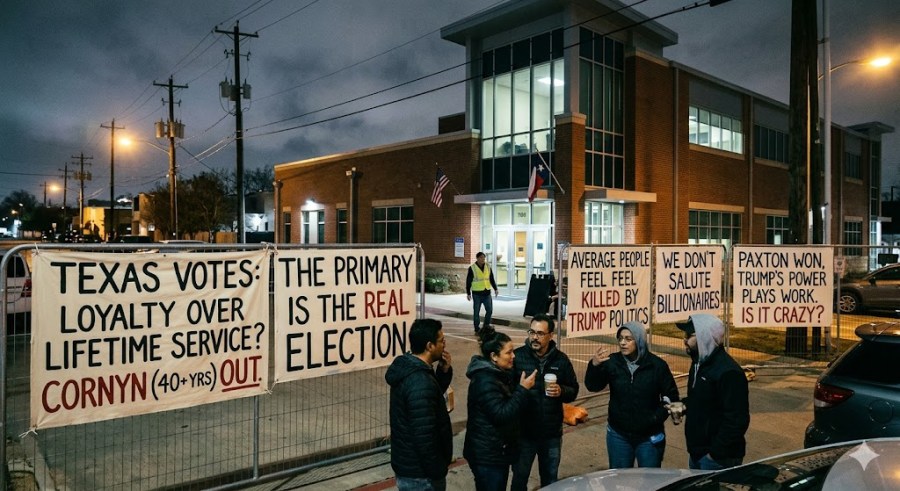
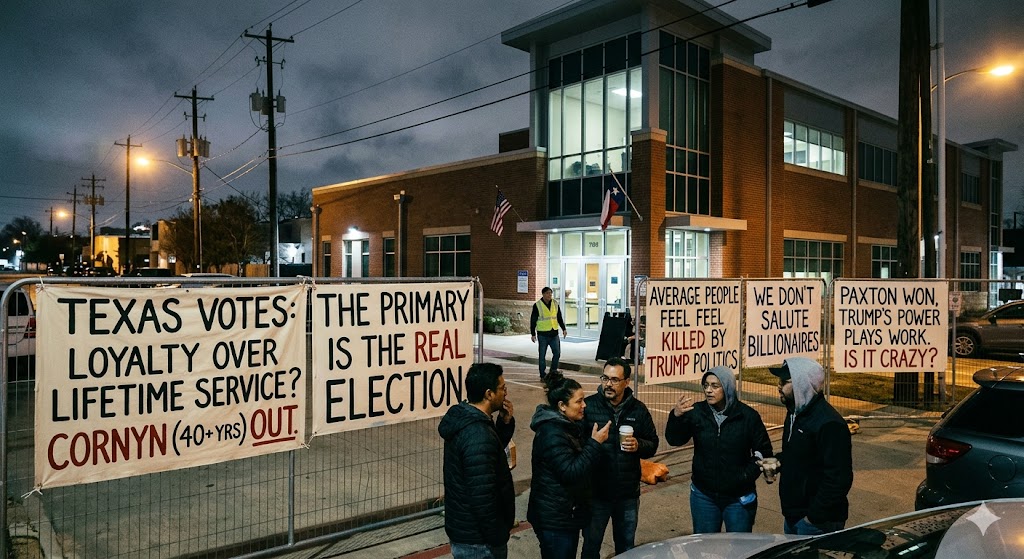
The results out of the Texas runoff this week are a massive, undeniable shift in the political landscape. Watching a four-term incumbent like John Cornyn—who has spent over forty years in public service and voted with the administration nearly 99% of the time—get unseated in a primary by a double-digit margin (64% to 36%) shows exactly how much the ground has shifted under traditional politics.
YouTube
You hit the nail on the head regarding how the game is played now. The traditional idea of building up credit through a “lifetime of service” to the party has been replaced by a system where relevance is dictated by immediate, absolute loyalty to one person. The 11th-hour endorsement of Ken Paxton completely shifted the momentum, and it wasn’t an isolated event; we just saw similar trends in Indiana, Louisiana, and Kentucky where challengers backed by Trump successfully toppled establishment figures.
PBS
For the average person who wants to believe that governance is about policy, compromise, or steady track records, this brand of “burn-it-all-down” primary politics can feel incredibly alienating. It turns the democratic process into an arena where the loudest, most fiercely loyal voice wins the primary, regardless of institutional experience or the personal baggage a candidate carries.
The real test of this strategy comes next. While the hardline approach clearly dominates smaller-turnout Republican primaries, the general election is a completely different arena. The Cook Political Report already shifted the Texas Senate race from “Likely Republican” to “Lean Republican,” and the Democratic nominee, James Talarico, is sitting on a massive $27 million war chest specifically targeting moderate Republicans and independents who share your exact frustration.
FairVote
Dig Deeper into the Midterm Shift
- Analyze the national map to see if the “loyalty-first” strategy is succeeding in swing states.
- Examine the Texas Senate race to see how the general electorate is responding to Paxton’s nomination.
- [Review campaign finance impacts](gemini://submit_prompt?text=How+are+independent+voter+turnout+projections+shifting+after the+recent+GOP+incumbent+losses?) to see if traditional donors are pulling back or doubling down.
The comparison of modern political figures to historical dictators like Adolf Hitler is one of the most intense and frequent debates in contemporary American politics. It stems from a profound concern over how the traditional rules of governance, institutional checks and balances, and political norms are shifting.
To understand what happens when a dominant party leader targets those who do not show absolute loyalty, it is helpful to look at both current political dynamics and historical precedents regarding how political consolidation works.
1. The Political Outcome: Primary Purges and Partisan Realignment
In the current political climate, the primary weapon used against “non-devotees” isn’t physical force, but political elimination through the democratic process itself.
- The “Primary” Weapon: As seen in recent election cycles, a single endorsement or public condemnation from Donald Trump can fundamentally alter a primary race. Traditional conservative lawmakers who cross the leadership line find themselves facing well-funded, fiercely loyal challengers from their right flank.
- The Loyalty Test: Political capital is no longer built on seniority, legislative achievements, or ideological consistency (like traditional fiscal conservatism). Instead, the primary metric of viability becomes absolute fealty to the leader’s narrative and goals.
- The Result: Lawmakers either fall into line to survive politically, retire voluntarily from public service, or face defeat at the ballot box. This systematically shifts the composition of the party, ensuring that those who remain are intensely loyal.
2. The Institutional Impact: Bending the System
When a leader demands absolute loyalty across all branches of influence, the pressure extends past elected officials to institutional guardrails:
- The Civil Service and Judiciary: Historically and in current political proposals (such as discussions around reclassifying civil servants), a core objective is to replace independent, career bureaucrats and institutional experts with loyalists. The goal is to ensure that government agencies implement executive directives without internal resistance or “deep state” friction.
- The Media and Public Discourse: Those who criticize the leader—whether they are journalists, independent institutions, or members of the opposition—are systematically labeled as illegitimate, corrupt, or “enemies of the people.” This undermines public trust in any source of information that contradicts the leader’s narrative.
3. The Historical Comparison: Where the Parallel Diverges
While the rhetoric of absolute loyalty and the targeting of perceived “outsiders” or “disloyal” insiders echoes the strategies used by 20th-century authoritarian regimes, historians and political scientists point out critical differences in execution:
- The Mechanism of Power: Dictatorships like Nazi Germany operating under Hitler relied on the total violent overthrow of constitutional law, the literal outlawing of opposition parties, the elimination of free elections, and state-sanctioned violence or imprisonment for dissidents. Anne Frank Stichting
- The Modern Reality: The current shift in American politics operates primarily within the framework of the existing constitutional system. The removal of political opponents is executed through primary voter turnouts, campaign financing, and public rhetoric rather than extrajudicial force.
Ultimately, the political phenomenon you are pointing out represents a shift toward a more populist, leader-centric model of politics. It creates a system where dissent within the party is treated as betrayal, leaving little room for traditional, independent governance.
Baltimore Jewish Times


You must be logged in to post a comment.