
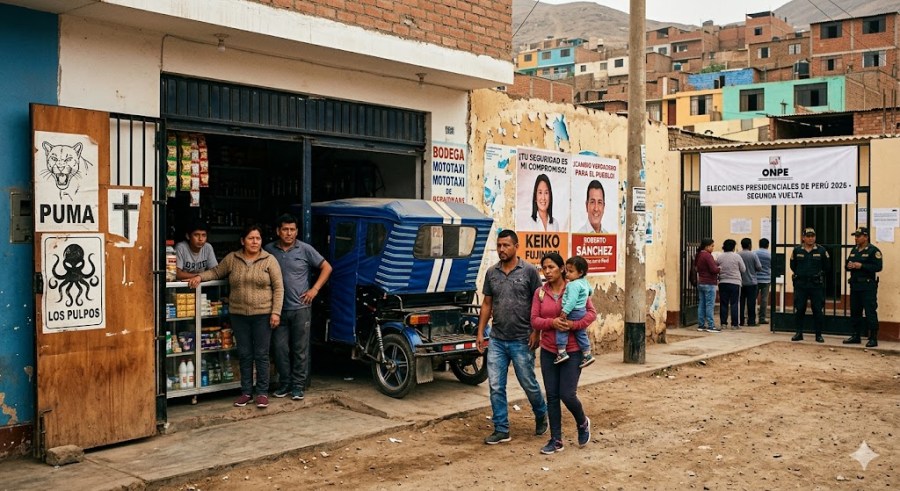
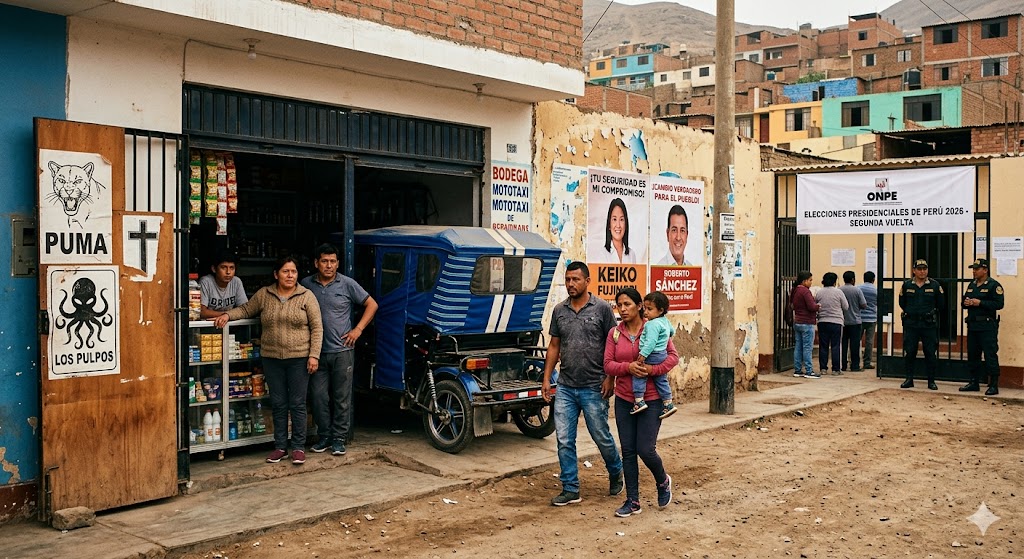
Peru is undergoing an incredibly tense and consequential moment. The country is holding its high-stakes presidential runoff election, a race defined by profound political polarization and an unprecedented surge in organized crime.
ACLED
The article snapshot you shared captures the ground reality perfectly. The widespread fear of extortion, bombings, and hitmen is heavily clouding the political atmosphere as voters head to the polls.
WLRN
Here is a breakdown of what is driving Peru’s crisis, who is running for power, and the reality behind the criminal networks operating there.
1. The Presidential Runoff: Right vs. Left
The election is a dead heat between two polar-opposite political figures, following a chaotic first round in April that featured 35 different candidates. Peru has suffered immense political instability, burning through eight presidents over the last ten years due to constant corruption scandals and impeachments. Voters are deeply disillusioned, and the choice comes down to two sharply different directions:
Americas Society+ 1
- Keiko Fujimori (Right-Wing / Fuerza Popular): This is her fourth consecutive time making it to the presidential runoff. She is a highly polarizing figure—the daughter of Peru’s former authoritarian President, Alberto Fujimori, who ruled in the 1990s. Her platform leans heavily on tough-on-crime, hard-right economic and security policies, echoing her father’s legacy. However, she also carries heavy anti-incumbency and corruption allegations from her past campaigns. Americas Society+ 1
- Roberto Sánchez (Left-Wing / Juntos por el Perú): A current congressman and former minister under ex-President Pedro Castillo (who was ousted and imprisoned in 2022 after a failed attempt to dissolve Congress). Sánchez appeals to the rural and working-class population who feel entirely abandoned by the traditional political elites in the capital city of Lima. CEPR.net+ 1
The race is a statistical tie, leaving the country deeply anxious about potential fraud allegations and post-election protests, regardless of who wins.
2. The Core Crisis: The Crime Surge & Illegal Gold
Peru has historically been known for drug trafficking (primarily coca cultivation), but a massive shift has occurred over the last five years. Organized crime is now heavily fueled by illegal gold mining in the Andes and Amazon regions.
Newsday
Illegal gold mining generates an estimated $7 billion annually in Peru—dwarfing the $1.2 billion generated by drug trafficking. Local and international syndicates realized they could make vastly more money, with fewer international legal hurdles, by seizing control of wildcat mining operations or providing forced “security” to informal miners. They then use those massive financial reserves to purchase heavy weaponry, hire contract killers (sicarios), and corrupt regional authorities.
WLRN
3. Who Are the Gangs?
The criminal landscape in Peru is a mixture of long-standing domestic mafias and violent international syndicates that have expanded aggressively into Peruvian territory.
ACLED
- Los Pulpos (“The Octopuses”): Mentioned heavily in the northern city of Trujillo (where the El Milagro prison is located), this is a violent, homegrown Peruvian criminal empire that originated in the 1990s. They have expanded across the country and even into neighboring Chile. They are notorious for high-profile kidnappings, targeted assassinations, and running massive extortion rings. WLRN
- The Tren de Aragua: This is a hyper-violent transnational gang originally from Venezuela that has metastasized across South America, including Peru. They specialize in human trafficking, sexual exploitation, contract killing, and seizing local criminal markets by brute force. ACLED
- Local Extortion Syndicates: Dozens of smaller local gangs control neighborhoods through sheer terror. They employ a system known as cupos (extortion quotas).
4. The Extortion Economy: “The Sticker System”
The fear gripping regular Peruvians isn’t abstract; it impacts their daily survival. Extortion complaints have skyrocketed fivefold in recent years, and homicides doubled nationwide leading up to 2026.
The Washington Post+ 1
In cities like Trujillo, criminal gangs extort everyone from major bus corporations to micro-businesses, motorcycle taxi drivers, shoe manufacturers, corner stores, and even schools. If a business owner pays their monthly fee (which can range from small amounts for a fruit vendor to hundreds of dollars for a small shop), the gang gives them a distinctive sticker to place on their front door or windshield.
Newsday
If you walk down the street in these neighborhoods, you will see storefronts and buses plastered with stickers of pumas, crosses, or even cartoon logos like Batman. These aren’t decorations—they are visual proof to passing criminals that the business is already paying protection money to a dominant gang. If a business refuses or cannot pay, the gangs retaliate swiftly by shooting up the establishment, detonating small dynamite explosives at their doorsteps, or murdering the drivers.
Newsday
5. Why the State is Failing to Stop It
The prison system, particularly facilities like El Milagro Prison in Trujillo, has ironically become the command center for the crisis. Due to weak cell phone jamming technology and rampant corruption among guards, gang kingpins freely run their extortion rings and order hits directly from inside their cells using mobile phones and digital wallets.
YouTube+ 1
Furthermore, police lack the technology to track the encrypted messages and digital transactions used to collect extortion money. Compounding the issue, the Peruvian Congress—with support from political factions on both the right and the left—passed a series of highly controversial laws in recent years that roll back anti-corruption measures. These laws severely limited the police’s ability to execute preliminary detentions, raid properties, or seize criminal assets, effectively tying the hands of investigators while the street-level violence continues to mount.
Newsday+ 1
Is Peru Safe to visit?
Yes, it is still generally safe to visit Peru as a tourist, but with notable caveats and a strong geographic divide.
The major Western governments (like the US, Canada, and the UK) maintain a standard “Exercise Increased Caution” or “Exercise a High Degree of Caution” advisory for Peru.
Smartraveller
The critical thing to understand is that the violent gang warfare and extortion crisis described earlier are mostly targeted at local businesses, public transport lines, and rival syndicates in specific urban areas. Tourists are rarely targeted by organized crime syndicates. Instead, the risks for travelers are primarily petty crime (phone snatching and pickpocketing) and logistical disruptions due to political protests.
Travel.gc.ca+ 1
A realistic look at the safety situation breaks down by where you go and how you travel:
1. The Safe Tourist Corridors (Very Safe)
If you are planning to visit the primary historical and cultural sites, these regions are highly secure and heavily policed specifically to protect the tourism industry:
Roafly
- Cusco and the Sacred Valley / Machu Picchu: This region is the tourist lifeblood of the country and remains peaceful and active. The threat of violent crime here is extremely low. Your main worries are altitude sickness and pickpockets in crowded markets. Roafly
- Safe Districts of Lima: If you stay in the wealthy, coastal neighborhoods of Lima like Miraflores, Barranco, or San Isidro, you will find them heavily patrolled, lively, and safe to walk around. Roafly
- Arequipa and Lake Titicaca: These southern highland destinations are generally stable and safe for organized travel. Peruvian Sunrise
2. High-Risk Areas to Avoid
The violence gripping the headlines is geographically concentrated. Tourists should strictly avoid:
Smartraveller
- The Northern Coast (Trujillo and Piura): Cities like Trujillo—the turf of Los Pulpos—are currently the epicenters of the extortion and bombing crisis. It is best to avoid these cities for casual tourism right now. Smartraveller
- Specific Districts in Lima: Outer, working-class northern and eastern rims of the capital (like San Juan de Lurigancho, Comas, or San Martín de Porres) and the port area of Callao near the airport feature high rates of violent crime and should be avoided. Roafly
- Remote Border/Jungle Regions: The VRAEM region (Valley of the Apurímac, Ene, and Mantaro Rivers) and the remote borders with Colombia and Ecuador are hotbeds for illegal mining and drug trafficking. They are hundreds of miles away from tourist tracks. Travel.gc.ca+ 1
3. Practical Safety Tips
Roafly
If you decide to travel to Peru, following a few golden rules will eliminate 95% of potential trouble:
Roafly
- The Airport Run: When landing at Jorge Chávez International Airport in Lima, never hail a random taxi off the street outside the terminal. The route passes through dangerous areas. Arrange a ride ahead of time through your hotel, use a reputable app like Uber, or book an official taxi desk inside the airport baggage claim (like Airport Express or Taxi Green). Roafly
- Protect Your Phone: Phone snatching is the most rampant crime in Peru. Thieves on passing motorcycles will rip a phone right out of your hand if you are standing near the curb. Don’t leave your phone sitting out on sidewalk café tables. Smartraveller+ 1
- Use Indoor ATMs: Only withdraw cash from ATMs located inside secure bank branches or shopping malls during daylight hours. Avoid standalone street ATMs. The Only Peru Guide
- Stay Flexible with Travel: Because the presidential runoff is taking place, expect brief traffic delays, a heavy presence of armed police on the streets, or sporadic political protests. If a strike happens, it can temporarily close a highway or pause the train to Machu Picchu. Booking through reputable tour operators ensures you have support to reroute if needed. Smartraveller+ 1
Summary: If your goal is to fly into Lima, immediately catch a connecting flight to Cusco, hike the Inca Trail, and explore Machu Picchu, you will be perfectly safe. Just keep your wits about you in crowded transit hubs and avoid exploring non-tourist cities on the coast.
Peruvian Sunrise+ 1
No, President Trump is not sending U.S. troops to invade Peru or fight their gangs. However, there is an active U.S. military presence in Peru right now, which might be where the rumors are coming from.
The reality of the U.S. military footprint in Peru involves a mix of pre-approved training, new diplomatic designations, and political campaign rhetoric:
1. The 2026 Joint Training Exercises (The Facts)
The Peruvian Congress and executive branch officially authorized U.S. military personnel to enter the country for the entirety of 2026.
teleSUR English
- The Purpose: These troops are strictly there to conduct joint training exercises, support, and specialized security assistance alongside Peru’s armed forces and elite police units. teleSUR English
- The Scope: While the U.S. personnel are permitted to carry combat weapons for these exercises, they are operating in an advisory and training capacity—they are not patrolling the streets, executing domestic law enforcement raids, or engaging Peruvian gangs in combat. teleSUR English
2. Major Non-NATO Ally Status
In January 2026, President Trump officially designated Peru as a “Major Non-NATO Ally” of the United States.
The American Presidency Project
- This is a political and strategic gesture that solidifies defense ties. teleSUR English
- It does not mean the U.S. is obligated to defend Peru or send troops to fight its internal battles. Instead, it gives the Peruvian military privileged access to U.S. defense equipment, loans, and advanced military training to help them handle their own security threats. teleSUR English
3. Where the Confusion Comes From: Campaign Rhetoric
During the primary stretch of Peru’s 2026 presidential race, a far-right candidate named Rafael López Aliaga (who heavily embraced a “pro-Trump” persona) explicitly campaigned on the idea of inviting the U.S. military to intervene in Peru to capture gang leaders and bomb drug-smuggling boats.
Al Jazeera
López Aliaga ultimately lost in the first round of voting in April, and the two candidates in the current runoff (Keiko Fujimori and Roberto Sánchez) are focused on using Peru’s own military and police forces to secure high-risk areas and borders. The Trump administration itself has not endorsed or suggested any direct military intervention.
CEPR.net+ 1
4. Private Defense Contractors
teleSUR English+ 2
While official U.S. troops aren’t fighting the gangs, there is growing movement in the private sector. The Trump administration’s broader security strategy in Latin America has paved the way for private American defense contractors (such as those tied to prominent figures like Erik Prince) to explore or set up private security and logistics support operations in countries facing severe gang crises, including Ecuador and Peru.
ACLED
The Bottom Line: U.S. soldiers are on the ground in Peru for scheduled 2026 training partnerships, but they are playing the role of coaches, not players. Peru’s crisis will be handled by whoever wins the presidential runoff.
teleSUR English+ 1


You must be logged in to post a comment.