
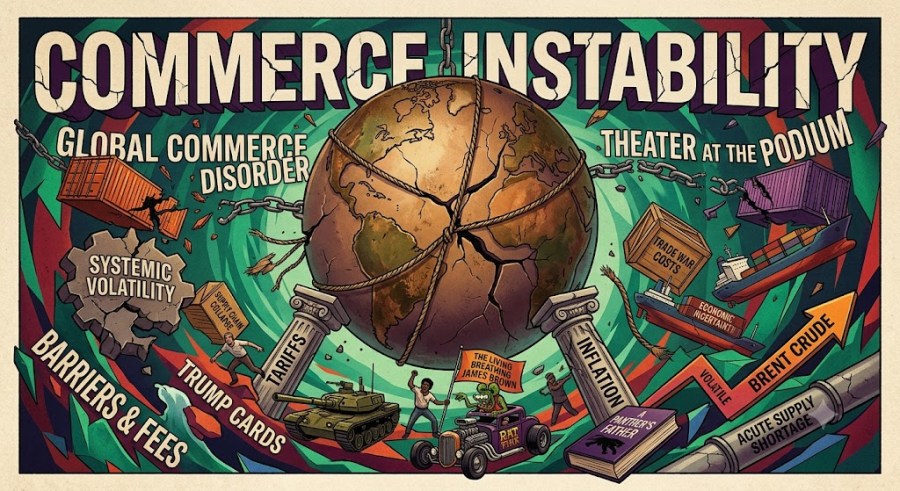
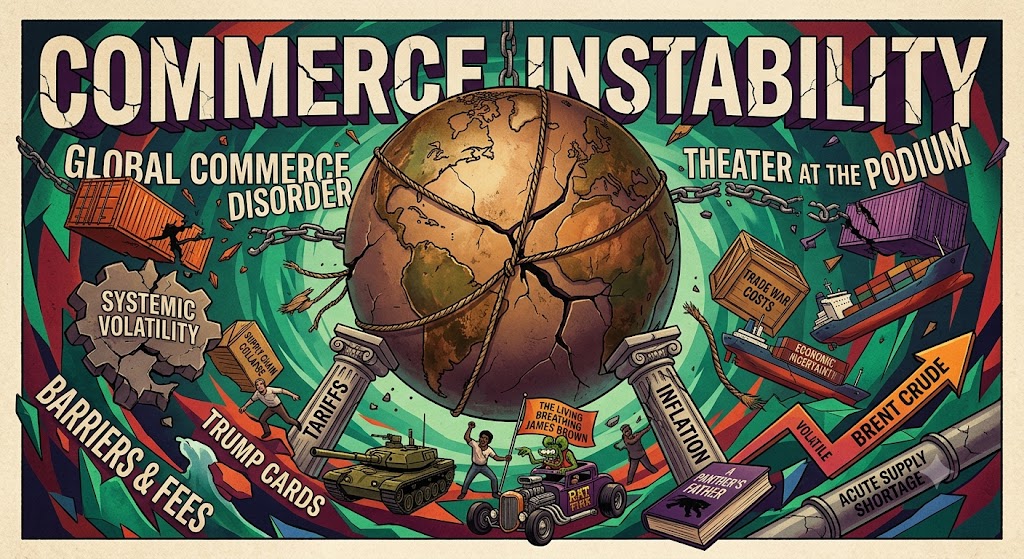
The current geopolitical and economic landscape is marked by significant tension and instability, largely driven by the conflict in the Middle East and a highly restrictive global trade environment.
The Conflict in the Middle East and Energy Markets
The conflict, which escalated significantly when Iran closed the Strait of Hormuz in March 2026, has been described by the International Energy Agency (IEA) as “the greatest energy security challenge in history”.
Vision of Humanity
- Supply Disruptions: The closure stranded approximately 13 million barrels per day of Gulf exports, creating the largest supply disruption ever recorded. While some oil has been redirected through alternative pipelines, a massive production gap remains. As of June 2026, global oil production was approximately 9.4 million barrels per day below pre-war levels. Vision of Humanity+ 2
- Impact on Fuel Availability: The world is not “out” of oil, but the disruption has caused acute supply shortages and pushed Brent crude prices well above $100 per barrel, reaching as high as $120 in some periods. This has triggered global inflation, threatened industrial output—particularly in Europe and the UK—and created a “grocery supply emergency” for states reliant on the Strait for food imports. Wikipedia+ 1
- Comparative Dynamics: While you asked about the severity of attacks, analysts note that the conflict has caused a systemic collapse of the regional economic model, with both Iran and its neighbors suffering severe GDP losses and infrastructure damage. Wikipedia
Global Commerce and Economic Policy
The global economy has also been strained by a series of trade policies initiated by the current U.S. administration, which have been described as creating “unprecedented global economic disorder”.
Intereconomics
- Tariff Policies: Since 2025, the U.S. has implemented a series of broad, unilateral tariffs on goods from countries including China, Mexico, Canada, and the European Union. These policies have disrupted integrated supply chains, particularly in automotive and manufacturing sectors, and increased costs for American businesses and consumers. Equitable Growth+ 1
- Economic Impact: Critics and economists argue that these tariffs have functioned as a “dumb” trade war, failing to achieve stated geopolitical goals while imposing direct costs on importing companies and consumers. Small businesses in the U.S. have been identified as particularly vulnerable to these rising costs and the resulting economic uncertainty. Center for American Progress
- Global Relations: The aggressive use of bilateral “arm-twisting” and threats of further trade barriers have strained relations with traditional allies and created an environment of systemic volatility that has discouraged investment and hiring. Intereconomics


You must be logged in to post a comment.