
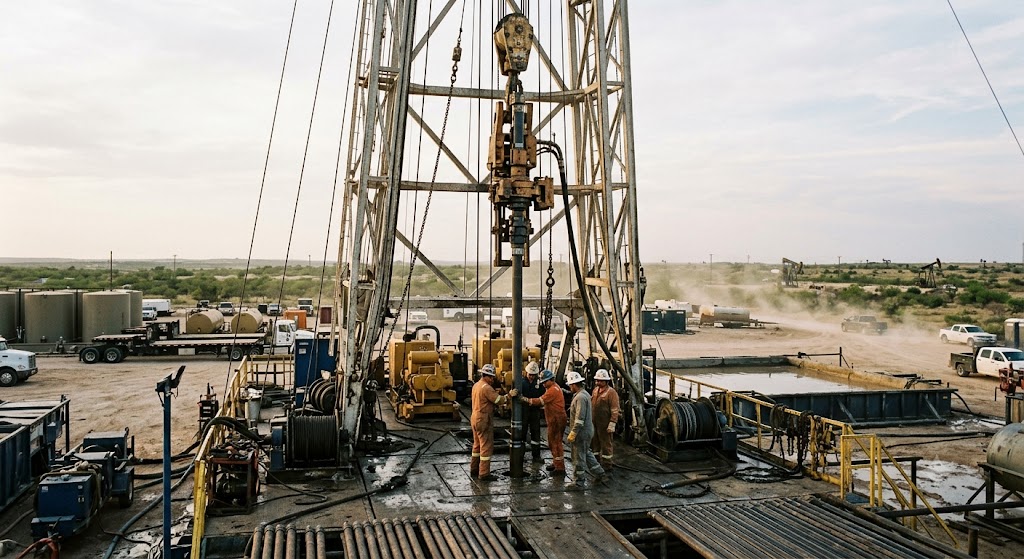
The concept of America “running out” of oil requires distinguishing between the Strategic Petroleum Reserve (SPR)—the government-owned emergency storage tanks—and overall U.S. oil production.
1. The Strategy: SPR vs. Domestic Production
The Strategic Petroleum Reserve (SPR)
The U.S. government maintains underground emergency salt caverns in Texas and Louisiana holding roughly 300 to 400 million barrels.
- The Administration’s Plan: To manage price spikes caused by conflict in the Middle East and the closure of maritime choke points, the Trump administration has drawn heavily from the SPR.
- Replenishment Strategy: Once emergency drawdowns end or global prices stabilize, the official plan calls for refilling the SPR by buying cheap domestic crude when market prices drop or by issuing contracts to domestic drillers.
Domestic Oil Production
The U.S. does not rely entirely on foreign oil reserves or emergency storage tanks. The United States is the world’s largest crude oil producer, producing over 13.5 million barrels per day (driven primarily by hydraulic fracturing in Texas, New Mexico, and the Gulf of Mexico).
The Trump administration’s broader energy plan focuses on expanding domestic output (“Drill, Baby, Drill”):
- Deregulation & Permitting: Opening additional federal lands, offshore leases, and pipeline construction to maximize domestic extraction.
- Export Controls / Redirection: Restricting raw oil exports to force domestic refineries to process American crude for local consumption if foreign supply drops.
2. The Real-Life Impact on Everyday Americans
If the Strategic Petroleum Reserve hits physical “tank bottom” limits while international shipping lanes remain blocked, domestic drilling alone cannot completely insulate the economy overnight.
                                  DOMESTIC CHAIN REACTION

  ┌───────────────────┐     ┌───────────────────┐     ┌───────────────────┐
  │  HIGH CRUDE COST  │ ──> │ DIESEL & TRANSPORT│ ──> │ CONSUMER GOODS &  │
  │  & REFINERY LAGS  │     │   SURCHARGES SOAR │     │ FOOD INFLATION    │
  └───────────────────┘     └───────────────────┘     └───────────────────┘
A. Rapid Gas Station Price Spikes
Even though the U.S. produces vast amounts of oil, global markets set the price per barrel. Without the “cushion” of emergency SPR releases to suppress temporary supply shocks, pump prices for gasoline and diesel would climb sharply.
B. Severe Refinery Mismatches
U.S. Gulf Coast refineries were historically built to process heavy/sour crude (imported from Venezuela or the Middle East). Texas and North Dakota produce light/sweet crude. If foreign heavy crude stops flowing and the SPR runs empty, refineries cannot immediately convert light American oil into heavy diesel and jet fuel at 100% efficiency, creating localized shortages for commercial trucking and aviation.
C. Supply Chain & Grocery Inflation
Virtually every consumer product moves by diesel truck, freight rail, or cargo ship. Higher diesel costs instantly translate to freight surcharges:
- Food Prices: Agriculture relies heavily on petroleum-based fertilizers and diesel-powered tractors and transport trucks, driving up food prices at local stores.
- Consumer Goods: Retailers pass shipping surcharges directly to customers, triggering broader inflation across non-energy sectors.
D. Federal Reserve Interest Rate Pressures
Surging energy prices create sustained inflation. To keep money from devaluing further, the Federal Reserve would be forced to hold interest rates higher for longer—increasing borrowing costs on mortgage loans, auto financing, and credit cards for average households.


You must be logged in to post a comment.