
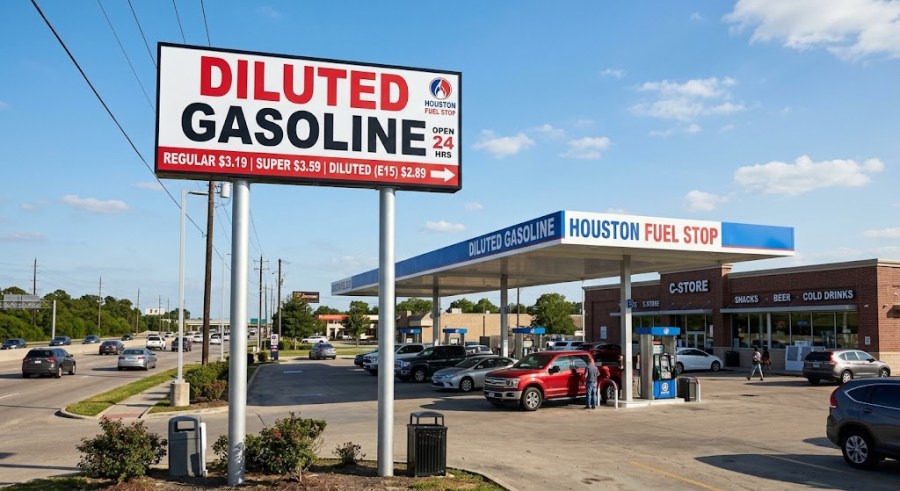
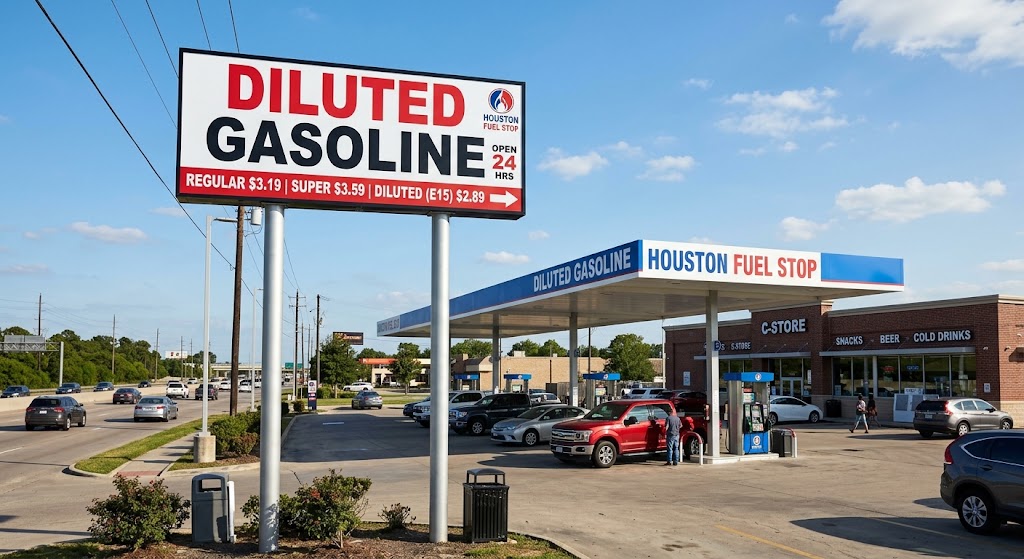
The dramatic headline about ordering gas to be “diluted” refers to the EPA issuing emergency fuel waivers that allow E15 gasoline (fuel blended with up to 15% ethanol) to be sold year-round, including during the hot summer months.
The government isn’t mixing water or junk into the fuel; rather, it is expanding the permissible ratio of corn-based ethanol from the standard 10% (E10) up to 15% to stretch crude oil supplies and lower prices at the pump.
What Does This Mean for Your Wallet?
- Slightly lower pump price: Increasing the ethanol share expands the volume of the fuel pool, which can reduce the retail price of regular unleaded by a few cents per gallon.
- Slightly lower gas mileage (MPG): Pure gasoline is denser in chemical energy than ethanol. Moving from standard E10 to E15 usually drops fuel economy by about 1% to 2%. In practice, that small loss in mileage can offset some of the savings at the register.
Will It Hurt Your Vehicle?
Whether this higher ethanol blend is safe depends entirely on what you are driving and operating:
1. Newer Passenger Cars & Trucks (2001 and Newer) — Safe
The EPA approved E15 for all light-duty vehicles (cars, light trucks, and SUVs) made in model year 2001 or later. Modern engines are built with corrosion-resistant fuel lines, stainless steel injectors, and engine management computers that automatically adjust ignition timing and air-fuel mixtures to compensate for 15% alcohol blends. If you drive a modern car, running E15 will not damage your engine.
2. Older Cars (Pre-2001) — Risk of Fuel System Damage
Vehicles built prior to 2001 were not engineered for ethanol concentrations beyond 10%. Ethanol is corrosive to cork, natural rubber seals, gaskets, and older plastics, and it can dry out and degrade fuel hoses or damage older fuel pumps and carburetors over time.
3. Small Engines, Boats, and Motorcycles — Do Not Use E15
E15 is strictly prohibited and harmful for non-road engines:
- Lawnmowers, weed trimmers, generators, and chainsaws
- Boats and marine engines
- Motorcycles and ATVs
Small engines generally use carburetors and run hotter; ethanol burns leaner and absorbs water out of humid air (phase separation), which causes internal corrosion and severe carb fouling if left sitting. Small engines should stick to E10 or, ideally, pure ethanol-free gasoline (often labeled REC-90 or Non-Ethanol).
How to Tell What You’re Buying
Federal law requires gas stations to clearly label pumps offering higher ethanol blends:
- Standard Regular: Usually labeled as containing “up to 10% ethanol” (E10).
- E15 / Unleaded 88: Marked with an orange and black EPA warning label that explicitly states “15% Ethanol” and notes that it is only for 2001 and newer passenger vehicles.
As long as you check the pump sticker and avoid putting E15 into small power equipment, older vintage vehicles, or carbureted engines, your everyday vehicle will run normally.
Want tips on protecting small engines and older carburetors from ethanol damage?
Ethanol acts like a sponge, drawing moisture directly out of ambient air. In vented fuel systems—like those on lawnmowers, chainsaws, generators, and vintage carbureted engines—that absorbed water separates from the gasoline (phase separation), drops to the bottom of the tank and float bowl, and rapidly corrodes jets and aluminum castings.
Fuel Selection & Storage
- Run ethanol-free fuel (REC-90): The single most effective preventative measure is running pure, non-ethanol gasoline. Most marinas and dedicated pumps (often labeled REC-90 or “Clear Gas”) sell it, as do big-box stores in pre-mixed quart/gallon cans for hand tools.
- Treat every gallon immediately: If ethanol-free fuel isn’t available, treat pump gas with a dedicated marine-grade fuel stabilizer (such as Sta-Bil Marine, Sea Foam, or Star Tron) the day you buy it at the station, not months later after it has started breaking down.
- Buy only what you burn in 30 days: Ethanol-blended fuel begins destabilizing and degrading in as little as three to four weeks. Avoid storing more than a month’s supply of fuel in plastic gas cans.
Operating Habits & Long-Term Storage
- Drain carburetors before parking: For lawn equipment or generators sitting idle for more than 30 days:
- Shut off the fuel petcock while the engine is idling.
- Let it run until it stumbles and dies to purge the float bowl.
- Loosen the carburetor float bowl drain screw (if equipped) to catch the last few drops of fuel in a rag.
- Never leave E10 in seasonal small engines over winter: Dry out the tank and carb entirely, or top the tank off with 100% pure ethanol-free gas treated with stabilizer and run it for 10 minutes so treated fuel reaches the needle and seat.
- Avoid running the tank completely dry under heavy load: On two-stroke equipment (like weed trimmers or blowers), running out of fuel while running wide open causes the engine to lean out and lose lubrication momentarily. Purge the carb at low idle.
Upgrading Fuel Lines & Carb Components
- Replace black rubber fuel lines: Older black neoprene and rubber hoses soften, turn gummy, or flake microscopic black debris straight into your carburetor jets when exposed to ethanol. Swap them for EPA-rated low-permeation fuel line (often blue, translucent yellow Tygon, or lined SAE J30R9 fuel-injection hose).
- Install an inline fuel shutoff valve: If an older tractor, lawnmower, or motorcycle doesn’t have a manual fuel petcock, splice a $5 inline shutoff valve into the line between the tank and carburetor. This allows you to burn the carburetor dry in 60 seconds whenever you finish a job.
- Upgrade needle tips and gaskets: When rebuilding an older carburetor, use modern overhaul kits featuring Viton rubber needle tips and fluorocarbon gaskets rather than older NOS (new-old-stock) rubber or cork parts that dissolve in alcohol blends.
 thelivingbreathingjamesbrown.com
You must be logged in to post a comment.