
Gridiron Cathedral: A Comprehensive Sociological and Historical Examination of Texas High School Football
Introduction: The Genesis of a Cultural Megalith
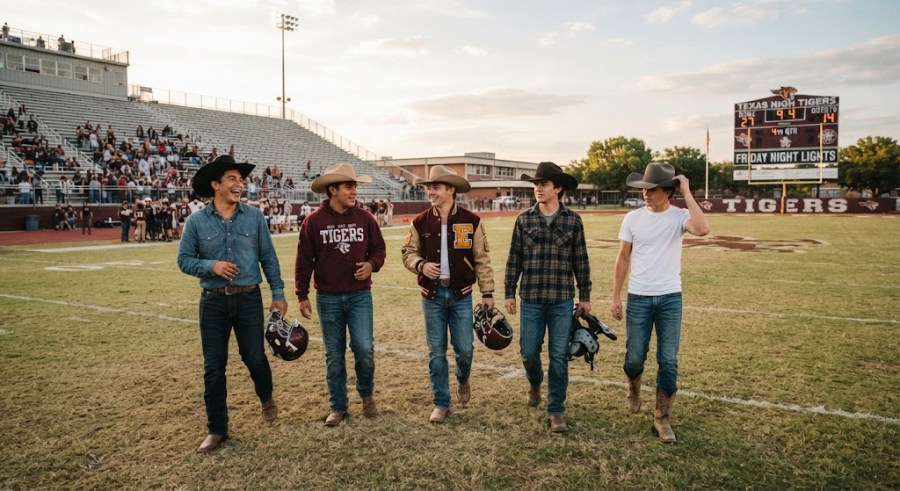
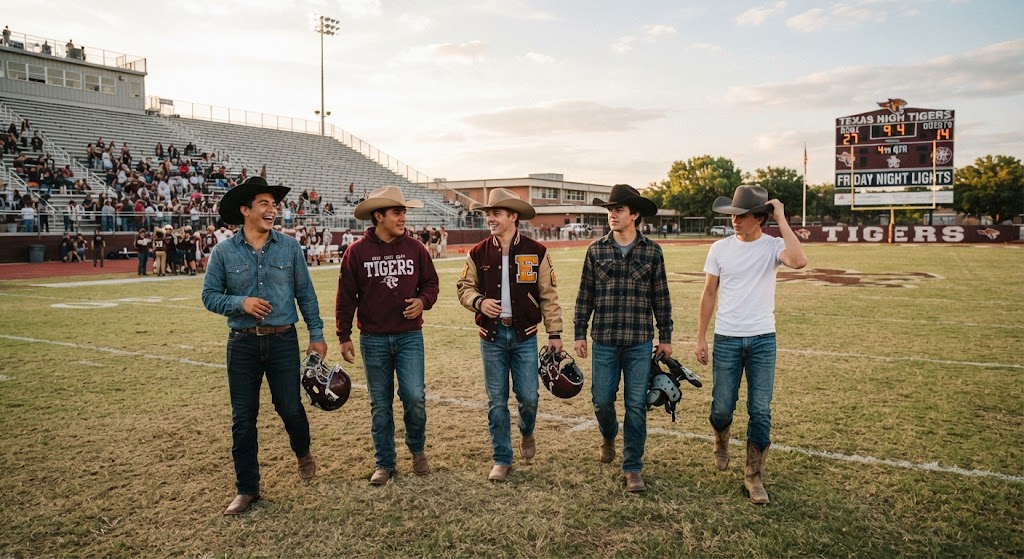
High school football in Texas transcends the boundaries of traditional scholastic athletics, operating instead as a profound civic religion, an economic engine for rural and suburban municipalities, and an enduring social touchstone. To study the history of Texas high school football is to trace the trajectory of the Lone Star State itself—from a patchwork of isolated agrarian outposts and frontier railroad towns into an urbanized, economic titan.
The origins of the sport trace back to the closing decades of the nineteenth century. While intercollegiate football took root in the Northeast in 1869, the gridiron gospel arrived slowly in Texas, carried by university students returning home and educators influenced by Eastern institutions. Institutional historians generally mark the inception of the sport in the state with early, unorganized contests played by high schools in Galveston, Houston, and Dallas during the 1880s and 1890s (Winningham, 1979). Galveston Ball High School is widely credited with fielding one of the earliest documented high school teams in 1884, initiating a sporting tradition that would fundamentally reshape the state’s cultural landscape (Winningham,1979).
Institutionalization and the Rise of the UIL (1910–1940)
In its earliest iterations, Texas high school football was a chaotic, unregulated enterprise. Matches were plagued by disputes over eligibility, inconsistent rule interpretations, and a stark lack of standardized safety equipment. Players took the field with minimal padding, leather helmets, and an abundance of raw grit.
Recognizing the urgent need for structural governance, the University Interscholastic League (UIL) was established in 1910 under the auspices of the University of Texas at Austin (Hawthorne, 2003). Originally founded to coordinate various academic and debate leagues, the UIL rapidly absorbed athletic governance. By 1920, the UIL formally structured state championship playoffs, establishing classification tiers based on school enrollment and laying the groundwork for a standardized statewide tournament (Texas Almanac, 2021).
Simultaneously, the professionalization of the sport’s leadership emerged. In 1929, visionary mentors such as Johnnie Pierce, Jesse Kellam, and Jimmie Kitts founded the Texas High School Coaches Association (THSCA). Originally designated exclusively for football instructors, the THSCA elevated coaching from a secondary school duty into a revered, highly trained pedagogical profession, ensuring that Texas sidelines were helmed by tactical masterminds (THSA, 2024).
The Golden Era of Power and the Legend of the Sugar Land Express (1940s–1960s)
The conclusion of the Second World War sparked an unprecedented demographic and economic expansion across Texas. Small towns and booming metropolitan suburbs alike funneled civic pride into their Friday night contests, cementing the phenomenon famously popularized as “Friday Night Lights.”
During the mid-century era, the sport produced individual titans whose exploits passed into folklore. None loomed larger than Kenneth “Ken” Hall, universally celebrated as the “Sugar Land Express.” Playing for Sugar Land High School from 1950 to 1953, Hall shattered national records by amassing an astonishing 11,232 career rushing yards—a national benchmark that stood for nearly six decades (Cushman,1993). Hall’s dominance epitomized an era defined by punishing single-wing and wing-T rushing attacks, where physical line play and bell-cow running backs dictated supremacy.
This period was also defined by legendary coaching dynasties. Mentors like Gordon Wood of Brownwood High School transformed high school football into an art form. Wood captured nine state championships over a career spanning four decades, compiling 396 victories and setting a standard for organizational discipline and psychological mastery over young athletes (Wood,2002).
Integration, Evolution, and the Spread Revolution (1970s–2000s)
The late twentieth century brought profound structural and tactical evolutions to the gridiron. Most notably, the full integration of Texas public schools during the late 1960s and early 1970s fundamentally enriched the talent pool, competitive intensity, and cultural fabric of the game. Brilliant athletes and coaches from previously segregated programs brought unprecedented speed, athleticism, and strategic innovation to UIL competition (Hurd, 2017).
Tactically, the game underwent a revolution starting in the 1980s and accelerating through the 1990s. Pioneered by innovators like Art Briles at Stephenville High School, the traditional ground-and-pound power schemes gave way to the high-octane spread offense. Utilizing wide receiver alignments, shotgun formations, and rapid-tempo play-calling, Texas high schools transformed into incubators for elite quarterback play. Prodigies such as Drew Brees at Austin Westlake High School refined their craft within these sophisticated systems before ascending to collegiate and professional greatness (1.2.1).
The sheer cultural weight of the sport during this epoch was immortalized by journalist H. G. Bissinger in his seminal 1990 nonfiction masterwork, Friday Night Lights: A Town, a Team, and a Dream, which focused on the Odessa Permian Panthers and exposed the intense pressures, racial dynamics, and transcendent community devotion tied to Texas schoolboy football (Bissinger, 1990).
Modern Grandeur and the Contemporary Landscape
Today, Texas high school football operates on a scale matched by few collegiate athletic departments. State championship games are held in colossal multi-million-dollar architectural marvels such as AT&T Stadium in Arlington, drawing tens of thousands of passionate spectators and reaching statewide television audiences (1.2.3).
Classifications now span from tiny rural six-man football leagues played in remote West Texas outposts—brilliantly documented by photographers like Laura Wilson (Wilson,2003)—to massive 6A behemoths boasting enrollments exceeding three thousand students. Modern master-tacticians and longevity icons, such as coach Phil Danaher of Corpus Christi Calallen, have pushed career victory milestones past the 470-win threshold, proving that the commitment to mentorship and athletic excellence remains as vibrant as ever (1.2.1).
Ultimately, the history of Texas high school football is not merely a chronicle of wins, losses, and tactical formations. It is a mirror reflecting the perseverance, community identity, and unrelenting passion of generations of Texans who gather under stadium lights every autumn Friday to witness the pursuit of gridiron glory.
References
Bissinger, H. G. (1990). Friday night lights: A town, a team, and a dream. Addison-Wesley Publishing Company.
Cushman, R. B. (1993). Young Bussey, young stud. Bigco Press.
Hawthorne, B. (2003). The University Interscholastic League: Its history and legacy. University of Texas Press.
Hurd, M. (2017). Thursday night lights: The story of Black high school football in Texas. University of Texas Press.
Texas Almanac. (2021). High school football history and state champions. The Texas State Historical Association.
Texas High School Coaches Association (THSA). (2024). Historical milestones of the THSCA. TSHA Online Handbook.
Wilson, J. (2010). Home field: Texas high school football stadiums from Alice to Zephyr. University of Texas Gridiron Cathedral: A Comprehensive Sociological and Historical Examination of Texas High School Football
Introduction: The Genesis of a Cultural Megalith
High school football in Texas transcends the boundaries of traditional scholastic athletics, operating instead as a profound civic religion, an economic engine for rural and suburban municipalities, and an enduring social touchstone. To study the history of Texas high school football is to trace the trajectory of the Lone Star State itself—from a patchwork of isolated agrarian outposts and frontier railroad towns into an urbanized, economic titan.
The origins of the sport trace back to the closing decades of the nineteenth century. While intercollegiate football took root in the Northeast in 1869, the gridiron gospel arrived slowly in Texas, carried by university students returning home and educators influenced by Eastern institutions. Institutional historians generally mark the inception of the sport in the state with early, unorganized contests played by high schools in Galveston, Houston, and Dallas during the 1880s and 1890s (Winningham, 1979). Galveston Ball High School is widely credited with fielding one of the earliest documented high school teams in 1884, initiating a sporting tradition that would fundamentally reshape the state’s cultural landscape (Winningham,1979).
Institutionalization and the Rise of the UIL (1910–1940)
In its earliest iterations, Texas high school football was a chaotic, unregulated enterprise. Matches were plagued by disputes over eligibility, inconsistent rule interpretations, and a stark lack of standardized safety equipment. Players took the field with minimal padding, leather helmets, and an abundance of raw grit.
Recognizing the urgent need for structural governance, the University Interscholastic League (UIL) was established in 1910 under the auspices of the University of Texas at Austin (Hawthorne, 2003). Originally founded to coordinate various academic and debate leagues, the UIL rapidly absorbed athletic governance. By 1920, the UIL formally structured state championship playoffs, establishing classification tiers based on school enrollment and laying the groundwork for a standardized statewide tournament (Texas Almanac, 2021).
Simultaneously, the professionalization of the sport’s leadership emerged. In 1929, visionary mentors such as Johnnie Pierce, Jesse Kellam, and Jimmie Kitts founded the Texas High School Coaches Association (THSCA). Originally designated exclusively for football instructors, the THSCA elevated coaching from a secondary school duty into a revered, highly trained pedagogical profession, ensuring that Texas sidelines were helmed by tactical masterminds (THSA, 2024).
The Golden Era of Power and the Legend of the Sugar Land Express (1940s–1960s)
The conclusion of the Second World War sparked an unprecedented demographic and economic expansion across Texas. Small towns and booming metropolitan suburbs alike funneled civic pride into their Friday night contests, cementing the phenomenon famously popularized as “Friday Night Lights.”
During the mid-century era, the sport produced individual titans whose exploits passed into folklore. None loomed larger than Kenneth “Ken” Hall, universally celebrated as the “Sugar Land Express.” Playing for Sugar Land High School from 1950 to 1953, Hall shattered national records by amassing an astonishing 11,232 career rushing yards—a national benchmark that stood for nearly six decades (Cushman,1993). Hall’s dominance epitomized an era defined by punishing single-wing and wing-T rushing attacks, where physical line play and bell-cow running backs dictated supremacy.
This period was also defined by legendary coaching dynasties. Mentors like Gordon Wood of Brownwood High School transformed high school football into an art form. Wood captured nine state championships over a career spanning four decades, compiling 396 victories and setting a standard for organizational discipline and psychological mastery over young athletes (Wood,2002).
Integration, Evolution, and the Spread Revolution (1970s–2000s)
The late twentieth century brought profound structural and tactical evolutions to the gridiron. Most notably, the full integration of Texas public schools during the late 1960s and early 1970s fundamentally enriched the talent pool, competitive intensity, and cultural fabric of the game. Brilliant athletes and coaches from previously segregated programs brought unprecedented speed, athleticism, and strategic innovation to UIL competition (Hurd, 2017).
Tactically, the game underwent a revolution starting in the 1980s and accelerating through the 1990s. Pioneered by innovators like Art Briles at Stephenville High School, the traditional ground-and-pound power schemes gave way to the high-octane spread offense. Utilizing wide receiver alignments, shotgun formations, and rapid-tempo play-calling, Texas high schools transformed into incubators for elite quarterback play. Prodigies such as Drew Brees at Austin Westlake High School refined their craft within these sophisticated systems before ascending to collegiate and professional greatness (1.2.1).
The sheer cultural weight of the sport during this epoch was immortalized by journalist H. G. Bissinger in his seminal 1990 nonfiction masterwork, Friday Night Lights: A Town, a Team, and a Dream, which focused on the Odessa Permian Panthers and exposed the intense pressures, racial dynamics, and transcendent community devotion tied to Texas schoolboy football (Bissinger, 1990).
Modern Grandeur and the Contemporary Landscape
Today, Texas high school football operates on a scale matched by few collegiate athletic departments. State championship games are held in colossal multi-million-dollar architectural marvels such as AT&T Stadium in Arlington, drawing tens of thousands of passionate spectators and reaching statewide television audiences (1.2.3).
Classifications now span from tiny rural six-man football leagues played in remote West Texas outposts—brilliantly documented by photographers like Laura Wilson (Wilson,2003)—to massive 6A behemoths boasting enrollments exceeding three thousand students. Modern master-tacticians and longevity icons, such as coach Phil Danaher of Corpus Christi Calallen, have pushed career victory milestones past the 470-win threshold, proving that the commitment to mentorship and athletic excellence remains as vibrant as ever (1.2.1).
Ultimately, the history of Texas high school football is not merely a chronicle of wins, losses, and tactical formations. It is a mirror reflecting the perseverance, community identity, and unrelenting passion of generations of Texans who gather under stadium lights every autumn Friday to witness the pursuit of gridiron glory.
References
Bissinger, H. G. (1990). Friday night lights: A town, a team, and a dream. Addison-Wesley Publishing Company.
Cushman, R. B. (1993). Young Bussey, young stud. Bigco Press.
Hawthorne, B. (2003). The University Interscholastic League: Its history and legacy. University of Texas Press.
Hurd, M. (2017). Thursday night lights: The story of Black high school football in Texas. University of Texas Press.
Texas Almanac. (2021). High school football history and state champions. The Texas State Historical Association.
Texas High School Coaches Association (THSA). (2024). Historical milestones of the THSCA. TSHA Online Handbook.
Wilson, J. (2010). Home field: Texas high school football stadiums from Alice to Zephyr. University of Texas Press.
Wilson, L. (2003). Grit and glory: Six-man football. Bright Sky Press.
Winningham, G. (1979). Rites of fall: High school football in Texas. University of Texas Press.
Wood, G. (2002). Gordon Wood’s game plan for winning football. Privately Published..
Wilson, L. (2003). Grit and glory: Six-man football. Bright Sky Press.
Winningham, G. (1979). Rites of fall: High school football in Texas. University of Texas Press.
Wood, G. (2002). Gordon Wood’s game plan for winning football. Privately Published.


You must be logged in to post a comment.