
Historical Report: Ancient Egyptian Necropolises and Mastaba Construction
1. Introduction and Environmental Context
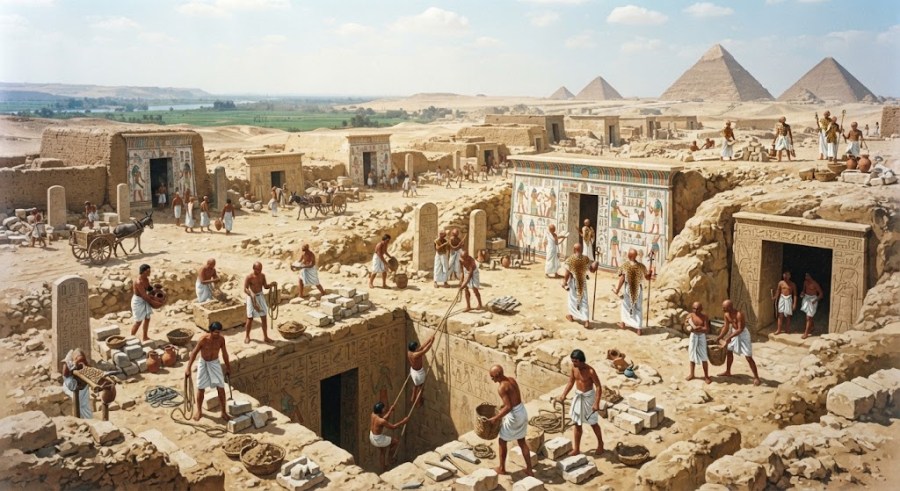
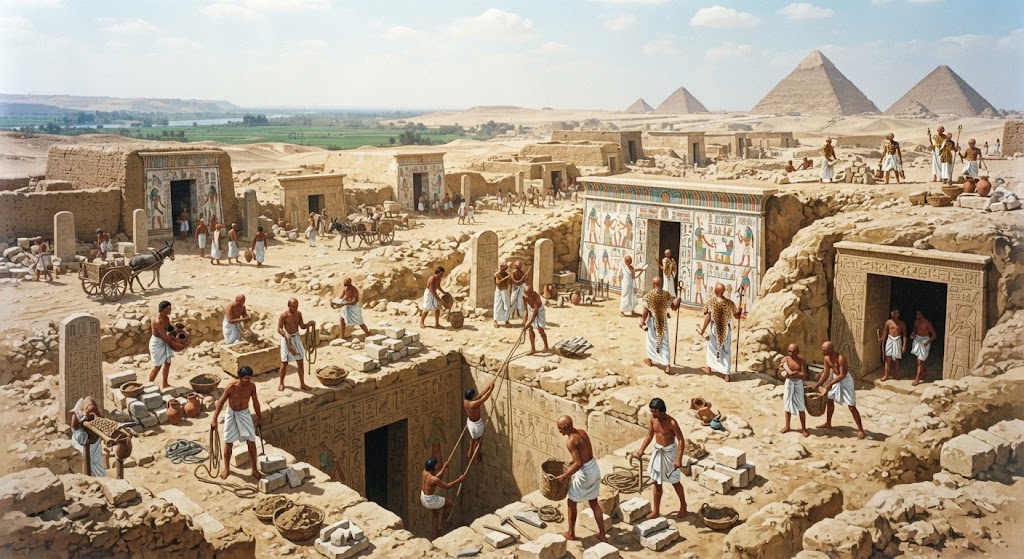
Long before centuries of drifting desert sands buried the necropolises of Upper and Lower Egypt into silent dunes, these sacred burial grounds were bustling, vibrant architectural work-sites and active ritual landscapes. Set against the stark contrast of the hyper-arid western desert plateau and the intensely vibrant, life-giving green ribbon of the Nile floodplains, monumental cemeteries like Saqqara and Giza were visual testaments to the ancient Egyptian worldview: a permanent city of the dead standing in parallel to the cities of the living.
During periods of active construction—particularly the Old Kingdom and Early Dynastic eras—these sites were free of the blank blankets of sand that characterize them today. Instead, they were exposed expanses of exposed native bedrock, sun-baked mudbrick, and brilliant white limestone that gleamed intensely under the North African sun.
2. Architectural Anatomy: Above and Below Ground
The standard elite tomb of the era was the mastaba (derived from the Arabic word for a mud bench due to its flat-roofed, rectangular profile with sloping sides). These structures were meticulously engineered into two distinct realms representing the separation between the earthly cult and the netherworld:
- The Superstructure (Above Ground): Constructed primarily from sun-dried Nile mudbricks or heavy blocks of local and fine white limestone, the exterior walls were often deeply paneled or plastered and whitewashed to a brilliant finish. Within this structure sat the offering chapel. This room featured a “false door”—a heavily carved architectural stele designed to let the ka (spirit) of the deceased pass back and forth between the living world and the tomb. Priests and family members frequented these chambers, leaving fresh bread, beer, meat, and grain on stone offering tables.
- The Substructure (Below Ground): A deep, vertical shaft cut straight down through the solid limestone bedrock—sometimes plunging 40 to 80 feet beneath the desert floor. At the base of this shaft lay the heavily sealed burial chamber. Here rested the stone sarcophagus or wooden coffin containing the mummified remains, accompanied by grave goods meant to sustain the soul: copper model tools, stone vessels filled with precious oils, jewelry, and designated provisions. Once the body and goods were secured, the vertical shaft was tightly packed with massive rubble and limestone blocks, and sealed with plaster to deter tomb robbers.
3. The Atmosphere of an Active Necropolis
An ancient Egyptian cemetery under construction or during an active burial phase was an environment defined by intense physical labor, artistry, and communal ritual:
- The Workforce: Teams of skilled stonemasons, sculptors, carpenters, and laborers swarmed the plateau. Using copper chisels, stone mallets, and wooden levers, they quarried limestone right from the desert floor or hauled mudbricks up ramps and scaffolding.
- The Scribes and Artists: Painters and relief carvers covered the interior walls of the chapels and corridors with vibrant pigments (ochre reds, carbon blacks, malachite greens, and Egyptian blues). They carved intricate scenes depicting daily life—farming, cattle herding, sailing, and grand banquets—to magically provision the deceased for eternity.
- The Ritual Processions: Mourners, wailing women, and white-robed priests crowded the pathways between mastabas. Barges crossed the Nile carrying the embalmed body from the eastern bank (the land of the living) to the western desert (the land of the setting sun and the dead), accompanied by the heavy scent of burning incense, myrrh, and cedar resin.
4. The Transition to Desert Sands
As central political authority shifted during intermediate periods and maintenance of mortuary cults waned, the human presence retreated from these outlying plateaus. Without daily upkeep, sweeping seasonal winds and relentless desert sandstorms began their gradual work. Over centuries, fine desert particulates filled the open courtyard shafts, drifted over the flat roofs of the mudbrick mastabas, and slowly choked the offering chapels.
What was once a bright, bustling, multi-colored metropolis of stone and ritual was completely swallowed, turning towering architectural monuments into uniform, rolling mounds of wind-blown dunes—preserving them undisturbed beneath the sand until modern archaeological excavation brought them back to the light.


You must be logged in to post a comment.