
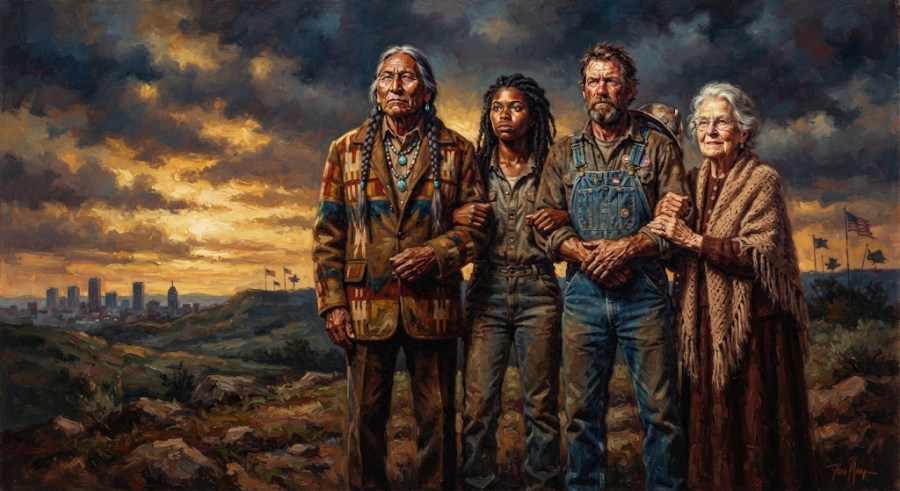
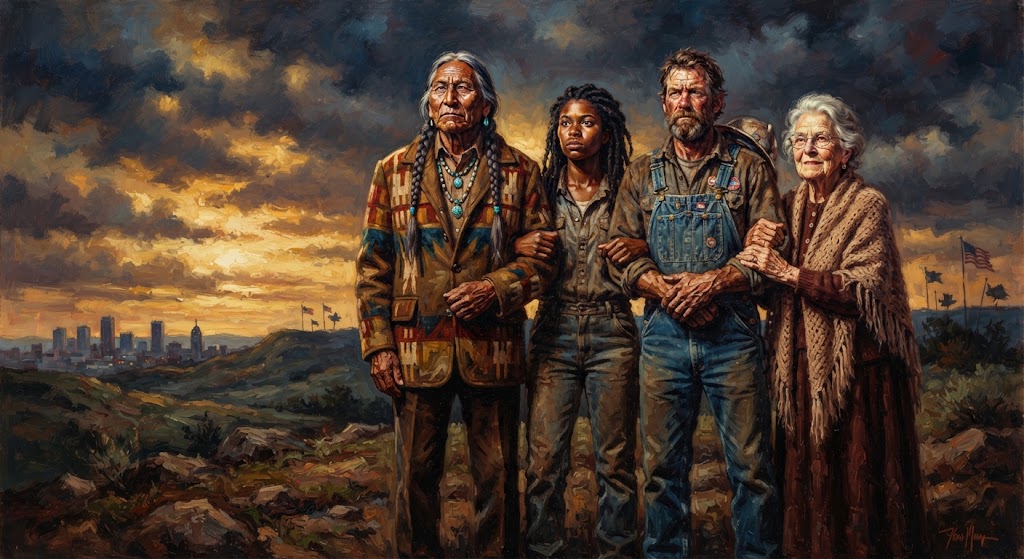
The phrase “thick-skinned” is often used in casual parlance to describe someone who shrugs off a casual insult or brushes away a minor slight. But when applied at a societal level across the American landscape, true thick skin is not born of casual detachment. It is forged in the furnace of survival. It is the neurological, emotional, and cultural scar tissue developed by populations who have had to absorb systemic friction, institutional neglect, and physical vulnerability without breaking.
In America, that heavy armor is worn most visibly by four intersecting groups: Native American Indians, Black people, poor people, and the elderly.
I. Native American Indians: The Endurance of Indigenous Survival
For Native Americans, thick skin is rooted in a centuries-long fight against physical erasure, displacement, and cultural assimilation. It is the resilience of peoples who survived the systematic shattering of their worlds and yet persist.
- The Weight of Erasure: Indigenous communities have endured centuries of broken treaties, forced relocations, boarding school systems designed to strip away identity, and a modern American culture that frequently renders Native history and contemporary existence invisible. To walk in America as Native American is to navigate a landscape built upon the displacement of your ancestors while fighting for basic sovereignty, representation, and resource equity.
- The Intergenerational Resolve: Developing thick skin here means carrying the collective memory of historical trauma while maintaining an unbreakable connection to land, language, and culture. It is an extraordinary, quiet fortitude—a refusal to vanish in the face of institutional neglect, romanticized stereotypes, and ongoing systemic hurdles.
II. Black People: The Heritage of Structural Resistance
For Black Americans, thick skin is not merely a personality trait; it is a multigenerational inheritance passed down through centuries of structural hostility.
- The Daily Calculus: From the days of chattel slavery through Jim Crow and into the modern era of subtler, systemic microaggressions, Black Americans have had to master an exhausting psychological calculus. Every public space, corporate office, and routine traffic stop carries an unspoken requirement: to remain composed in the face of prejudice, to swallow indignation, and to navigate dual realities without letting anger compromise survival or success.
- The Armor of Excellence: To combat the presumption of inferiority, generations of Black Americans adopted the cultural mandate of working “twice as hard to get half as far.” This demands an extraordinary emotional fortitude—a shield that absorbs systemic headwinds while projecting dignity, brilliance, and unshakable resolve. It is a thick skin built not from numbness, but from a fierce, defiant resilience.
III. Poor People: The Endurance of Economic Gravity
Poverty in America is an unremitting daily siege. For the working poor and those trapped below the safety net, thick skin is an immediate, practical necessity of keeping the lights on and the family fed.
- The Volatility of Scarcity: When a single flat tire, an unexpected dental bill, or a minor health scare can trigger a cascading financial collapse, there is no room for fragility. The poor live in a state of high-alert endurance, navigating predatory lending, food deserts, underfunded schools, and unstable housing markets.
- The Stigma of Invisibility: Beyond economic deprivation, American culture frequently stigmatizes poverty, blaming individuals for systemic market failures. Developing thick skin here means learning to function under the weight of indignity—shrugging off the casual contempt of a society that often equates net worth with human worth, and finding unbreakable resourcefulness in the face of structural abandonment.
IV. The Elderly: The Grace of Long Memory and Bodily Attrition
The elderly bear the thick skin of time itself—the cumulative wear of outliving peers, adapting to a world that accelerates past them, and watching their own physical forms change.
- The Marginalization of Age: Modern American culture is obsessed with youth, speed, and novelty, frequently rendering older adults invisible or treating them as economic liabilities. Seniors watch their societal influence erode even as their wisdom peaks.
- The Quiet Fortitude of Aging: Beyond social sidelining, the elderly endure the daily, unyielding friction of physical decline—chronic pain, the loss of lifelong companions, and the gradual erosion of independence. To wake up each morning, face a diminishing physical horizon, and maintain humor, grace, and perspective requires a profound, quiet thickness of skin. It is the wisdom of knowing what matters, and letting the rest roll off.
Mexican and Mexican-American People: The Resilience of the Frontera and the Fields
For generations of Mexican and Mexican-American people, thick skin is forged through the trials of migration, cultural dislocation, and the invisible labor that sustains the American economy.
- The Stigma of the Border and Labor: Mexican-Americans have long navigated shifting political crosswinds, anti-immigrant rhetoric, and systemic underappreciated of their labor. From the backbreaking work of agricultural fields and construction sites to navigating hostile social environments where their very presence is politicized, they carry an immense burden of endurance.
- The Dual-World Perseverance: Developing thick skin here means building a life across cultural fault lines—holding fast to rich familial and traditional roots while enduring prejudice, economic marginalization, and the constant demand to prove one’s worth in a society that often utilizes their labor while denying their humanity. It is an armor built on dignity, community strength, and an unyielding work ethic.

The Intersection of Resilience
What makes these four groups compelling is not just their individual trials, but how deeply they intersect. To be an elderly, Native, Black, or poor American—or any combination of these identities—is to understand that America rarely offers a soft landing.
The thick skin they share is an American paradox: it is a testament to extraordinary strength, yet it is born of a society that has historically demanded too much endurance from those who deserve peace. It is armor built by necessity, worn by people who refuse to be erased.

He luvs it when you sit on his face


You must be logged in to post a comment.