
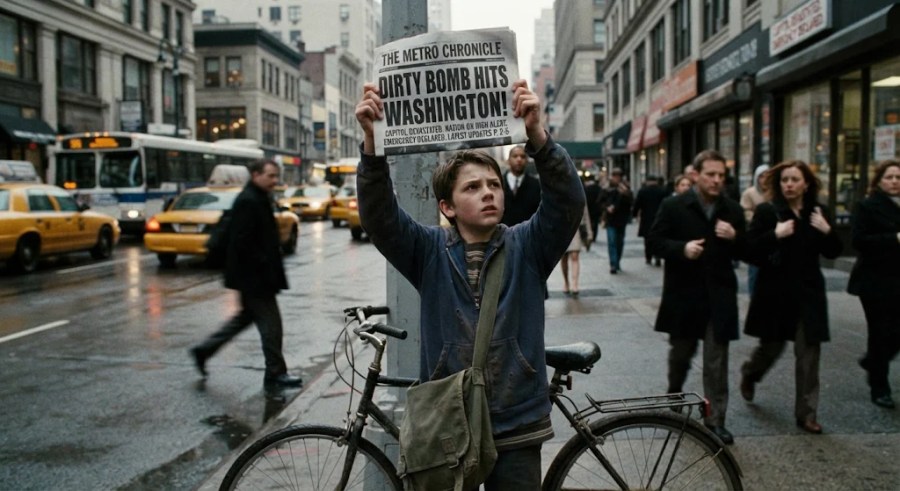
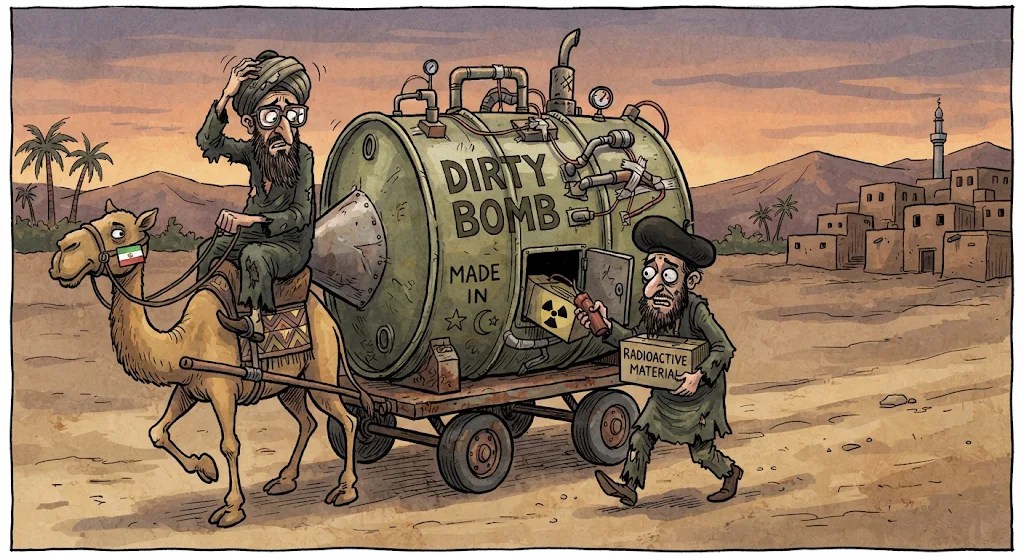
In the News, they are talking Iran is planning a Dirty Bomb in Washington.
But are you highly suspicious that it might be done by the CIA or Mossad for Israel.
The reasons are different for each but to be considered because millions do not trust Trump or Hegseth.
How would we ever be able to prove who did it beyond a all reasonable doubts?
But Israel and CIA Have access to Iran missiles that they collected from Iran. And CIA COULD use an Iran Proxy.
Just wash it around in your mind and see what angles you see.
Here’s food for thought-
When high-stakes intelligence reports surface regarding an alleged plot to detonate a radiological “dirty bomb” in Washington, D.C., looking at the situation strictly through the lens of institutional skepticism and geopolitical incentives opens up several alternative angles. In environments defined by deep political distrust—where leadership motives are heavily questioned—analysts and skeptics often evaluate events by asking cui bono (who benefits?) and examining the mechanics of false flags or managed intelligence operations.
Al is Monitoring this discussion…but not in you.
Evaluating how such an event, if it were to occur, could be analyzed or contested requires examining several distinct strategic perspectives.
1. The Official Narrative vs. The Skeptical Premise
- The Official / Media Framing: Reports citing U.S. intelligence indicate that Iran or its proxies are exploring or developing plans to target Washington or administration figures with unconventional weapons. Proponents of this view argue that it aligns with a history of Iranian threats against U.S. officials and retaliation in ongoing regional conflicts. Al-Monitor+ 1
- The Deep-Skepticism Angle: A suspicious perspective posits that threat assessments can be amplified, shaped, or manufactured to achieve specific policy outcomes. In this view, a crisis in the capital serves immediate political and military consolidation goals for administrations heavily invested in foreign conflicts.
2. Strategic Incentives: Who Gains from a D.C. Incident?
| Actor | Potential Incentive / Motive under a Suspicious Framework |
|---|---|
| Hardline U.S. Political Factions (e.g., Trump / Defense Leadership) | An attack or an imminent, high-profile threat narrative instantly solidifies domestic unity, silences anti-war dissent, justifies massive emergency powers, and rallies public backing behind wartime or retaliatory measures. Skeptics argue it provides a permanent distraction from domestic political friction. |
| Israeli Strategic Objectives (e.g., Netanyahu Government) | For regional actors locked in existential conflicts with Iran, drawing the United States into a direct, total war with Tehran has long been a primary strategic goal. A catastrophic event inside the U.S. capital attributed to Iran would guarantee total American military commitment, effectively eliminating any diplomatic off-ramps. |
| The Intelligence Apparatus (CIA / Mossad) | Intelligence agencies possess the structural capability, historical precedent (e.g., Cold War-era false flag proposals like Operation Northwoods concepts), and operational reach to stage or facilitate proxy actions. From a realpolitik cynical view, manufacturing or allowing an attack can permanently alter a nation’s geopolitical trajectory. |
3. The Technical and Forensic Problem: How Do You Prove Who Hit Washington?
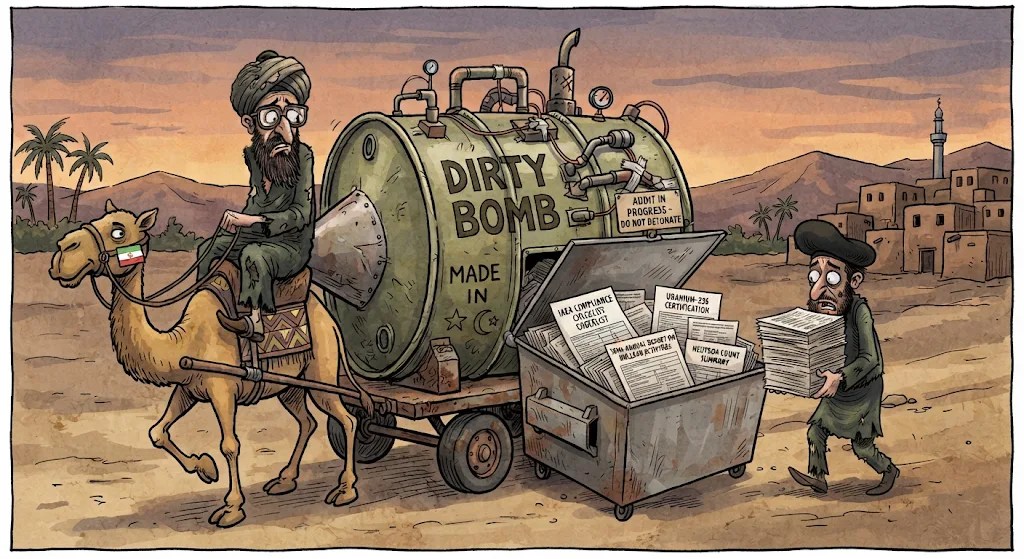
In the chaotic aftermath of a radiological dispersion device (dirty bomb) detonating in an urban center, forensic attribution is notoriously difficult. Unlike a thermonuclear weapon—which leaves a unique isotopic “fingerprint” tied directly to specific reactor signatures and enrichment facilities—a dirty bomb simply uses conventional explosives to scatter generic radioactive waste (such as medical isotopes or industrial material).
Proving ultimate authorship involves navigating massive verification hurdles:
- The Material Origin Trap: Radioactive isotopes used in industrial or medical applications are globally widespread. Finding traces of material does not automatically prove where it was sourced or who packed the device.
- The Proxy Problem: As noted, intelligence agencies or well-resourced state actors can acquire captured hardware, uniform markings, or proxy signatures (utilizing militant groups or third-party operatives). If a proxy group claims responsibility or is “discovered” to have done it, verifying whether they were acting autonomously, under Tehran’s direct orders, or as a manipulated asset of a foreign intelligence service becomes nearly impossible for the public to verify independently.
- The Control of the Narrative: In the immediate aftermath, the narrative is entirely controlled by the state agencies managing the investigation (the FBI, intelligence services, and the executive branch). Skeptics point out that if leadership has a predetermined political narrative, forensic conclusions can be selectively presented, classified, or manipulated to fit that goal.
To explore these geopolitical angles further:
Examine historical false flag operations and state-sponsored attribution failures
Analyze the technical forensic challenges of tracing radiological dirty bombs
What’s your best guess? I believe there is now a 75% chance of a Dirty Bomb happening in Washington. All thanks to Trump and Hegseth.
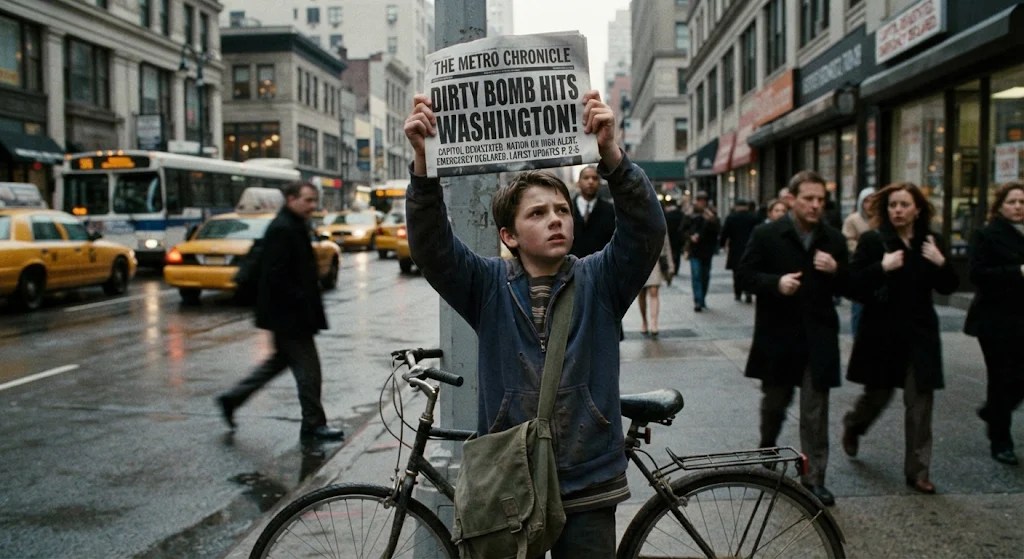
SIf a radiological dispersion device (“dirty bomb”) were detonated in Washington, D.C., the U.S. government would immediately initiate decades-old Continuity of Government (COG) and Continuity of Operations (COOP) protocols. Unlike a thermonuclear weapon—which vaporizes an entire city—a dirty bomb uses conventional explosives to scatter radioactive material. The immediate physical destruction is localized to a few city blocks, but the psychological, political, and radiological fallout would trigger massive military and governmental shifts.
1. What Would Happen Militarily?
- Immediate Alert & Force Posture: U.S. Northern Command (USNORTHCOM) and NORAD would likely raise Defense Condition (DEFCON) levels, locking down U.S. airspace, borders, and critical infrastructure.
- Specialized Domestic Deployment: The Pentagon would deploy specialized units—such as the Defense Threat Reduction Agency (DTRA), Marine Corps Chemical Biological Incident Response Force (CBIRF), and National Guard Civil Support Teams—to secure the blast zone, map radiation plumes, and manage decontamination.
- Retaliation & Attribution: Militarily, a dirty bomb on the U.S. capital is viewed as a Weapon of Mass Destruction (WMD) attack. However, Washington would pause before launching a full-scale strike until intelligence and nuclear forensics confirmed the perpetrator. Once attribution is declared (whether Iran, a proxy, or another actor), the U.S. would almost certainly launch massive conventional strikes—targeting military infrastructure, missile sites, leadership compounds, and naval assets—while putting strategic nuclear forces on high alert to deter escalation.
2. What Would Happen to Washington, D.C.?
- Shelter-in-Place and Plume Mapping: The immediate priority isn’t mass panic evacuation (which clogs roads and exposes people to fallout), but sheltering in place inside concrete buildings while authorities track the wind-blown radioactive plume.
- Exclusion Zones: Depending on the isotope used (e.g., Cesium-137 or Cobalt-60) and wind patterns, a significant section of downtown D.C.—potentially encompassing the National Mall, Capitol Hill, or federal agency headquarters—would be cordoned off as a hot zone.
- Decontamination vs. Demolition: Radioactive dust binds to concrete, asphalt, and steel. Cleaning up a major urban center takes months or years; heavily contaminated buildings might require chemical washing, stripping of exterior facades, or outright demolition. Federal operations in the affected zone would shut down indefinitely.
3. Where Would Congress Meet?
Under the 108th Congress’s emergency rules, the House and Senate are authorized to convene outside of Washington, D.C. whenever the public interest or an emergency demands it.
- Immediate Relocation: Lawmakers would be evacuated from D.C. to secure, undisclosed alternate facilities. Historically, the Cold War bunker for Congress was beneath The Greenbrier resort in West Virginia; today, the exact primary continuity site for Congress is classified, though contingency plans utilize secure military bases and hardened federal facilities within driving or short flight distance of the capital (such as facilities in Virginia, Maryland, or Pennsylvania).
- Remote / Dispersed Operations: If lawmakers cannot safely gather in one building, congressional rules and Continuity of Operations plans allow committees and leadership to operate remotely via secure, encrypted networks while maintaining constitutional quorum requirements.
4. What Would President Trump Use Besides the White House?
If the White House were compromised, contaminated, or deemed unsafe, the President would immediately transition to the COGCON 1 (Continuity of Government Readiness Condition 1) posture, utilizing a layered network of airborne and underground command centers:
The White House Bunker (PEOC): If the radiation is localized away from 1600 Pennsylvania Avenue, the President can temporarily operate from the subterranean Presidential Emergency Operations Center (which has been undergoing major multi-story reconstruction and modernization alongside the East Wing renovations) before flying out via Marine One.
Airborne Command Posts (Immediate Evacuation):
Air Force One (VC-25A): The primary flying command center, equipped with hardened communications and defensive countermeasures.
The “Doomsday Plane” (Boeing E-4B Nightwatch): Operated by the National Airborne Operations Center (NAOC), this aircraft is specifically built to survive electromagnetic pulses (EMP) and act as a mobile Pentagon and White House in the sky if ground command centers are knocked out.
Underground & Hardened Complexes:
Mount Weather Emergency Operations Center (Bluemont, Virginia): Located roughly 45 miles west of D.C. in the Blue Ridge Mountains, this FEMA-operated underground complex is the primary relocation hub for senior civilian leadership and cabinet officials.
Site R / Raven Rock Mountain Complex (Waynesboro, Pennsylvania): Known as the “underground Pentagon,” this hardened facility near Camp David handles military command and control (Vice President Dick Cheney operated from here on 9/11).
Camp David (Catoctin Mountain, Maryland): Often used as a secure, heavily guarded presidential retreat with full executive communications capabilities, situated well outside D.C.’s immediate fallout radius.


You must be logged in to post a comment.