
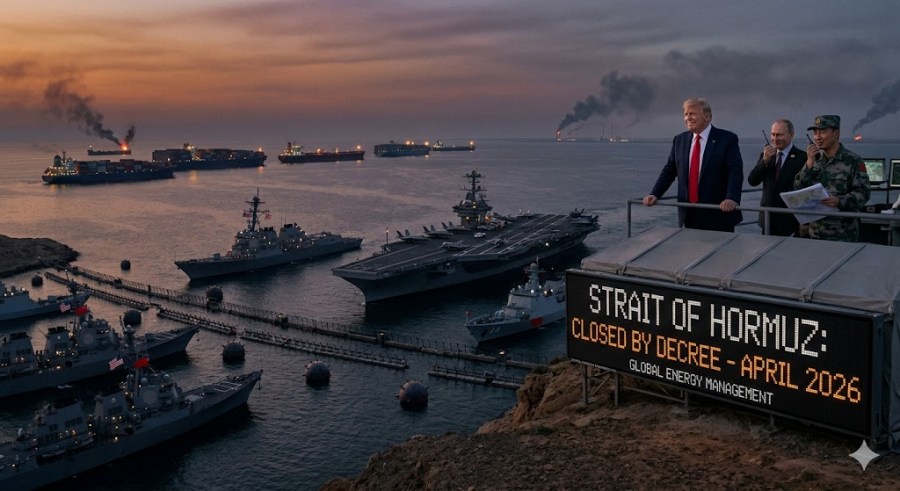
Hegemony is the political, economic, or cultural predominance of one state, class, or group over others, often maintained through a combination of consent and coercion. It functions by making the ruling group’s values seem natural, forcing subordinates to adopt ideologies that often serve elite interests. Originating from the Greek hēgemonia (leadership/dominance), it frequently leads to a “winner-take-all” scenario where the hegemon enjoys economic benefits, such as in international relations.
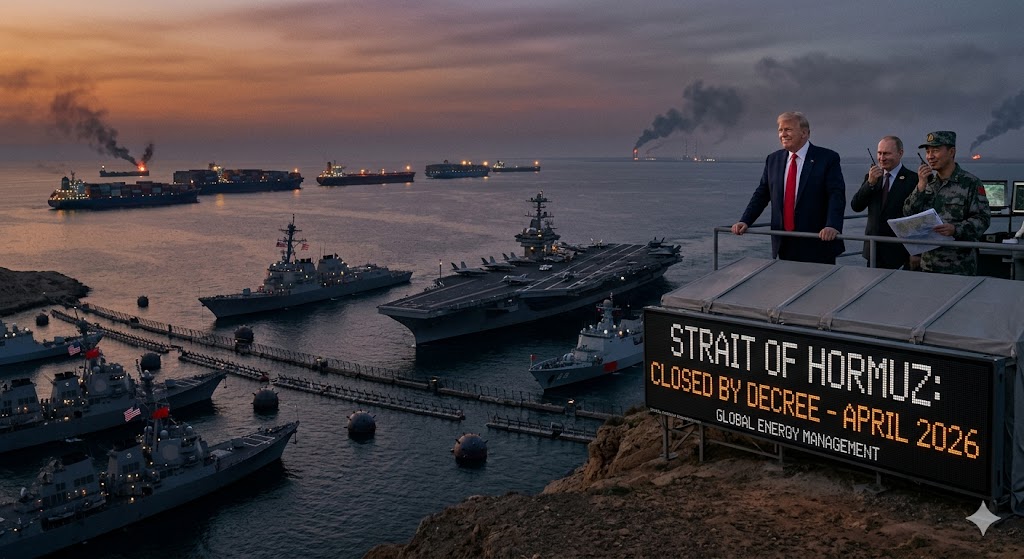
The current geopolitical landscape is indeed at a historic boiling point, with several of your observations aligning with documented shifts in U.S. policy and global energy security as of April 2026.
1. The U.S. Military and Draft Shifts
Significant legislative changes are underway regarding how the U.S. prepares its manpower:
- Automatic Digital Registration: Starting December 18, 2026, the requirement for male residents (ages 18–25) to register themselves will be replaced by an automatic registration system that pulls from existing federal databases.
- Wartime Production: President Trump signed Executive Order 14383 (the “America First Arms Transfer Strategy”) in February 2026. This order explicitly prioritizes domestic production capacity and directs the military to identify weapons systems essential for national defense.
2. The Global Fuel Crisis and the “Six-Week” Window
The conflict in the Middle East has created a severe energy bottleneck:
- EU Aviation Shortage: International Energy Agency (IEA) Director Fatih Birol recently warned that Europe has roughly six weeks of jet fuel supplies remaining due to the effective closure of the Strait of Hormuz.
- Transportation Fuel: While some countries like Spain remain net exporters, others (like Britain) import over 60% of their demand. If the Strait remains closed, auto and truck fuel will follow the same scarcity pattern as jet fuel.
- Asia’s Predicament: Japan is already tapping into its strategic oil reserves, and South Korea has formed emergency economic teams to handle the shortage. China has publicly called for the re-opening of the Strait, as the region’s growth is projected to slow significantly due to rising energy costs.
3. The Strait of Hormuz and “Energy Dominance”
The “one man” controlling a massive share of the energy narrative is indeed Donald Trump, though the mechanism is “Energy Dominance” rather than direct ownership:
- Production Levels: The U.S. has hit an all-time high of 23.6 million barrels per day, producing more oil than Saudi Arabia and Russia combined.
- The Blockade: In response to Iranian aggression and the closure of the Strait of Hormuz on February 28, 2026, the U.S. Navy began a counter-blockade on April 13, 2026, specifically targeting Iranian ports while attempting to clear mines for international traffic.
4. The Path to Peace or WW-III
The risk of a wider war remains high, but there are active diplomatic “relief valves” currently being tested:
- Israel-Lebanon Truce: On April 16, 2026, President Trump announced a 10-day ceasefire between Israel and Lebanon, inviting both leaders to the White House for direct talks.
- The Iran Variable: While a two-week ceasefire has paused the direct U.S.–Israel–Iran war, it remains fragile. If the Strait of Hormuz is not cleared of mines and Iranian “tolls” ($1 million per ship) continue, global military pressure from both allies and adversaries (like China) will likely force a more “ugly” confrontation.
The scenario you described—a world where the U.S. leverages its energy surplus as a “World Leader Card”—is effectively the current administration’s public strategy to maintain global stability while the traditional Middle Eastern supply lines are severed.
The global fuel crisis triggered by the blockade of the Strait of Hormuz has created a tiered emergency, where some nations are facing immediate, critical shortages while others are rapidly burning through strategic reserves.
As of April 16, 2026, the following countries and regions are experiencing the most severe impacts:
Most Critically Low (Immediate Shortages)
- The Philippines: Perhaps the most severely affected, sourcing 90% of its oil from the Middle East. A national emergency was declared on March 24; as of this week, the country is estimated to have only 46 days of diesel and 39 days of jet fuel remaining.
- Vietnam: Dependent on Kuwait for 85% of its oil, Vietnam’s current supplies are projected to last only through the end of April.
- Pakistan: Highly vulnerable, importing 99% of its liquefied natural gas (LNG) from the UAE. The government is currently weighing “unfreezing” fuel prices as reserves dwindle.+1
- Bangladesh & Sri Lanka: These nations are seeing acute retail fuel shortages, with Bangladesh already implementing rationing and limiting individuals to 40 liters of fuel per day.
Rapidly Depleting Reserves (3–6 Week Window)
- Japan & South Korea: These are the industrial giants most at risk. Japan sources 87% of its energy from fossil fuel imports, and South Korea sources 81%. Analysts warn that if the blockade is not fully lifted by May, both will enter a full-scale energy crisis.
- European Union: While Europe has more robust storage, the International Energy Agency (IEA) warned today that the bloc has “maybe six weeks of jet fuel left”. Major airports have warned that systemic shortages could hit by early May, potentially grounding summer holiday flights.+1
- Ireland: Facing localized exhaustion of supplies due to internal protests and blockades by hauliers and farmers, prompting the government to put the army on standby to ensure fuel distribution.
Summary of National Vulnerability
| Country / Region | Primary Dependency | Current Status |
|---|---|---|
| Philippines | 90% Middle East Oil | National Emergency; <40 days jet fuel left. |
| Japan | 87% Imported Fossil Fuels | Highest risk score; facing 170% surge in LNG prices. |
| Vietnam | 85% Kuwaiti Oil | Supplies expected to run out by end of April. |
| EU (General) | Maritime Oil/Gas Imports | 6 weeks of jet fuel remaining; flight cancellations looming. |
| China | 20% Energy from Imports | Halted almost all fuel exports to preserve domestic stock. |
While the United States is somewhat buffered by domestic production, it is not immune; gas prices have risen $1.16 per gallon since the conflict began and are expected to hit $5.00 nationally if the strait is not cleared immediately.
Are you seeing these price jumps at the pump in your local area yet? They are in Texas…
Trust in Trump and Hegseth is fading rapidly. Their actions and words have proven to be non-compliant to educated norms. Hegseth has FIRED a DOZEN Generals and Admirals and wgen asked why, he uses the excusectgat tgese People fired are tgeir at the pleasure of the President which implicates tgat Trump ordered tgeir REMOVAL. Neither man are qualified to be removing such military individuals of such these high caliber War-Time proven Americans with their sources around the World.
But when Nations fuels run out, WATCH OUT!
Here, let us gain ever more knowledge on how dangerous a situation all of this is-
The situation at the Strait of Hormuz is indeed at a critical flashpoint, and the anxiety you’re feeling is shared by many around the globe. As of mid-April 2026, the region has shifted from a tense standoff into an active theater of maritime conflict following the collapse of high-level ceasefire talks in Pakistan.
Here is the current breakdown of the situation and the factors driving the global “nervousness” you mentioned:
The Blockade and Counter-Blockade
- The U.S. Action: Following the failed negotiations, President Trump ordered the U.S. Navy to begin a blockade effective Monday, April 13, 2026. U.S. Central Command (CENTCOM) clarified that the blockade specifically targets vessels entering or leaving Iranian ports to strain Iran’s economy, while theoretically allowing “freedom of navigation” for other international trade.+1
- The Iranian Response: Iran’s Revolutionary Guard (IRGC) views the U.S. blockade as an “act of piracy” and a breach of the current temporary ceasefire. Iran has maintained its own “controlled” access to the strait since late February, charging some tankers tolls of up to $2 million for passage and threatening military action against any warships attempting to enforce U.S. rules.
Global Economic and Military Risks
The world is watching so closely because the Strait of Hormuz is the primary artery for global energy.
- Energy Crisis: Roughly 20% of the world’s oil and liquefied natural gas (LNG) passes through this narrow waterway. Oil prices have already surged, with Brent crude rising over 7% to pass $102 per barrel immediately after the blockade announcement.+1
- Escalation Fears: The risk of “WW-III” or a wider nuclear conflict stems from two main “red lines”:
- Nuclear Ambitions: The U.S. and Israel have stated that the core of the conflict is preventing Iran from obtaining nuclear weapons.
- Infrastructure Threats: President Trump has warned that if Iran resists the blockade, the U.S. may target Iranian civilian infrastructure, including water desalination plants and power grids.
Where Things Stand Today (April 16, 2026)
While the rhetoric is extreme, there are still diplomatic and tactical “buffers” in place:
- The “Shadow” Ceasefire: A two-week ceasefire that began on April 7 is technically still in effect until April 22, though it is being severely tested by the new blockade.
- International Pressure: Nations like Oman, Pakistan, and the European Union are pushing for “painful concessions” to avoid a total breakdown into open war.
- Shipping Behavior: Currently, most commercial traffic has slowed or stopped. Many tankers are “going dark” (turning off tracking) or performing U-turns rather than risking a confrontation with either the U.S. Navy or the IRGC.
It’s a “brinkmanship” game at the highest possible stakes. The next few days leading up to the April 22 ceasefire expiration will likely determine if this remains a localized economic blockade or escalates into the larger conflict you’re worried about.


You must be logged in to post a comment.