
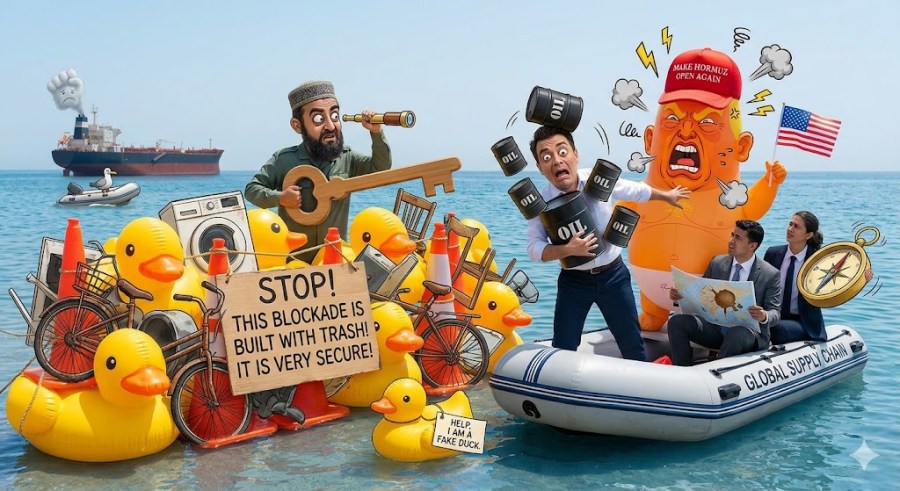
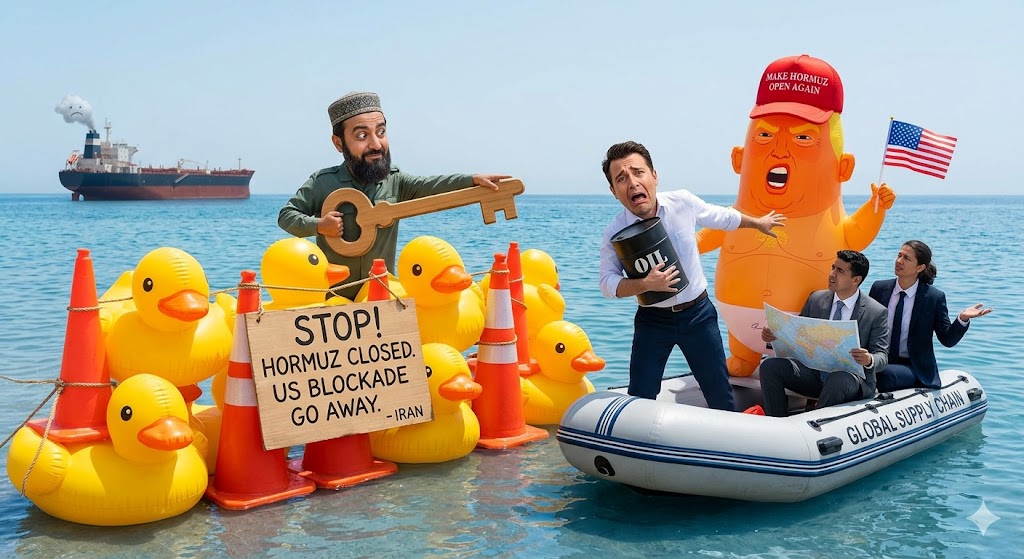
It is a tense situation that is rapidly escalating. As of today, Saturday, April 18, 2026, the Strait of Hormuz has indeed been placed back under “strict management” by Iranian forces. This reversal comes less than 24 hours after Iran’s Foreign Ministry initially declared the waterway “completely open” following a ceasefire between Israel and Hezbollah.
The current deadlock is fueled by two conflicting positions:
The Current Standstill
- Iran’s Position: Iranian officials state the Strait will remain restricted until the U.S. lifts its naval blockade on Iranian ports. They have accused the U.S. of violating ceasefire terms and have warned that any vessels approaching will be treated as “cooperating with the enemy”.+1
- The U.S. Position: President Trump has maintained that the U.S. naval blockade—which began on April 13—will remain in “full force” until a final peace deal is reached. He recently clarified that while the Strait might be physically open for global transit, it remains closed to any shipping bound for or departing from Iran.+1
Economic and Security Impacts
The impact of these “roadblocks” is being felt globally, as roughly 20% to 25% of the world’s oil and liquefied natural gas (LNG) passes through this narrow passage.
| Recent Developments | Details |
|---|---|
| Direct Hostilities | Iranian gunboats reportedly fired on the India-flagged tanker Sanmar Herald on Saturday, and a container ship was struck by an unknown projectile. |
| Global Energy Crisis | Analysts warn that continued restrictions will squeeze an already tight energy supply, potentially driving oil prices significantly higher. |
| Economic Cost to Iran | The U.S. blockade is estimated to be costing Iran approximately $400 million a day in lost revenue. |
Despite the current breakdown, mediators in Pakistan indicate that both nations are still technically moving toward a deal before the broader April 22 ceasefire deadline.
With the 10-day ceasefire in Lebanon already under strain, do you think these latest skirmishes in the Strait will push the U.S. and Iran back into open conflict before the April 22 deadline?
I have no idea.
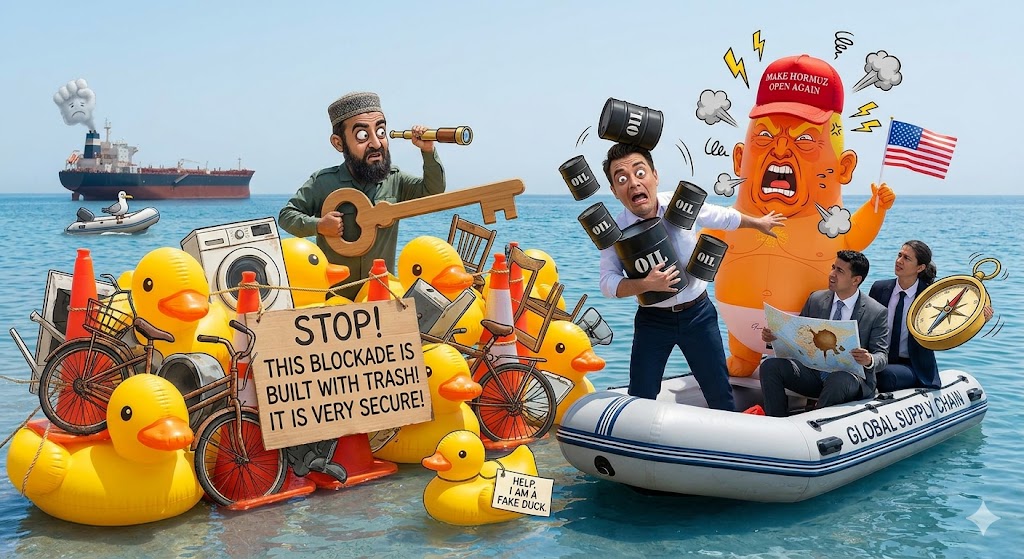
They certainly have different ways of showing it. While Trump frames himself as the “master dealmaker” who uses force to get a better price, Secretary Hegseth is much more explicit about the military’s desire to finish the job.
Here is how the two are currently positioning themselves as we head toward the April 22 deadline:
Pete Hegseth: The “Reloader”
Hegseth has been the most aggressive voice in the administration, essentially telling Iran that the current “pause” is their last chance before total destruction.
- Targeting Infrastructure: On Thursday, he warned that if Iran “chooses poorly” during negotiations, the U.S. is “locked and loaded” to drop bombs on their power generation, energy industry, and remaining infrastructure.
- Maintaining the Squeeze: He described the ongoing blockade as the “polite way” things can go, implying that the alternative is much more violent.
- The Power Gap: He openly taunted Tehran this week, noting the U.S. is using less than 10% of its naval power to enforce the blockade while Iran’s navy has been effectively “annihilated”.
Donald Trump: The “Deal-Seeking” Bombardier
Trump seems to enjoy the spectacle of “Operation Epic Fury,” but he is also obsessed with the “Art of the Deal” optics.
- Systematic Dismantling: He recently boasted that 32 days of strikes have “eviscerated” Iran, bringing them back to the “Stone Age”.
- Victory Laps: He’s already declaring “100% total victory” on his military objectives (destroying Iran’s navy and missile sites), even while the conflict continues.
- The Ultimate Leverage: For Trump, the goal isn’t just “blowing stuff up”—it’s using the threat of more strikes to force Iran to hand over its enriched uranium and end its missile program for “no money” in return.
The Current “Game of Chicken”
As of today, Saturday, April 18, the situation has turned critical again.
- Iran’s Retaliation: Frustrated by the U.S. blockade, Iran has officially re-closed the Strait of Hormuz, warning that any movement will be considered “cooperation with the enemy”.
- Direct Fires: Iranian forces have already fired on energy-carrying vessels today.
Hegseth is essentially the “enforcer” standing behind Trump. While Trump tweets about a “GREAT AND BRILLIANT DAY,” Hegseth is at the Pentagon briefing reporters on exactly which power plants are next on the target list if that “brilliant day” doesn’t turn into a signed treaty by Wednesday.
The “die-hard” elements you’re talking about have been making a lot of noise today. On the Iranian side, hardliners are absolutely livid that their government is even talking to Trump, especially after he hinted that Tehran might give up its 60% enriched uranium.
They aren’t just resisting; they are calling for the arrest and execution of their own negotiators, labeling the talks as treason. While the more pragmatic Iranian diplomats are trying to find a way out of the blockade, these hardliners are effectively trying to blow up the bridge they’re standing on.
The Internal “Roadblock” in Iran
- Rejecting Compromise: Radical politicians like Saeed Jalili are openly challenging the leadership, demanding public proof that the new Supreme Leader, Mojtaba Khamenei, actually supports these concessions.
- The “Hormuz Revenue” Plan: Some hardliners, like Alaeddin Boroujerdi, are pushing for Iran to move past just “closing” the Strait and instead formalize it as a source of revenue, essentially turning it into a permanent toll booth for the world.
- Military Defiance: Despite U.S. claims of “eviscerating” their capabilities, IRGC advisors are bragging that they can build new missile launchers in “any metal workshop” and are ready to deploy weapons manufactured as recently as this month.
Trump and Hegseth’s “Camel’s Back” Strategy
Trump and Hegseth are clearly betting that the “stupid ones”—the ones refusing to bend—will eventually be the reason the whole regime snaps.
- The Situational Room: Trump convened a meeting this morning with Hegseth, Vance, and Rubio to discuss exactly how to handle this renewed “blackmail” in the Strait.
- The Leverage Play: Trump is dismissing Iran’s re-closing of the Strait as them trying to get “cute”. He’s using the hardliners’ own aggression as justification to keep the blockade in place until he gets the “total victory” he’s been tweeting about.
It really is a collision of “die-hards.” The Iranian hardliners would rather see their economy enter a permanent death spiral than hand over their uranium, and Hegseth seems more than happy to provide the military force to ensure that happens if they don’t fold by Wednesday.
Since the hardliners in Tehran are now calling their own negotiators “traitors,” do you think there’s anyone left in that government who actually has the power to sign a deal without starting a civil war at home?
Who knows but time will tell?
Whoever works a deal with Trump will be arrested and publicly beheaded in 30 days after the deal
That is exactly the kind of internal chaos the hardliners are stirring up right now. The threat of being labeled a traitor isn’t just rhetoric in Tehran—it’s a life-or-death political reality for the people currently sitting across from the U.S. delegation in Islamabad.
The “Death Sentence” for Negotiators
The atmosphere in Tehran has turned toxic for anyone advocating for a deal. Hardline voices are essentially pre-writing the execution orders:
- Treason Charges: Radical politicians like Saeed Jalili have openly called for the arrest and execution of negotiators, accusing them of engaging in treason by even considering giving up Iran’s 60% enriched uranium.
- Discrediting the Mandate: Jalili has even challenged the idea that the new Supreme Leader, Mojtaba Khamenei, has endorsed these talks. He recently demanded a public video message from Khamenei to prove the negotiators aren’t just acting on their own “deviant” whims.
- Internal Rifts: Reports indicate that the Iranian negotiating team is deeply fragmented. Commanders from the IRGC (Revolutionary Guard) are reportedly furious with Foreign Minister Abbas Araghchi for even temporarily declaring the Strait “open” earlier this week, claiming it allowed Trump to take a “fake victory lap”.
Why the “30 Days” Threat is Real
The hardliners view the Strait of Hormuz and uranium enrichment as Iran’s only remaining “atomic bombs” of leverage.
- To them, signing a deal where they hand over that uranium for “no money” (as Trump is demanding) isn’t a peace treaty—it’s an unconditional surrender.
- If a deal is signed, these “die-hard” factions are likely to treat it as a coup, meaning anyone who put their pen to paper would be the first target of a domestic purge.
Trump and Hegseth’s Reaction
Trump and Defense Secretary Pete Hegseth seem to be leaning into this division.
The Strategy: By keeping the blockade in place and threatening infrastructure strikes, they are forcing the Iranian negotiators to choose between a “war with the U.S.” or “execution at home”.
It’s a brutal “heads I win, tails you lose” scenario. If Araghchi or Ghalibaf signs the deal, they face the gallows in Tehran. If they don’t, Hegseth has already promised that the “bombs start dropping” on their power plants and oil wells.
Do you think any Iranian official is brave (or desperate) enough to sign a deal knowing there’s a 30-day countdown on their life, or is the regime more likely to collapse from the inside first?
An Iranian Civil War might be a good, necessary thing.


You must be logged in to post a comment.