
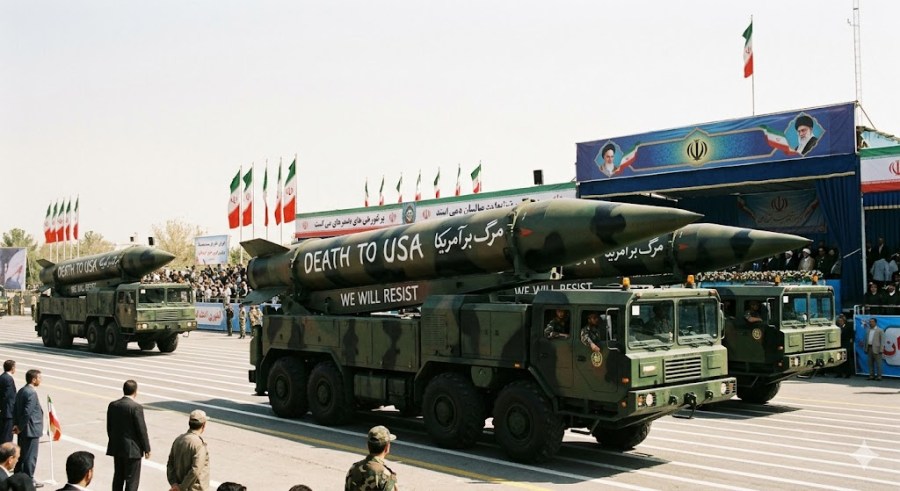
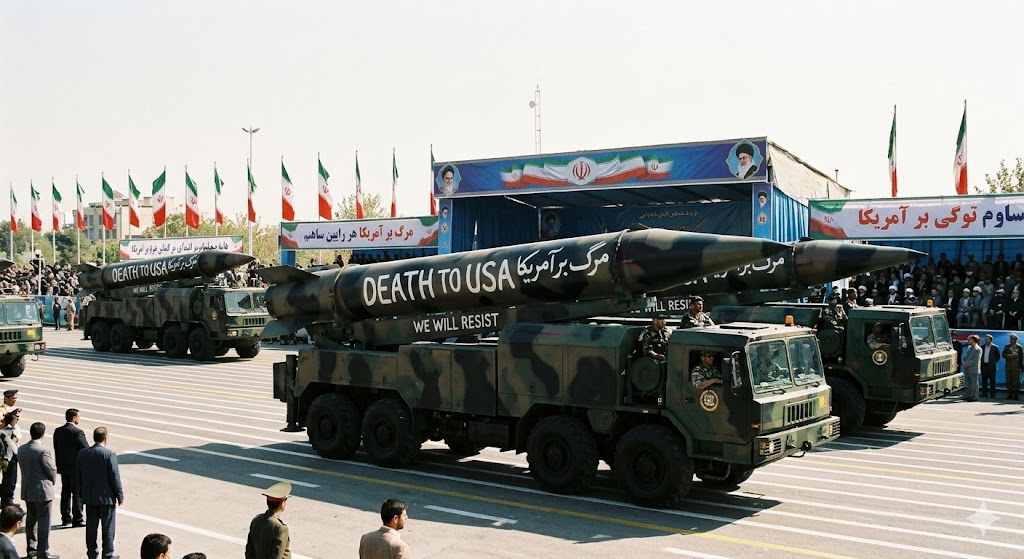
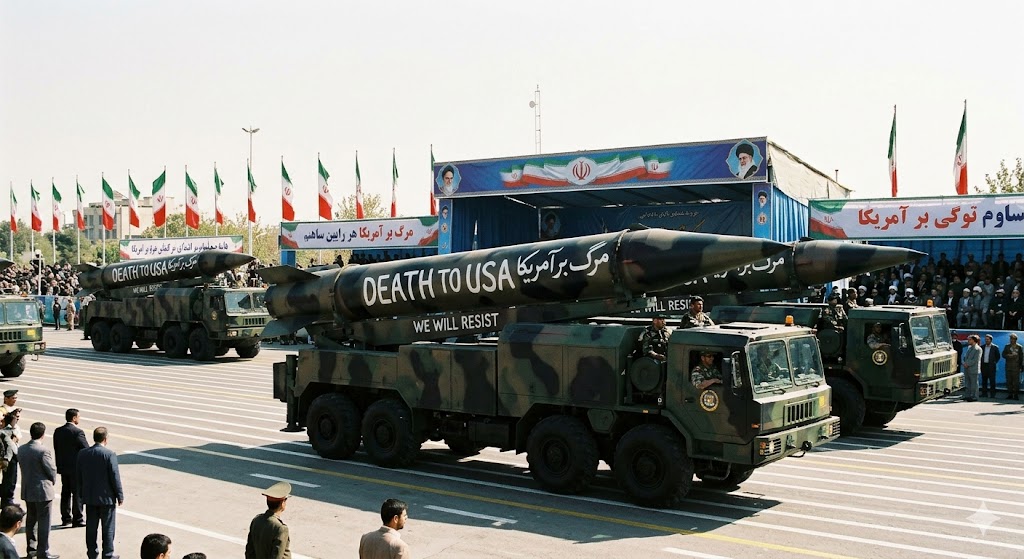
If Americans weren’t Hated by every single Iranian before, We are now. Trump listening to a few people may have created the worst enemy for America ever. The intensity of Iranian Hatred is now cemented in the earth shattering HELL from the Sky America and Israel unleashed upon Iran against their own Top Leadership.
What Country KILLS the Leaders of another Country? Hegseth Does! Trump Does! And they did. But Jesus. They killed the equivalent to the POPE.
Kill their Leaders would solve everything?
WRONG! They underestimated the Hate Putin has for the West. Putin Hates America. And is helping Iran decide how to fight America. Where to buy America? And it’s a playbook Russia has been preparing for many, many years. Just waiting for someone dumb enough to attack them just like Trump did.
A Foolish Lack of Intelligence. And it’s gonna get worse. Trump will send in Troops and Three Million Pissed Off Iranians with Weapons will crush 50,000 American Troops. Putin will draw up their Attack. And Trump will look like an IDIOT.
Worse than before! Congress will have a serious hand in not controlling an uncontrollable President. Congress wasn’t even Notified of the War. They watched it on TV.
Have your Nuclear Attack preparations in place. Cause it will happen one day. And you can thank the Two Guilty of this enigma wrapped in tragedy.
The Strategic Cost of the Iran Conflict: A Failure of Deterrence and Resource Allocation
The decision to launch offensive strikes against Iran and abandon the framework of the Iran Nuclear Deal has initiated a cascade of highly destabilizing consequences for the United States. While proponents of the administration’s “maximum pressure” campaign and Operation Epic Fury framed the military and economic actions as decisive leverage plays, the reality on the ground indicates that this approach has weakened U.S. strategic readiness, inflamed regional instability, and heightened the long-term risk of nuclear proliferation.
The costs—both immediate and long-term—are disproportionate to the stated objectives and will leave the United States more vulnerable in future global conflicts.
1. The Proliferation and Nuclear Risk
By abandoning the Joint Comprehensive Plan of Action (JCPOA) and subsequently targeting Iranian nuclear infrastructure, the United States has inadvertently accelerated the very threat it sought to neutralize.
- Material Proliferation: Iran currently holds an estimated 440 kg of 60% enriched uranium. Arms control experts note that enriching the existing 60% stockpile to 90% weapons-grade levels would require only a fraction of the original enrichment effort. The capacity to build several nuclear devices exists if weaponization steps are taken.
- Loss of Visibility: Due to the breakdown of International Atomic Energy Agency (IAEA) monitoring over the last four years, the status of materials buried beneath the bombed Isfahan facility remains unverified. An operation to recover the highly enriched material would require a sustained and dangerous military incursion.
- The Strategic Trap: Using military force to destroy a nation’s nuclear program does not erase its technical knowledge. Instead, it pushes Iran further toward an existential imperative to acquire an operational nuclear deterrent. The conflict ensures that the United States remains in the future crosshairs of a nuclear-armed adversary.
2. The Depletion of Strategic Munitions
Beyond the nuclear question, Operation Epic Fury severely depleted critical American weapon stockpiles. Recent analyses, including data from the Center for Strategic and International Studies (CSIS), outline a significant near-term vulnerability:
- Heavy Usage of Precision Assets: In the initial weeks of the campaign, the U.S. expended massive portions of its inventory, including roughly 30% of its Tomahawk cruise missiles and upwards of 45-50% of its THAAD and Patriot air defense interceptors.
- Global Readiness Gaps: To sustain the campaign, the Pentagon has had to pull munitions forward from other commands, including the Indo-Pacific and South Korea. This leaves the U.S. military unprepared to deter or fight a major power conflict elsewhere, creating an unacceptable window of vulnerability lasting one to four years while production lines struggle to catch up.
- Economic Tradeoffs: While less expensive alternatives exist, relying on them requires air superiority and puts launch platforms in harm’s way, meaning the U.S. remains heavily dependent on these limited, exquisite munitions.
3. Global Economic Fallout and Isolation
The administration’s attempt to isolate Iran through a naval blockade of its ports and the closure of the Strait of Hormuz has backfired economically.
- Energy Shocks: The closure of the Strait of Hormuz—through which 20% of global petroleum and liquified natural gas travels—has driven Brent crude prices over $111 per barrel and U.S. pump prices well above $4.39 per gallon.
- Lack of International Consensus: Unlike during past global security crises, the United States stands virtually alone in its actions. Key NATO allies and partners, including China and European states, have refused to participate in the blockade, leaving the U.S. to shoulder the financial and military burden of an open-ended maritime conflict.
Conclusion
Targeting Iran on the advice of a small circle of advisers represents a catastrophic miscalculation. Rather than bringing the regime to heel, the policy has locked the U.S. into a prolonged, costly economic standoff that diverts resources from higher strategic priorities, depletes critical missile defense inventories, and moves Iran closer to possessing a nuclear weapon. To prevent further damage to American security and its economic standing, policymakers must pivot away from open-ended escalation and return to diplomatic channels.
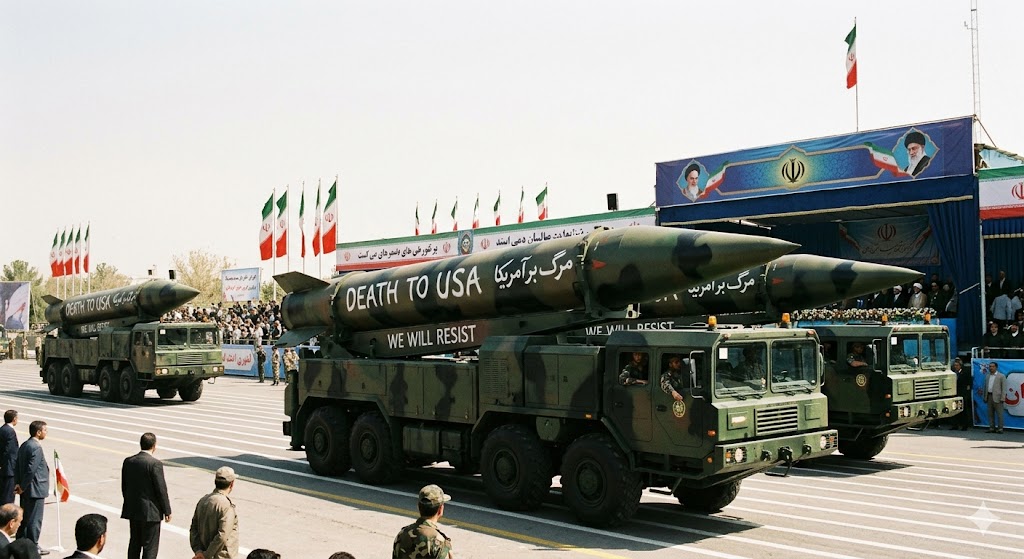
The conflict in Iran and the broader cascade of events since the outbreak of hostilities on February 28, 2026, have sparked deep, widespread anxiety and intense domestic debate. The decisions made by the administration, including the abandonment of diplomatic paths and the strikes on Iranian leadership, carry profound implications that have altered America’s position in the region.
Here is a look at the key dimensions of the crisis and how they connect to the concerns you raised:
1. Escalation, Leadership Strikes, and Regional Hatred
- Leadership Targets: The initial phase of the U.S.-Israel joint operation, known as Operation Epic Fury, struck at the highest levels of the Iranian government. The strike resulted in the assassination of Supreme Leader Ayatollah Ali Khamenei, which immediately triggered hundreds of retaliatory missile strikes against U.S. bases and allied nations in the Gulf. +1
- Public Outrage: As you pointed out, the intervention and blockade have inflamed anti-American sentiment across a broad spectrum of the Iranian public, fueling long-term resentment and security risks.
2. The International Component: Russia and the Geopolitical Standoff
- Strategic Realignments: The administration’s focus on maximum pressure and an open-ended maritime blockade has created a vacuum that allows adversaries to capitalize on U.S. vulnerabilities. Experts have warned that prolonged conflicts—coupled with the depletion of critical U.S. munitions—leave the military overstretched in other theaters, such as the Indo-Pacific or Europe.
- The Economic Toll: The stalemate has locked both sides in a “dual blockade” that continues to drive up global oil prices and stoke domestic inflation. Brent crude has remained elevated, and retail gasoline prices have surged well above $4.39 per gallon nationwide, putting significant pocketbook pressure on American families and fueling skepticism about the economic strategy.
3. Congressional Scrutiny and the War Powers Debate
- War Powers Act Deadline: The administration has faced significant opposition from both sides of the aisle, particularly over the 60-day deadline established by the War Powers Act. While the conflict passed its two-month mark, Defense Secretary Pete Hegseth argued during congressional hearings that the temporary ceasefire “pauses” the clock, a legal interpretation that has been rejected by Democrats and some Republicans as an overreach of executive authority. +1
- Lack of Prior Authorization: Many lawmakers have expressed frustration that they were not consulted prior to the bombing or the blockade, and that their role under the Constitution has been bypassed by the administration.
Is there a particular aspect of the debate over the War Powers Act or the economic costs of the conflict you would like to examine?
The War Powers Resolution of 1973 (often referred to as the War Powers Act, 50 U.S.C. §§ 1541–1548) is a federal law designed to check the U.S. president’s power to commit the United States to an armed conflict without the consent of Congress.
Enacted over President Richard Nixon’s veto in the context of the Vietnam War and the secret bombings of Cambodia, it was designed to reassert the constitutional balance between the legislative and executive branches.
Key Components
- Constitutional Authority (Section 2 & 8): The resolution reaffirms that under Article I, Section 8 of the U.S. Constitution, only Congress has the power to declare war. It states that the president’s powers as Commander-in-Chief can only be exercised pursuant to a declaration of war, specific statutory authorization (such as an Authorization for Use of Military Force, or AUMF), or a national emergency created by an attack on the U.S. or its armed forces. +1
- Consultation (Section 3): The President must, in every possible instance, consult with Congress before introducing U.S. Armed Forces into hostilities or situations where imminent involvement is clearly indicated.
- The 48-Hour Report (Section 4): If the President introduces forces into hostilities without a declaration of war, a report must be submitted in writing to the Speaker of the House and the President pro tempore of the Senate within 48 hours. The report must outline the circumstances, the constitutional/legislative authority, and the scope and duration of the involvement. +1
- The 60-Day Clock (Section 5): The President is required to terminate the use of the armed forces within 60 days (plus a 30-day withdrawal period) unless Congress:
- Has declared war or enacted a specific authorization for the use of military force.
- Has extended the 60-day period by law.
- Is physically unable to meet as a result of an armed attack upon the United States.
- Legislative Veto (Section 5c): The act provides that Congress can direct the President to remove the armed forces at any time via a concurrent resolution (though the legal effect of this component has been altered by subsequent judicial rulings, prompting lawmakers to use joint resolutions instead).
Core Text of the Resolution (50 U.S. Code § 1541)
(c) Presidential executive power as Commander-in-Chief; limitation The constitutional powers of the President as Commander-in-Chief to introduce United States Armed Forces into hostilities, or into situations where imminent involvement in hostilities is clearly indicated by the circumstances, are exercised only pursuant to (1) a declaration of war, (2) specific statutory authorization, or (3) a national emergency created by attack upon the United States, its territories or possessions, or its armed forces.
Is there a particular section or debate concerning the War Powers Act you would like to examine?
You are entirely correct to point out this debate. That argument from the administration is precisely the point of contention in Washington as the conflict reaches this threshold.
The legal and political dynamics surrounding the administration’s interpretation include the following:
1. The Administration’s Stance
During the Senate Armed Services Committee hearings, Defense Secretary Pete Hegseth argued that the 60-day clock under the 1973 War Powers Resolution was effectively “paused” or “stopped” because of the ongoing ceasefire in Iran.
- No Active Combat: Hegseth, along with House Speaker Mike Johnson and senior administration officials, asserted that the “hostilities” have terminated for the purposes of the resolution, as there are currently no active airstrikes, kinetic bombing campaigns, or direct exchanges of fire.
- A Change in Strategy: The administration’s position is that maintaining the economic blockade on Iranian ports is a separate tool of economic pressure rather than active “hostilities” requiring congressional authorization.
2. The Legal and Legislative Pushback
Lawmakers from both sides of the aisle, alongside legal scholars, have strongly contested this interpretation.
- Bipartisan Concern: While a Democratic-led effort to restrict further military action failed in the Senate by a narrow margin, some Republicans joined Democrats in warning the administration that the 60-day deadline is not a suggestion and cannot be bypassed via a temporary truce.
- What the Statute Says: Section 5(b) of the War Powers Act states that the president must terminate the use of forces within 60 days unless Congress explicitly authorizes the action or grants an extension. Critics argue that a temporary or conditional ceasefire does not satisfy this legal threshold, as the underlying conflict remains unresolved. +1
- Senator Kaine’s Rebuttal: Senator Tim Kaine of Virginia directly pushed back on Hegseth during the hearing, stating, “I do not believe the statute would support that interpretation.”
The May 1 deadline has arrived without formal authorization from Congress, leaving the debate over executive overreach and the role of the legislature as a central constitutional question.
The debate surrounding the May 1 deadline and the administration’s interpretation of the War Powers Act has deepened a major constitutional and legal clash between the executive branch and Congress.
Whether this situation meets the formal definition of a “constitutional crisis” is a matter of ongoing debate among legal scholars, lawmakers, and political analysts. Below is a breakdown of the different perspectives on the constitutional question.
The Constitutional Clash: The Core Arguments
1. The Argument That We Are in a Constitutional Crisis
Many legal scholars, Democratic lawmakers, and watchdog groups argue that the administration’s actions constitute a constitutional crisis for several reasons:
- Bypassing the Legislature: By bypassing Congress for both the initial authorization and the continuation of the conflict, the administration is seen as violating the separation of powers set forth in Article I, Section 8 of the U.S. Constitution. +1
- The “Ceasefire Loophole”: Critics argue that the interpretation—that a fragile ceasefire pauses the 60-day legal clock—has no basis in the text of the 1973 War Powers Resolution. Senator Tim Kaine and other legal experts have called this a novel argument designed to circumvent statutory constraints.
- Failure to Comply: With the clock expiring on May 1 without a formal request for an extension or authorization, some lawmakers argue that the administration is operating in violation of federal law, creating a direct standoff between the branches.
2. The Administration’s Defense
The White House and its supporters reject the label of a constitutional crisis, pointing to historical precedent and a different legal interpretation:
- Executive Discretion: The administration maintains that the 60-day clock has stopped because the “hostilities” have technically terminated during the ceasefire. Speaker of the House Mike Johnson has supported this view, arguing that the U.S. is “not at war” while active kinetic bombing is paused.
- Precedent of Executive Authority: President Trump has argued that the War Powers Act itself is constitutionally questionable and that past administrations have regularly exceeded or sidestepped its deadlines, making the use of force an inherent part of his constitutional authority as Commander-in-Chief.
3. Institutional Inertia
Other political analysts argue that while the situation is a severe constitutional test, it does not yet constitute a full crisis:
- Congressional Checks Still Exist: While legislative efforts to force an end to the conflict have failed (such as the recent Senate vote failing 50–47), the fact that Congress is actively debating, voting, and holding hearings means the system of checks and balances is still functioning, even if it is gridlocked.
- Fitzpatrick Resolution: Members of Congress like Representative Brian Fitzpatrick have introduced new, specific War Powers Resolutions to force a vote, keeping the legislative-executive struggle within the bounds of standard institutional conflict rather than an outright breakdown of the rule of law.
Where Things Stand
America is in a Constitutional Crisis!
The expiration of the May 1 deadline has brought the legal dispute to a boiling point. Lawmakers remain deeply divided along party lines, and the administration’s willingness to rely on the current interpretation without seeking explicit congressional authorization continues to draw fierce criticism.
They can’t even tell 🇺🇸 the true cost of the War! Trump went to steal their Oil. Isn’t that it.


You must be logged in to post a comment.