
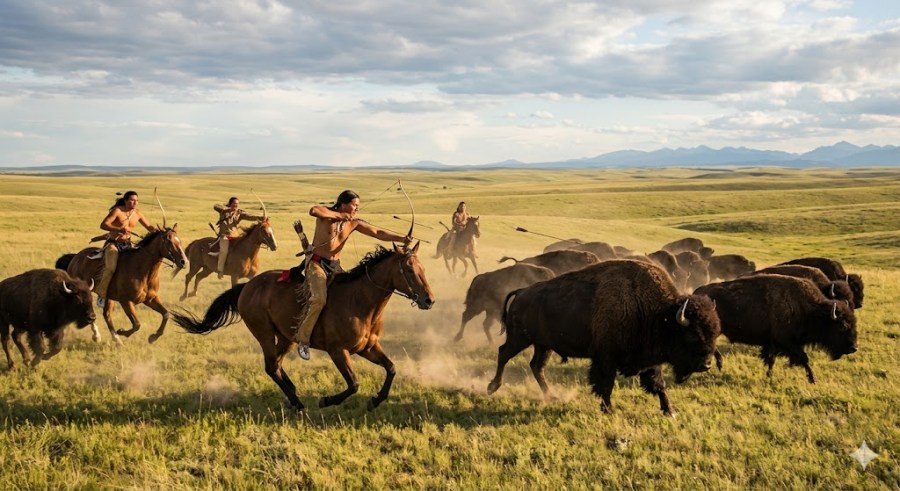
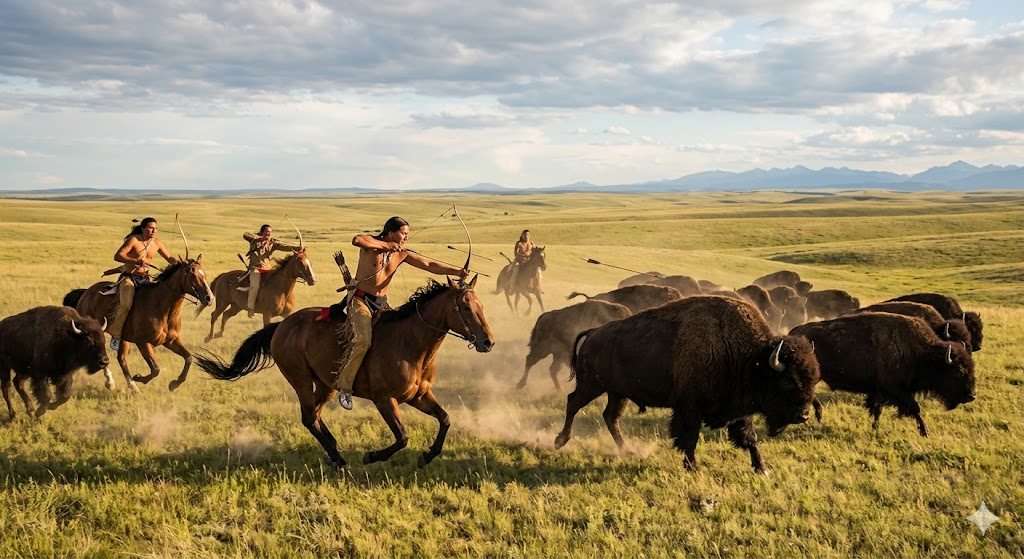
Trump and his Billionaire Clan want to Remove the Bison. Also, ending Indian Reservations once and for all. His Plans are not Making America Great Again, He’s making America as WHITE AS POSSIBLE. White Power. But at what Costs? Rights hard fought by Black People he’s eroded. Rights gained by American Indians, Trump wants those treaties trashed. Trump is out of control. His mind is rich man bent. Not for 99% of Americans. All of 🇺🇸 will lose as the Rich Gain Uncontrolled Power. Over 2 and a half years more of Trump. Get your poverty stickers ready. We will once again be using WW-II RATION BOOKS before Trump is done. It’s Trump’s BANKRUPTCY PLAN FOR 🇺🇸.
The Plains Divided: Bison Restoration, Political Friction, and the Struggle for Cultural Sovereignty
The ongoing conflict in northern Montana regarding the American Prairie’s bison herds is more than a dispute over grazing rights; it is a collision of disparate visions for the American West. At its core, the Trump administration’s 2026 decision to revoke bison grazing permits on federal lands reflects a deep-seated tension between traditional agricultural production and the ecological restoration of the Great Plains. For many, including Native American tribes and conservationists, this policy shift represents a direct assault on both environmental progress and the cultural heritage of the continent’s Indigenous peoples.
The Economic vs. Ecological Mandate
The U.S. Bureau of Land Management (BLM) justified the eviction of 900 bison by citing the Taylor Grazing Act of 1934. By reclassifying bison as “wildlife” rather than “production livestock,” the administration effectively prioritized the cattle industry over conservation efforts.
- The Ranching Perspective: For multi-generational ranching families, the prairie is a workplace dedicated to food security. Proponents of the move argue that in an era of high beef prices and low cattle populations, public lands must be utilized for “productive” agriculture to sustain local economies and national food supplies.
- The Conservation Perspective: Organizations like American Prairie argue that bison are a keystone species essential to a functioning prairie ecosystem. Their grazing patterns, wallowing, and manure create a biodiversity that cattle—which are often more sedentary and water-dependent—cannot replicate.
The Intersection of Race, Rights, and Heritage
The user’s concerns regarding the “White Power Act” and the impact on Native Americans highlight the sensitive racial and historical undercurrents of this debate. The systematic near-extinction of the bison in the 19th century was a deliberate tool used to subjugate Indigenous populations who relied on the animal for spiritual and physical sustenance.
For modern Native American tribes, the restoration of bison is a matter of sovereignty and restorative justice. By halting these efforts, the federal government is seen by many as reinforcing a colonial legacy that prioritizes the land-use preferences of white settlers and their descendants over the ancestral rights and cultural restoration of Tribal Nations. The “Bison vs. Cattle” debate is thus viewed not just as a policy shift, but as a symbolic continuation of the erasure of Indigenous history and environmental stewardship.
Political Polarization and “The Last Best Place”
The conflict is further complicated by the socioeconomic shifts occurring in Montana. The influx of “out-of-state” wealth and the rise of land prices—often attributed to wealthy donors supporting nonprofits like American Prairie—has created a “class war” on the range.
| Stakeholder | Primary Concern | Political Alignment |
|---|---|---|
| Local Ranchers | Land affordability and heritage | Republican / Pro-Trump |
| American Prairie | Ecosystem restoration | Non-partisan / Donor-funded |
| Tribal Leaders | Cultural restoration and food sovereignty | Independent / Conservationist |
| State Leadership | Economic productivity and base voters | Republican (e.g., Gov. Gianforte) |
Conclusion: A Heritage at Risk
The move to replace “Crazy Alice” and her herd with cattle is a physical manifestation of a political philosophy that views public land through the lens of extraction and production rather than preservation. While ranchers view this as a victory for the “American Cowboy,” the cost is borne by those who see the bison as the true, rightful inhabitants of the range. As the 2026 midterm elections approach, the Montana prairie remains a battlefield where the ghosts of 19th-century expansionism meet the 21st-century struggle for racial and ecological justice.


You must be logged in to post a comment.