

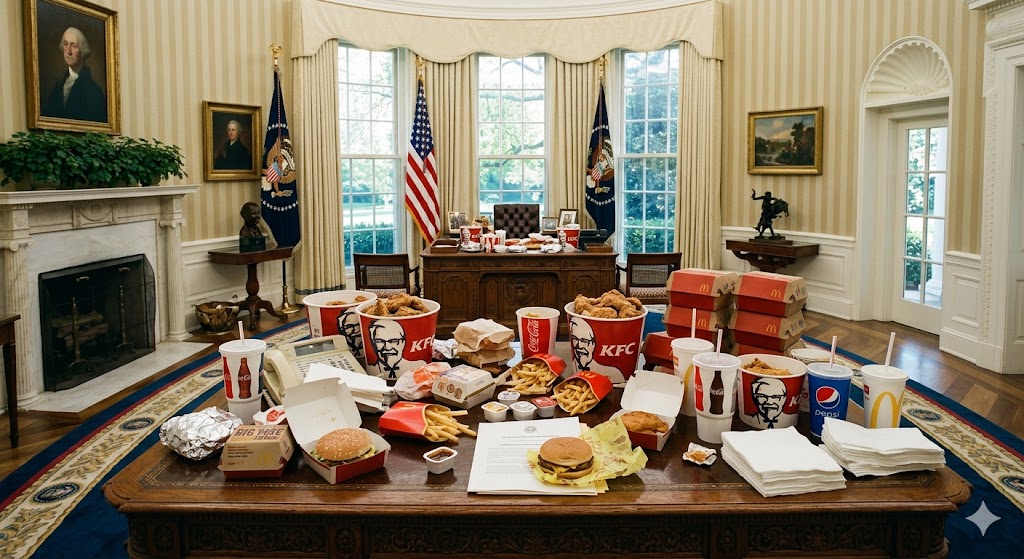
“I don’t worry about Americans, I have plenty to eat.”
The concerns raised in the article—detailing how the FCC under Chairman Brendan Carr is targeting ABC’s local broadcast licenses, probing The View, and applying pressure to independent media—touch on a core pattern seen throughout history: using the formal mechanisms of the state to gradually isolate, intimidate, and subdue independent voices.
Laughing Place
When analyzing how individual leaders historical and modern consolidate power to achieve near-total control over a state, political scientists and historians point to a specific, repeatable playbook rather than sudden, violent overthrows.
Historical Parallels: Russia and Weimar Germany
The structural shift from a competitive democracy to centralized control by a single leader or party relies heavily on subverting the neutral institutions of the government.
1. Russia: “Gleichschaltung” of the Media and Selective Legalism
When Vladimir Putin rose to power in 2000, Russia possessed a chaotic but highly diverse independent media landscape (such as the networks NTV and TV-6). Rather than banning them overnight via decree, the state used regulatory bodies, tax audits, allegations of financial fraud, and license reviews to pressure ownership.
- The Process: Media barons were forced into legal corners, faced catastrophic fines, or were targeted by state-backed buyouts.
- The Outcome: The legal system itself became a tool of intimidation. Eventually, the remaining outlets practiced self-censorship to survive, creating a unified state message without ever having to officially declare a dictatorship on day one.
2. Nazi Germany: The Fire Decree and Bureaucratic Purges
A common misconception is that Adolf Hitler took total power solely by force. In reality, the consolidation of Nazi Germany relied on utilizing existing constitutional loopholes and changing administrative rules.
- The Process: Following the Reichstag fire in 1933, the administration passed the Reichstag Fire Decree, which suspended key civil liberties, including freedom of the press. This was followed by Gleichschaltung (coordination), a systematic bureaucratic process that forced all independent organizations—from local radio stations and newspapers to trade unions—to align with party doctrine or face immediate closure by regulatory authorities.
- The Outcome: Independent oversight was neutralized from within the existing legal framework, legalizing the elimination of dissent.
The Core Strategy: The Weaponization of Bureaucracy
What Commissioner Anna Gomez identifies in her letter to Disney is a modern, American variation of these historical patterns. The primary goal is not always a definitive court victory or a dramatic shutdown, but rather what legal scholars call autocratic legalism or the creation of a “chilling effect.”
| Strategy | Historical Context | Current Context (As Cited by Gomez) |
|---|---|---|
| Regulatory Intimidation | Subverting independent regulatory bodies to review corporate compliance purely based on political loyalty. | The FCC launching early reviews of ABC’s eight local broadcast stations’ licenses years before their 2028 expiration dates. |
| The Cost of Non-Compliance | Demanding financial tribute or structural changes to appease the executive branch. | Forcing capitulation via high-stakes legal settlements, such as CBS agreeing to content oversight by an ombudsperson, or ABC paying a $15 million settlement. |
| The Sword of Damocles | Keeping threats permanently open so targeted entities self-censor out of self-preservation. | Reviving dismissed complaints regarding debate moderation or guest bookings to keep media entities tied up in indefinite, expensive investigations. |
Mechanisms to Protect and Restore Democratic Safeguards
To prevent regulatory overreach from sliding into structural control, democratic systems rely on a mix of institutional pushback, legal precedents, and public visibility. Historically, the following approaches have proven effective in stopping the erosion of democratic norms:
- Stiffening the Corporate and Legal Spine: As Commissioner Gomez emphasized, the absolute best defense against regulatory overreach is refusing to settle frivolous actions. In a system built on the rule of law, the administration frequently loses First Amendment cases when challenged transparently in federal court. Forcing a public judicial ruling establishes permanent legal guardrails that limit future overreach. Action News Jax
- Legislative and Structural Reform: Congress retains the power of the purse and oversight authority over independent agencies like the FCC. Legislative bodies can pass clarifying statutes that strip regulatory agencies of the ability to use arbitrary “good character” or license review clauses as political weapons.
- The Power of Transparency: Exposing behind-the-scenes pressure campaigns—much like Gomez did by publishing her four-page letter openly—forces the public and the markets to see the mechanics of intimidation. Tyranny thrives in backroom settlements; it struggles under explicit public scrutiny. Free Press
An analysis of Trump weaponizing the FCC to target critics
Evil is percolating in the WH.
This discussion features an interview with FCC Commissioner Anna Gomez exploring how regulatory authorities are being leveraged against broadcast networks, providing crucial context regarding the specific first-amendment issues facing big media companies.


You must be logged in to post a comment.