
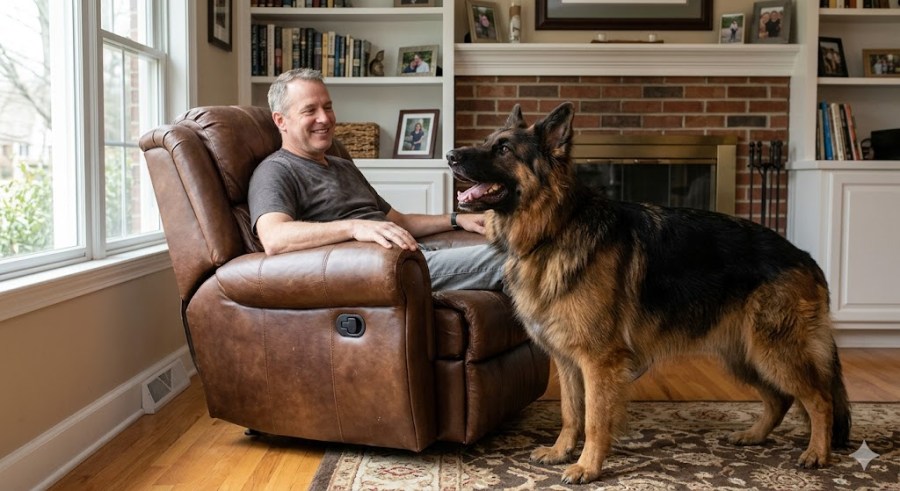
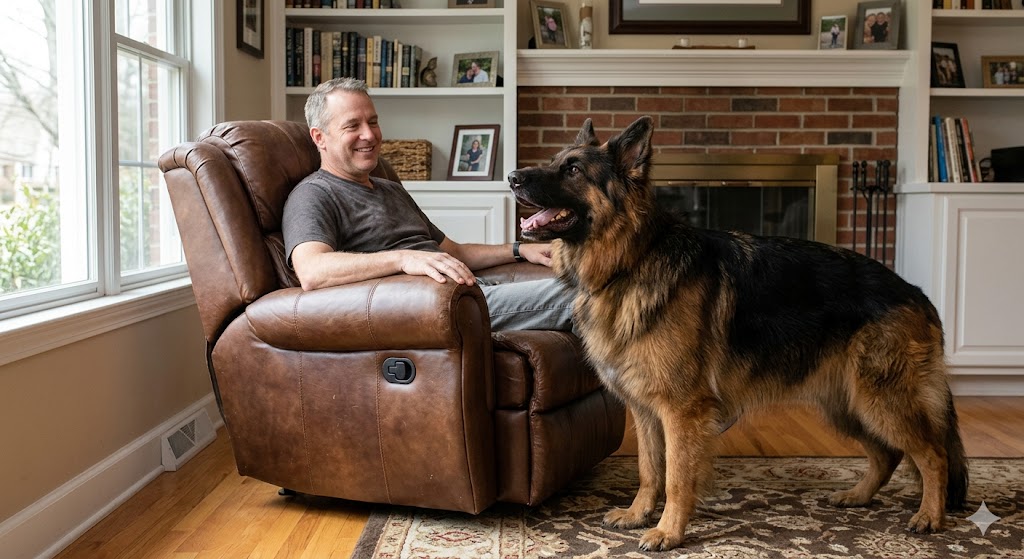
Every dog owner knows the routine: the sudden, urgent burst of barking that sends them scrambling to the window, only to find an entirely empty yard. In the canine world, these aren’t technical glitches—they are highly strategic maneuvers.
Here is a breakdown of FAKE-A-RONNIES, the notorious art of the fraudulent canine alarm, and the various reasons your dog might be deploying them. I’m been calling these Phantom Barks the FAKE-A-RONNIES most of my life. I don’t know where I picked it up or just made it up. But, I say the words out loud to let my German Shepherds know I know they’re faking it.
What is a FAKE-A-RONNIE?
A FAKE-A-RONNIE is a completely manufactured bark designed to alert a human (or another pet) to an entirely non-existent threat outside. While it sounds identical to a genuine “intruder alert,” the underlying motive has absolutely nothing to do with security and everything to do with canine politics, boredom, or resource management.
The Anatomy of a Hoax: Why Dogs Use FAKE-A-RONNIES
Dogs are brilliant psychologists, and they know exactly which buttons to push. Here are the most common reasons a dog will hit you with a FAKE-A-RONNIE:
- The Classic Distraction Thief (The Bait-and-Switch): This usually happens in multi-pet households. Dog A wants the prime spot on the couch, the chew toy Dog B is holding, or a scrap of food drop. Dog A runs to the window and lets out a series of frantic FAKE-A-RONNIES. Dog B falls for it and rushes to defend the perimeter. Dog A immediately circles back and claims the prize.
- The “Check Your Reflexes” Boredom Buster: Sometimes, the house is just too quiet. A dog might realize that a sharp, sudden bark instantly makes their human jump up, drop their phone, or look out the window. If a dog wants attention or just wants to break up the monotony of a lazy afternoon, a FAKE-A-RONNIE is the fastest way to get the whole room moving.
- The Phantom Phantom (Over-Correction): Occasionally, a FAKE-A-RONNIE starts with a tiny grain of truth—a microscopic dust bunny moving, or a noise only they heard—but they realize midway through that there’s nothing there. Instead of backing down, they lean into the performance, barking at the empty air to save face so they don’t look foolish.
- The Sympathy/Manipulative Bark: Dogs know that when they protect the “pack,” they often get acknowledged. A dog might use a FAKE-A-RONNIE just to get a “Good boy, thanks for watching the house,” followed by a pat on the head or a treat to calm them down. They’ve successfully monetized a fake security threat.
The Tell-Tale Sign: You can usually spot a FAKE-A-RONNIE by watching the tail and the eyes. A real alert involves rigid posture and intense focus. A FAKE-A-RONNIE often features a dog looking back over their shoulder to see if you are actually buying it.
The next time your pup sets off the alarm and you find nothing but a quiet driveway, you aren’t dealing with a broken watchdog—you’ve just been hit by a master-level FAKE-A-RONNIE.


You must be logged in to post a comment.