
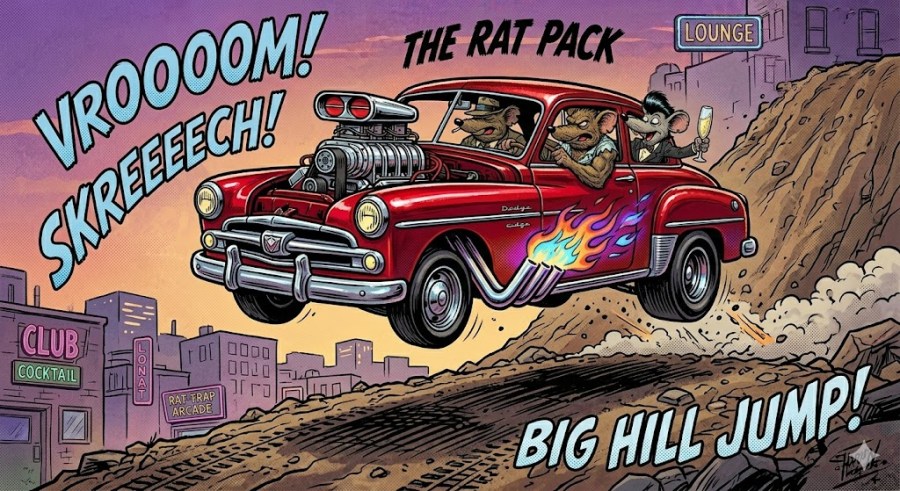
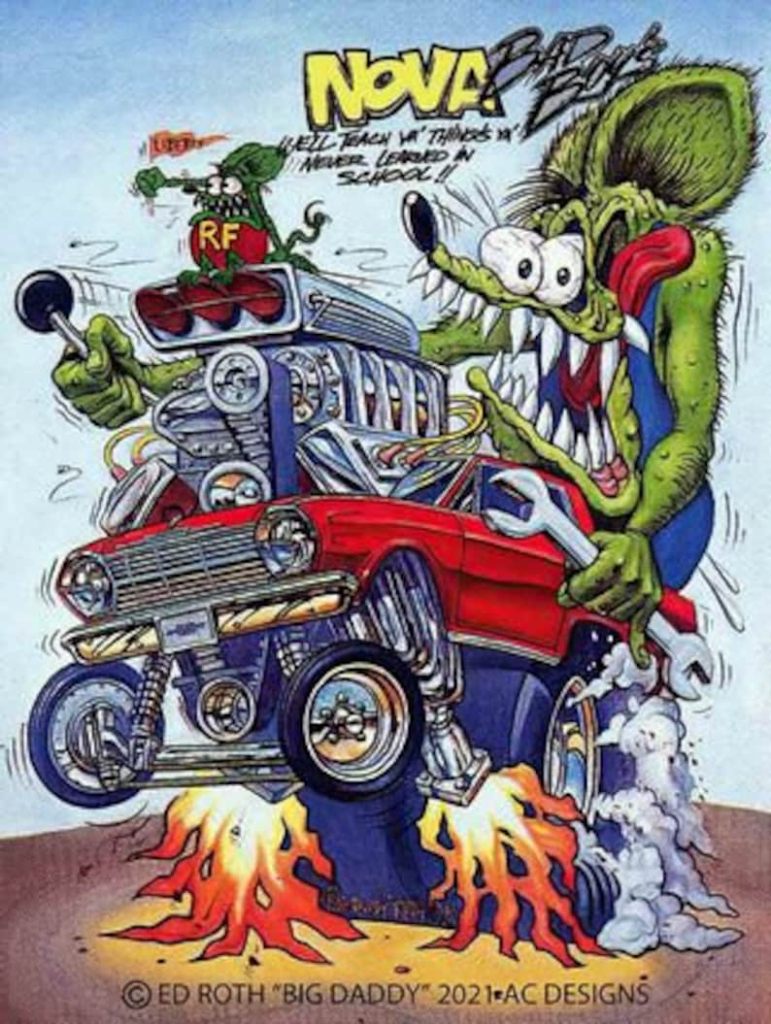
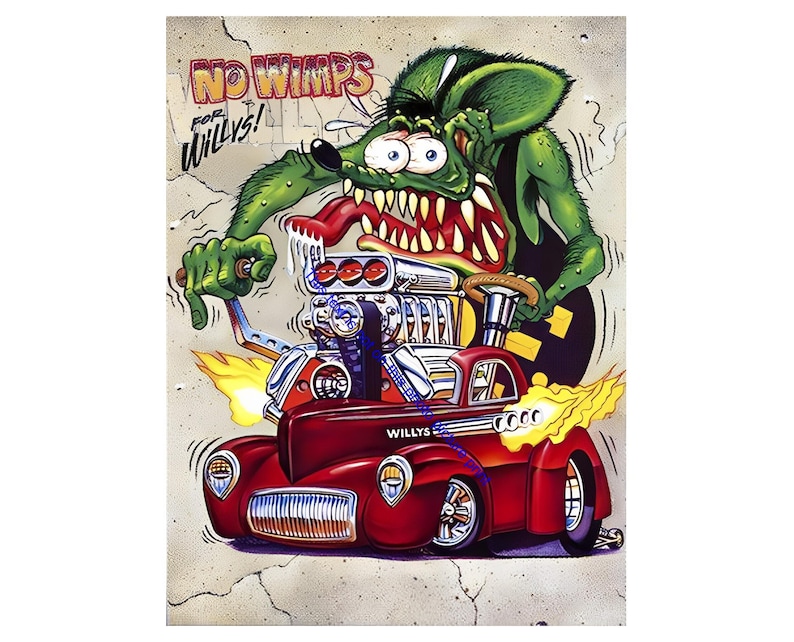
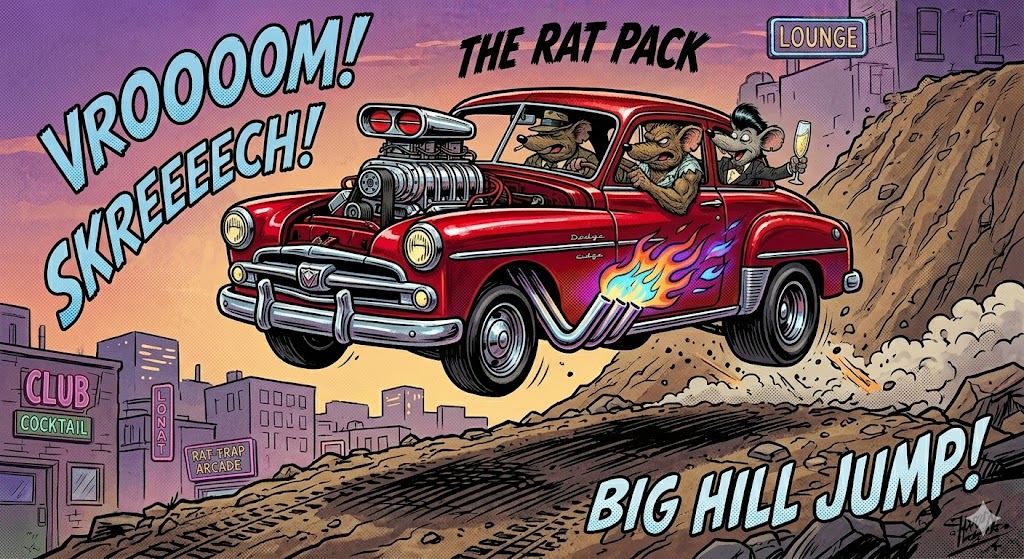
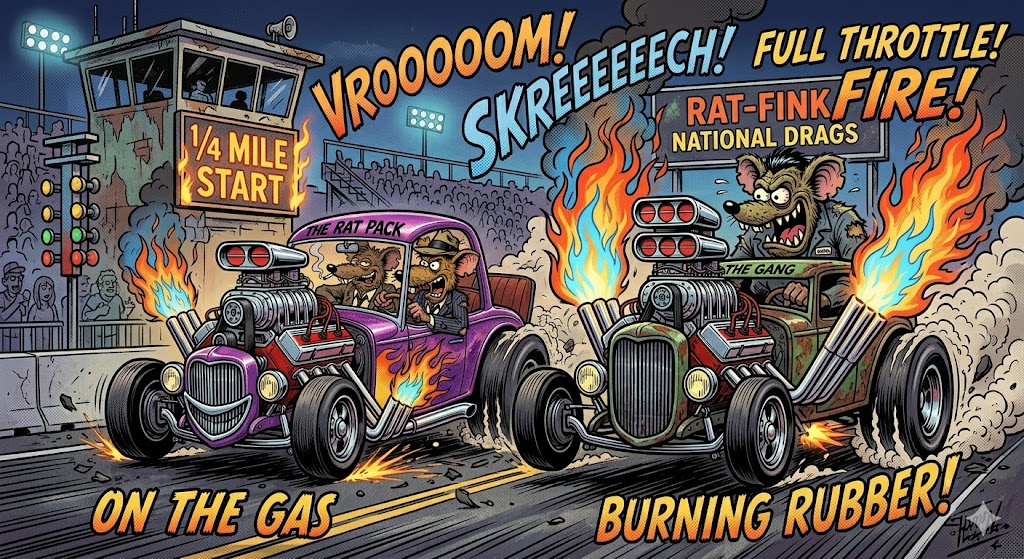
The “crazy images of rats in full-blown hot rods” that you are thinking of actually belong to a massive counterculture art movement born in Southern California during the late 1950s and 1960s. While “Rat Pack” was a nickname later used by fans or loosely thrown around for the whole crew of characters, the undisputed king of this style is Rat Fink, created by the legendary hot rod builder and artist Ed “Big Daddy” Roth.
Here is the story of how a grotesque, fly-ridden rodent became the ultimate icon of horsepower and rebellion.
The Birth of Ed “Big Daddy” Roth
To understand Rat Fink, you have to understand Ed Roth. In the 1950s, Southern California was the epicenter of car culture. Mainstream culture celebrated sleek, clean, factory-line cars, but a rebellious subculture of “hot rodders” was tearing cars apart, dropping in massive engines, and racing them on dry lake beds and street strips.
Roth was a creative genius and master builder who created wild, futuristic fiberglass custom cars (like the Outlaw and the Beatnik Bandit). He was also a talented artist who started airbrushing monster designs onto t-shirts at car shows.
The Anti-Mickey: Creating Rat Fink (1963)
By the early 1960s, Roth wanted a mascot for his growing brand. At the time, Walt Disney’s Mickey Mouse was the squeaky-clean, corporate symbol of wholesome American childhood.
Roth decided to draw the exact opposite.
In 1963, he debuted Rat Fink:
- A grotesque, green (sometimes gray), crazed-looking rodent.
- Bloodshot, bulging eyes popping out of his head.
- An oversized, maniacal grin showing sharp, yellowed teeth.
- Flies constantly buzzing around him.
- Usually seen wearing red overalls with the initials “R.F.” on the front.
Rat Fink wasn’t just a standalone character; he was almost always depicted driving a “radical hot rod”—a highly stylized caricature of a car with a mammoth, chrome-plated motor, a towering blower, and raw flames blasting out of straight-pipe exhausts. The shifter was always drawn impossibly tall, stretching way up into the sky, with Rat Fink gripping it with a clawed hand as his foot stomped the gas pedal.
The “Monster Hot Rod” Craze
Rat Fink was an overnight sensation among teenagers, gearheads, and surfers who rejected mainstream, buttoned-down society. The imagery perfectly captured the raw, loud, dangerous thrill of the hot rod lifestyle.
The craze exploded into pop culture through several massive waves:
1. The Revell Model Kits
Roth partnered with the Revell Model Company to produce plastic model kits. Kids could build not only Roth’s real-life custom cars but also wild plastic models of Rat Fink and his monstrous buddies driving these insane machines. This brought the artwork into millions of bedrooms across America.
2. “The Rat Pack” and Other Characters
As the brand grew, Roth didn’t stop at Rat Fink. He created a whole universe of monstrous characters—often referred to by fans as his “Rat Pack” or monster crew. These included:
- Mr. Gasser: A wild, shifting monster.
- Drag Nut: A crazed creature with a massive helmet.
- Mother’s Worry: A bizarre, multi-eyed alien-like monster.
- Dirty Dug: A shaggy, canine-like creature.
3. The Shift to Cartooning and Custom Art
Roth hired other legendary artists to help him keep up with demand, most notably Robert Williams (who later became a pioneer of the lowbrow art movement). They pushed the boundaries of the art style, creating dizzying, highly detailed comic book-style layouts filled with smoke, burning rubber, flying gravel, and speed lines that made the cars look like they were breaking the sound barrier.
The Legacy of the Fink
By the 1970s, the initial craze had peaked, but the artwork had already cemented its place in American pop culture. It laid the foundation for the “Lowbrow” art movement, heavily influenced underground comix, punk rock flyer art, and modern car culture customization.
Today, Rat Fink remains the ultimate symbol of DIY hot rod rebellion. Whenever you see a cartoon drawing of a wild creature with giant bloodshot eyes, hanging out of a chopped-top coupe with a massive supercharger and fire spitting from the pipes, you are looking directly at the lasting legacy of Ed “Big Daddy” Roth.
 thelivingbreathingjamesbrown.com
You must be logged in to post a comment.