
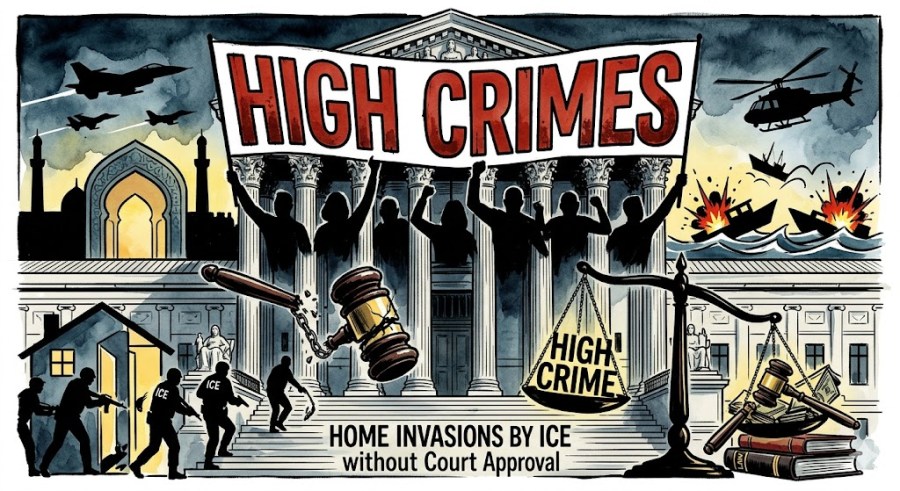
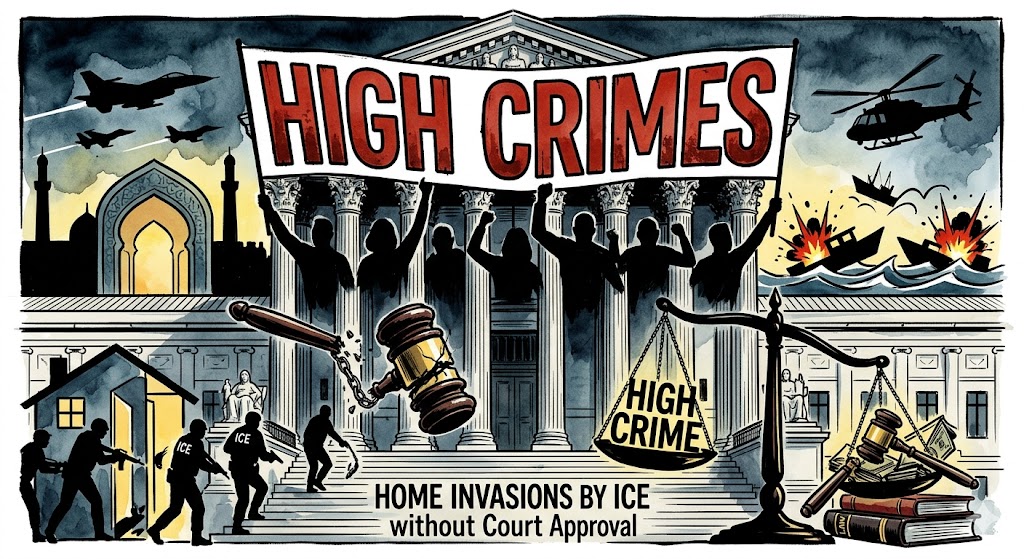
When policy decisions, executive orders, or federal law enforcement actions cross lines that citizens believe are unlawful or unconstitutional, the American system relies on a distinct set of checks and balances. The friction between executive power and public opposition—whether concerning military operations in the Middle East and the Caribbean or domestic immigration enforcement—typically plays out across three major battlefields: the courts, Congress, and state-level resistance.
Here is how citizens, legal bodies, and lawmakers address what they view as severe overreaches of executive power:
1. Constitutional & Legal Challenges in Federal Courts
The federal judiciary is the primary mechanism for halting actions that bypass legal standards, such as enforcement actions operating without judicial warrants.
Assembly Speaker Robert Rivas – Assembly Democratic Caucus
- The Power of Injunctions: When a federal agency (like ICE) or the military is accused of violating federal law or the Constitution (such as Fourth Amendment protections against unreasonable searches), civil rights organizations and defense attorneys file for immediate emergency injunctions. If a federal judge agrees the action is likely unlawful, they can issue a nationwide stay to halt the practice immediately while the full case is litigated.
- Challenging the Scope of Executive Order: In the case of military actions—like the lethal kinetic strikes against suspected cartel vessels in the Caribbean and Pacific—the administration operates under the premise that an armed conflict exists, treating crews as combatants. Human rights groups and legal scholars counter this by arguing the strikes constitute unlawful extrajudicial killings of civilians who pose no imminent threat. These arguments are brought before federal courts to test whether the executive branch has exceeded its statutory authority under the War Powers Resolution or international law. The Spokesman-Review+ 1
2. Legislative Pushback and Accountability
Congress holds the power of the purse and explicit oversight authority to constrain the executive branch, even during deep partisan divisions.
- War Powers Defiance: Under the War Powers Resolution, the President must notify Congress within 48 hours of committing armed forces to military action. If Congress does not authorize the use of military force or declare war within 60 days, the executive is legally required to withdraw those forces. Congress can vote on specific measures to force an end to unauthorized conflicts, such as ongoing legislative efforts to mandate an end to hostilities.
- The Power of Appropriations: Congress can defund specific operations. If a majority of lawmakers believe a federal agency is abusing its power or bypassing court approvals, they can attach “riders” to mandatory spending bills that explicitly forbid federal funds from being used for those specific enforcement methods.
- Subpoenas and Public Oversight: Congressional committees have the authority to launch formal investigations, subpoena internal agency memos (such as the intelligence behind maritime strikes or ICE enforcement directives), and compel officials to testify under oath, exposing the inner workings of these operations to the public record.
3. State and Local Countermeasures (Federalism)
Under the Tenth Amendment, state governments possess significant independence and can actively refuse to serve as an arm of federal enforcement.
- Legislative Firewalls: States frequently pass laws to restrict how federal agents operate within their borders. For example, California’s introduction of sweeping accountability bills explicitly restricts federal law enforcement presence near polling places and bars ICE from entering non-public spaces (like child care areas) without a signed judicial warrant rather than an agency-issued administrative one. Assembly Speaker Robert Rivas – Assembly Democratic Caucus
- Withholding Local Resources: States and “sanctuary” jurisdictions can pass non-cooperation policies, legally prohibiting local police departments, jail space, and county resources from aiding federal agencies in raids or processing. This forces federal agencies to rely solely on their own limited personnel, severely slowing the scale of their operations. Assembly Speaker Robert Rivas – Assembly Democratic Caucus
4. The Power of Public and Institutional Transparency
When formal legal channels are slow, grassroots documentation and institutional guidelines serve as a vital shield.
- Public Area vs. Private Area Protections: In the private sector and local communities, clear legal boundaries are drawn between public spaces (where law enforcement can walk freely) and private property. Employers and housing providers are increasingly trained to verify the difference between an ICE administrative warrant (which lacks judicial authority to enter private quarters) and a true judicial search warrant signed by a judge. Refusing entry without a judicial warrant is a legal right that forces federal agents to adhere to standard court processes.
- Democratic Participation and Accountability: Ultimately, the most direct recourse citizens have against leaders and enablers of policies they deem criminal is the electoral process—voting out the lawmakers who protect those policies, funding legal defense funds that fight these actions in court, and participating in public dissent to keep these issues at the forefront of national discourse.


You must be logged in to post a comment.