
The “Hora de Sangre” and La Matanza (1910–1920): State-Sanctioned Violence and Racial Terror along the Texas-Mexico Border
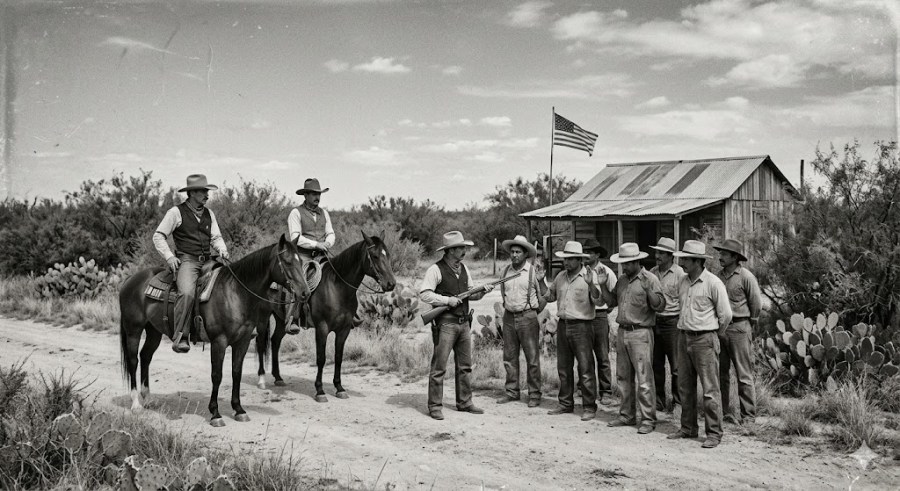
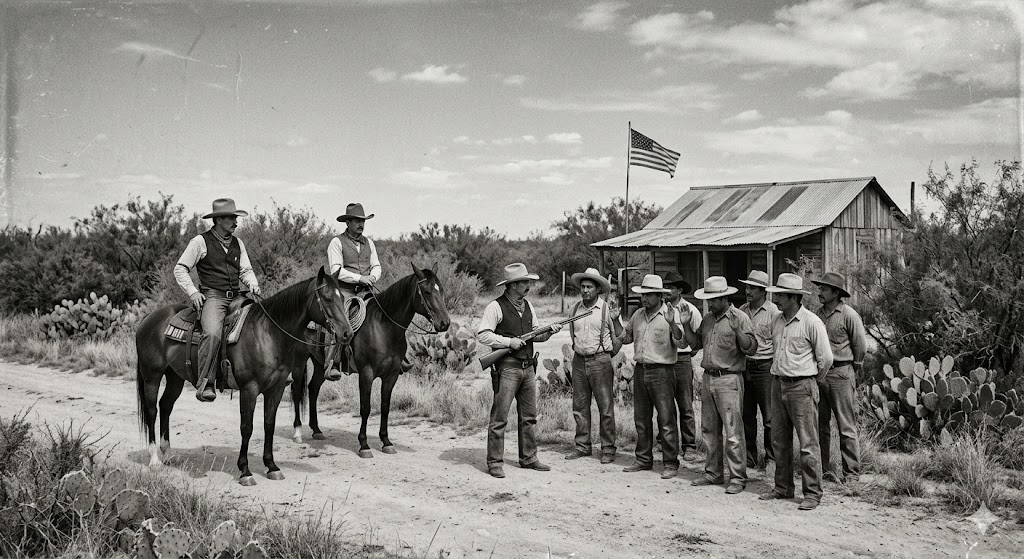
The decade of the 1910s along the Texas-Mexico border remains one of the darkest, most undertold chapters in American history. Known colloquially as the Hora de Sangre (Hour of Blood) or La Matanza (The Massacre), this period saw a wave of state-sanctioned extrajudicial killings, lynchings, and mass violence directed at ethnic Mexicans—both Mexican nationals and American citizens of Mexican descent.
Executed primarily by the Texas Rangers, local law enforcement, federal troops, and white vigilante groups, the violence resulted in the deaths of an estimated 3000 to several hundred thousand individuals. The geographic epicenter was the lower Rio Grande Valley, though the terror rippled across the entire South Texas borderlands. Killings were taking place all along the Texas-Mexico Border. It was a killing frenzy. Some places were reportedly knee deep in blood where horses were slipping and falling in the Blood.
Historical Context: A Perfect Storm of Fear and Racism
The violence of the Hora de Sangre did not occur in a vacuum; it was ignited by a convergence of three powerful forces:
- The Mexican Revolution (1910): The collapse of the Porfirio Díaz regime plunged Mexico into a brutal civil war. The border became highly volatile as various revolutionary factions, refugees, and raiders crossed back and forth over the Rio Grande, creating immense panic among white Anglo settlers in Texas.
- The Demographic and Economic Shift: In the early 1900s, the arrival of railroads transformed South Texas from a traditional ranching economy—where Mexican-Americans held significant land and political influence—into a commercial farming hub. A massive influx of white Midwestern settlers arrived, viewing the established Tejano population with deep suspicion, racial hostility, and a desire to seize their agricultural lands.
- The Plan de San Diego (1915): In early 1915, authorities discovered a radical manifesto in San Diego, Texas. The Plan de San Diego called for an uprising of minorities to overthrow Anglo rule, execute all white males over the age of 16, and return the American Southwest to Mexico. While it is heavily debated how much of the plan was actual strategy versus wartime propaganda, it sparked absolute hysteria among Anglo Texans and served as a blanket justification for pre-emptive racial terror.
Chronology of Terror: The Critical Timeline
The Hora de Sangre reached its absolute zenith between 1915 and 1919, characterized by a loop of border raids followed by immediate, indiscriminate retaliation against the civilian Tejano population.
Outbreak of the Mexican Revolution
November 1910
Political instability along the border escalates. Antonio Rodríguez, a Mexican laborer, is seized from a jail in Rocksprings, Texas, and burned at the stake by a mob, signaling a sharp rise in anti-Mexican vigilantism.
Discovery of the Plan de San Diego
January 1915
The discovery of the irredentist manifesto paralyzes South Texas with fear. Guerrilla-style border raids begin, targeting infrastructure, ranches, and Anglo law enforcement, attributed to sediciosos (seditionists).
The Peak of ‘La Matanza’ (The Massacre)
July – October 1915
Texas Governor James E. Ferguson deploys dozens of Texas Rangers to the Rio Grande Valley with implicit orders to pacify the region. Rangers and vigilantes begin executing any Mexican men suspected of being raiders or sympathizers. Bodies are regularly left hanging from trees or rotting in chaparral fields as warnings.
The Norias Ranch Raid & Retaliation
August 1915
Following a raid by Mexican seditionists on the Norias Ranch, Texas Rangers and local deputies sweep the countryside. They summarily execute numerous local Tejano residents who had no connection to the raid, including elderly ranchers and farmworkers.
The Porvenir Massacre
January 28, 1918
In the remote West Texas village of Porvenir, a company of Texas Rangers, alongside local ranchers and U.S. Cavalry soldiers, round up the town’s male population. They separate 15 unarmed Mexican-American men and boys (ranging in age from 16 to 72) from their families and shoot them at point-blank range. The village is subsequently abandoned.
The Canales Investigation
January – March 1919
José Tomás (J.T.) Canales, the only Hispanic representative in the Texas Legislature, bravely introduces 19 charges against the Texas Rangers, instigating a formal legislative investigation into their brutal tactics.
The Canales Investigation and Institutional Aftermath
The scale of the atrocities finally forced official government scrutiny in early 1919. Representative J.T. Canales risked his life to file a formal complaint detailing the extrajudicial killings, torture, and lawlessness perpetrated by the Texas Rangers.
The resulting joint legislative committee heard weeks of horrifying testimony. Witnesses described how Rangers routinely executed prisoners under the guise of the ley fuga (the claim that the prisoner was shot while attempting to escape).
“The Ranger force had been recruited with men who held an absolute disregard for human life… They treated the Mexican population as if they had no rights under the constitution.” — Paraphrased from testimonies of the 1919 Canales Hearings
Despite overwhelming evidence of mass murder, the political leverage of the Rangers ensured that no individual officer was ever criminally prosecuted or jailed for the killings. However, the investigation did achieve critical structural reforms: the Texas Legislature drastically reduced the size of the Ranger force and instituted stricter recruitment, oversight, and professional standards, effectively ending their era of unchecked frontier violence.
Visualizing the History: Remembrance and Erasure
For nearly a century, the Hora de Sangre was actively erased from Texas history textbooks, often romanticized in popular culture as a heroic era of the Texas Rangers “taming” a lawless border.
In recent years, historians, descendants, and cultural institutions have launched efforts like Refusing to Forget to unveil the truth. The state has since erected historical markers acknowledging the atrocities of La Matanza.
Exhibits documenting the 1910-1920 border violence. Source: Library | South Texas College Library – South Texas College / 1910 – 1920: Life & Death on the Border | Library
Texas Historical Commission marker style used for state commemoration. Source: Lone Star Stock / Getty Images
Legacy and Historical Conclusion
The exact death toll of the Hora de Sangre will never be known. State forces intentionally kept few records of extrajudicial killings, and many bodies were burned or buried in unmarked mass graves across the brush country. Historians conservatively place the number of deaths between 300 and 500, while contemporaneous accounts by journalists and diplomats suggested that as many as several thousand perished.
The legacy of La Matanza deeply fractured race relations in South Texas for generations, instilling a profound, systemic distrust of law enforcement within Mexican-American communities. It stands alongside the worst eras of racial terror in American history—a stark reminder of how wartime panic and racial animus can dismantle the rule of law.


You must be logged in to post a comment.