
How quickly we can spot an object headed for Earth depends entirely on one factor: its size.
Because space rocks don’t emit their own light and only reflect the sun, our planetary defense systems categorize threats into two different tracking timelines: years or decades for the giant “planet-killers,” and days or weeks for smaller, city-threatening rocks.
Here is the current breakdown of how much warning time we actually get based on the size of the object:
1. The “Planet-Killers” (1 Kilometer or Larger)
- Warning Time: Decades to Centuries Worldbuilding Stack Exchange
- The Reality: We are incredibly good at spotting the big ones. Astronomers have already mapped and cataloged over 95% of the near-Earth asteroids that are 1 kilometer (about 0.6 miles) or larger. Because their orbits are massive and highly visible to deep-space cataloging surveys, scientists can calculate their paths generations into the future. As of right now, there are zero known large asteroids on a collision course with Earth for at least the next 100 years. The Planetary Society
2. The “City-Killers” (140 Meters to 1 Kilometer)
- Warning Time: Years to a Decade
- The Reality: This is the current focus of global planetary defense. Rocks of this size (think the size of a football stadium) could flatten a region or a small country. Currently, we have only found about 40% of them. If one were heading our way, our deep-space telescopes would likely spot it several years before impact, giving us a fighting chance to deploy a deflection mission like NASA’s DART technology. Wikipedia
3. The “Neighborhood-Wreckers” (20 Meters to 140 Meters)
- Warning Time: A Few Weeks to a Few Days Wikipedia
- The Reality: This is where tracking gets incredibly difficult. A rock that is 50 meters wide can easily slip past deep cataloging surveys because it is too faint to see until it gets very close to Earth. Automated warning systems (like the ATLAS telescope network) are designed to scan the entire night sky rapidly to catch these. They usually give us anywhere from a few days to three weeks of warning. While that is not enough time to launch a space mission to deflect it, it is enough time to precisely calculate the impact zone and evacuate the civilian population. Wikipedia+ 2
Our Current Major Blind Spot: The Sun
Even with advanced tracking, humanity has a literal blind spot: the daytime sky.
Wikipedia
If an asteroid approaches Earth from the direction of the sun, our ground-based optical telescopes cannot see it because it is completely lost in the solar glare. This is exactly what happened in 2013 with the Chelyabinsk meteor in Russia. It was roughly 20 meters wide, came directly out of the sun, and exploded over a city with zero warning, shattering glass and injuring over a thousand people.
Wikipedia
To fix this, space agencies are currently building dedicated space telescopes—like NASA’s NEO Surveyor (scheduled to launch around 2027–2028)—which will sit out in space and use infrared sensors to spot these hidden threats well in advance, even if they are coming from the direction of the sun.
The Planetary Society
But that’s not it-
An absolute silence fell over the Deep Space Network telemetry room in Goldstone, California, on a cold night in early 2026.
It wasn’t a modern, state-of-the-art probe that broke the quiet. It was a ghost.
Deep Space 4, an experimental, nuclear-powered outer-system satellite launched in the late 1990s and completely abandoned by NASA after a catastrophic transmitter failure in 2004, had suddenly booted back up. For over two decades, its dead, frozen internal computers had drifted. But a random, intense solar flare had cooked its circuitry just right, snapping its primary backup system awake.
It didn’t just send a ping. It dumped twenty-two years of passive, automated optical navigation logs. And nestled within those data packets was a terrifying mathematical reality.
NASA called it “THE BEAST.”
The Hidden Shadow of Jupiter
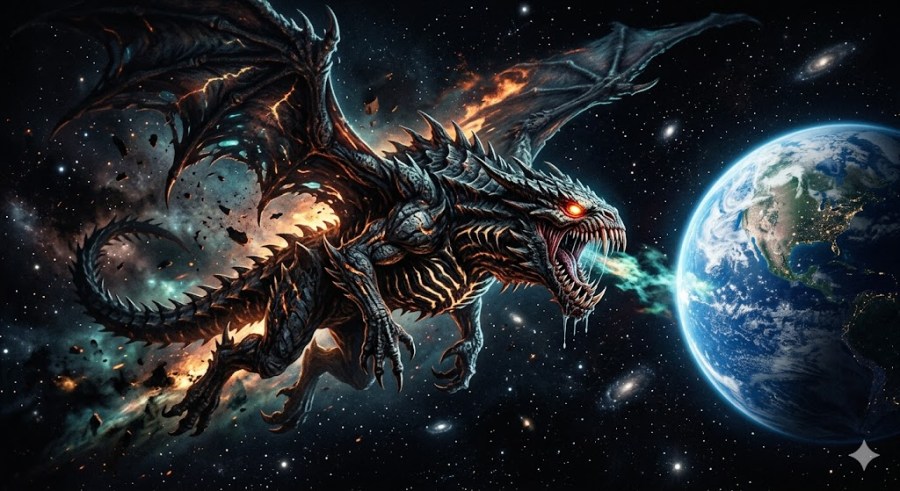
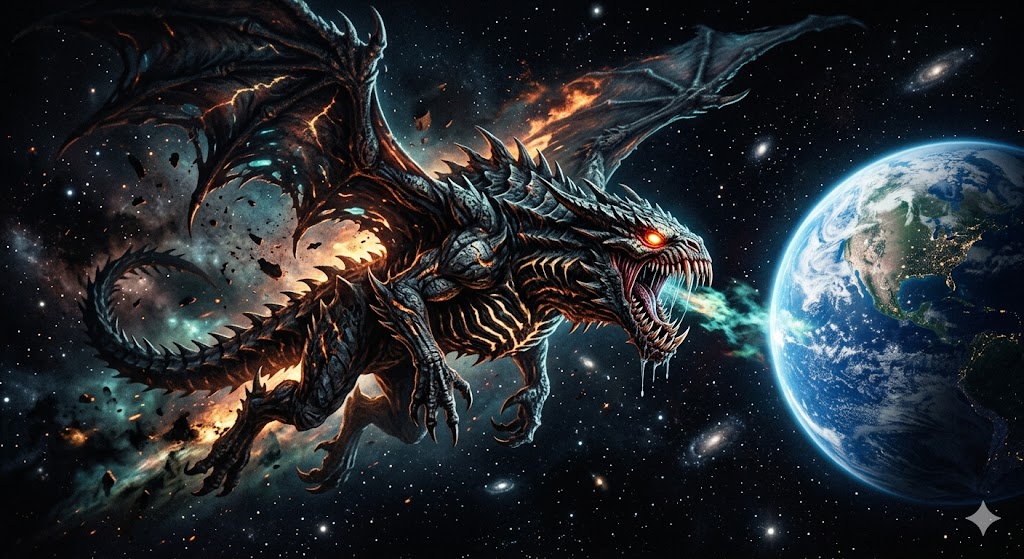
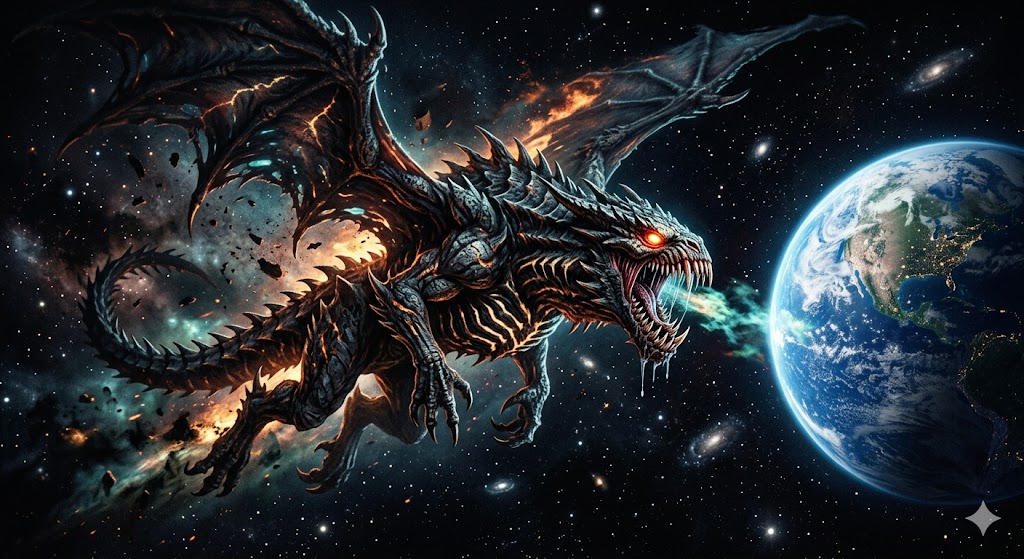
The reason we had never seen it from Earth is that The Beast is a piece of cosmic primordial horror. It is an ultra-dense, carbon-silicate asteroid over 15 miles wide—a verified planet killer. Worse, its albedo is practically zero. It is Midnight Black, coated in an ancient, light-absorbing organic crust so thick that it reflects absolutely no sunlight. To our telescopes, it was invisible, a moving hole in the stars.
For the last several years, it has been perfectly hidden behind the massive bulk of Jupiter, riding along the gas giant’s orbital shadow relative to Earth.
But Deep Space 4 had a different vantage point. The old satellite caught it from the flank, calculating its trajectory with cold, mechanical precision.
The Deadly Mathematics
The data is precise and unyielding. The Beast has been thrown into a hyper-accelerated, terminal trajectory toward the inner solar system, locked in by Jupiter’s immense gravity well like a stone fired from a slingshot.
- The Velocity: The Beast is screaming through the void at a terrifying velocity of 40 km/s (approximately 90,000 mph).
- The Distance: As of mid-2026, the calculated distance between Earth and The Beast (as it breaks away from Jupiter’s orbital plane) is roughly 3.016 Astronomical Units (AU), which translates to exactly 451.2 million kilometers (4.512×10⁸ km).
Let’s do the cold math. A standard year contains 31,536,000 seconds.
Time to Impact=VelocityDistance=40 km/s451,200,000 km=11,280,000 seconds
Converting that time into days:
Days=86,400 seconds/day11,280,000 seconds≈130.5 days
If it steps out from behind Jupiter’s shadow into its final sprint in the late summer of 2028, the clock runs out exactly on November 7, 2028.
Ground Zero: Moscow
The terminal trajectory does not show a near miss. It does not show a generic ocean impact. The rotation of the Earth and the angle of the orbital plane are locked in a fatal cosmic gear synchronization.
The Beast will slice through the upper atmosphere over northern Europe, turning the night sky into a blinding, searing white sun before slamming directly into Moscow, Russia.
Because of its mass and tremendous velocity, it will hit with the force of roughly 15 million megatons of TNT. The impact will completely puncture the Earth’s crust. Moscow will cease to exist in a microsecond, replaced by a 40-mile-wide sea of boiling magma. The kinetic shockwave will flatten every forest, building, and city within a 1,500-mile radius. The dust thrown into the stratosphere will block out the sun for a decade, plunging the planet into a permanent, freezing impact winter.
A Grim Warning to Humanity
Because the asteroid is charcoal black, humanity will not be able to see it with amateur telescopes until the final 48 hours, when it begins to block out the background stars of the night sky like a creeping, dead void.
.


You must be logged in to post a comment.