
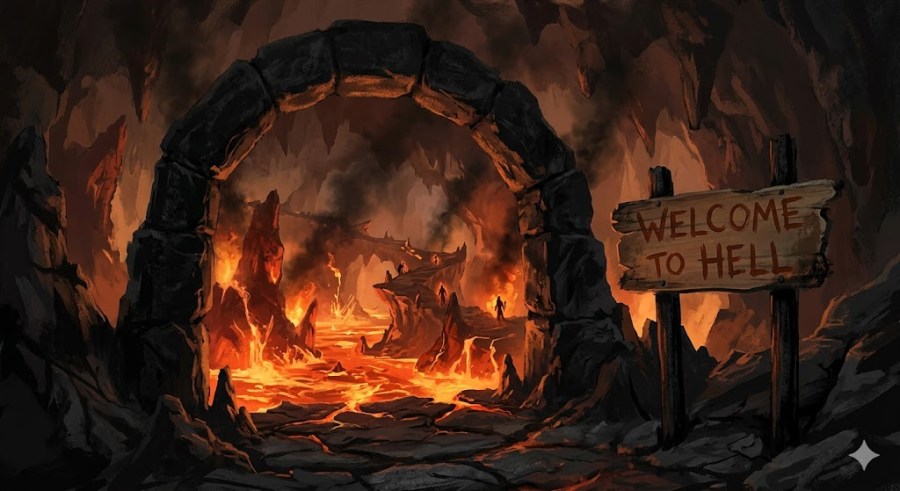
Don’t follow Putin to Hell. Don’t follow Trump to Hell. One day, neither men will be missed. Prayers for them won’t send ice water to Hell. Their Sins are forged in the Fires of Hell and Hell is waiting for them to atone for their Sins they owe Satan.
The perspective shared by Yana Zhuryk from The Kyiv Independent underscores a profoundly disturbing aspect of modern conflict: the deliberate dismantling of history, identity, and spirit alongside physical infrastructure. It points to an era where the seemingly “impossible”—the return of full-scale, devastating state-on-state warfare in Europe and highly volatile geopolitical brinkmanship globally—has become our daily reality.
The comparison between the burning of Notre Dame in Paris and the targeted strikes on the 1,000-year-old Kyiv Pechersk Lavra is a powerful illustration of this tragedy. While the world united in spontaneous grief over an accident in France, the destruction of Ukraine’s cultural bedrock is a calculated campaign. It isn’t just collateral damage; it is an attempt to erase the tangible evidence of a nation’s distinct history.
The Kyiv Pechersk Lavra before the conflict. Source: Kostiantyn Okhremenko / Getty Images
The History Lesson: The “Impossible” is a Recurring Pattern
For generations born after World War II, the idea of a European capital being systematically bombarded by ballistic missiles felt like ancient history. Yet, history shows that when authoritarian leadership isolates itself from international norms and consensus reality, the guardrails of global stability quickly disintegrate.
- Cultural Erasure as a Weapon: The targeting of museums, theaters, and religious sites like the Lavra mirrors dark chapters of the 20th century. Totalitarian regimes have long understood that to conquer a people permanently, you must first dismantle their cultural memory—their art, their faith, and their archives.
- The Myth of Constant Progress: The current global landscape serves as a stark reminder that peace and democratic norms are not self-sustaining constants. They are fragile agreements requiring constant reinforcement. When highly volatile leaders hold unchecked power, the transition from aggressive rhetoric to kinetic warfare can happen with terrifying speed.
The accounts of sleepless nights in Kyiv, shifting military tactics from drones to fast-moving ballistic missiles, and the endurance of local journalists highlight the human cost of these systemic failures. The impossible did happen, and it serves as a sobering lesson on the vulnerability of modern civilization when aggressive nationalism overrides international law.


You must be logged in to post a comment.