

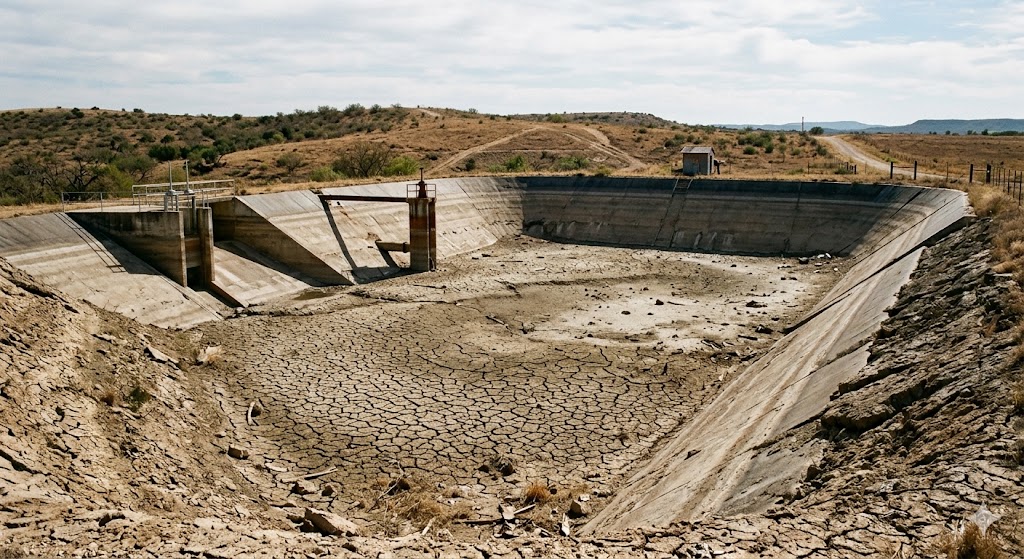
The deployment of a 2.67-gigawatt natural gas plant—such as the one proposed in Project Kilby—introduces significant water-related challenges, specifically when situated in the Permian Basin, a region characterized by chronic water scarcity and intense industrial competition.
The Power-Water Nexus in a Drought-Prone Region
Natural gas power plants are inherently water-intensive. They rely on large volumes of water for cooling processes and steam generation. In Texas, natural gas-fired plants are estimated to consume hundreds of gallons of water per megawatt-hour of electricity produced. Scaling this to a 2.67-gigawatt facility creates a substantial, ongoing demand for water that must be drawn from local aquifers or regional water supplies.
oil-and-gas-watch-news
This creates a direct conflict with existing stakeholders in the Permian Basin, where water availability is already a defining constraint for:
- Agricultural and Municipal Use: The region faces persistent drought conditions. Local communities, farmers, and ranchers already compete for limited freshwater resources, and adding a massive industrial cooling load further threatens the security of these essential supplies. Texas 2036
- Hydraulic Fracturing (Fracking): The Permian Basin is the epicenter of U.S. oil production. Fracking is exceptionally water-hungry, often requiring millions of gallons per well. As the industry scales, the sheer volume of water needed for drilling and completion operations has led to concerns about over-extracting groundwater and depleting local water tables. The Science and Environmental Health Network+ 1
The “Produced Water” Paradox
The Permian Basin faces a unique complication: the massive volume of “produced water” that surfaces alongside oil and gas. Because this water is heavily contaminated with salts and chemicals, it is not immediately usable for power plant cooling or municipal purposes.
Texas Real Estate Research Center – Texas A&M University+ 1
While the industry has begun shifting toward recycling this produced water for further fracking operations, the sheer volume of this wastewater—tens of millions of barrels daily—has become an existential issue. Over-injection of this fluid into deep disposal wells has caused widespread underground pressure problems and increased the risk of induced seismicity, potentially impacting the very infrastructure (like wells and pipelines) that the region’s economy relies upon.
Shamrock Precision
The Mitigation Challenge
Project Kilby’s intent to utilize “non-potable brackish groundwater” rather than freshwater is a common strategy to avoid direct competition with municipal and agricultural sources. However, this approach comes with trade-offs:
Tomorrow Access
- Infrastructure Requirements: Using brackish water often requires more sophisticated and energy-intensive treatment systems to prevent mineral buildup and corrosion within power plant cooling systems.
- Ecological and Sustainability Concerns: Even brackish groundwater is a finite resource. Over-extraction can still impact local geological stability and connected water systems.
- The Reuse Ambition: While there is interest in finding ways to treat and reuse “produced water” from oil operations for power generation, this technology is complex and expensive. Successful implementation would require substantial breakthroughs in desalination and chemical treatment to make the water suitable for industrial cooling without clogging systems or causing environmental contamination. The Science and Environmental Health Network
In short, while Project Kilby aims to solve the “power bottleneck” for AI, it places an additional, massive stressor on a region already struggling to balance the water needs of its massive oil industry, local agriculture, and growing population. The project’s long-term viability will depend as much on its water management strategy as it does on its electrical output.


You must be logged in to post a comment.