
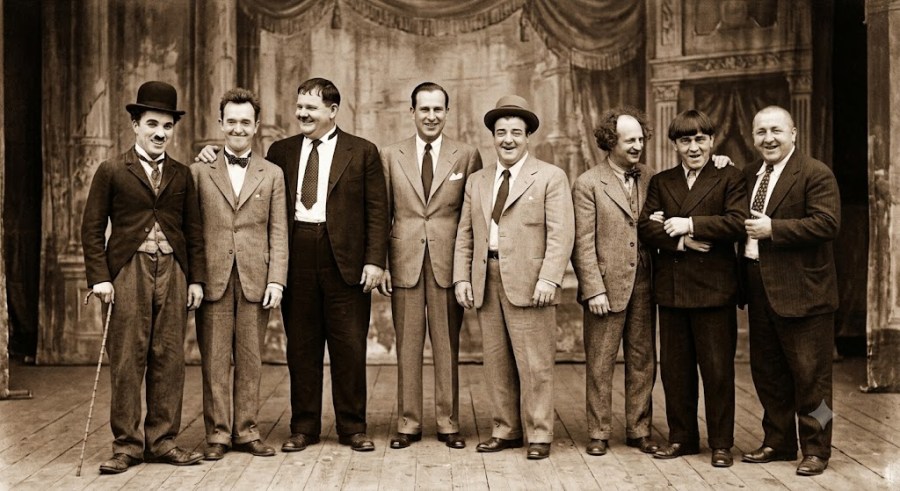
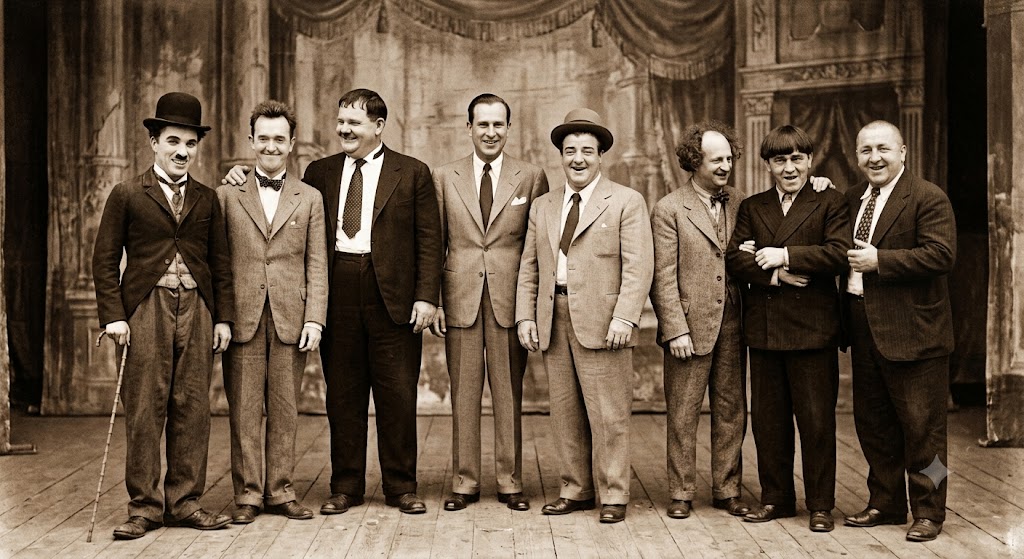
Step through the red velvet curtains for a moment. Long before television screens illuminated every living room in America, laughter was born in cramped dressing rooms, under harsh stage footlights, and across the smoky wooden floorboards of vaudeville.
Vaudeville wasn’t just entertainment—it was the boot camp for modern comedy. Performing three to five shows a day to tough crowds taught performers one fundamental rule: get the laugh fast, or get out.
The Birth of the Big Screen Icons
In the 1910s, a young British clog dancer and pantomime performer named Charlie Chaplin hit the American vaudeville circuit with Fred Karno’s comedy troupe. Sharing a room on those long train rides between stops was another future legend: Stan Laurel.
Chaplin’s genius lay in blending physical grace with emotional depth. When he stepped off the stage and onto silver screen celluloid as “The Little Tramp”—baggy trousers, tight coat, bamboo cane, and a toothbrush mustache—he didn’t just make audiences laugh; he made them care.
Fun Vaudeville Fact: In vaudeville’s prime, the famous Orpheum and Keith-Albee circuits connected thousands of theaters nationwide, creating a shared American pop culture for the very first time.
The Master Class of Slapstick: The Three Stooges
While silent cinema elevated pantomime, vaudeville’s rough-and-tumble side birthed pure, unfiltered slapstick. Enter Moe Howard, his brother Shemp, and their childhood friend Larry Fine.
Starting out as “stooges” (audience foils who interrupted the headliner) for vaudeville star Ted Healy, the group learned how to turn sound effects and precise physical choreography into comedic art. When Curly Howard later replaced Shemp in the early film shorts, the classic trio was sealed in history.
The Three Stooges: Masters of lowbrow slapstick. Source: Etsy
Every poke to the eyes, double-pipe clonk to the head, and frantic “Nyuk, nyuk, nyuk!” required split-second timing. What looked like utter chaos on screen was actually as tightly rehearsed as a Broadway ballet.
Rapid-Fire Wordplay: Abbott & Costello
As radio and “talkies” (sound films) took over, comedy shifted from visual gags to lightning-fast verbal banter. No duo spanned the gap between burlesque stages and radio waves quite like Bud Abbott and Lou Costello.
Bud Abbott and Lou Costello. Source: Silver Screen Collection / Getty Images
Bud was the ultimate cool, smooth-talking straight man; Lou was the easily agitated, wide-eyed childish instinct personified. Together, they refined classic vaudeville crosstalk routines into perfection. Their world-famous “Who’s on First?” routine is widely considered one of the greatest comedic sketches ever written—a dizzying, perfectly timed masterpiece of linguistic confusion.
The Hall of Vaudeville Legends
The footprints left by these pioneers paved the way for generations of comedic artists.
| Performer / Act | Vaudeville Roots & Specialty | Lasting Legacy |
|---|---|---|
| Charlie Chaplin | British pantomime, physical comedy | Pioneer of silent cinema and narrative film comedy |
| The Three Stooges | Knockabout slapstick, physical sound effects | Definition of American ensemble slapstick |
| Abbott & Costello | Burlesque crosstalk, rapid wordplay | Masters of radio and early TV comedy dialogue |
| The Marx Brothers | Musical vaudeville, anarchic stage antics | Blended surrealism, satire, and physical chaos |
| Buster Keaton | “The Great Stone Face”, extreme stuntwork | Standardized cinematic stunt choreography |
From the dusty footlights of traveling stage shows to classic cinema and black-and-white television broadcasts, these comedy icons proved that a well-timed double take or a masterfully delivered punchline is timeless.


You must be logged in to post a comment.