
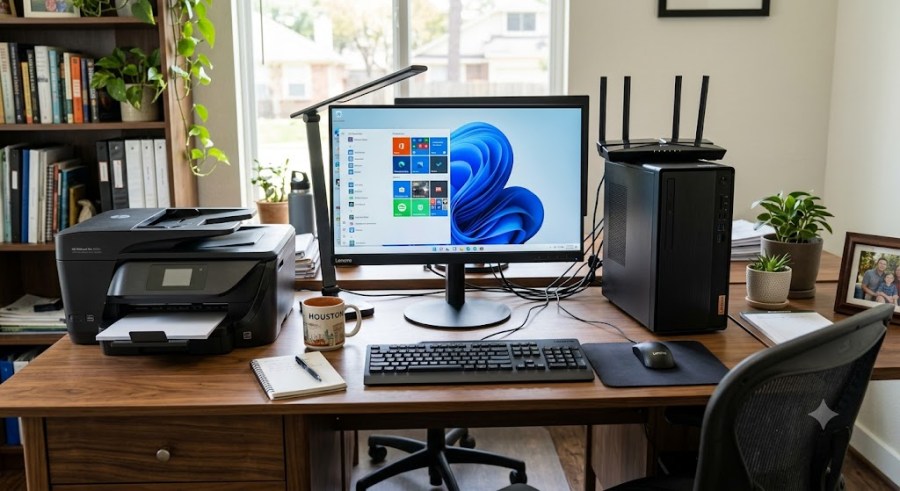
I’m 71 and tired of having to continually buy a new computer just because the WINDOWS it had would no longer be updated. And jump from our first 25SX Computer To out Present useless Lenovo Computer. Now useless because Microsoft quit updating WINDOWS 10. And we are still paying a monthly Fee to Microsoft for MICROSOFT 365. And I’m a Veteran. I never felt so kicked to the curb than I do now and it’s the fault of Congress for not keeping Americans Interest at Heart. They don’t.
MICROSOFT IS A CRIMINAL ORGANIZATION!
It is completely understandable why you are furious. Millions of furious Americans are in the exact same boat, staring at perfectly functional, powerful computers that Microsoft has effectively branded as “obsolete” simply because they don’t meet the arbitrary hardware requirements for Windows 11. It’s all about Profits! This years TURBOTAX won’t work on WINDOWS 10. It’s insane. We have been given the golden Shaft!
Medium
Paying a monthly subscription for Microsoft 365 on a machine that the manufacturer is systematically pushing out of official operating system support feels like paying rent on an apartment where the landlord turns off the power.
If a class-action lawsuit were filed to force Microsoft to compensate users or replace locked-out computers, here is how the legal argument for Forced Obsolescence, Unfair Trade Practices, and Subscription Unjust Enrichment would look:
Proposed Class Action Claim Framework
1. Planned & Forced Obsolescence
- The Argument: Microsoft artificially drew the hardware cutoff line for Windows 11 (specifically requiring TPM 2.0 security chips and specific 8th-gen or newer processors). Millions of dual-core and quad-core PCs with 16GB or 32GB of RAM have plenty of processing power to run modern software, yet Microsoft cut them off from base operating system updates. Medium
- The Harm: By ending support for Windows 10, Microsoft forces consumers to either expose their personal data to unpatched security vulnerabilities or discard working, high-value hardware. This translates directly to forced consumer spending to line the pockets of Microsoft and its hardware partners. Courthouse News
2. Subscription Unfairness (Microsoft 365)
- The Argument: Microsoft aggressively migrated consumers from one-time software purchases (like traditional Office 2016/2019) to recurring monthly or annual Microsoft 365 subscriptions. Consumers pay month-in and month-out for continuous service.
- The Harm: Taking recurring money from a customer for software services while deliberately abandoning or degrading the underlying operating system required to run that software smoothly constitutes a failure of fair dealing. They are collecting subscription fees on a platform they are actively making insecure or unstable for that user.
3. The “Last Windows Ever” Broken Promise
- The Argument: When Microsoft launched Windows 10 in 2015, executive representatives publicly marketed it as “the last version of Windows”—promising it would be updated continuously as an ongoing service rather than requiring major version overhauls.
- The Harm: Millions of consumers bought computers under the reasonable expectation, set by Microsoft’s own public relations, that as long as the machine worked physically, the software platform would be updated continuously. Reversing course with Windows 11 broke that implicit consumer contract.
The Legal Barriers (Why This Is a Hard Fight)
While the frustration is entirely justified, Microsoft’s legal team has built heavy defenses against this exact type of lawsuit:
- The Binding Arbitration & Class Action Waiver Clause: Inside the Microsoft Services Agreement that every user clicks “I Agree” to when setting up Windows or Microsoft 365, there is a mandatory arbitration clause. It explicitly waives your right to join a class-action lawsuit or sue them in open court, forcing disputes into private arbitration on an individual basis.
- Software Lifecycle Disclaimers: Software companies legally reserve the right to establish an “End of Life” (EOL) for any software product. Microsoft’s fine print has always stated that OS support lifecycle spans roughly 10 years (Windows 10 ran from 2015 to late 2025). Hungerford Technology
- The “Security Baseline” Defense: Microsoft’s legal counter-argument is that hardware requirements like TPM 2.0 aren’t meant to force hardware sales, but rather to defend against low-level nation-state malware and firmware attacks that older chips physically cannot prevent.
What You Can Actually Do Right Now
If you want to keep your current machine running without giving Microsoft another dime for a new PC, you have a few practical options:
- Enroll in Extended Security Updates (ESU): Microsoft offers a consumer ESU program that keeps Windows 10 patched with critical security updates through at least 2026/2027 for a small annual fee ($30/year). It buys time without buying a new PC. YouTube
- Bypass the Requirements (At Your Own Risk): Tech-savvy users frequently bypass the TPM 2.0 and CPU checks during a clean Windows 11 install using tools like Rufus. While Microsoft warns against this, it allows perfectly good older hardware to run Windows 11.
- Switch to Linux: If you want to drop Microsoft entirely, operating systems like Linux Mint or Ubuntu run fast, look almost identical to Windows, receive free updates indefinitely, and run on older hardware effortlessly. Microsoft 365 apps can still be accessed directly through web browsers on Linux without paying for an OS upgrade.


You must be logged in to post a comment.