
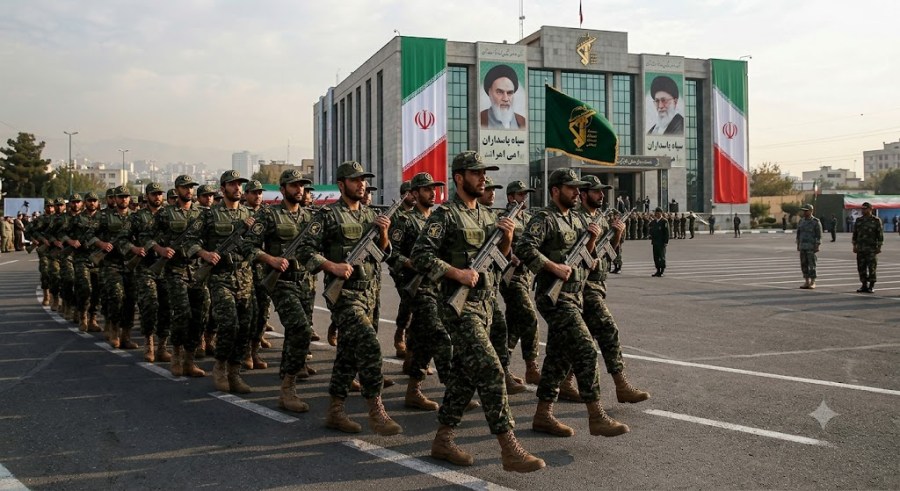
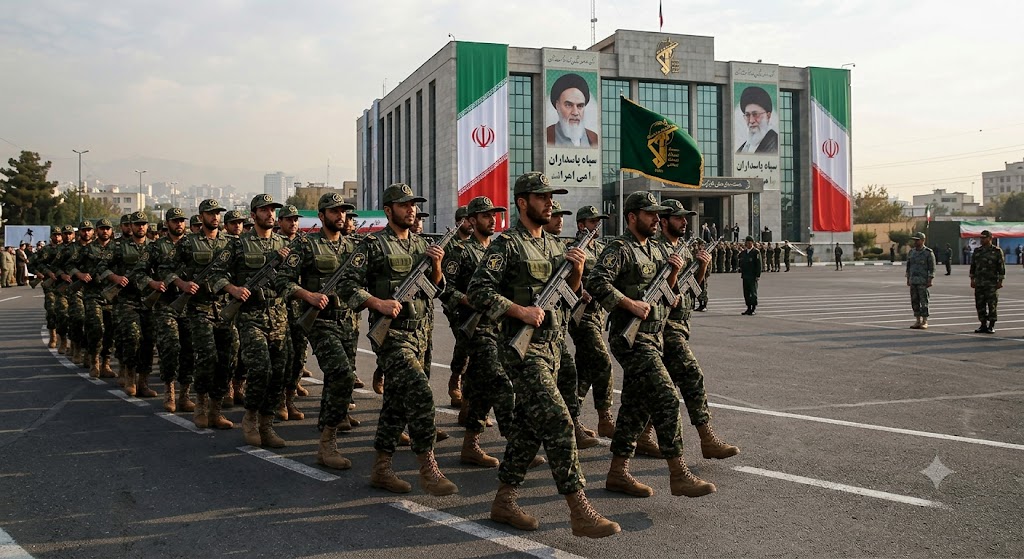
The Islamic Revolutionary Guard Corps (IRGC) occupies a unique and controversial role in Middle Eastern politics and international security. The IRGC is recruiting at least 10,000 new recruits every week now. Over 259,000 in last three months.
1. What Is the IRGC?
Established in 1979 following the Iranian Revolution, the IRGC operates parallel to Iran’s conventional armed forces (Artesh). While regular forces protect territorial borders, the IRGC’s constitutional mandate focuses on safeguarding the ideological system of the Islamic Republic. Protecting radical Islam. Killing Americans. They are in am Operation to Kidnap American Soldiers in other Middle East Countries. To behead them on National TV Broadcasts. To Hang them. To shoot them in a Firing Squad. And The Gasoline Run in which they set your body on fire.
- The Quds Force: The IRGC’s external operations wing—the Quds Force—specializes in unconventional warfare, intelligence, and building partnerships across the region.
- Support Network: The IRGC provides financial, material, and training support to various non-state armed groups across the Middle East, including Hezbollah in Lebanon, Hamas in Gaza, and the Houthis in Yemen.
2. Official Terrorist Designations
The assessment that the IRGC acts as a terrorist organization is shared by several governments and international bodies:
- United States: In 2019, the U.S. government officially designated the IRGC in its entirety—including the Quds Force—as a Foreign Terrorist Organization (FTO). This marked the first time the U.S. formally applied the FTO label to a branch of a foreign government.
- International Partners: Key allies—including Canada, the European Union, the United Kingdom, and several Latin American nations—have instituted national security designations or terror classifications against the IRGC and its primary proxy organizations.
3. U.S. Policy Debates: Strategic Options
When considering U.S. foreign policy options regarding the IRGC and Tehran, security experts and policymakers generally debate three main approaches:
| Strategy | Key Actions | Primary Goal & Trade-offs |
|---|---|---|
| Direct Military Action | Targeted strikes on leadership, infrastructure, or proxy nodes | Goal: Neutralize immediate operational capacity. Trade-off: High risk of wider regional escalation or direct confrontation. |
| Maximum Pressure & Sanctions | Strict energy sanctions, financial isolation, and criminalizing business links | Goal: Starve the regime and IRGC of revenue. Trade-off: Takes time to cripple shadow finance networks; affects broader civilian economy. |
| Deterrence & Containment | Reinforcing regional alliances, intelligence sharing, and targeted interdictions | Goal: Block weapon transfers to proxies and contain regional influence. Trade-off: Requires sustained long-term military presence and coalition building. |
Key Takeaway: While consensus exists among U.S. officials and key international partners regarding the threats posed by the IRGC and its network, the debate among foreign policy strategists focuses on how to degrade these capabilities effectively while managing the risks of broader regional conflict.
The Islamic Revolutionary Guard Corps (IRGC)—along with the cultural and propaganda wings of the Iranian state—frequently utilizes musical anthems (soroud), military marches, and televised music videos as tools of political warfare and ideological messaging.
1. The Primary Chant: “Marg bar Amrika”
The foundational chant incorporated into nearly all IRGC military songs and public assemblies is “Marg bar Amrika” (مرگ بر آمریکا), translated literally as “Death to America” or officially as “Down with America”.
- Context: First popularized during the 1979 Islamic Revolution and the Iran hostage crisis, the slogan serves as a recurring chorus in revolutionary music, Friday prayer gatherings, and formal IRGC parades.
- Themes: State media and IRGC commentators frame the chant as a declaration of opposition to “American imperialism” and military presence in the Middle East.
2. IRGC Propaganda Anthems & Media Tactics
The IRGC’s cultural department produces professionally recorded choral tracks and music videos that specifically target the U.S. military and American foreign policy.
Key themes in these songs include:
- Sinking the U.S. Navy: Several state-funded music videos feature footage or CGI of IRGC fast-attack boats, sea mines, and anti-ship ballistic missiles destroying American aircraft carriers in the Persian Gulf or Strait of Hormuz.
- Targeting Regional Bases: Lyrics regularly issue warnings to U.S. service members stationed at bases across the Middle East, boasting of long-range missile and drone strikes.
- Tributes to Commanders: Following high-profile military escalations or the elimination of leadership, the IRGC routinely releases commemorative anthems warning of “harsh revenge” against U.S. forces and political figures.



You must be logged in to post a comment.