
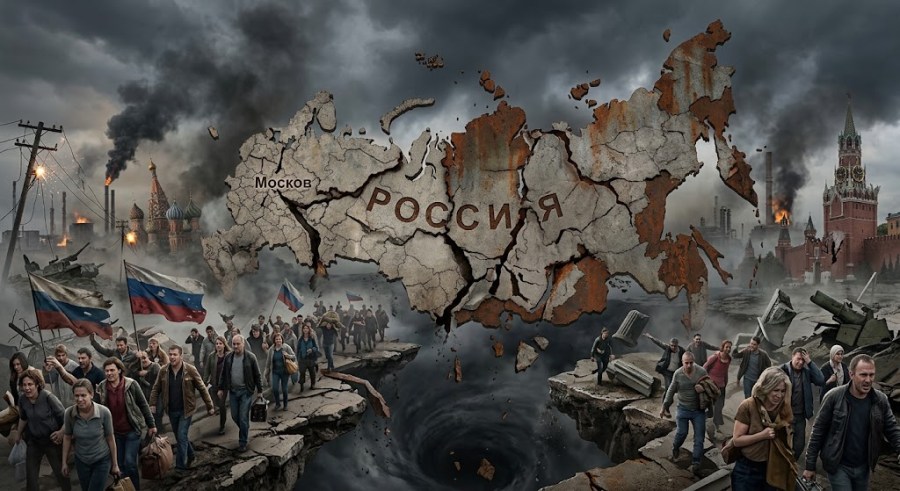
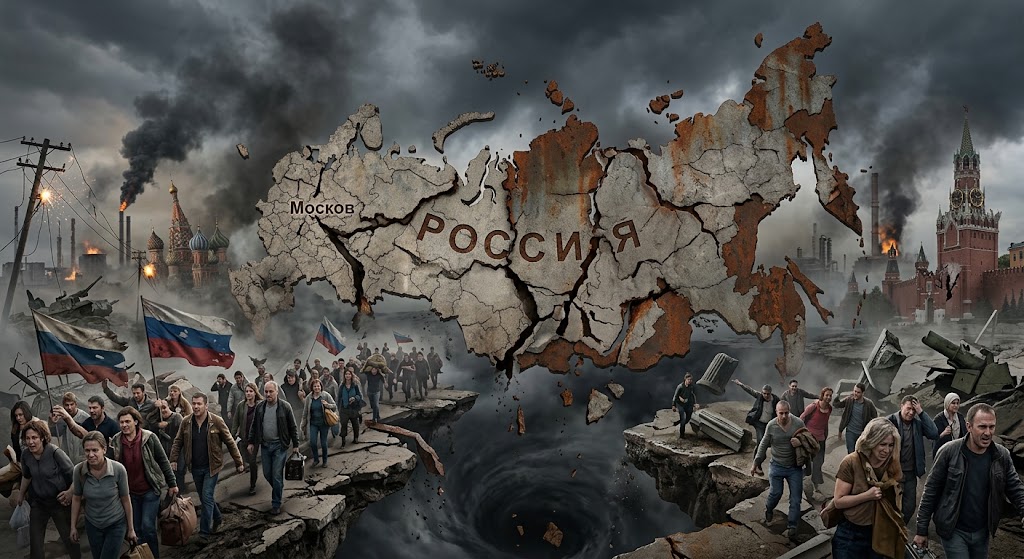
The War Inward: FSB Ascendance, Clan Cannibalization, and the Fracturing Russian Elite
The defining vulnerability of the Russian state is no longer foreign military containment or external sanctions, but the internal fragmentation of its governing coalition. For over two decades, regime stability rested on an unwritten pact between the Kremlin, the security apparatus (siloviki), and the financial elite: unquestioned political loyalty in exchange for asset security, domestic monopolies, and wealth accumulation.
That contract has collapsed. As the war in Ukraine demands ever-greater material reserves, Vladimir Putin’s regime has turned inward, deploying the Federal Security Service (FSB) to cannibalize domestic wealth, purge legacy power brokers, and enforce wartime control through systemic paranoia.
1. The Totalitarian Pivot: The FSB as Supreme Arbiter
The FSB’s evolution from an intelligence and counter-subversion agency into an unchecked domestic enforcement arm marks the end of bureaucratic equilibrium in Moscow. By eliminating external judicial oversight and elevating specialized internal directorates, the Kremlin has established a mechanism capable of targeting any tier of the Russian elite.
- Dismantling Elite Immunity: High net-worth individuals, regional governors, and senior military officials who previously operated under implicit protection are now subject to surveillance, asset seizure, and prosecution.
- The Purge of the Military Establishment: The marginalization of the Ministry of Defense old guard—exemplified by the restructuring around Sergey Shoigu and the arrest of key defense officials—reflects a deliberate strategy to subordinate the armed forces to security service scrutiny.
- Cross-Agency Paranoia: As security departments compete for diminishing resources and political favor, inter-agency distrust has created an environment where operational failures are actively weaponized as treason.
2. War Economics by Confiscation: The 4 Trillion Ruble Seizure
The structural transformation of the Russian economy is no longer driven by market mechanisms or conventional industrial policy, but by aggressive state redistribution.
| Economic Domain | Mechanism of Control | Strategic Regime Objective |
|---|---|---|
| Heavy Industry & Refining | De-privatization and asset re-nationalization | Securing direct supply chains for military logistics |
| Retail & Transport Infrastructure | State-backed corporate raiding of private hubs and ports | Siphoning liquidity to fund widening budget deficits |
| Private Enterprise | “Voluntary” windfall taxes and mandatory war levies | Offsetting collapsing sovereign bond demand |
| Private Capital | Restrictions on foreign exchange and cross-border settlement | Stemming systemic capital outflows toward the Gulf and Turkey |
The nationalization of private assets exceeding 4 trillion rubles reveals that property rights in Russia are now entirely conditional. While this provides short-term liquidity to fuel the war effort, it permanently breaks institutional investor confidence, accelerates the exodus of skilled human capital, and replaces operational efficiency with bureaucratic rent-seeking.
3. The Structural Mechanics of Regime Brittleness
Authoritarian regimes rarely collapse from external pressure alone; they deteriorate when internal balancing mechanisms cease to function. The Kremlin’s reliance on coercive extraction creates three critical structural vulnerabilities:
                  ┌───────────────────────────────┐
                  │ Prolonged Wartime Attrition   │
                  └──────────────┬────────────────┘
                                 │
                 ┌───────────────┴───────────────┐
                 ▼                               ▼
    ┌─────────────────────────┐     ┌─────────────────────────┐
    │  Resource Scarcity &    │     │  FSB Resource Seizures  │
    │  Sovereign Deficits     │     │  & Selective Purges     │
    └────────────┬────────────┘     └────────────┬────────────┘
                 │                               │
                 └───────────────┬───────────────┘
                                 │
                                 ▼
                  ┌───────────────────────────────┐
                  │  Erosion of Elite Cohesion    │
                  │  & Heightened Succession Risk │
                  └───────────────────────────────┘
- The Incompetence Penalty: Replacing pragmatic technocrats and independent economic operators with loyal security apparatchiks severely degrades the management of civil infrastructure, logistics, and domestic production.
- Succession Anxiety and Factional Feuds: Yevgeny Prigozhin’s mutiny proved that parallel armed structures and elite infighting can rapidly escalate into open defiance. With no neutral legal arbiter or clear succession protocol, competing Kremlin clans view any concession as an existential risk.
- Decaying Municipal Foundations: Reallocating non-defense budgets toward the war front accelerates the breakdown of domestic utilities, regional transport networks, and municipal services, gradually expanding public exhaustion.
The Terminal Dynamics of Coercive Consolidation
When an authoritarian regime begins hunting within its own founding coalition to sustain a war economy, it does so from a position of systemic stress rather than enduring strength.
The concentration of total authority within the FSB temporarily suppresses open dissent and guarantees short-term revenue mobilization, but it dramatically increases long-term fragility. By alienating the financial oligarchs, subordinating the armed forces, and stripping the elite of basic guarantees of personal and financial security, the Kremlin is steadily eliminating the shock absorbers that kept the Russian state resilient through past crises.
The closest single equivalent to Russia’s FSB (Federal Security Service) is the FBI, but the FSB holds vastly more consolidated power and authority than any single American agency.
In the United States, national security and intelligence functions are intentionally divided across separate agencies to prevent the concentration of domestic and foreign power. In Russia, the FSB—the primary successor to the Soviet-era KGB—combines roles that are spread across multiple US bodies:
| Russian FSB Role | U.S. Equivalent Agency | Primary Function |
|---|---|---|
| Domestic Counterintelligence & Federal Law Enforcement | FBI (Federal Bureau of Investigation) | Investigating treason, terrorism, organized crime, and federal-level offenses. |
| Border Control & Port Security | CBP / Coast Guard / DHS | Guarding territorial borders and maritime frontiers. |
| Electronic Surveillance & Signals Interception | NSA (National Security Agency) | Operating domestic telecommunications wiretaps (via Russia’s SORM network). |
| Near-Abroad & Covert Foreign Operations | CIA (Central Intelligence Agency) | Operating covert intelligence networks, particularly across the former Soviet states (via the FSB’s 5th Service). |
| Armed Paramilitary & SWAT Units | FBI HRT / ATF SRT | Deploying elite, militarized special forces (e.g., FSB Alpha and Vympel groups). |
The Crucial Difference: Regime Protection Unlike the FBI or other American agencies, which are bound by judicial oversight, statutory warrants, and constitutional checks, the FSB operates with near-total immunity under direct command of the Kremlin. It functions as a political secret police force tasked with suppressing internal dissent, surveilling business elites, and protecting the regime’s grip on power.
No, ICE is not a close equivalent. U.S. Immigration and Customs Enforcement (ICE) focuses primarily on enforcing federal immigration statutes, interior border security, and investigating transnational crimes like trafficking and contraband smuggling through its Homeland Security Investigations (HSI) branch.
While the FSB does control Russia’s Border Guard Service (which performs tasks similar to U.S. border enforcement and customs), border control is only a single branch of what the FSB does.
The critical differences include:
- Scope of Jurisdiction: ICE does not investigate domestic espionage, run nation-wide signals intelligence, manage counterintelligence against foreign spies, or lead domestic political investigations. Those duties belong to the FBI, CIA, and NSA.
- Political & Economic Power: The FSB has the authority to audit, investigate, and seize major corporations, remove regional political figures, and conduct surveillance on high-ranking military commanders and business elites. ICE possesses no domestic political mandate or authority over corporate governance and civil administration.
- Structural Intent: ICE is a specialized federal law enforcement agency under the Department of Homeland Security with specific statutory limits. The FSB is a comprehensive state-security organ designed for counterintelligence, counter-subversion, and the preservation of central regime control.
Martial law is not an agency, but a temporary legal state in which the armed forces take over civilian government functions, law enforcement, and the courts during extreme emergencies like invasion or rebellion.
The closest concept to how the FSB operates in Russia is that the FSB exercises many of the sweeping powers of martial law on a permanent, routine basis without needing a formal declaration:
- Suspension of Ordinary Checks: Under martial law in the West, normal judicial processes, warrants, and civil rights are temporarily overridden by military necessity. In Russia, the FSB already conducts unmonitored electronic surveillance, freezes assets, and detains targets without standard judicial constraints.
- Control Over the Economy and Movement: Martial law grants governments emergency authority to seize private property, enforce curfews, and direct industrial output. The FSB carries out asset re-nationalizations and corporate takeovers as part of its standard mission.
- Armed Domestic Authority: Martial law deploys troops into the streets to keep order. The FSB maintains its own heavily armed internal security and tactical units (alongside the Rosgvardia, or National Guard) to police the population and protect the state apparatus.
(


You must be logged in to post a comment.