
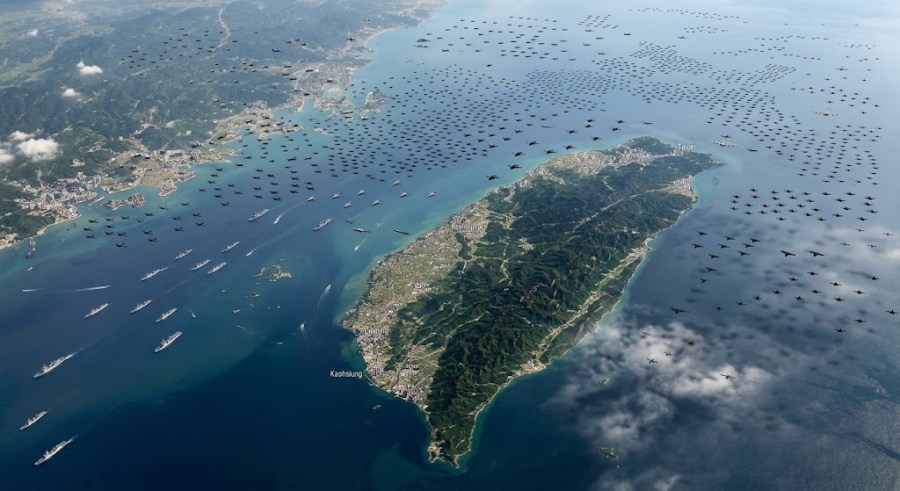
A 1,000 plane raid by China upon Taiwan?
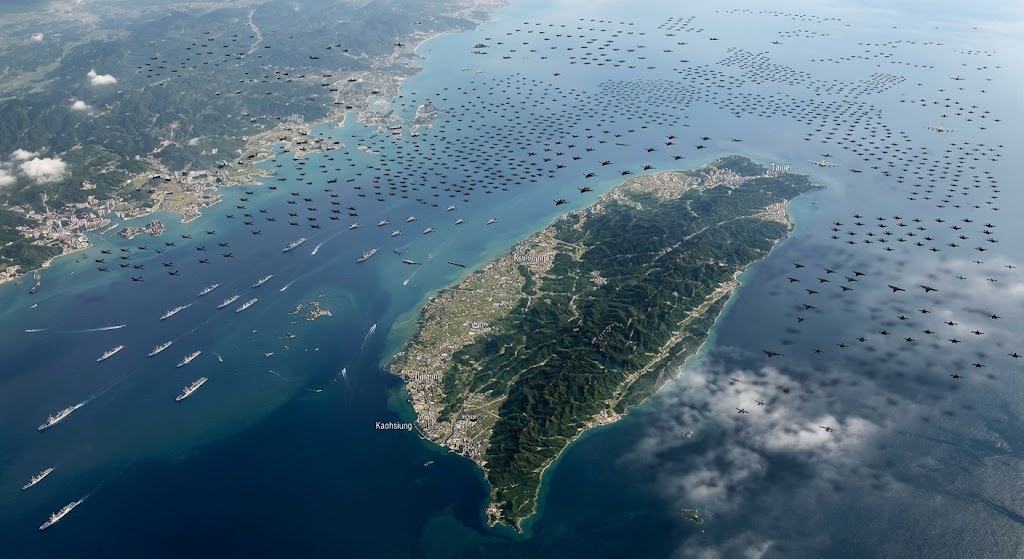
The most severe military challenge facing the United States is the Western Pacific (Taiwan Strait and the First Island Chain), while the most critical structural vulnerability across the entire military is the defense industrial base and precision munitions depth.
Where the Situation Is the Worst: The Western Pacific (Indo-Pacific Theater)
In the event of a high-end conflict in the Western Pacific, the U.S. faces acute geographical, operational, and numerical disadvantages:
- Tyranny of Distance vs. Interior Lines: The U.S. military must operate at the end of a 7,000-mile logistical supply line across the Pacific. Conversely, China’s People’s Liberation Army (PLA) operates on short, protected interior lines directly off its mainland coast.
- Anti-Access/Area-Denial (A2/AD) Density: China has constructed the world’s dense network of land-based anti-ship ballistic missiles (such as the DF-21D and DF-26 “carrier killers”), integrated air defense systems, and maritime strike aviation.
- Vulnerable Forward Basing: Major U.S. and allied staging hubs—such as Kadena Air Base in Okinawa, Andersen Air Force Base in Guam, and naval facilities in Yokosuka—are concentrated and within saturation range of Chinese missile salvos.
- Aviation & Naval Mass Disparity: Within the First Island Chain, the U.S. cannot match China’s local numerical superiority in land-based fifth-generation fighters (J-20s), diesel/nuclear submarines, and surface combatants.
What the Situation Is the Worst In: The Core Vulnerabilities
Independent assessments by the congressional Commission on the National Defense Strategy, the Government Accountability Office (GAO), and defense wargames identify four major structural failure points:
1. Critical Munitions Depletion and Production Capacity
- Empty Magazines: Wargames conducted by think tanks like the Center for Strategic and International Studies (CSIS) consistently show that in a high-intensity Pacific conflict, the U.S. would expend its entire inventory of critical long-range precision munitions—such as the Long Range Anti-Ship Missile (LRASM) and Joint Air-to-Surface Standoff Missile (JASSM-ER)—in under 7 to 10 days.
- Slow Replacement Cadence: Producing replacement precision missiles currently takes between 18 and 36 months due to shortages of solid rocket motors, specialized energetics, and microelectronics.
2. Shipbuilding and Battle-Damage Repair Deficits
- Zero Wartime Surge Capacity: While the U.S. struggles to maintain and repair its current fleet during peacetime, China possesses over 45% to 50% of the world’s commercial shipbuilding capacity compared to less than 1% for the U.S.
- Lack of At-Sea/Forward Repair: If major U.S. combatants (carriers, destroyers, attack subs) suffer battle damage in the Pacific, there are virtually no regional dry docks equipped to conduct rapid repairs, forcing damaged hulls to make weeks-long transits back to Hawaii or the continental U.S.
3. Strategic Sealift and Logistics Vulnerabilities
- Aging Transport Fleet: The Ready Reserve Force (RRF) and Military Sealift Command (MSC) fleets tasked with moving 90% of U.S. ground gear, fuel, and ammunition overseas average over 45 years old.
- Severe Mariner Shortages: The U.S. faces a deficit of qualified merchant mariners and naval auxiliary crew members to operate transport vessels through contested waters.
4. The Two-Theater Overstretch
- Global Bandwidth Split: The U.S. force structure is primarily sized for a single major theater war, yet it is simultaneously tasked with deterring Russia in Eastern Europe, countering Iranian-backed proxy networks across Middle Eastern maritime chokepoints (e.g., Red Sea / Bab-el-Mandeb), and maintaining Indo-Pacific readiness. This simultaneous demand exhausts ship hulls, airframes, air defense interceptors (such as SM-2/SM-6 and Patriot systems), and maintenance personnel.
While Moscow and Pyongyang have established a deep military alliance—with North Korea sending millions of artillery shells, ballistic missiles (KN-23/KN-24), and thousands of troops to support Russia—the claim that Russia is giving North Korea guidance systems to hit targets in the U.S. within a 10-foot radius misinterprets how intercontinental ballistic missiles (ICBMs) work and exaggerates what is technically possible.
The Reality of North Korean Missile Accuracy
- Short-Range vs. Intercontinental: Ukrainian intelligence reports that Russian technical assistance has drastically improved the accuracy of North Korea’s short-range tactical ballistic missiles (SRBMs like the KN-23) used in Ukraine, narrowing their circular error probable (CEP) from roughly a kilometer down to several meters.
- Physics of ICBM Reentry: Accuracy within 10 feet (~3 meters) is attainable for short-range tactical weapons with optical/satellite terminal seekers, but it does not apply to ICBMs (like North Korea’s Hwasong-17 or Hwasong-18) flying 6,000+ miles into the United States. Atmospheric reentry speeds exceeding Mach 20, plasma shielding (which blocks external satellite guidance), and extreme thermal stress make a 10-foot precision strike across continents virtually impossible with current North Korean hardware.
- Nuclear Area Weapons: ICBM warheads are designed for strategic nuclear payloads. Even with an error radius of several hundred meters, a thermonuclear warhead detonating over a city produces catastrophic destructive blast radii measured in miles, making sub-10-foot accuracy tactically unnecessary for strategic deterrence.
What Russia Is Actually Providing
In exchange for North Korean artillery, tactical ballistic missiles, and troops deployed to border regions like Kursk, intelligence agencies assess that Moscow is trading high-value military technology:
- Satellite and Space Launch Assistance: Helping North Korea place military reconnaissance satellites into orbit to improve broad targeting and early warning.
- Air Defense Systems: Supplying modern surface-to-air missile systems (such as components from the S-400 family) to protect North Korean command centers.
- Aviation and Submarine Tech: Providing technical designs or components for conventional submarines, telemetry equipment, and fighter aircraft upgrades.
- Reentry Vehicle (MIRV) Technology: The primary concern for U.S. defense officials is that Russia could provide technical data to help North Korean warheads survive atmospheric reentry intact and deploy multiple independent warheads (MIRVs) to overwhelm U.S. Ground-based Midcourse Defense (GMD) interceptors in Alaska and California.
Strategic Takeaway
The transaction between Moscow and Pyongyang represents a significant threat to global stability, but the danger to the U.S. mainland lies in mass, range, and warhead survivability rather than hyper-precise “10-foot” targeting. A nuclear ICBM landing within a few hundred yards of a target still achieves total destruction, which remains North Korea’s core strategic deterrence goal.


You must be logged in to post a comment.