
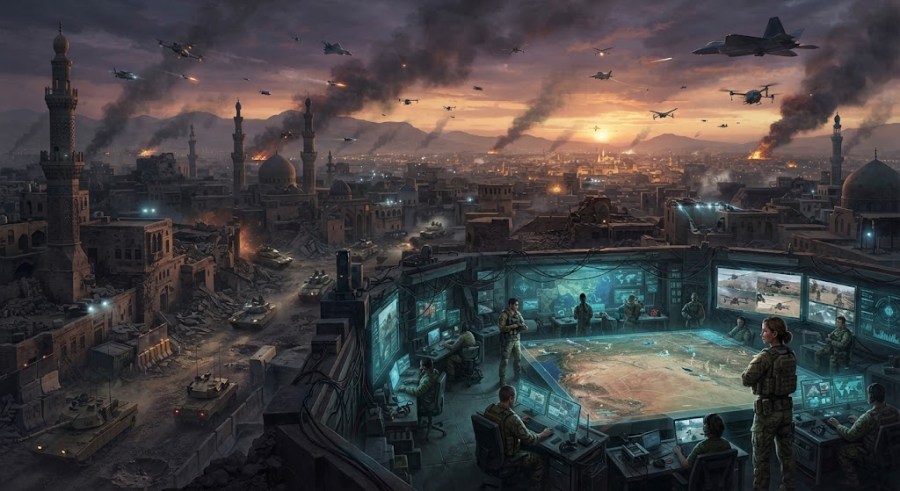
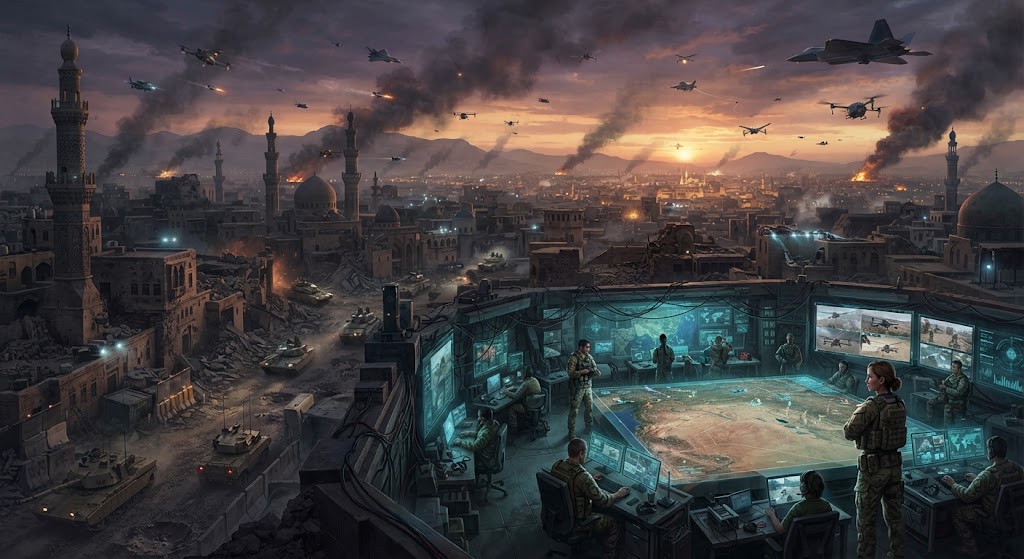
The Century-Long Quagmire: Structural Drivers of a Protracted Iran-Israel-America War
(Only fools start a War on a Fear Alone) Has Trump and Netanyahu got 🇺🇸 in a hundred year War? Iran says it can last long after that.
Introduction: The Looming Shadow of a Modern Hundred Years’ War
Just as the historic Hundred Years’ War (lasting 116 years from 1337 to 1453) was defined not by continuous, unbroken battlefields but by shifting feudal claims, recurring truces, deep-seated dynastic vendettas, and escalating proxy fronts, the contemporary conflict triangle involving Iran, Israel, and the United States carries alarming structural markers of a multi-generational catastrophe. Initiated by major escalations like Operation Epic Fury in early 2026, the current hostilities have bypassed brief diplomatic freezes and localized ceasefires.
With the Trump administration maintaining unyielding pressure, Tehran refusing to surrender its regional ambitions, and asymmetric actors like the Houthis methodically destabilizing critical economic lifelines—such as Saudi Arabia’s Aramco oil network—the theater has evolved into a persistent security trap. This paper examines the systemic factors driving this conflict toward a protracted, century-long trajectory.
1. The Asymmetric Multiplier: Houthi Operations and the Suffocation of Saudi Energy
A primary catalyst ensuring the conflict’s indefinite extension is the weaponization of regional proxies to paralyze global economic infrastructure.
- Targeting the Energy Heartbeat: The Houthis’ sustained campaign against Saudi Arabia’s civil aviation and oil network—striking core Aramco facilities and urban infrastructure—imposes astronomical security and economic costs on Washington’s key regional partners. The Guardian
- Bypassing Traditional Containment: Despite episodic U.S. and Saudi-led coalition air campaigns, the decentralized nature of Houthi drone and missile networks ensures that total eradication remains nearly impossible without a costly, open-ended ground occupation of Yemen.
- Global Economic Blackmail: By continually threatening maritime choke points (such as the Bab al-Mandab Strait and the Strait of Hormuz), Iran and its “Axis of Resistance” maintain permanent leverage to spike international oil and gas prices, preventing any stable diplomatic equilibrium. The Guardian
2. Structural Intractability: Political Persistence and Unyielding Doctrines
Just as medieval English and French monarchs perpetually revived hereditary claims across generational divides, modern political incentives on all sides actively discourage permanent peace settlements.
- The U.S. Political Calculus: The Trump administration’s refusal to ease strategic pressure—combining sweeping economic isolation campaigns, naval blockades, and targeted military interventions—establishes a baseline of permanent confrontation. Because political rewards favor hardline deterrence over messy, compromise-driven nation-building, shifts in presidential administrations or mid-term cycles routinely reset aggressive postures rather than resolve core grievances.
- Tehran’s Existential Defense: Following devastating blows—including leadership transitions and intense infrastructure damage—Iran’s remaining political and military apparatus views asymmetrical proxy warfare and nuclear hedging as existential safeguards. Any total capitulation is perceived by Tehran as regime suicide, ensuring that ideological resistance outlasts individual political windows.
- Israel’s Security Paradigm: For Israel, neutralizing persistent multi-front threats from state and non-state actors requires a posture of perpetual military readiness, eliminating the possibility of a definitive political normalization while hostile regional architectures remain intact.
3. The Mechanics of a Century-Long Stalemate
The trajectory of the Iran-Israel-America conflict mirrors historical protracted wars through three distinct mechanisms:
| Conflict Dimension | Historic Hundred Years’ War Parallel | Modern Iran-Israel-America Dynamic |
|---|---|---|
| Pacing & Lulls | Decades of intermittent fighting interrupted by plagues, lulls, and unstable truces. | Periodic ceasefires (e.g., 2026 diplomatic pauses) repeatedly shattered by maritime blockades and proxy surges. |
| Proxy & Satellite Fronts | Feudal vassals and shifting allegiances across Aquitaine, Normandy, and Gascony. | Regional proxies (Houthis, militias) executing high-impact strikes on economic hubs like Saudi oil facilities. |
| Economic Attrition | Depleted treasuries and interrupted trade routes across Western Europe. | Chronic volatility in global energy markets, shipping insurance spikes, and infrastructural reconstruction costs. |
Conclusion
Without a radical transformation in regional security architecture—such as an inclusive, multi-lateral security framework that addresses core sovereignty and economic security concerns—the Iran-Israel-America conflict is poised to ossify into a permanent fixture of international relations. Driven by unyielding political stances in Washington, entrenched ideological survival strategies in Tehran, and relentless asymmetric disruptions by actors like the Houthis, the structural ingredients for a modern century-long war are already fully assembled.
To n


You must be logged in to post a comment.