
Based on national time-use data (including metrics from the U.S. Bureau of Labor Statistics and communications industry tracking), here is how the average human spends their day across these daily routines:
1. Television, News, & Gaming
- Watching TV & News: Approximately 2.5 to 2.6 hours per day. Watching television and news broadcasts still commands the single largest share of daily leisure time, accounting for roughly half of all dedicated downtime.
- Gaming & Computer Leisure: Roughly 30 to 45 minutes per day on average across the whole population, though this skews much higher for younger demographics (with teenagers averaging over 1.5 hours daily on gaming and computer entertainment).
2. Cell Phones & Screen Time
- Mobile Device Use: Roughly 4.5 hours per day dedicated specifically to smartphones.
- Total Screen Burden: When factoring in total digital consumption across phones, computers, and connected televisions, total screen time frequently stretches between 6 to 12 hours daily depending on whether work tasks are factored in. Younger generations (Gen Z and Millennials) often log 6 to 9 hours a day on mobile devices alone.
3. Reading
- For Pleasure/Information: Roughly 15 to 20 minutes per day on average for the general adult population. While dedicated readers spend significantly longer, national surveys show that a large percentage of adults read books, magazines, or non-work articles for only a few minutes—or zero minutes—on any given day.
4. Eating & Drinking
- Meals and Snacking: Roughly 1 hour to 1.25 hours per day spent actively sitting down to eat and drink meals, though primary meal times combined with social eating and beverage breaks can span up to 90 minutes over the course of a day.
5. Cooking & Food Preparation
- Food Prep & Kitchen Cleanup: Approximately 40 to 45 minutes per day (about 0.7 hours) averaged across the entire population. This includes actual cooking, meal assembly, and cleaning up dishes afterwards.
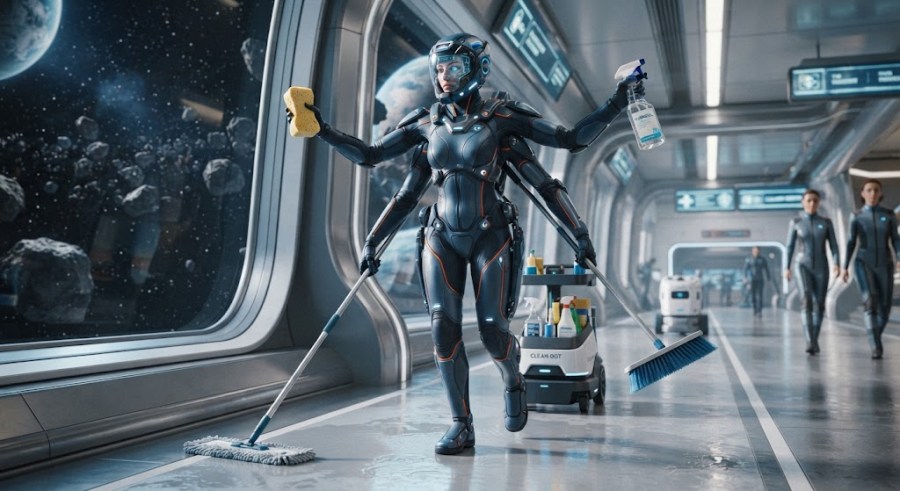
6. Cleaning & Household Chores
- Housework & Maintenance: Roughly 50 minutes to 1 hour per day dedicated to interior cleaning (sweeping, vacuuming, tidying), laundry, and general household management (with total household activities—including outdoor maintenance—hovering near 2 hours daily).
Summary of an Average Day
To put it in perspective, out of a 24-hour day, human habits generally distribute across these key pillars:
- Sleeping: ~8.5 to 9 hours
- Working / Responsibilities: ~3.5 to 8 hours (depending on employment status)
- Media & Screens (TV + Phones): ~5 to 7+ hours combined
- Chores, Cooking, & Cleaning: ~2.5 to 3 hours
- Eating & Personal Care: ~1.5 to 2 hours
How much do We Humans talk per day?
On average, humans spend roughly 1 to 2 hours per day actually speaking, though this varies significantly based on profession, lifestyle, and social habits.
wikiHow
Sociolinguistic and psychological studies (such as well-known tracking research from the University of Arizona) break down our daily verbal output through a few key metrics:
- Daily Word Count: The average person speaks roughly 13,000 to 16,000 words per day.
- Speaking Rate: Conversational speech typically flows at an average rate of 120 to 150 words per minute. wikiHow
- Total Time: If you divide total daily word output by standard conversational pacing, the cumulative time spent actively talking lands right around 40 minutes to 1.5 hours over a 24-hour period.
Factors That Shift the Average
- Profession: People in communicative roles—such as teachers, customer service representatives, sales professionals, and managers—often log several hours of active speech daily. Conversely, remote desk workers or individuals in independent trades may spend much of their workday in relative silence.
- Social Context: Studies tracking daily interpersonal interaction note that a significant chunk of our spoken time is casual or conversational socializing—ranging from brief workplace check-ins to spending nearly an hour daily engaged in informal banter or catching up with family. TLC.com
How much SEX do we spend time on?
On average, scientific and demographic surveys (such as the National Health and Social Life Survey and longitudinal health studies) suggest that humans spend roughly 1,000 to 1,500 hours—or about 40 to 60 days of continuous time—engaged in sexual intercourse over the course of an adult lifetime.
Broken down into typical lifetime metrics:
- Total Encounters: Across an active adult span (roughly from age 18 to 75), the average person experiences roughly 3,500 to 4,500 sexual encounters, though this number varies enormously based on relationship status, health, and personal preference.
- Average Duration: Epidemiological and sexological studies place the average duration of a single act of intercourse (excluding extended foreplay or afterglow) at roughly 15 to 20 minutes.
- Lifetime Cumulative Time: Multiplying average frequency by standard duration yields about 1,500 hours of active intercourse—equivalent to roughly 2 to 2.5 months if stacked back-to-back 24/7, or spread out as a tiny fraction of one’s total lifespan.
Key Factors That Influence the Average
Relationship Status: Long-term cohabitating partners or married couples statistically engage in sex more frequently over a sustained lifetime than single individuals, though individual variance remains the largest single determinant.
Age and Life Stage: Sexual frequency is typically highest during late adolescence and the twenties, gradually tapering off in frequency while often increasing in emotional satisfaction and duration during later decades.


You must be logged in to post a comment.