
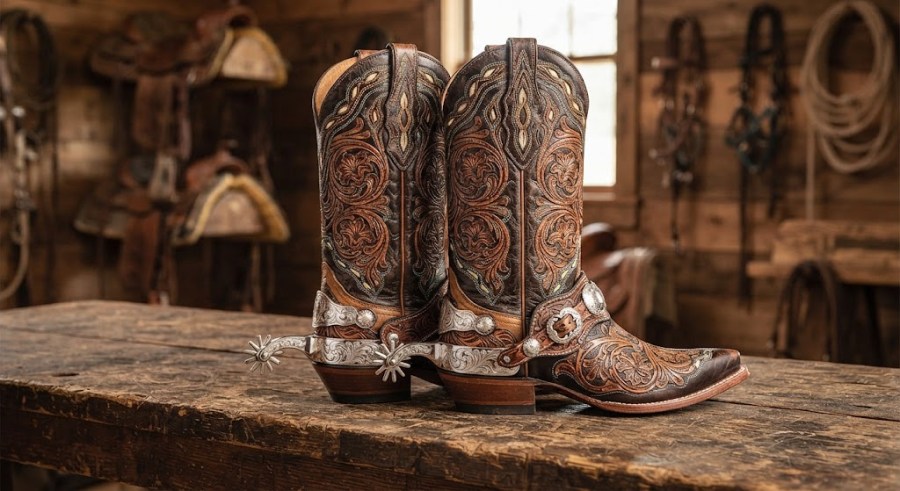
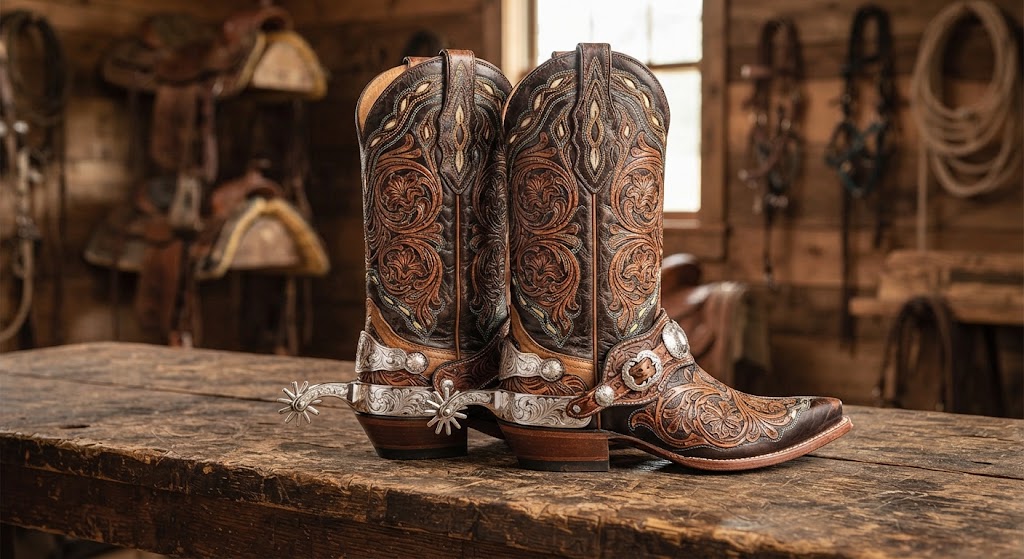
The primary purpose of spurs on cowboy boots is to serve as a subtle, highly refined communication tool between rider and horse.
Because working cowboys often have their hands full—holding a lariat, managing reins, or steadying an animal through rough terrain—spurs allow a rider to guide a horse using only precise lower-leg movements without relying on voice commands or pulling the reins.
Key aspects of their function include:
- Refined Cues: By lightly turning or flexing the heel against the horse’s flank, a rider can signal the horse to accelerate, back up, change leads, or make tight turns.
- The Physics of the Rowel: The spinning star wheel on the back of a spur is called a rowel. It is designed to roll smoothly across the horse’s hide rather than puncture it, delivering a rolling pressure that is felt rather than sharp.
- Maintaining Responsiveness: During long, grueling days on the open range, working horses naturally grow tired and less sensitive to basic leg pressure. Spurs provide the extra leverage needed to keep a working horse alert and responsive.
Don’t spurs hurt horses
They shouldn’t—when used correctly.
In the hands of an experienced, skilled rider, spurs are designed to be a gentle, nuanced communication tool, not a weapon. However, just like any tool, their impact depends entirely on who is using them.
Why Properly Used Spurs Do Not Hurt
- The Design Prevents Puncture: A standard western spur features a smooth, rotating star-shaped wheel called a rowel. When applied correctly, the rowel rolls smoothly across the horse’s thick, muscular hide rather than digging into it. The horse feels the rotation and the subtle shift in pressure much like a human feels a light tap on the shoulder.
- Equine Skin Sensitivity: Horses have thick skin and a dense coat of muscle over their flanks, making them naturally resilient to minor pressure. They are also incredibly sensitive to touch; a well-trained horse responds instantly to the lightest brushing of a boot heel, meaning a rider rarely needs to apply heavy force.
- Horsemanship Ethics: Traditional horsemanship places a heavy emphasis on a light hand and a light heel. Harming a horse makes it anxious, unpredictable, and difficult to manage—the exact opposite of what a working cowboy needs when navigating rugged terrain.
When Spurs Can Cause Harm
Spurs can cause pain, discomfort, or injury if misused:
- Inexperienced or Rough Riders: A rider with poor balance who jabs or kicks their horse out of frustration can cause bruises or raw spots.
- Improperly Fitted Gear: Spurs that hang too low or straps that are poorly adjusted can dig awkwardly into the animal’s leg.
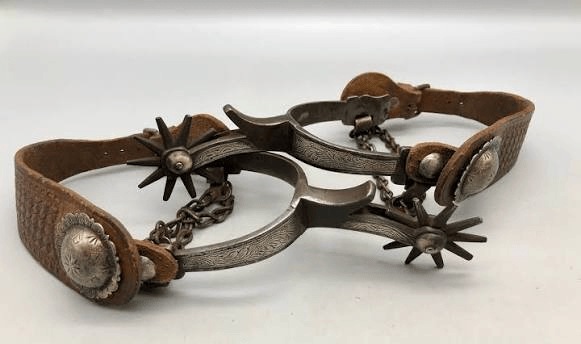
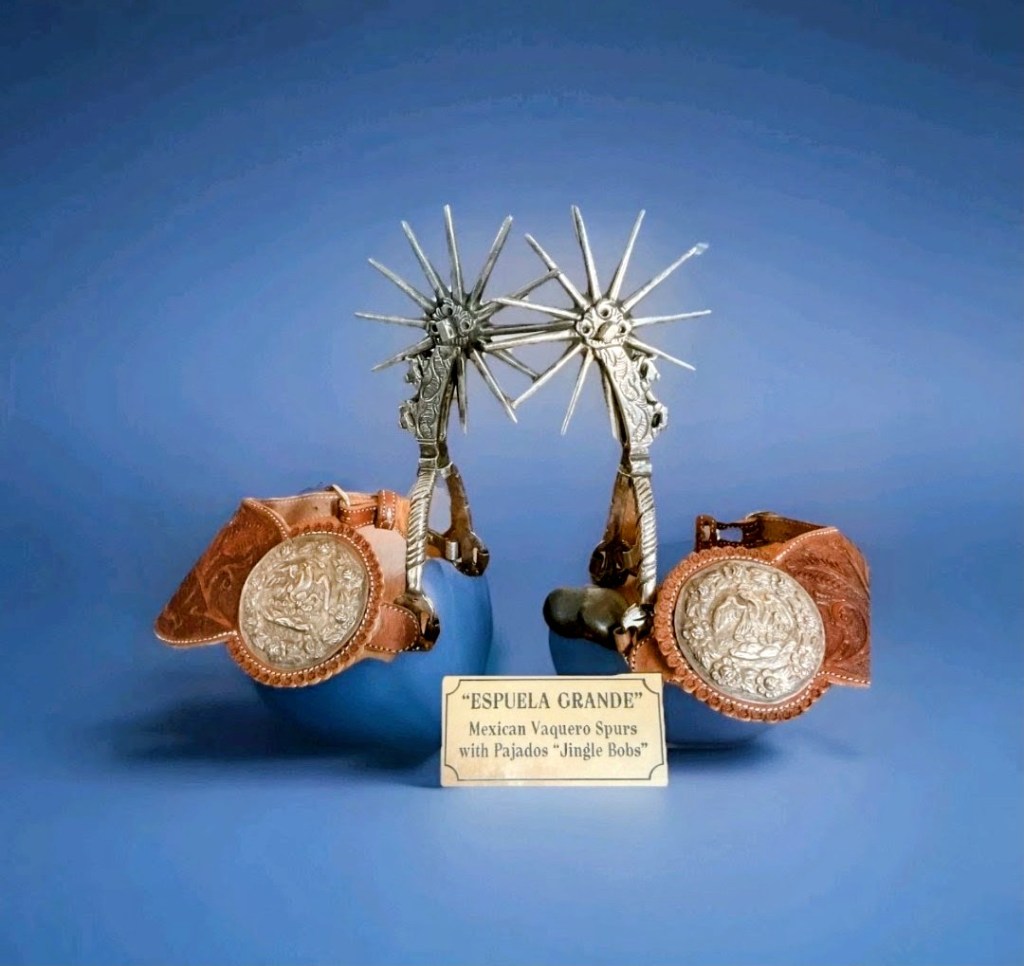
The above spurs are available on eBay and cost only $8500 dollars.


You must be logged in to post a comment.