
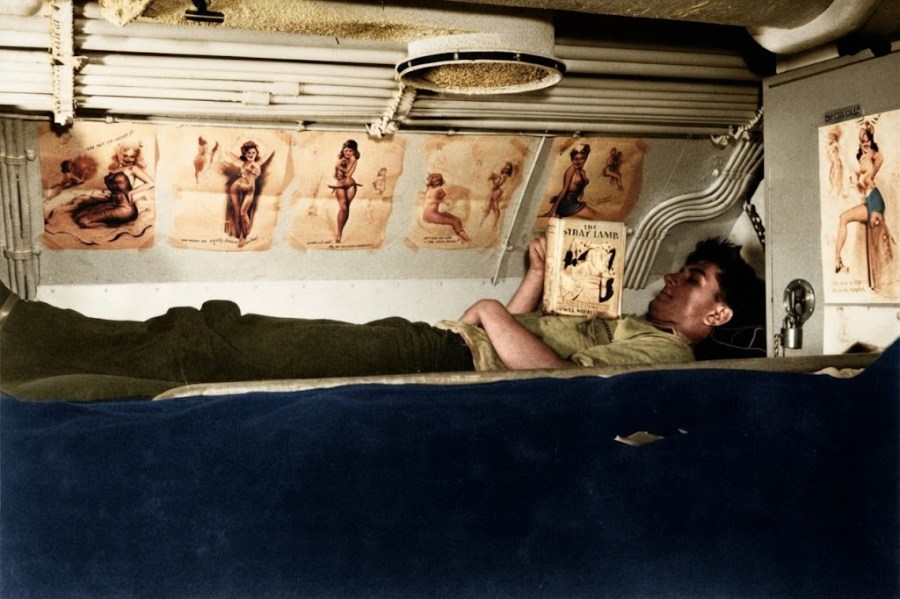
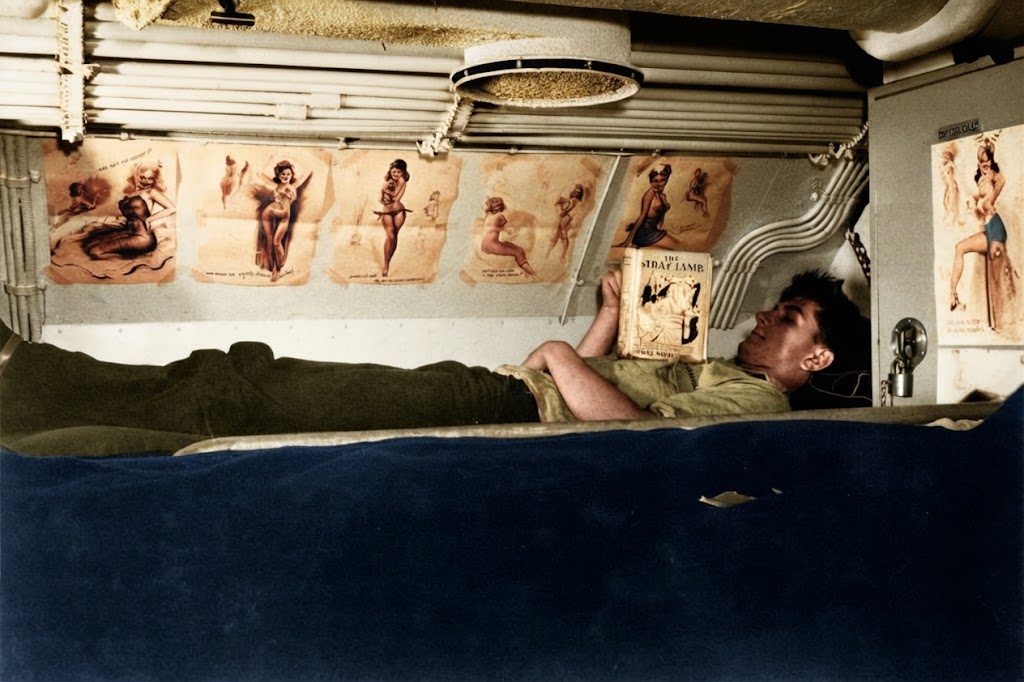
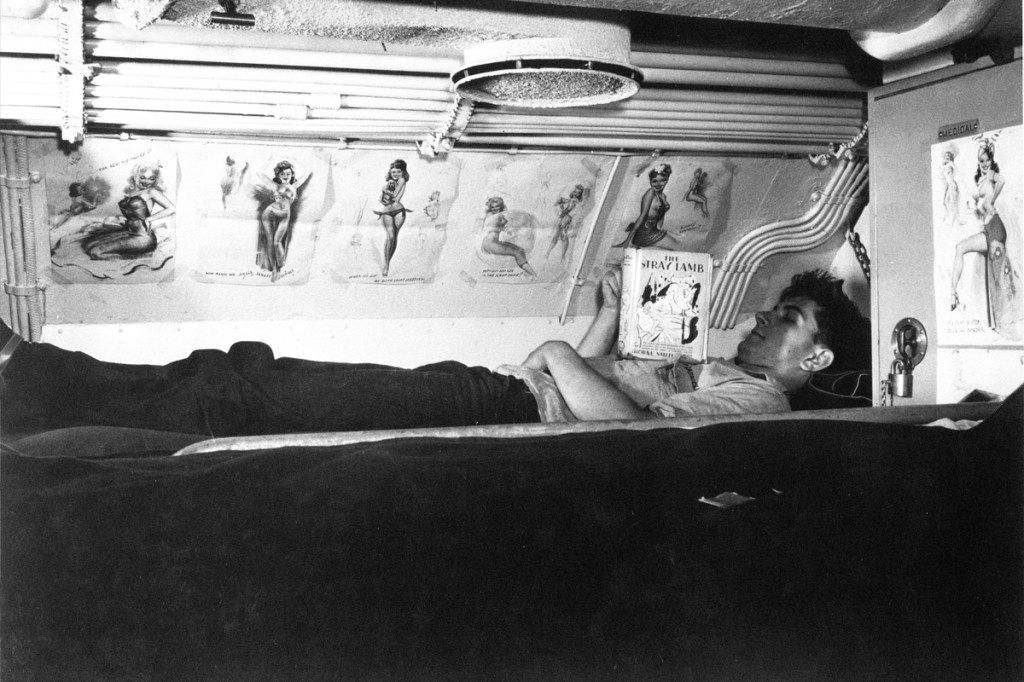
The Stray Lamb: A Companion in the Trenches and the Legacy of Armed Services Editions
During the crucible of the Second World War, millions of American soldiers, sailors, and Marines found themselves stationed far from home, enduring the grueling monotony, fatigue, and psychological weight of military life. To combat homesickness and bolster morale, the United States government, in an unprecedented partnership with American publishers, launched one of the most remarkable literacy initiatives in history: the Armed Services Editions (ASE) [cite: 1, 2]. These portable, pocket-sized paperbacks were engineered to fit into a standard military uniform pocket, offering deployed troops an essential window to other worlds [cite: 1, 2]. Among the most fascinating titles issued in this format was Thorne Smith’s The Stray Lamb, designated as ASE K-15 [cite: 3].
The Armed Services Editions: Literature on the Front Lines
Introduced in 1943, the ASE program revolutionized wartime publishing [cite: 1, 2]. Managed by the Council on Books in Wartime under the leadership of former Pocket Books executive editor Philip Van Doren Stern, the program printed millions of lightweight, oblong or landscape-format paperbacks [cite: 1, 2, 3].
These books were distributed across every theater of war—from the Pacific islands to the hedgerows of Europe. Because of their unique oblong layout, soldiers could easily slide a book into a breast pocket or cargo trouser pocket, carrying a piece of home, humor, or high adventure directly into the trenches, barracks, and transport ships. The initiative ensured that literature was not treated as a luxury, but as vital equipment for psychological endurance.
The Stray Lamb (ASE K-15) as a Soldier’s Read
Published in 1944 under the Editions for the Armed Services, Inc. imprint, The Stray Lamb (ASE K-15) was a stroke of brilliant programming for troops needing an escape from harsh realities [cite: 3]. Written by Thorne Smith—a master of whimsical, supernatural satire best known for Topper—The Stray Lamb tells the uproarious and imaginative tale of Mr. T. Lamb, a mild-mannered man who finds himself undergoing a series of bizarre transformations into various animals and entities.
For a generation of young soldiers facing strict discipline, danger, and relentless uniformity, Smith’s irreverent humor, surreal escapism, and subversion of respectable society struck a profound chord. Reading about absurd metamorphoses provided a much-needed psychological release, offering laughter and absurdity in environments defined by gravity and danger.
Collectibility, Editions, and Historical Value
Today, surviving copies of wartime paperbacks hold a cherished place among book collectors and military historians.
- The ASE Printing (1944): The original oblong, pictorial-wrapper Armed Services Edition of The Stray Lamb (K-15) is a tangible artifact of WWII history [cite: 3]. Because these books were heavily read, traded among troops, and often discarded in harsh field conditions, surviving copies in good condition are prized by collectors.
- Alternative Vintage Printings (1945): Alongside the ASE printings, companion civilian and reprint editions—such as those published by Avon in 1945—also captured the vintage paper market [cite: 3].
- Market Pricing: Vintage WWII-era and early paperback copies typically range in value from $7.50 to $35.00, depending on condition, wrapper integrity, and historical provenance [cite: 3].
Conclusion
The Stray Lamb in its Armed Services Edition incarnation stands as more than just a collectible artifact; it is a testament to the power of stories during times of crisis. Through programs like the ASE, books became silent comrades-in-arms, offering laughter, comfort, and humanity to the soldiers who carried them across the globe [cite: 1, 2, 3].
Every ship had a bunk where Troopers Called


You must be logged in to post a comment.